
Poultry keeping has evolved dramatically over the decades, transitioning from purely utilitarian barnyard management to a passionate hobby enjoyed by homesteaders, backyard enthusiasts, and preservation breeders alike. Among the myriad traits that captivate chicken keepers—ranging from vibrant egg colors to feather lacing—size remains a perennial point of fascination. There is something undeniably majestic about stepping into a backyard run and encountering a bird that stands as tall as a medium-sized dog, commanding the attention of the entire flock with calm authority and gentle grace.
(Reference: Poultry)Understanding the heavyweight class of the avian world requires looking past simple vanity or visual appeal. Large chicken breeds carry distinct biological, behavioral, and management realities that set them apart from standard lightweight or bantam varieties. Their massive frames demand specific dietary formulations to support bone and muscle development, unique coop modifications to prevent joint injuries, and specialized handling techniques. , their sheer bulk influences everything from egg production cycles to climate tolerance, particularly their notoriously poor resistance to extreme summer heat.
Explore our detailed breakdown on Rabbit Breed Identification Chart [Full Reference Chart].This master article explores the physical dimensions, history, temperament, egg-laying capabilities, and day-to-day husbandry requirements of the world’s most massive chickens. Whether you are looking to stock your homestead with dual-purpose meat and egg producers, seeking a docile giant to integrate with children, or simply researching the biological extremes of domestic poultry, this guide delivers authoritative, zero-fluff insights into the giants of the coop.
Understanding the Largest Chicken Breed: The Jersey Giant and Its Heavyweight Peers
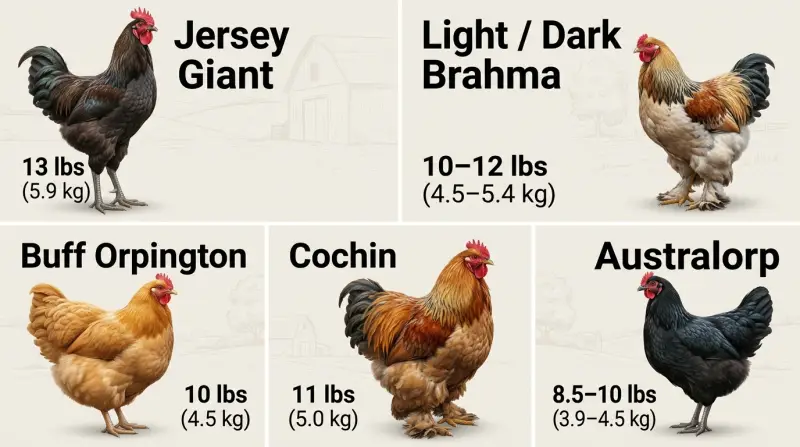
- The Ultimate Champion: The Jersey Giant holds the official title of the world’s largest chicken breed, with mature roosters topping out around 13 pounds and hens reaching 10 pounds.
- Purpose-Driven Origins: Heavy breeds were historically bred as dual-purpose utility birds to replace turkeys in the commercial meat market of the late 19th century.
- Climate Vulnerabilities: While exceptional cold-hardiness makes giants thrive in harsh winters, their massive body mass makes them highly susceptible to heat stress and heat stroke during summer.
- Housing Adjustments Required: Heavy breeds cannot clear high vertical spaces; low perches, ramp configurations, and deep-bedding systems are mandatory to prevent bumblefoot and keel bone injuries.
- Slower Maturation: Unlike high-production hybrid layers that begin laying at 16 to 18 weeks, true heavyweights often take 6 to 9 months—or even a full year—to reach physical and sexual maturity.
To truly grasp what defines the largest chicken breed, one must examine the intersection of genetics, history, and selective breeding. The category of “heavy” or “super-heavy” breeds is dominated by a select group of heritage birds developed primarily during the Victorian era and the late 19th-century agricultural boom. During this period, farmers and poultry fanciers sought to create the ultimate dual-purpose fowl: birds that could provide substantial meat carcasses while maintaining reliable egg production through cold northern winters.
The Jersey Giant emerged in Burlington County, New Jersey, around 1870. Brothers John and Thomas Black set out to create a chicken that could rival the market weight of a small turkey. By crossing Black Javas, Dark Brahmas, and Black Langshans, they stabilized a colossal bird characterized by a long, deep body, heavy bone structure, and a placid demeanor. Though early specimens were sometimes reported to weigh up to 15 or 16 pounds, modern standards stabilize around 13 pounds for roosters and 10 pounds for hens.
Beyond the Jersey Giant, a few other legendary heavyweights vie for recognition in the ultra-large poultry category. The Brahma, often styled the “Gentle Giant” of the Asian class, features heavily feathered legs and a massive, broad skull. The Orpington, particularly the Buff variety popularized in England, offers a deceptive visual illusion of immense size due to its extraordinarily fluffy, loose feathering, though its dense muscle mass places it firmly in the heavy category. Similarly, the Cochin presents a round, football-shaped silhouette of abundant plumage that conceals a sturdy, heavy frame.
| Breed Name | Average Rooster Weight | Average Hen Weight | Egg Production & Color | Primary Climate Tolerance |
|---|---|---|---|---|
| Jersey Giant | 13 lbs (5.9 kg) | 10 lbs (4.5 kg) | 150–200 large brown/tinted eggs/year | Exceptional cold; poor in heat |
| Light / Dark Brahma | 10–12 lbs (4.5–5.4 kg) | 8–9 lbs (3.6–4.1 kg) | 120–150 medium/large brown eggs/year | Outstanding cold; moderate in heat |
| Buff Orpington | 10 lbs (4.5 kg) | 8 lbs (3.6 kg) | 175–200 light brown eggs/year | Superior cold; vulnerable to heat |
| Cochin | 11 lbs (5.0 kg) | 8.5 lbs (3.9 kg) | 120–150 light brown eggs/year | Good cold; extremely vulnerable in heat |
| Australorp | 8.5–10 lbs (3.9–4.5 kg) | 7–8 lbs (3.2–3.6 kg) | 250+ light brown eggs/year | Hardy in cold; moderate in heat |
Analyzing this comparison table reveals a crucial distinction in poultry husbandry: visual size versus actual biological mass. While fluffy breeds like the Cochin and Orpington often look larger than life due to plumage volume, true heavy-bone breeds like the Jersey Giant and Brahma possess denser skeletal structures and heavier muscle tissue. Evaluating these metrics helps keepers choose the right breed based on coop structural limits, local climate profiles, and production goals.
Anatomy, Genetics, and Physical Characteristics of Super-Heavy Chickens
The biological architecture of the world’s largest chicken breeds requires distinct anatomical adaptations to support their massive weight. Unlike sleek Mediterranean breeds designed for agility and foraging efficiency, super-heavy breeds are built like draft horses: blocky, wide-backed, and deep-chested.
Skeletal Structure and Bone Density
The skeleton of a Jersey Giant or Brahma is significantly thicker and heavier than that of a Leghorn or Rhode Island Red. This robust skeletal frame is necessary to prevent structural collapse under the bird’s own body weight. However, this heavy bone density comes with trade-offs. Heavy breeds have higher dietary calcium and phosphorus requirements during their long developmental phase to prevent bone deformities such as valgus-varus deformities (slipped tendons or crooked legs).
Plumage Variation: Dense vs. Loose Feathering
Feather structure dictates how these giant breeds interact with their environment:
- Tight, Hard Plumage (Jersey Giants): Features a streamlined, glossy appearance that allows water to shed effectively, though it offers slightly less thermal insulation than fluffy down types.
- Abundant, Loose Plumage (Cochins and Orpingtons): Contains a massive underlayer of down feathers that traps air, creating superior cold-weather insulation. However, this heavy plumage easily traps mud and moisture, requiring diligent coop hygiene to prevent skin infections.
- Feathered Shanks (Brahmas and Cochins): The presence of feathers down the outer toes and shanks provides extra warmth in winter but makes these birds prone to mud-balling and frostbite if their run remains damp and freezing.
Temperament and Behavioral Dynamics
One of the most remarkable paradoxes of the largest chicken breed is its temperament. Despite standing intimidatingly tall, Jersey Giants and other heavy heritage breeds are famously docile, placid, and gentle. They lack the nervous, flighty energy common in production hybrids and Mediterranean breeds.
Because of their calm disposition, they are exceptionally well-suited for families with children and mixed-flock configurations where aggression can destabilize the social order. While a dominant rooster will still protect his flock from aerial and ground predators, roosters of heavy breeds are generally far less prone to unprovoked human aggression compared to smaller, high-testosterone breeds like Old English Game or Leghorns.
However, their size introduces distinct social challenges. In a mixed flock, slow-moving giants can easily become the targets of faster, more aggressive breeds during pecking-order disputes. While a Jersey Giant can easily defend itself physically, its slow reaction time means it may suffer psychological stress or feather-pecking before it mounts a counter-defense. It is often best to keep heavy breeds in flocks composed of similarly sized, calm-tempered companions.
Nutritional Requirements and Growth Dynamics
Raising the world’s largest chicken breed is not a project for cheap feed or rushed timelines. Their colossal size is achieved through a prolonged juvenile growth phase that requires precise nutritional management.
The Slow-Growth
Unlike commercial broiler crosses (Cornish Cross) that are forced to slaughter weight in six to eight weeks—often resulting in crippling leg and heart failure—heritage heavyweights are marathon runners. A Jersey Giant cockerel will take six to nine months to fill out its frame, and true structural maturity is rarely reached before 10 to 12 months of age. Feeding a high-protein starter feed (20–22%) for the first 8 weeks, followed by a balanced grower feed (16–18%), ensures that bone growth keeps pace with muscle development.
Calcium and Mineral Management for Laying Hens
Jersey Giant and Brahma hens produce large-to-extra-large brown eggs with impressive consistency once mature. Sustaining this shell production in large-bodied hens requires a constant, accessible supply of free-choice oyster shell alongside a balanced layer ration (16% protein with 3.5–4.0% calcium). Neglecting mineral supplementation in heavy hens can quickly lead to reproductive tract fatigue, soft-shelled eggs, and metabolic calcium depletion.
Coop Design and Management for Heavyweight Flocks
Keeping massive chickens requires modifying standard backyard chicken coop architecture. Standard setups built for lightweight backyard hens can cause catastrophic injuries when populated with 10-to-13-pound birds.
Perch Height and Placement
When a 12-pound rooster leaps down from a high roost bar, the kinetic impact on his footpads and joints is severe. To prevent debilitating conditions like bumblefoot (staphylococcal infection of the footpad) and keel bone fractures:
- Keep roost bars low—no higher than 12 to 18 inches off the floor.
- Use wide, flat roosting surfaces (such as a standard 2×4 laid flat with rounded edges) rather than narrow round tree branches, distributing the bird’s weight evenly across the keel of the foot.
- Provide gentle ramps if elevated nesting boxes or coop exits are utilized.
Space Allocations
Heavy breeds require significantly more interior floor space and run area than smaller birds. Cramped quarters quickly lead to feather picking, stress, and unhygienic conditions. Aim for a minimum of 5 to 6 square feet per bird inside the coop and 10 to 15 square feet per bird in the outdoor run.
Climate Management: The Heat Tolerance Paradox
While the cold-hardiness of the Jersey Giant and Brahma is legendary—allowing them to withstand sub-zero winter temperatures without missing a beat—their massive body mass becomes a severe liability during hot summer months.
Chickens do not possess sweat glands; they regulate their internal body temperature through panting and by radiating heat away from their unfeathered combs, wattles, and legs. A 13-pound bird with dense muscle and heavy plumage acts like a living furnace. During heatwaves exceeding 85°F (29°C), heavy breeds are at high risk for fatal heat stroke.
Mitigating Heat Stress in Heavy Breeds
- Shade and Ventilation: Ensure absolute cross-ventilation in the coop. Never tightly seal a coop in summer, and provide shaded, breezy run spaces.
- Hydration Strategies: Provide multiple, heavy-duty waterers filled with cool, fresh water throughout the yard. Adding ice blocks to water stations during peak afternoon hours lowers core temperatures.
- Electrolytes and Wet Feeds: Supplement drinking water with poultry electrolytes and vitamins during heatwaves. Feeding chilled watermelon, cucumbers, or soaked grains helps maintain hydration when appetite drops.
Common Mistakes When Raising Large Chicken Breeds
Even experienced chicken keepers often stumble when transitioning from standard backyard breeds to super-heavyweights. Avoiding these frequent pitfalls ensures a healthy, thriving flock:
- Feeding High-Protein Meat Broiler Diets: Mistakenly feeding commercial meat-bird rations to heritage giants causes their skeletons to grow too fast for their joints, resulting in crippled legs and early mortality. Stick to balanced heritage growth feeds.
- Neglecting Mite Prevention in Feathered Shanks: Breeds with heavily feathered legs (Brahmas, Cochins) are prime targets for scaly leg mites. Inspect legs regularly and apply preventive treatments such as petroleum jelly or specialized oils.
- Building High Roosts: Assuming chickens naturally want high roosts leads to heavy birds crashing to the floor, causing severe breast blisters, bumblefoot, and joint trauma.
- Underestimating Feed Consumption: Heavy breeds eat significantly more feed than standard breeds. Budgeting for higher feed overhead is essential before bringing home a flock of giants.
- Ignoring Summer Vulnerability: Failing to provide rigorous heat-mitigation protocols can lead to sudden loss of mature breeding stock during unexpected summer heat spikes.
Frequently Asked Questions
The Jersey Giant is universally recognized as the largest chicken breed in existence. Mature roosters can reach weights of 13 pounds or more, and exceptional specimens historically exceeded 15 pounds, matched with a remarkably long, deep-bodied physical frame.
Yes, Jersey Giants are dependable dual-purpose layers. A healthy hen typically produces around 150 to 200 large-to-extra-large brown or tinted eggs per year. While they do not match the relentless output of industrial egg-laying hybrids like Leghorns, their production is more than sufficient for homestead needs.
Unlike commercial meat birds that grow unnaturally fast, Jersey Giants grow at a steady, natural pace. They require approximately 6 to 9 months to look fully grown, and males often continue filling out their chest width and bone density until they are a full 12 months old.
Due to their massive weight and dense muscle mass, heavy breeds like Jersey Giants, Brahmas, and Cochins are virtually incapable of sustained flight. A standard 2-to-3-foot chicken fence is usually more than enough to contain them, as they rarely attempt to clear vertical barriers.
Yes. Because of their heavy bodies, you must install low roost bars (under 18 inches off the floor) with wide, flat surfaces to prevent foot injuries like bumblefoot and joint trauma. They also require greater floor space per bird (at least 5–6 square feet inside the coop) to prevent overcrowding.
Conclusion
The world’s largest chicken breed—anchored by the magnificent Jersey Giant—represents a fascinating pinnacle of agricultural heritage and selective breeding. These gentle giants offer an unmatched combination of imposing physical presence, docile temperament, reliable dual-purpose utility, and exceptional cold-weather hardiness. While they demand thoughtful management regarding nutrition, low-slung coop architecture, and critical heat-stress mitigation during summer, the rewards of keeping these magnificent birds far outweigh the challenges. For homesteaders and backyard enthusiasts seeking a calm, striking, and productive addition to their flock, the heavyweights of the poultry world stand peerless.