
Choosing to bring a cat into your home is a major lifestyle decision that extends far beyond picking out a cute kitten from a shelter. Felines are renowned for their enigmatic personalities, sleek elegance, and reputation as low-maintenance pets. Yet, beneath their calm exterior lies a complex creature with unique behavioral needs, medical requirements, and environmental preferences. Whether you live in a high-rise city apartment or a sprawling suburban home, understanding what it truly takes to share your living space with a cat requires a clear-eyed look at the daily realities.
This guide dives deep into the realities of cat ownership, breaking down the exact benefits and drawbacks you will encounter day-in and day-out. From financial considerations and behavioral dynamics to litter box logistics and human-animal bonding, every critical facet of feline companionship is examined so you can make an informed, confident choice.
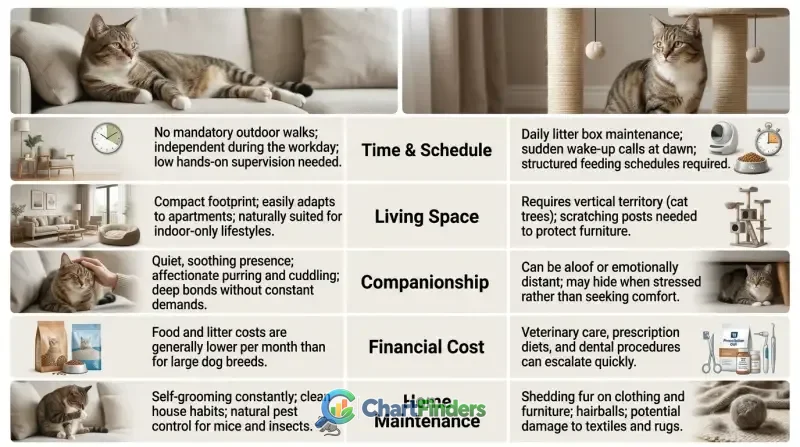
Pros And Cons Of Owning A Cat
- Low Daily Maintenance: Cats do not require daily outdoor walks, making them exceptionally well-suited for busy professionals or individuals with limited mobility.
- Independence vs. Affection: While cats are fiercely independent, they form deep, quiet emotional bonds with their owners through purring, head-butting, and sleeping nearby.
- Indoor Suitability: Their compact size and natural litter-box-training instincts make them ideal companions for apartment living and small spaces.
- The Litter Box Factor: Daily scooping, managing tracking litter, and combating household odors are non-negotiable daily chores.
- Behavioral Challenges: Scratching furniture, nocturnal zoomies, and managing multi-cat resource competition require proactive environmental enrichment.
- Financial & Medical Realities: Routine food and litter costs are modest, but unexpected veterinary emergencies can carry steep price tags.
To accurately weigh whether a cat fits your life, you must look at how the daily realities of feline care intersect with your personal schedule, physical home environment, and emotional expectations. The following breakdown organizes the primary advantages and disadvantages of cat ownership into clear, actionable categories.
| Category | The Pros | The Cons |
|---|---|---|
| Time & Schedule | No mandatory outdoor walks; independent during the workday; low hands-on supervision needed. | Daily litter box maintenance; sudden wake-up calls at dawn; structured feeding schedules required. |
| Living Space | Compact footprint; easily adapts to apartments; naturally suited for indoor-only lifestyles. | Requires vertical territory (cat trees); scratching posts needed to protect furniture. |
| Companionship | Quiet, soothing presence; affectionate purring and cuddling; deep bonds without constant demands. | Can be aloof or emotionally distant; may hide when stressed rather than seeking comfort. |
| Financial Cost | Food and litter costs are generally lower per month than for large dog breeds. | Veterinary care, prescription diets, and dental procedures can escalate quickly. |
| Home Maintenance | Self-grooming constantly; clean house habits; natural pest control for mice and insects. | Shedding fur on clothing and furniture; hairballs; potential damage to textiles and rugs. |
Reading through a high-level summary is only the beginning. To truly understand what life with a cat looks like, we must examine the specific advantages and disadvantages in detail.
The Major Advantages of Owning a Cat
Cats have shared human living spaces for thousands of years, evolving from agricultural pest controllers into cherished household companions. Their enduring popularity stems from a distinct set of evolutionary traits that align remarkably well with modern human lifestyles.
1. Low-Maintenance Daily Routines
Unlike dogs, which require multiple daily walks regardless of weather, exhaustion, or work deadlines, cats are entirely self-contained regarding bathroom habits. Once a kitten or cat is litter-box-trained, their elimination needs are handled indoors in a designated spot. This eliminates the need to rush home in the pouring rain or freezing cold for an evening walk. , cats spend a significant portion of the day sleeping—often between 12 and 16 hours—meaning they tolerate the standard 8-to-5 workday exceptionally well without experiencing severe separation anxiety.
2. Perfect Adaptation to Small Spaces
Because of their compact size and agility, cats thrive in environments that would feel restrictive to larger animals. Studio apartments, townhomes, and multi-story houses all work well. As long as a cat has access to vertical space—such as windowsills, bookshelves, or dedicated cat trees—they can easily satisfy their territorial and exploratory instincts within a limited square footage.
3. Quiet and Independent Companionship
Feline vocalizations are generally soft and infrequent compared to the barking of dogs, making cats fantastic pets for apartment buildings with strict noise restrictions or thin walls. They offer a soothing, calming presence. Studies have frequently noted that the frequency of a cat’s purr (typically between 20 and 140 Hz) can have therapeutic, stress-reducing effects on human blood pressure and nervous systems.
4. Natural Pest Control
Even well-fed indoor cats retain their predatory instincts. The mere presence of a cat in a home often deters mice, rats, and large insects like centipedes and spiders. For homeowners dealing with rural mice pressures or urban pests, a cat provides active, biological defense without chemical traps.
5. Lower Overall Cost Baseline
While premium cat food and quality litter require a steady financial commitment, the baseline cost of feeding a cat is typically lower than feeding a medium-to-large dog. They consume smaller quantities of food, do not require professional grooming haircuts (with rare exceptions for long-haired breeds), and do not need expensive obedience training classes or specialized gear like heavy-duty leashes, crates, and harnesses.
The Major Drawbacks and Challenges of Cat Ownership
While the benefits are compelling, cat ownership is not without its trials. Ignoring or underestimating these challenges is the leading cause of behavioral frustration and pet relinquishment.
1. Litter Box Management and Household Odors
The litter box is the undeniable epicenter of indoor cat care. Scooping solid waste and clumped urine at least once daily is mandatory to maintain hygiene and prevent the cat from rejecting the box in favor of your carpets. Even with high-quality litter, air purifiers, and enclosed boxes, tracking litter granules across hardwood floors and dealing with occasional ambient odors requires consistent housekeeping effort.
2. Behavioral Realities: Scratching and Nocturnal Zoomies
Cats are natural scratchers—an instinctive behavior used to shed outer claw sheaths, stretch their back muscles, and mark territory with scent glands on their paws. Without appropriate vertical scratching posts and redirection training, sofas, armchairs, and wallpaper become prime targets. Additionally, cats are crepuscular animals, meaning their natural peak activity windows occur at dawn and dusk. This frequently translates to the infamous “midnight zoomies,” where a cat sprints across the bed and knocks items off nightstands while you are trying to sleep.
3. Veterinary Expenses and Hidden Medical Risks
Cats are evolutionary masters at masking pain and illness—a survival trait inherited from their wild ancestors to prevent predators from spotting vulnerability. Consequently, by the time a cat exhibits outward signs of sickness (such as lethargy or hiding), the condition may be advanced. Common medical issues like feline lower urinary tract disease (FLUTD), chronic kidney disease, hyperthyroidism, and dental resorptive lesions require expensive veterinary diagnostics, blood panels, and long-term prescription diets.
4. Shedding, Hairballs, and Textile Damage
Short-haired cats shed year-round, while long-haired breeds like Persians and Maine Coons dump undercoats seasonally. Cat hair clings stubbornly to wool, fleece, and upholstery. Grooming oneself constantly also means cats ingest loose fur, resulting in hairballs that occasionally end up expelled on your favorite rug. , curious kittens love climbing curtains, batting at hanging cords, and knocking fragile items off shelves.
Cat vs. Dog: Key Lifestyle Comparisons
Many prospective pet owners weigh cats directly against dogs. Understanding the fundamental differences in daily commitment prevents mismatched expectations.
| Trait | Cats | Dogs |
|---|---|---|
| Social Structure | Solitary hunters; selective social interaction. | Pack animals; highly social and dependent on human groups. |
| Exercise Needs | Short bursts of play (wand toys, laser pointers); self-exercising. | Daily walks, running, and structured outdoor exercise required. |
| Training & Obedience | Can be clicker-trained, but operate on their own terms; highly independent. | Eager to please; highly responsive to obedience training and commands. |
| Travel & Leaving Alone | Can be left alone for longer windows with automatic feeders and fresh water. | Requires pet sitters, boarding, or traveling companions for extended absences. |
| Allergies | Feline dander proteins (Fel d 1) are potent and easily airborne via dander. | Canine dander and saliva allergens vary widely by breed type. |
Financial Breakdown of Cat Ownership
Budgeting for a cat requires separating predictable recurring expenses from unexpected capital outlays. Understanding these numbers helps prevent financial strain.
- Initial Setup Costs: Adopting a cat involves adoption fees (ranging from $50 to $200), initial veterinary exams, vaccinations, spay/neuter surgery (if not already completed), microchipping, litter boxes, food bowls, scratching posts, and carriers. Initial setup typically ranges from $300 to $800.
- Recurring Monthly Costs: High-quality commercial cat food (wet and dry), clumping litter, and occasional treats average between $40 and $100 per month depending on diet quality and multi-cat households.
- Preventative Healthcare: Annual wellness exams, flea/tick preventatives, and parasite control average $200 to $500 annually.
- Emergency Fund / Pet Insurance: Setting aside a dedicated emergency savings fund or purchasing pet insurance ($20–$50/month) is vital for handling unexpected trauma, surgeries, or chronic disease management.
Multi-Cat Households: Should You Get a Second Cat?
A common dilemma for established cat owners is whether to introduce a second feline companion. While many assume cats are lonely and need a buddy, improper introductions can lead to chronic stress, spraying, resource guarding, and household fighting.
A second cat can provide wonderful stimulation and social enrichment, but only if the physical environment supports it. Multi-cat households require strict adherence to the “N+1 Rule” for essential resources: you should provide one litter box per cat plus one extra (so two cats need three boxes), placed in separate, accessible locations where a dominant cat cannot trap a timid cat. Feeding stations, resting perches, and water sources must also be multiplied and separated to prevent resource-guarding conflict.
Common Mistakes to Avoid as a New Cat Owner
First-time cat owners frequently stumble into avoidable traps due to misconceptions about feline psychology. Being aware of these pitfalls ensures a smoother transition for both you and your new pet.
- Expecting Dog-Like Compliance: Punishing a cat for misbehavior (such as spraying or scratching) is ineffective and destroys trust. Cats do not connect punishment with their actions the way dogs do; positive reinforcement and environmental redirection are the only working methods.
- Skipping Gradual Introductions: Bringing a new cat home and immediately letting them roam the entire house with existing pets creates high territorial anxiety. Cats require a strict “base camp” room setup for gradual scent-swapping over 1 to 2 weeks.
- Ignoring Dental Health: Periodontal disease affects a staggering majority of adult cats by age three, leading to systemic organ inflammation and pain. Neglecting regular teeth brushing or veterinary dental cleanings leads to costly extractions later in life.
- Not Providing Enough Vertical Space: Forcing a cat to live entirely on ground level creates stress. Cats feel secure when they can survey their territory from above. Lack of vertical perches often manifests as destructive counter-surfing or behavioral aggression.
Frequently Asked Questions
Yes and no. While cats require significantly less time in terms of daily exercise, outdoor walks, and constant hands-on supervision, they demand meticulous environmental hygiene. Daily litter box scooping, managing airborne dander, brushing long hair, and monitoring subtle health changes require consistent diligence.
Basic care—including quality food, litter, and routine annual veterinary exams—typically costs between $600 and $1,200 per year. This figure excludes unexpected medical emergencies, prescription diets, or professional pet boarding during vacations.
Unquestionably. Indoor cats have an average lifespan of 12 to 15 years (often extending into their late teens or early twenties), whereas outdoor or indoor-outdoor cats face severe risks from vehicular traffic, infectious diseases (like feline leukemia), predators, and toxic ingestions, dropping their average lifespan significantly.
Scratching is a natural, hardwired behavior that cannot be eliminated entirely; it must be redirected. Provide sturdy vertical posts wrapped in sisal rope, horizontal cardboard scratchers, and catnip-infused attractants placed directly next to the furniture pieces the cat currently targets. Use double-sided tape temporarily on furniture corners to deter them during training.
Cats hide vulnerability instinctively. Subtle signs of stress or illness include decreased appetite, hiding under beds or inside closets for extended periods, increased vocalization, sudden litter box avoidance, over-grooming resulting in bald patches, and uncharacteristic aggression when touched.
Conclusion
Owning a cat is a deeply rewarding, grounding experience that brings unmatched warmth, quiet companionship, and charm into your living space. By balancing the undeniable advantages—such as low daily maintenance, apartment suitability, and quiet independence—against the challenges of litter box upkeep, veterinary costs, and behavioral redirection, you can create a thriving environment for your feline companion. Taking the time to prepare your home, budget realistically, and respect your cat’s unique psychological needs ensures a harmonious, long-lasting friendship.