
The Ragdoll is one of the most sought-after pedigree cat breeds in the world, capturing the hearts of cat enthusiasts with their mesmerizing sapphire-blue eyes, luxuriously soft semi-longhair coats, and famously docile temperaments. Originating in California during the 1960s through the breeding efforts of Ann Baker, this breed was carefully cultivated to produce exceptionally relaxed, floppy felines that seemingly melt into the arms of anyone who holds them. Yet, bringing one of these gentle giants into your home is a major commitment that extends far beyond their striking aesthetics and placid demeanor.
Evaluating whether a Ragdoll is the right match for your lifestyle requires a balanced examination of both their endearing traits and their inherent challenges. While their social nature and lack of aggressive survival instincts make them a joy to live with, those same characteristics dictate specific environmental, medical, and behavioral needs. This comprehensive guide breaks down the complete spectrum of owning a Ragdoll cat, helping prospective owners navigate the realities of coat maintenance, health vulnerabilities, financial commitments, and daily companionship requirements.
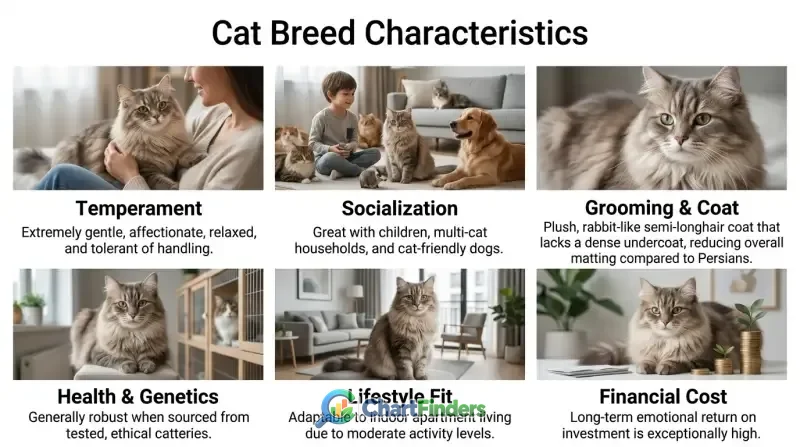
Pros And Cons Of Ragdoll Cats
- Ragdolls are exceptionally affectionate, “dog-like” companions that frequently greet owners at the door and follow them from room to room.
- Their lack of typical feline self-preservation instincts makes them strictly indoor-only cats for their own safety.
- Daily or near-daily grooming is mandatory to manage their plush, single-layered coats and prevent painful matting.
- The breed carries a genetic predisposition to Hypertrophic Cardiomyopathy (HCM) and Polycystic Kidney Disease (PKD), requiring screened bloodlines.
- High emotional dependency means they are prone to separation anxiety if left alone for extended periods during the day.
- Initial purchase prices from ethical breeders are high, and ongoing premium care adds significantly to long-term ownership costs.
Understanding the balance between the advantages and disadvantages of this breed ensures that your expectations align with the realities of daily life with a Ragdoll. Below is a comprehensive breakdown of what makes these cats uniquely wonderful, alongside the hurdles every owner must be prepared to manage.
| Category | Ragdoll Pros | Ragdoll Cons |
|---|---|---|
| Temperament | Extremely gentle, affectionate, relaxed, and tolerant of handling. | High emotional dependency; can suffer from severe separation anxiety. |
| Socialization | Great with children, multi-cat households, and cat-friendly dogs. | Lacks survival instincts; vulnerable if allowed outdoors unsupervised. |
| Grooming & Coat | Plush, rabbit-like semi-longhair coat that lacks a dense undercoat, reducing overall matting compared to Persians. | Sheds moderately year-round with heavier seasonal blow-outs; requires routine brushing. |
| Health & Genetics | Generally robust when sourced from tested, ethical catteries. | Prone to hereditary conditions such as HCM and bladder stones. |
| Lifestyle Fit | Adaptable to indoor apartment living due to moderate activity levels. | Demands significant human interaction and attention; not suited for absentee owners. |
| Financial Cost | Long-term emotional return on investment is exceptionally high. | High initial purchase cost for pet/show quality; premium food and vet care add up. |
The comparative table above outlines the core trade-offs of the breed. To truly appreciate what living with a Ragdoll entails, we must examine these categories in granular detail, starting with the distinct advantages that draw people to the breed.
The Major Advantages of Owning a Ragdoll Cat
Ragdolls have earned a legendary reputation as the ultimate companion pets. Their widespread popularity is driven by several standout characteristics that set them apart from more independent cat breeds.
1. Unmatched Affection and “Puppy-Like” Personality
Often dubbed “puppy cats,” Ragdolls frequently exhibit behaviors more commonly associated with dogs than felines. They are well-known for greeting their human family members at the front door, trailing them from room to room, and eagerly participating in household activities. When you sit on the couch, a Ragdoll is almost guaranteed to claim your lap, seeking out physical closeness and warm cuddles.
2. Exceptional Gentleness with Children and Other Pets
Unlike aloof or easily startled cats, Ragdolls possess an extraordinarily patient disposition. They tolerate handling by respectful children much better than most breeds and rarely resort to scratching or biting when overwhelmed. Their docile nature also allows them to integrate smoothly into multi-pet households, often forming close bonds with cat-friendly dogs and other feline companions.
3. The Iconic “Floppy” Relaxation Response
The breed derives its name from its physical reaction to being picked up. When cradled in human arms, a healthy Ragdoll tends to completely relax, loosen its muscles, and go limp. This endearing physical trait makes holding and cuddling them a uniquely comforting tactile experience.
4. Moderate Energy Levels and Adaptability
While kittens are characteristically playful and curious, adult Ragdolls settle into a calm, dignified routine. They enjoy interactive play sessions with wand toys or feather teasers, but they do not scale curtains or bounce off walls like high-octane breeds such as Abyssinians or Bengals. This makes them exceptionally well-suited for apartments and quieter homes.
The Disadvantages and Challenges of Ragdoll Ownership
Balancing the decision to adopt requires an honest look at the demanding aspects of the breed. Failing to anticipate these challenges can lead to behavioral issues or overwhelming care requirements.
1. High Emotional Dependency and Separation Anxiety
The flip side of a Ragdoll’s intense affection is their vulnerability to loneliness. They form profound attachments to their human families and do not cope well with isolation. Households where all family members are away for 10 to 12 hours a day are generally unsuitable for a single Ragdoll. Chronic loneliness can manifest as excessive vocalization, destructive scratching, or behavioral distress.
2. Strict Indoor-Only Lifestyle Requirement
Because Ragdolls were bred for domestic life and possess an inherently trusting, docile temperament, they lack normal feline survival instincts. They do not possess a strong fight-or-flight response to unfamiliar threats, making them tragically vulnerable to roaming dogs, fast-moving vehicles, and theft. Consequently, ethical breeders and rescue organizations strictly mandate that Ragdolls live exclusively indoors, or within secure enclosed catios.
3. Coat Maintenance and Grooming Commitments
Although Ragdolls possess a single-layered semi-longhair coat that is less prone to severe matting than a Persian’s double coat, they still require consistent grooming. Their fur is silky and fine, meaning it can easily trap loose hairs and form tangles, particularly around the armpits, belly, and behind the ears. Owners must commit to brushing their Ragdoll several times a week, stepping up to daily maintenance during seasonal shedding periods.
4. Hereditary Health Risks
Like many purebred cats, Ragdolls carry genetic predispositions to specific medical conditions. The most prominent concern is Hypertrophic Cardiomyopathy (HCM), a progressive heart disease that thickens the cardiac muscle. Responsible breeders utilize DNA testing and regular echocardiogram screenings to minimize HCM in their lines. Additionally, the breed can be susceptible to Polycystic Kidney Disease (PKD) and calcium oxalate bladder stones.
5. Significant Financial Investment
Acquiring a purebred Ragdoll kitten from a reputable, ethical breeder involves a substantial upfront cost, often ranging anywhere from several hundred to over a thousand British Pounds or US Dollars depending on lineage, region, and whether the cat is pet or show quality. Beyond the initial purchase price, maintaining a healthy Ragdoll requires high-quality nutrition, routine veterinary preventive care, and potential grooming tool investments.
Evaluating Coat Maintenance and Grooming Realities
Grooming is often underestimated by first-time owners who assume that because Ragdolls lack a dense undercoat, coat upkeep is effortless. In reality, maintaining their plush, silky mantle requires a structured routine.
Understanding the Ragdoll Coat Structure
The Ragdoll coat is unique because it lies close to the body and breaks smoothly as the cat moves. It is plush, soft, and feels remarkably like rabbit fur. Because the undercoat is minimal, mats do not form with the lightning speed of longhair breeds featuring thick woolly undercoats, but neglect will quickly lead to tight pelting in friction zones.
Essential Grooming Tools and Techniques
Effective grooming requires the right implements to protect the cat’s skin while removing loose under-fur and preventing tangles:
- Stainless Steel Greyhound Comb: The gold standard for checking for hidden tangles close to the skin.
- Slicker Brush: Excellent for catching loose surface hairs during shedding seasons.
- Rubber Grooming Mitt: Perfect for weekly maintenance and bonding sessions, removing loose dead hair smoothly.
- Nail Clippers and Styptic Powder: Routine nail trims prevent accidental snagging in their own fur or household fabrics.
Grooming sessions should be introduced gently during kittenhood so the cat learns to view the brush as a source of affection rather than a stressful ordeal.
Health Considerations, Screening, and Veterinary Care
Responsible ownership begins long before bringing a kitten home. Understanding the genetic landscape of the breed protects both your heart and your finances.
Hypertrophic Cardiomyopathy (HCM) Explained
HCM is an inherited autosomal dominant condition causing the walls of the heart to thicken, reducing the heart’s pumping efficiency. Because symptoms can remain hidden until heart failure occurs, genetic DNA testing (specifically the MyBPC3 mutation test) and veterinary echocardiogram screenings of breeding stock are mandatory indicators of an ethical cattery. Always ask breeders for documentary proof of parental health clearances.
Kidney and Urinary Health
Ragdolls can occasionally be prone to feline lower urinary tract diseases (FLUTD) and calcium oxalate uroliths. Ensuring proper hydration through wet food supplementation, fresh water fountains, and regular veterinary urinalysis helps catch early signs of crystal formation or kidney stress before they escalate into medical emergencies.
Behavioral Dynamics: Are Ragdolls Right for Your Household?
Matching a cat’s behavioral profile to your family dynamic is the single most important step in successful pet adoption. Ragdolls thrive in environments where they are treated as central members of the family.
Interaction with Children and Other Animals
Because of their incredible patience, Ragdolls make stellar companions for children who have been taught gentle handling boundaries. They do not startle easily and prefer to seek out gentle interaction rather than retaliation. In multi-cat settings, their easygoing nature allows them to establish peaceful hierarchies without aggressive territorial disputes.
Mitigating Separation Anxiety
If your household is empty for standard 9-to-5 workdays, a single Ragdoll can experience profound distress. Many cat behaviorists strongly recommend adopting a bonded pair of Ragdoll kittens or pairing a single Ragdoll with another social, friendly cat to ensure they keep each other company while humans are away.
Frequently Asked Questions
No. Despite having a semi-longhair coat that sheds moderately, Ragdolls produce normal levels of the Fel d 1 protein found in cat saliva, skin oils, and dander, which is responsible for most human cat allergies. They are not considered hypoallergenic.
Ragdolls shed a moderate amount year-round, with heavier coat “blow-outs” occurring during seasonal transitions in spring and autumn. Regular brushing minimizes loose fur accumulating on furniture and clothes.
With proper indoor care, high-quality nutrition, and routine veterinary monitoring, healthy Ragdolls typically live between 12 and 15 years, with some individuals living well into their late teens.
Allowing a Ragdoll to roam free outdoors is strongly discouraged. Because they lack defensive survival instincts, are unnaturally trusting of strangers and animals, and cannot protect themselves, they face exceptionally high risks of injury, disease, or theft.
Ethical breeding requires extensive financial investment in health-tested foundation cats, high-quality nutrition, veterinary clearances for HCM and PKD, and round-the-clock socialization of kittens. The high purchase price reflects the immense time, care, and ethical standards required to produce healthy, well-adjusted kittens.
Conclusion
The pros and cons of Ragdoll cats reveal a magnificent breed defined by deep affection, striking beauty, and an exceptionally gentle temperament. They reward dedicated owners with unwavering loyalty, joyful companionship, and a comforting physical presence that few other breeds can match. However, prospective owners must be fully prepared for the realities of the breed: daily grooming routines, strict indoor-only safety measures, constant emotional engagement to prevent separation anxiety, and proactive monitoring for hereditary health conditions. By carefully evaluating your lifestyle against these requirements, you can determine if welcoming a floppy, blue-eyed Ragdoll into your life is the perfect choice for both you and your future feline companion.