
Quick Answer: In the wild, raccoons typically live 2 to 3 years due to high mortality rates from vehicle strikes, predation, disease, and harsh weather. However, in captivity or protected environments where predators, scarce food, and veterinary threats are absent, raccoons can live up to 15 to 20 years. The oldest documented wild raccoon reached 16 years of age.
(Reference: Raccoon Nation | Raccoon Facts | Nature | PBS)Few North American mammals evoke as much fascination, frustration, and urban adaptation as the raccoon (Procyon lotor). With their distinctive bandit masks, exceptionally dexterous front paws, and remarkable problem-solving intelligence, raccoons have successfully colonized almost every habitat from deep hardwood forests to densely populated metropolitan centers. Yet, beneath their resilient reputation lies a stark biological reality: their life expectancy is exceptionally brief compared to other mammals of similar size.
Explore our detailed breakdown on Starfish Lifespan Chart.Understanding the true lifespan of a raccoon requires looking past simple averages. A raccoon’s life is heavily dictated by environmental pressures, geography, disease exposure, and human interference. While backyard observers often see the same individual visiting a porch night after night, the turnover rate in wild populations is remarkably rapid. This comprehensive guide examines the biological milestones, environmental factors, captive discrepancies, and mortality drivers that define the raccoon lifespan chart.
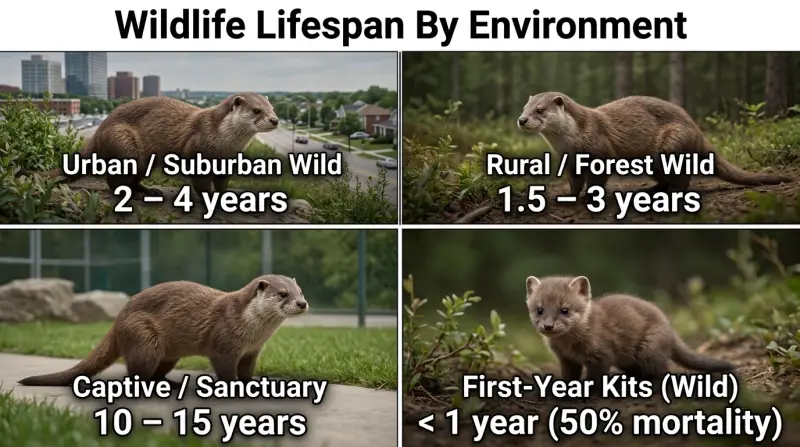
Raccoon Lifespan Chart and Comparative Demographics
- Wild vs. Captive Disparity: Wild raccoons average 2–3 years of life, while captive or protected raccoons regularly reach 15–20 years.
- High Juvenile Mortality: Up to 50% of kits do not survive their first year due to predation, harsh winters, and maternal abandonment.
- Urban vs. Rural Differences: Urban raccoons often experience higher survival rates in early years due to abundant food waste, but face severe risks from vehicle strikes.
- Disease Bottlenecks: Canine distemper, rabies, and raccoon parvovirus are primary population regulators that truncate wild lifespans.
- Maximum Recorded Age: While extremely rare in nature, wild raccoons have reached up to 16 years, with captive specimens reaching two decades.
To understand how long raccoons live, researchers break down longevity across different environments and life stages. The following table illustrates the dramatic differences in survival milestones between wild and captive populations.
| Environmental Setting | Average Lifespan | Maximum Recorded Age | Primary Mortality Factors |
|---|---|---|---|
| Urban / Suburban Wild | 2 – 4 years | 10 – 12 years | Vehicle collisions, pest control removal, domestic animal fights, poisoning. |
| Rural / Forest Wild | 1.5 – 3 years | 14 – 16 years | Predation (coyotes, owls), harsh winters, starvation, disease, hunting/trapping. |
| Captive / Sanctuary | 10 – 15 years | 18 – 20 years | Age-related organ failure, obesity, captive management issues. |
| First-Year Kits (Wild) | < 1 year (50% mortality) | N/A | Exposure, malnutrition, parasitic load, predation on dens. |
As detailed in the table above, the trajectory of a raccoon’s life shifts dramatically based on its proximity to human habitation and whether it enjoys protection from external hazards. Next, we examine the quantitative differences in survival probabilities through structured visual data.
Visualizing Raccoon Survival Rates Across Settings
The stark contrast between wild survival curves and protected captive longevity can be organized by age brackets. The chart below models the estimated percentage of a raccoon cohort surviving to specific age milestones in wild versus captive environments.
Estimated Cohort Survival (%) Over Time
Captive / Protected
Figure 1: Comparative cohort survival percentages over a 10-year span, highlighting the steep drop-off in unmanaged wild populations.
Biological Life Stages of the Raccoon
To accurately interpret any raccoon lifespan chart, one must examine the distinct developmental phases raccoons pass through from birth to senescence. Each stage introduces unique vulnerabilities and behavioral shifts.
1. The Kit Stage (Months 0–6)
Raccoons are born blind, deaf, and weighing only 60 to 75 grams. Litters typically range from two to five kits, born in hollow trees, rock crevices, or unauthorized urban spaces like attics and chimneys. During the first two months, kits rely entirely on maternal milk. Their eyes open around three weeks, and they begin exploring outside the den at approximately nine weeks. Mortality in this window is severe; sudden weather drops, maternal abandonment, or discovery by predators (such as owls, snakes, or male raccoons seeking to induce estrus in females) eliminate up to half of all born kits before their first winter.
2. Juvenile Independence (Months 6–12)
By late autumn, young raccoons are roughly adult size and have learned foraging techniques from their mother. However, their inexperience poses grave dangers. Fall and winter test their ability to accumulate sufficient subcutaneous fat reserves. While adult raccoons undergo torpor during extreme cold—sleeping for days or weeks at a time without entering true hibernation—inexperienced juveniles often forage inappropriately during freezing weather, leading to fatal exhaustion or hypothermia.
3. Prime Adulthood (Years 1–5)
Raccoons reach sexual maturity in their first year, with females typically breeding at one year of age. This window represents prime physical condition, characterized by peak foraging efficiency and territorial dominance. In the wild, however, prime adults face their highest cumulative exposure to anthropogenic hazards, including vehicular traffic, pest control trapping, and territorial fights.
4. Senior Years (Years 6+)
Reaching age six in the wild places a raccoon in the top tier of longevity. Dental wear becomes pronounced, reducing their ability to crunch hard seeds, process tough chitinous insects, or defend themselves against predators. Joint degradation, vision loss, and chronic parasite loads further compromise senior wild raccoons, sharply reducing their remaining life expectancy.
Environmental and Ecological Pressures Impacting Lifespan
The vast gap between wild and captive lifespans is governed by specific ecological pressure points. Raccoons are generalist omnivores possessing high reproductive rates—an evolutionary strategy designed to offset exceptionally high annual mortality.
Predation and Natural Enemies
In rural and semi-rural ecosystems, adult raccoons face predation from apex predators such as coyotes, bobcats, wolves, cougars, and great horned owls. While healthy adult raccoons can put up a fierce defense, injured, young, or elderly specimens are frequently preyed upon. In suburban areas, domestic dogs represent a frequent source of fatal conflict.
Anthropogenic Mortality (Human-Caused Hazards)
In modern landscapes, human activity is the single largest determinant of wild raccoon mortality:
- Vehicular Collisions: Roadways are major wildlife sinks. Nighttime foraging habits frequently intersect with high-speed traffic, resulting in instantaneous mortality for thousands of raccoons nightly.
- Pest Control and Trapping: Legal trapping seasons, nuisance wildlife removals, and homeowner extermination efforts account for a massive percentage of adult raccoon removal.
- Secondary Poisoning and Entanglement: Ingestion of rodenticides, discarded human medications, or entanglement in netting, fencing, and plastic containers shortens countless lives.
Disease and Parasitology
Epizootic disease outbreaks can decimate local raccoon populations overnight. Key pathogens include:
- Canine Distemper Virus (CDV): A severe viral infection affecting respiratory, gastrointestinal, and nervous systems, frequently fatal in raccoons.
- Rabies: A neurotropic virus that is universally fatal once clinical symptoms manifest.
- Raccoon Parvovirus (Feline Panleukopenia): Causes severe gastrointestinal distress and high mortality among kits.
- Parasites: Heavy loads of roundworms (Baylisascaris procyonis), tapeworms, fleas, and ticks weaken host immune systems, predisposing them to secondary infections.
Urban vs. Rural Raccoon Demographics
A frequent point of discussion in wildlife biology is whether urban raccoons live longer than their rural counterparts. The reality is nuanced.
Urban and suburban environments offer an unnaturally rich calorie source: unsecured garbage, pet food left outdoors, compost bins, and fruit trees. Because food is abundant and reliable, urban raccoon litters are often larger, and kit survival through the first winter is statistically higher than in food-scarce forests. Consequently, young urban raccoons have a higher baseline survival rate during their first year.
However, this survival advantage reverses as they age. Urban environments introduce severe density-dependent hazards. High concentrations of raccoons facilitate the rapid spread of diseases like distemper. , dense street grids, high-speed arterial roads, and direct conflicts with human residents (including pest management trapping and deliberate poisoning) create a high-risk ceiling. Very few urban raccoons survive past four or five years, whereas an exceptional rural forest raccoon inhabiting a large, low-density tract with minimal trapping pressure may occasionally reach 12 to 15 years.
Captive Raccoons: Reaching the 15-to-20-Year Milestone
When removed from the harsh equations of natural selection, malnutrition, predation, and vehicular trauma, raccoon physiology reveals a surprisingly robust constitution. In accredited zoos, wildlife sanctuaries, and lawful rehabilitation settings where release is impossible due to permanent injury or habituation, raccoons regularly live between 15 and 20 years.
Controlled environments eliminate the primary bottlenecks of wild existence:
- Veterinary Care: Prompt antibiotic treatment for infections, parasite eradication, and preventative vaccinations against distemper and rabies.
- Dietary Consistency: Biologically balanced diets preventing the starvation, nutritional deficiencies, and toxic ingestions common in the wild.
- Shelter and Protection: Complete immunity from severe winter weather extremes, starvation loops, and predatory attacks.
Despite these advantages, captivity introduces new physiological challenges. Captive raccoons are highly susceptible to obesity due to reduced physical exertion and unrestricted food access. Obesity cascades into secondary conditions such as diabetes, hepatic lipidosis, and severe joint arthritis, which require careful dietary management by handlers.
Common Misconceptions About Raccoon Age and Longevity
Because raccoons are ubiquitous, several persistent myths surround their lifespans and behavior:
- Myth: Backyard raccoons live 10+ years naturally. Homeowners often believe the raccoon visiting their deck every summer is the same individual living a decade-long suburban life. In reality, high urban turnover means subsequent generations or sibling groups frequently replace the original visitor, as individual wild lifespans rarely exceed 3 years.
- Myth: Raccoons hibernate like bears. While raccoons enter periods of metabolic depression and torpor during freezing weather—sometimes remaining denned up for weeks—they do not truly hibernate. They must wake to burn fat reserves and occasionally forage during winter thaws, making severe, prolonged cold snaps a major mortality driver.
- Myth: Keeping a wild raccoon as a pet extends its life safely. Aside from being illegal in most jurisdictions without specialized permits, raising a wild raccoon as a pet without proper veterinary care and species-specific nutrition often leads to metabolic bone disease, severe behavioral aggression upon sexual maturity, and premature mortality.
Frequently Asked Questions
In the wild, raccoons typically live between 2 and 3 years. High annual mortality rates caused by vehicular strikes, predation, disease, and harsh winter conditions prevent the vast majority of wild raccoons from reaching old age, though rare individuals survive up to 10–16 years.
Yes, but strictly in captivity. Protected environments such as wildlife sanctuaries, zoos, or specialized rescues remove natural predators, starvation risks, and infectious disease bottlenecks, allowing some raccoons to reach 15 to 20 years of age.
Vehicle collisions represent the single largest source of anthropogenic mortality for adult raccoons. For juveniles under one year old, cold exposure, maternal abandonment, disease outbreaks, and predation are the primary causes of death.
Urban raccoons often have higher survival rates during their first year due to abundant food waste. However, their overall life expectancy is often truncated by high-density disease transmission, vehicular traffic, and human-wildlife conflict, resulting in lifespans comparable to or shorter than rural counterparts.
Accurately determining a raccoon’s age requires biological analysis, such as examining tooth wear patterns or counting annular cementum growth layers in extracted teeth under a microscope. Externally, younger raccoons have sleek fur, playful behaviors, and smaller frames, while seniors show graying guard hairs, worn teeth, and joint stiffness.
Conclusion
The raccoon lifespan chart tells a story of remarkable biological adaptability clashing with relentless environmental friction. On one hand, Procyon lotor is an evolutionary success story—intelligent, prolific, and capable of thriving in humanity’s discarded margins. On the other hand, its existence in the wild is intensely compressed, with natural and human-made hazards cutting short the lives of most individuals before their third year. Whether viewed as resilient urban survivors or fragile victims of modern infrastructure, understanding their demographic reality is essential for effective wildlife management, humane coexistence, and conservation awareness.