
When restructuring a diet to support cardiovascular health, seafood is frequently recommended due to its rich supply of lean protein and essential omega-3 fatty acids. However, navigating the dietary cholesterol content of various marine species can quickly become confusing. Certain popular delicacies, such as shrimp and squid, contain markedly elevated levels of dietary cholesterol, leading many consumers to avoid them out of an abundance of caution. Understanding how different species compare on a seafood cholesterol chart requires distinguishing between dietary cholesterol—the sterols found within the food itself—and circulating blood cholesterol, which is heavily influenced by liver function, genetics, saturated fats, and systemic lifestyle factors.
This master guide examines the lipid profiles of finfish and shellfish, analyzes the latest clinical perspectives on dietary cholesterol, and breaks down exact milligram measurements per standard serving size. By looking past broad generalizations, you will learn how to balance heart-healthy omega-3 intake with precise cholesterol management.
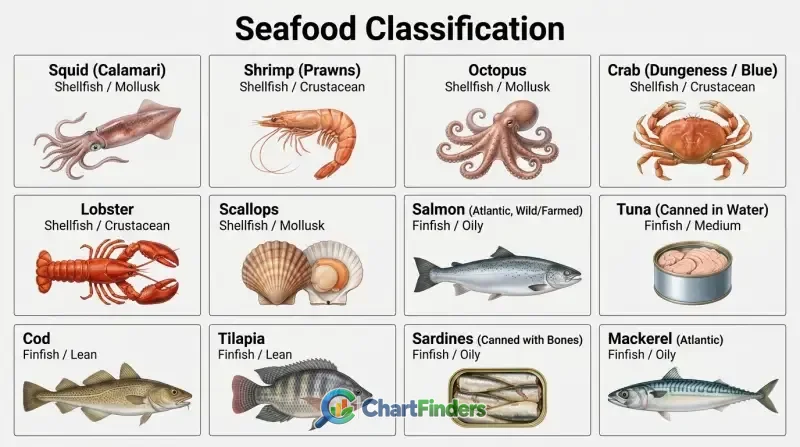
Seafood Cholesterol Chart
- Shellfish Discrepancy: Shrimp, squid, and octopus consistently rank at the top of the seafood cholesterol spectrum, though they remain very low in saturated fat.
- Finfish Stability: Most common finfish—such as salmon, cod, tilapia, and canned tuna—contain modest and safe levels of dietary cholesterol (typically 45–70 mg per 3-ounce serving).
- Dietary vs. Blood Cholesterol: Current 2026 cardiology guidelines stress that saturated fat intake and overall lifestyle drive blood LDL elevations far more aggressively than dietary cholesterol.
- Omega-3 Benefits: Fatty fish like salmon and mackerel provide high concentrations of EPA and DHA, which actively support endothelial function and reduce systemic inflammation.
- Preparation Matters: Deep frying, heavy butter sauces, and trans fats transform a heart-healthy seafood meal into a high-risk cardiovascular hazard.
To accurately evaluate the impact of different marine proteins on your dietary intake, you must examine standardized portions side by side. The following comprehensive reference details the cholesterol, saturated fat, and omega-3 content of popular seafood varieties based on a standard 3-ounce (85-gram) cooked serving.
| Seafood Type | Category | Cholesterol (mg) | Saturated Fat (g) | Omega-3 Fatty Acids (g) |
|---|---|---|---|---|
| Squid (Calamari) | Shellfish / Mollusk | 198 mg | 0.3 g | 0.2 g |
| Shrimp (Prawns) | Shellfish / Crustacean | 166 mg | 0.2 g | 0.3 g |
| Octopus | Shellfish / Mollusk | 103 mg | 0.4 g | 0.4 g |
| Crab (Dungeness / Blue) | Shellfish / Crustacean | 85 mg | 0.1 g | 0.3 g |
| Lobster | Shellfish / Crustacean | 72 mg | 0.1 g | 0.1 g |
| Scallops | Shellfish / Mollusk | 35 mg | 0.1 g | 0.2 g |
| Salmon (Atlantic, Wild/Farmed) | Finfish / Oily | 60 mg | 1.5 – 3.2 g | 1.5 – 2.2 g |
| Tuna (Canned in Water) | Finfish / Medium | 45 mg | 0.1 g | 0.2 – 0.5 g |
| Cod | Finfish / Lean | 48 mg | 0.1 g | 0.2 g |
| Tilapia | Finfish / Lean | 48 mg | 0.1 g | 0.1 g |
| Sardines (Canned with Bones) | Finfish / Oily | 131 mg | 1.5 g | 1.2 g |
| Mackerel (Atlantic) | Finfish / Oily | 63 mg | 1.0 g | 1.7 g |
When reviewing this data, observe that high cholesterol numbers do not automatically correlate with high saturated fat. This separation is crucial for understanding how the body processes these foods.
Decoding the Numbers: High vs. Low Cholesterol Species
The vast differences in cholesterol content across marine species stem from biological and anatomical variations. Crustaceans and mollusks utilize sterols differently than finfish. For instance, shrimp and squid have high concentrations of sterols in their cell membranes and tissues, pushing their dietary cholesterol readings well above 160 mg per standard 3-ounce portion. Historically, this caused widespread panic among individuals monitoring their lipid panels.
Conversely, finfish maintain a much tighter range. Whether you choose a lean white fish like cod or a rich, oil-dense swimming fish like salmon, the baseline cholesterol stays comfortably between 45 and 70 milligrams per serving. The lone finfish outlier is canned sardines with bones, which carry higher cholesterol and moderate saturated fat due to their nutrient-dense organs and fatty tissue profile, though they simultaneously deliver massive doses of protective omega-3 polyunsaturated fats.
The Science of Dietary Cholesterol vs. Blood Cholesterol
For decades, nutritional dogma dictated a strict ceiling on dietary cholesterol—often capped at 300 mg per day. Anyone looking at a seafood cholesterol chart and seeing shrimp at nearly 170 mg would immediately strike it from their grocery list. However, modern clinical cardiology has shifted its understanding of how ingested sterols impact systemic health.
How the Human Body Processes Dietary Sterols
When you consume foods containing cholesterol, your digestive tract absorbs only a fraction of it—typically between 20% and 50%. The liver acts as the master regulator of internal cholesterol homeostasis. If dietary intake drops, the liver synthesizes more cholesterol to meet cellular and hormonal demands. If dietary intake rises, the liver downregulates its internal production.
For roughly 75% of the population (termed “homeostatic responders” or non-hyperresponders), dietary cholesterol has a negligible impact on low-density lipoprotein (LDL) particle counts. For the remaining 25% (“hyperresponders”), dietary cholesterol can nudge blood markers upward, but even in this subgroup, saturated fats and trans fats remain the primary drivers of dangerous arterial plaque formation.
Saturated Fat: The Real Cardiovascular Culprit
The primary catalyst for elevated serum cholesterol is not dietary cholesterol itself, but saturated fat. Saturated fatty acids downregulate hepatic LDL receptors, meaning the liver clears fewer circulating LDL particles from the bloodstream, allowing them to oxidize and form atherosclerotic plaques.
This is where seafood shines as a dietary staple. Even species with high dietary cholesterol—such as shrimp, crab, and squid—feature remarkably low saturated fat levels (typically under 0.4 grams per serving). Compare this to a standard ribeye steak or a processed breakfast sausage, which combine high saturated fat with moderate cholesterol, and the cardiovascular distinction becomes clear.
Nutritional Profiles of Major Seafood Categories
To construct an optimal meal plan, you must look beyond raw cholesterol numbers and evaluate the broader nutritional landscape of different seafood categories. Each group offers distinct advantages and trade-offs.
1. Crustaceans (Shrimp, Crab, Lobster)
Crustaceans are prized for their clean protein-to-calorie ratio. While shrimp and prawns score high on the cholesterol chart, they are virtually devoid of saturated fat and provide valuable micronutrients such as selenium, zinc, and vitamin B12. , shrimp contain astaxanthin, a potent carotenoid antioxidant that gives them their pink hue and provides anti-inflammatory benefits.
2. Mollusks (Squid, Octopus, Scallops)
Mollusks display a wide variance. Scallops are remarkably low in cholesterol (roughly 35 mg per serving) and fat, making them an effortless addition to heart-conscious menus. Squid and octopus sit on the opposite end of the cholesterol scale. However, when prepared without heavy industrial seed oils or deep-frying batter, their overall impact on lipid profiles remains benign for the average consumer.
3. Oily Finfish (Salmon, Mackerel, Sardines)
Fatty fish are the undisputed champions of cardiovascular nutrition. While they contain moderate amounts of cholesterol, their heavy concentrations of eicosapentaenoic acid (EPA) and docosahexaenoic acid (DHA)—the primary omega-3 fatty acids—help lower triglyceride levels, reduce blood pressure, and stabilize heart rhythms. Current cardiology guidelines strongly advocate for eating at least two servings of fatty fish per week.
4. Lean Finfish (Cod, Tilapia, Halibut)
Lean white fish are ideal for individuals who require high-quality protein without excess calories or heavy fats. Their cholesterol levels are modest, and their saturated fat content is practically zero. They serve as blank canvases for nutrient-dense preparations involving olive oil, fresh herbs, and citrus.
Practical Guidelines for Heart-Healthy Seafood Selection
Knowing the data on a seafood cholesterol chart is only half the battle; how you source, prepare, and integrate these foods dictates your long-term health outcomes. Implementing practical selection criteria prevents common dietary pitfalls.
Evaluating Cooking Methods
The health profile of any seafood dish can be instantly altered by preparation techniques. Consider the following structural differences:
- Heart-Healthy Methods: Poaching, steaming, baking, grilling, and raw preparations (such as sashimi or ceviche) preserve delicate omega-3 bonds and avoid adding harmful fats.
- Cardiovascular Hazards: Deep-frying in hydrogenated oils, heavy cream reductions, and drowning lean fish in butter or processed cheese sauces introduce massive amounts of trans and saturated fats, entirely neutralizing the natural benefits of the seafood.
Balancing Frequency and Variety
Variety is essential when managing nutritional intake. Rather than fixating on eliminating high-cholesterol options entirely, focus on rotation:
- Incorporate fatty fish (salmon, sardines) 2 to 3 times weekly to maximize omega-3 intake.
- Enjoy crustaceans and mollusks moderately as part of a vegetable-heavy, fiber-rich diet.
- Pair seafood with high-fiber whole grains, leafy greens, and legumes, which actively assist in binding and excreting cholesterol through the digestive tract.
Common Mistakes and Misconceptions
Misunderstandings surrounding seafood and lipids persist in both public perception and clinical settings. Avoiding these common errors ensures your dietary choices align with current medical evidence.
Mistake 1: Avoiding All Shellfish Due to Cholesterol Phobia
Many patients completely banish shrimp and crab from their diets based solely on old nutritional charts. Because these foods contain negligible saturated fat, eliminating them deprives you of lean protein, iodine, and trace minerals without meaningfully improving your blood lipid panel.
Mistake 2: Confusing Fried Seafood with Fresh Seafood
A fried basket of calamari or battered fish carries a completely different metabolic consequence than grilled or baked preparations. Attributing negative blood marker shifts to the seafood itself, rather than the frying oil and refined carbohydrates, is a frequent error.
Mistake 3: Ignoring Individual Genetic Variability
While dietary cholesterol has a modest impact for most people, hyperresponders do exist. If your routine blood work reveals a sharp, unexplained spike in LDL-C after dramatically increasing your intake of high-cholesterol shellfish, consulting a physician or registered dietitian to assess your specific genetic response is the most prudent course of action.
Frequently Asked Questions
For the vast majority of people, eating shrimp does not significantly raise blood cholesterol. While shrimp is high in dietary cholesterol, it is very low in saturated fat. Because saturated fat is the primary dietary driver of blood LDL, eating shrimp typically has a neutral effect on circulating cholesterol levels.
Scallops, tilapia, cod, and canned tuna in water rank among the lowest options on the seafood cholesterol chart. Most standard 3-ounce servings of these varieties contain between 35 and 48 milligrams of cholesterol while maintaining virtually zero saturated fat.
No. Omega-3 fatty acids (EPA and DHA) are beneficial polyunsaturated fats that operate independently of dietary cholesterol. High-omega-3 fish like salmon and mackerel contain moderate cholesterol alongside powerful anti-inflammatory and cardioprotective lipid profiles.
Squid sits near the top of the seafood cholesterol spectrum, containing roughly 198 mg of cholesterol per 3-ounce serving. However, like shrimp, its saturated fat content is extremely low (around 0.3 grams), meaning it does not pose the same cardiovascular risk as foods high in both cholesterol and saturated fat.
Recent guidelines emphasize that dietary cholesterol has a minor impact on blood cholesterol compared to saturated fat intake and overall lifestyle factors. Major health organizations advocate for plant-forward diets rich in fiber alongside regular consumption of fish high in omega-3 fatty acids for optimal heart health.
Conclusion
Navigating the nuances of a seafood cholesterol chart reveals that dietary cholesterol numbers alone do not tell the whole story. While species like squid, shrimp, and fish roe exhibit high levels of dietary sterols, their lack of saturated fat and the presence of vital nutrients mean they can safely fit into a balanced, heart-conscious lifestyle for most individuals. By prioritizing healthy cooking methods, focusing on fatty fish rich in omega-3s, and maintaining a fiber-rich, plant-forward overall diet, you can successfully the exceptional nutritional benefits of seafood while safeguarding your cardiovascular health.