
The study of green algae spans billions of years of evolutionary history, establishing these organisms as the evolutionary ancestors of all land plants (Embryophytes). Far from being a simple, uniform group of pond scum, green algae exhibit staggering morphological, physiological, and ecological diversity. They populate snowfields, desert crusts, high-salinity lakes, and deep marine trenches, adapting through distinct life cycles and cellular architectures. Understanding these species requires looking beyond superficial resemblances to examine ultrastructural features, cell wall compositions, and molecular phylogenetics.
In recent years, practical interest in green algae has surged beyond basic ecology into industrial biotechnology, wastewater bioremediation, nutritional supplements, and cosmetic formulations. Concurrently, environmental managers closely monitor freshwater green algae and associated cyanobacterial interactions to safeguard public health against harmful algal blooms (HABs). This master guide explores the taxonomy, morphology, ecological roles, monitoring protocols, and industrial applications of green algae species.
Explore our detailed breakdown on Sea Bean Identification Chart [Master Comparison Chart].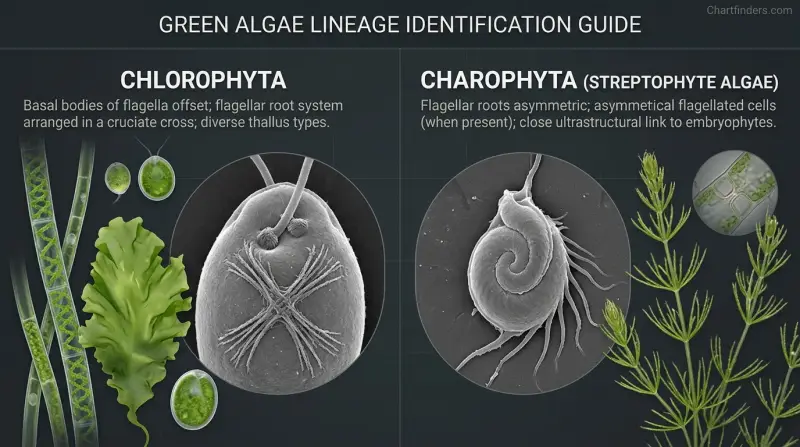
Green Algae Species: Taxonomy, Diversity, and Evolutionary Significance
- Green algae are divided into two main evolutionary lineages: Chlorophyta (the vast majority of marine and freshwater green microalgae and seaweeds) and Charophyta (streptophyte algae closely related to land plants).
- Cellular replication varies widely, encompassing unicellular flagellates, colonial aggregates, non-motile coccoid forms, filamentous strands, and complex parenchymatous macroalgae.
- Pigmentation relies primarily on chlorophyll $a$ and $b$, masking accessory carotenoids, with energy stored internally as true starch grains inside chloroplasts.
- Ecological distribution spans extreme habitats, including psychrophilic snow algae, endolithic desert communities, and ubiquitous freshwater plankton.
- Industrial applications leverage high lipid, protein, and secondary metabolite yields for biofuels, nutraceuticals, aquaculture feed, and cosmetics.
Taxonomically, the green algae—traditionally grouped informally as “green algae”—are polyphyletic when considering the entire plant kingdom, but form two distinct monophyletic sub-phyla or lineages under the green plant clade (Viridiplantae): Chlorophyta and Streptophyta (which includes the Charophyte algae and land plants). Distinguishing between these groups relies heavily on ultrastructural details of cell division (such as the presence of phycoplasts versus phragmoplasts) and the architecture of flagellated reproductive cells.
| Taxonomic Lineage | Key Structural Features | Cell Division Mechanism | Representative Genera | Primary Habitats |
|---|---|---|---|---|
| Chlorophyta | Basal bodies of flagella offset; flagellar root system arranged in a cruciate cross; diverse thallus types. | Phycoplast (microtubules run parallel to the plane of division); nuclear envelope often persists. | Chlamydomonas, Chlorella, Ulva, Scenedesmus | Marine, freshwater, terrestrial, symbioses (lichens). |
| Charophyta (Streptophyte Algae) | Flagellar roots asymmetric; asymmetrical flagellated cells (when present); close ultrastructural link to embryophytes. | Phragmoplast (microtubules perpendicular to division plane, guiding cell plate formation); open mitosis. | Chara, Nitella, Spirogyra, Closterium | Predominantly freshwater ponds, lakes, wetlands, and damp soils. |
The table above highlights the foundational divergence within green plants. While Chlorophyta dominate marine environments and planktonic freshwater niches, Charophyta display structural innovations—such as apical growth and complex gametangia seen in stoneworts—that mirror early land plant evolution.
Major Morphological Forms of Green Algae
Green algae exhibit every major level of vegetative organization short of true vascular tissue. This morphological plasticity allows different species to exploit radically different hydrodynamic and light environments.
- Unicellular Motile: Organisms like Chlamydomonas possess two or more anterior whip-like flagella, a contractile vacuole for osmoregulation, and a light-sensitive eyespot (stigma) that directs positive or negative phototaxis.
- Unicellular Non-Motile (Coccoid): Genera such as Chlorella lack flagella entirely, maintaining a rigid cellulosic cell wall and reproducing via internal autospores.
- Colonial: Species like Volvox form spherical or planar aggregates of hundreds to thousands of somatic and reproductive cells cooperating within a gelatinous matrix.
- Filamentous: Unbranched or branched chains of cells connected end-to-end, such as Spirogyra (noted for its spiral ribbon-like chloroplasts) and Cladophora.
- Siphonous / Coenocytic: Large, multinucleate cells lacking internal cross-walls (septa), exemplified by marine bubble algae like Valonia or fern-like Caulerpa.
- Parenchymatous (Macrophytic): Multicellular thalli with true 2D or 3D cellular expansion, such as the marine sea lettuce (Ulva).
Cellular Ultrastructure and Biochemistry
At the biochemical level, green algae share several diagnostic features with higher plants. Their photosynthetic apparatus utilizes chlorophyll $a$ and chlorophyll $b$ to harvest light energy, reflecting green wavelengths while absorbing blue and red light. Accessory pigments such as $beta$-carotene and various xanthophylls protect the photosynthetic machinery from high-intensity photoinhibition.
Unlike red algae or brown algae—which store carbohydrates outside the chloroplast as floridean starch or laminarin—green algae synthesize true starch directly inside their specialized plastids (chloroplasts) surrounding structures called pyrenoids, which are dense proteinaceous centers rich in the carbon-fixing enzyme Rubisco.
The cell wall is another defining characteristic. While variable across taxa, most green algal cell walls contain a crystalline skeleton of microfibrillar cellulose embedded in a matrix of hemicelluloses, pectins, and glycoproteins. Certain marine orders (such as Dasycladales and Codiales) incorporate calcium carbonate or xylans into their walls, providing structural rigidity against herbivory and wave action.
Comparative Analysis: Green Algae vs. Red Algae vs. Brown Algae
To fully contextualize green algae species, it is essential to compare them with the other major groups of multicellular and macroscopic marine algae (Rhodophyta and Phaeophyceae). Although all three groups contain photosynthetic pigments, their evolutionary origins, biochemical reserves, and cellular architectures differ profoundly.
| Feature | Green Algae (Chlorophyta & Charophyta) | Red Algae (Rhodophyta) | Brown Algae (Phaeophyceae) |
|---|---|---|---|
| Primary Pigments | Chlorophyll $a$ and $b$, $beta$-carotene | Chlorophyll $a$, phycobilins (phycoerythrin, phycocyanin) | Chlorophyll $a$ and $c$, fucoxanthin |
| Carbohydrate Storage | True starch inside chloroplasts | Floridean starch outside chloroplasts | Laminarin and mannitol in vacuoles |
| Cell Wall Composition | Cellulose, hemicellulose, pectins | Cellulose, agar, carrageenan, xylans | Cellulose, alginic acid (alginate), fucans |
| Flagellated Cells | Present in reproductive stages (typically 2 or 4 anterior whiplash flagella) | Completely absent across all life cycle stages | Present in zoospores and gametes (2 lateral heterokont flagella) |
| Dominant Habitat | Freshwater, terrestrial, and shallow marine | Deep marine, tropical to polar | Cool marine waters, intertidal to subtidal zones |
Ecological Distribution and Environmental Dynamics
Green algae occupy virtually every ecosystem where liquid water and sunlight coexist. Their ecological impact ranges from primary production at the base of aquatic food webs to complex symbioses and extreme-environment adaptations.
Aquatic Habitats: Freshwater and Marine Ecosystems
In freshwater ecosystems, planktonic green algae (chlorococcalean species like Scenedesmus and Pediastrum) coexist with diatoms and cyanobacteria, driving seasonal pulses of primary productivity. Benthic filamentous forms attach to submerged rocks, logs, or aquatic macrophytes, sometimes forming dense mats during spring and summer.
Marine green algae are predominantly benthic, inhabiting the intertidal and shallow subtidal zones where intense solar radiation matches their pigment profile. Genera like Ulva and Enteromorpha display high tolerance to salinity fluctuations and nutrient enrichment, frequently dominating disturbed coastal zones.
Terrestrial, Extreme, and Symbiotic Niches
Beyond open water, green algae have mastered marginal terrestrial habitats:
- Subaerial and Soil Crusts: Microscopic green algae (such as Trentepohlia, which often appears orange due to secondary carotenoid accumulation) coat tree bark, concrete walls, and damp soils, forming biological soil crusts that prevent erosion in arid landscapes.
- Cryophilic (Snow) Algae: Species like Chlamydomonas nivalis thrive in sub-zero snowfields. Accumulating red astaxanthin pigments to shield against intense UV radiation, they create visually striking “watermelon snow” phenomena in alpine and polar regions.
- Endolithic Communities: Certain species inhabit microscopic pore spaces inside rocks in hyper-arid deserts, surviving on trace condensation.
- Lichens and Invertebrate Symbiosis: Green algae frequently serve as the photobiont partner in lichens (e.g., Trebouxia associating with fungal partners) and establish intracellular symbioses within freshwater ciliates (Paramecium bursaria) and cnidarians (such as green Hydra).
Monitoring, Water Quality, and Harmful Algal Bloom (HAB) Context
While most green algae species are harmless or beneficial, nutrient pollution (nitrogen and phosphorus loading from agriculture, wastewater, and urban runoff) can trigger explosive population growth. In freshwater management, distinguishing between benign green algal proliferations and toxic cyanobacterial blooms (often historically termed “blue-green algae”) is a central operational priority.
Modern monitoring protocols, aligned with frameworks established by organizations like the World Health Organization (WHO) and regional environmental agencies, rely on systematic surveillance:
- Visual and Field Assessment: Evaluating water discoloration, surface scums, and foam accumulation. While dense green algae often form bright green, paint-like surface mats or filamentous clouds, toxic cyanobacteria (such as Microcystis) frequently present as blue-green, pea-soup discoloration with surface flecks.
- Fluorometric and Sensor Tracking: Deploying sondes measuring chlorophyll-a fluorescence, phycocyanin (specific to cyanobacteria), turbidity, and dissolved oxygen to detect impending bloom dynamics.
- Alert Level Frameworks: Utilizing tiered monitoring protocols (such as routine fortnightly surveillance at vulnerable water bodies) to trigger public health advisories when biovolume thresholds or microcystin/cylindrospermopsin toxin concentrations exceed safe recreational guidelines.
| Parameter / Feature | Benign Green Algae Blooms (Chlorophyta) | Toxic Cyanobacterial Blooms (“Blue-Green Algae”) |
|---|---|---|
| Dominant Taxa | Cladophora, Spirogyra, Microspora, Chlorella | Microcystis, Dolichospermum, Anabaena, Cylindrospermopsis |
| Visual Appearance | Vibrant grass-green mats, hair-like filaments, or uniform green water column. | Blue-green, turquoise, pea-soup turbidity, or spilled-paint surface scums. |
| Primary Toxin Risk | Generally non-toxic; primary risk is anoxia and aesthetic degradation upon decay. | High risk of hepatotoxins (microcystins), neurotoxins (anatoxins), and cytotoxins. |
| Management Response | Nutrient reduction, mechanical harvesting, targeted aeration. | Immediate recreational closures, drinking water treatment adjustments, toxin assay testing. |
Industrial Biotechnology, Nutrition, and Commercial Applications
The metabolic efficiency and rapid growth rates of green microalgae have made them focal points of industrial biotechnology. Cultivated in open raceway ponds or closed photobioreactors, select green algae species yield high-value biochemicals.
- Nutraceuticals and Human Nutrition: Chlorella and Haematococcus pluvialis are cultivated globally. Chlorella is rich in complete proteins, vitamins, and dietary fiber. Haematococcus pluvialis serves as the premier commercial source of astaxanthin, a potent keto-carotenoid antioxidant used in dietary supplements and functional foods.
- Aquaculture Feed: Microalgal species like Tetraselmis and Dunaliella salina provide essential fatty acids (EPA, DHA), carotenoids, and vitamins vital for rearing rotifers, crustaceans, and larval fish.
- Cosmetics: Extracts from green macroalgae (such as Ulva lactuca polysaccharides) and microalgae are integrated into topical formulations for skin hydration, photo-protection, and anti-aging properties.
- Biofuels and Bioplastics: Oleaginous green microalgae store substantial quantities of neutral lipids (triacylglycerols) under nutrient stress, positioning them as promising candidates for third-generation biodiesel and renewable bioplastics feedstock, though economic scaling remains an active area of research.
Common Identification Challenges and Field Misconceptions
Accurately identifying green algae species often presents hurdles for field researchers and water resource managers due to morphological convergence and complex life cycles.
Microscopic Confusion with Cyanobacteria: Untrained observers frequently mistake colonial green microalgae (such as Coelastrum or Pediastrum) for toxic colonial cyanobacteria. Microscopic examination is essential to verify the presence of true chloroplasts and nuclear membranes, which cyanobacteria (prokaryotes) lack.
Seasonal Polymorphism: Many green algae undergo heteromorphic life cycles, alternating between unicellular flagellated zoospores, sessile vegetative filaments, and resting zygospores. A single species can appear morphologically distinct depending on environmental triggers such as temperature, nitrogen availability, and photoperiod.
Biofouling and Epiphytic Overgrowth: Filamentous green algae frequently grow epiphytically upon larger aquatic plants or submerged infrastructure, masking underlying macrophyte communities and complicating ecological status assessments.
Frequently Asked Questions
Most green algae species (such as Cladophora or Spirogyra) are non-toxic and safe for recreational contact. However, rotting mats of decomposing algae can harbor opportunistic bacteria that cause skin irritation or gastrointestinal illness if ingested. , green algal blooms often co-occur with or are mistaken for toxic cyanobacterial blooms, making visual confirmation essential before entering natural water bodies.
Green algae (Chlorophyta and Charophyta) store energy as true starch inside their chloroplasts, possess chlorophyll $a$ and $b$, and build cell walls primarily of cellulose. Red algae (Rhodophyta) utilize floridean starch storage, phycobilin accessory pigments, and sulphated galactans in their cell walls. Brown algae (Phaeophyceae) store laminarin/mannitol, utilize fucoxanthin accessory pigments, and inhabit predominantly marine, cooler waters.
Yes, species like Chlorella and Spirulina (though Spirulina is technically a cyanobacterium) are commonly cultivated in home bioreactors or controlled indoor kits. However, commercial production requires strict sterile controls, pH regulation, and heavy metal testing to ensure the harvested biomass is free from environmental contaminants and pathogenic microbial growth.
When sunlight, warm temperatures, and high concentrations of dissolved nitrogen and phosphorus coincide, green microalgae undergo rapid exponential division. Because their cells contain abundant chlorophyll $a$ and $b$, dense concentrations scatter and reflect green light while absorbing other visible spectra, turning the water a vivid, opaque green.
Charophyte green algae are recognized as the direct evolutionary sister group to all land plants (Embryophytes). Molecular phylogenetics and structural homologies—such as phragmoplast-mediated cell division, plasmodesmata connections, and specific sperm ultrastructure—demonstrate that terrestrial plants evolved from freshwater ancestral charophyte algae over 500 million years ago.
Conclusion
Green algae species represent a remarkable intersection of evolutionary history, ecological ubiquity, and modern industrial utility. From microscopic flagellates drifting in alpine snowpacks to complex seaweeds shaping intertidal marine ecosystems, these organisms demonstrate exceptional physiological adaptability. As environmental monitoring protocols refine their detection of water quality shifts and biotechnologists unlock new applications in nutrition and sustainable energy, a thorough understanding of green algae taxonomy, ecology, and biochemistry remains vital for both environmental stewardship and scientific innovation.