
Understanding the life expectancy of Earth’s most iconic apex predator requires looking far beyond a single flat number. While a casual glance at wildlife statistics might suggest a neat decade or a decade-and-a-half of existence, the reality of a lion’s life is defined by dramatic divergence between protected sanctuary settings and the harsh, brutal realities of the African savanna or shrinking wild ranges. A complex web of social structures, sex-specific vulnerabilities, territorial warfare, and environmental pressures governs how long these magnificent cats survive.
(Reference: Lion | Smithsonian's National Zoo and Conservation Biology Institute)In this comprehensive analysis, we examine the quantitative and qualitative factors shaping the lion lifespan chart. By breaking down the survival curves of wild coalitions versus captive prides, analyzing the primary mortality drivers across different life stages, exploring paleogenomic insights into prehistoric and modern longevity, and comparing lion longevity with other big cats, we provide an authoritative reference for field researchers, wildlife conservationists, and nature enthusiasts alike.
Explore our detailed breakdown on Quokka Lifespan Chart.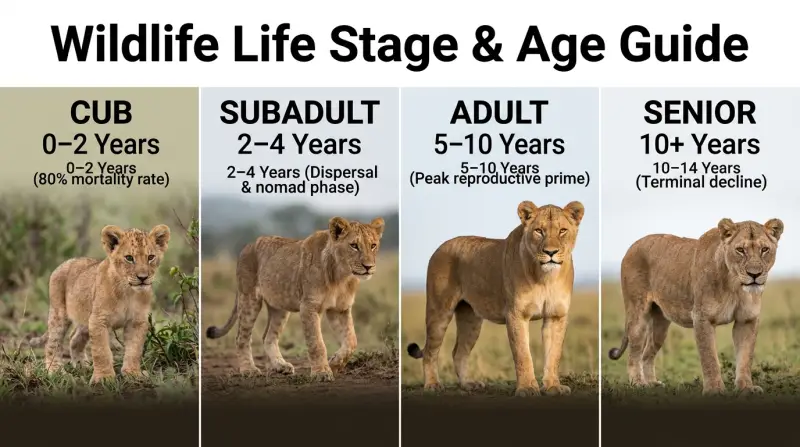
Lion Lifespan Chart
- Wild vs. Captive Disparity: Wild lions average 10–14 years of life, whereas protected captive specimens frequently reach 15–20+ years.
- Sex-Based Survival Gap: Female lions (lionesses) generally live longer than males because they avoid the high-stakes, fatal territorial combat typical of nomadic and resident male coalitions.
- High Infant Mortality: Up to 80% of lion cubs fail to reach two years of age, victims of starvation, infanticide by incoming coalition males, and predation by hyenas or leopards.
- Primary Cause of Death: Unlike many animals that succumb primarily to old age or disease, adult wild lions are predominantly killed by other lions during territorial defense.
- Comparative Longevity: While wild lion and tiger lifespans overlap significantly (10–15 years), captive tigers often exceed captive lions by several years due to the absence of social coalition stress.
The following reference matrix outlines the core biological parameters, survival milestones, and environmental variables that dictate the typical lifespan arc of Panthera leo across its various life stages and living conditions.
| Life Stage | Wild Lifespan / Timeline | Captive Lifespan / Timeline | Primary Mortality Factors |
|---|---|---|---|
| CUB (0–2 Years) | 0–2 Years (80% mortality rate) | 0–2 Years (Low mortality under veterinary care) | Infanticide, starvation, disease, hyena/leopard predation |
| SUBADULT (2–4 Years) | 2–4 Years (Dispersal & nomad phase) | 2–4 Years (Growth & socialization) | Starvation during clumsy hunting, injuries from prey, nomadic conflict |
| ADULT (5–10 Years) | 5–10 Years (Peak reproductive prime) | 5–15 Years (Prime breeding years) | Territorial battles, severe trauma, poaching, human-wildlife conflict |
| SENIOR (10+ Years) | 10–14 Years (Terminal decline) | 15–20+ Years (Managed geriatric care) | Tooth wear/starvation, organ failure, arthritis, natural senescence |
Interpreting Longevity Trends: Wild Versus Captive Realities
When examining a standard lion lifespan chart, the most striking variable is the stark chasm between wild and captive environments. In the wild, a lion’s life is governed by natural selection, resource scarcity, and constant physical conflict. A wild lion reaching 14 years of age is considered exceptionally old, comparable to a human reaching advanced centenarian status given the physical trauma they endure daily.
Conversely, captive lions housed in accredited zoos, wildlife sanctuaries, and conservation centers are shielded from the primary engines of wild mortality. Without the need to hunt for survival, compete for fractured territories, or defend against rival coalitions, captive lions routinely push past the 15-year mark, with exceptional individuals crossing into their late teens and early twenties. However, this longevity comes with managed trade-offs, including captive-specific health challenges such as obesity, joint degradation from reduced roaming ranges, and age-related kidney or cardiac failure.
The Sexual Longevity Gap: Why Lionesses Outlive Males
A critical nuance often obscured in generalized lifespan summaries is the pronounced demographic divide between males and females. Lionesses consistently outlive males in the wild by several years.
The core reason for this discrepancy lies in social structure and territorial defense. Male lions spend their lives fighting for dominance over prides or operating in nomadic coalitions where every interaction with rival males is a potential battle to the death. Serious puncture wounds, bone fractures, and subsequent infections sustained during territorial defense cut short the lives of countless prime-age males. , when a male coalition is overthrown by a younger, stronger rival group, the ousted former rulers are frequently driven out, starved, or hunted down and killed by the new coalition.
Lionesses, by contrast, form the stable genetic core of the pride. While they do participate in territorial defense against rival prides, their engagement in lethal combat is significantly lower than that of males. Their primary focus—hunting, cub-rearing, and maintaining social cohesion—presents fewer acute, fatal trauma risks, allowing them to push closer to the physiological ceiling of wild feline longevity.
Detailed Breakdown of Lion Life Stages
1. The Vulnerable Infancy (Ages 0 to 2)
The lion lifespan chart begins with a grim statistic: four out of every five cubs born in the wild will not live to see their second birthday. Cub mortality is driven by several interrelated pressures:
- Infanticide: When a new coalition of male lions successfully takes over a pride, they routinely kill all unweaned cubs sired by their predecessors. This forces the resident lionesses back into estrus quickly, allowing the new males to propagate their own genetics.
- Starvation: If hunting is poor or the mother is separated from the pride, cubs lack the fat reserves to survive more than a few days without food.
- Predation: Spotted hyenas, leopards, wild dogs, and pythons actively target unattended dens.
2. The Nomadic and Subadult Struggle (Ages 2 to 4)
As cubs transition into subadults, males are eventually forced out of their natal pride to live a nomadic existence, while females typically remain. Nomadic subadults face immense peril. They are inexperienced hunters, often failing to bring down large ungulates like buffalo or zebras independently. They must constantly evade resident pride males who view them as dangerous interlopers. This phase is characterized by malnourishment and frequent injuries.
3. The Prime Years (Ages 5 to 10)
For individuals that survive the crucible of youth, ages 5 to 10 represent the absolute prime of a lion’s life. Males are at peak muscular weight, sporting full, dark manes that signal health and hormonal vigor to potential mates and rivals alike. Females are experienced hunters, serving as the strategic anchors of the pride. Yet, even in prime condition, the physical toll is cumulative. Scars accumulate, old fractures ache, and minor hunting injuries can become chronic handicaps.
4. Senior Status and Natural Senescence (Ages 10 to 14+)
Entering the double-digit years marks senior status for a wild lion. For males, this phase usually means being deposed by a younger coalition. A lone, aging male forced into nomadism faces rapid decline; unable to hunt efficiently or defend a kill from hyenas, he starves or succumbs to injuries. For females, senior status brings dental wear. As canine teeth wear down or break, hunting large prey becomes agonizing and inefficient, leading to progressive physical deterioration.
Evolutionary and Paleogenomic Perspectives on Lion Longevity
Modern studies into the evolutionary history of lions—including paleogenomic analyses comparing modern lions (Panthera leo) with extinct Pleistocene cave lions (Panthera spelaea)—reveal that mammalian aging mechanisms within the Panthera lineage are deeply conserved. While prehistoric cave lions faced even harsher megafaunal prey dynamics and extreme climatic shifts during the Ice Age, their physiological architecture shared the same vulnerability to trauma, dental attrition, and social competition that caps modern lion life expectancy today. Evolutionary adaptations ensure that wild lions invest heavily in rapid reproductive maturity during their prime years rather than prolonged post-reproductive senescence.
Comparative Longevity: Lions Versus Other Big Cats
Placing the lion lifespan chart into a broader ecological context reveals how social organization influences aging across the Panthera genus.
| Species | Wild Lifespan Average | Captive Lifespan Average | Primary Longevity Limiting Factor |
|---|---|---|---|
| Lion (Panthera leo) | 10–14 Years | 15–20+ Years | Inter-coalition warfare, territorial trauma |
| Tiger (Panthera tigris) | 10–15 Years | 20–26 Years | Prey scarcity, human-wildlife conflict |
| Jaguar (Panthera onca) | 11–15 Years | 15–20 Years | Habitat fragmentation, human retaliation |
| Leopard (Panthera pardus) | 12–17 Years | 18–23 Years | Interspecific competition with lions/tigers |
As detailed in the comparative matrix, tigers frequently outlive lions in captivity—sometimes reaching 25 or 26 years of age. Because tigers are solitary animals, they do not engage in the brutal, coalition-based warfare that characterizes male lion behavior and systematically shortens their lifespans. Without the constant threat of being violently overthrown by peer rivals, captive tigers experience lower chronic stress and physical trauma over their life cycles.
External Threats Impacting Wild Lion Longevity
Natural senescence—dying of old age—is a rare luxury in the wild. The vast majority of lions have their lives cut short by anthropogenic (human-induced) and ecological pressures:
- Human-Wildlife Conflict: As agricultural expansion encroaches on traditional lion ranges, pastoralists frequently target lions using retaliatory poisoning, spearing, or shooting to protect livestock.
- Poaching and Snares: Indiscriminate wire snares set for bushmeat capture lions, leading to slow deaths from infection, dehydration, or starvation.
- Disease Outbreaks: Canine distemper virus (CDV) and feline immunodeficiency virus (FIV), often transmitted via domestic dogs near human settlements, can decimate entire lion populations rapidly, wiping out specific age cohorts.
- Habitat Fragmentation: Inbreeding depression caused by isolated populations reduces genetic diversity, which can manifest in lower disease resistance and physical abnormalities that shorten life expectancy.
Frequently Asked Questions
While wild lions rarely exceed 14 to 16 years of age, captive lions under optimal veterinary care have been documented living up to 24 or even 25 years, though such longevity is highly exceptional.
Male lions face significantly higher mortality risks due to violent territorial battles with rival coalitions. Ousted nomadic males and aging former pride rulers frequently suffer fatal injuries or starvation because they lack the collective support of a pride.
Lions reach physical and social maturity around 4 to 5 years of age. Their absolute prime—characterized by peak strength, reproductive dominance, and optimal hunting capability—typically spans from age 5 to age 10.
Rarely. Most wild lions die from violent trauma inflicted by other lions, severe injuries sustained while hunting dangerous prey like cape buffalo, human-wildlife conflict, or starvation resulting from broken teeth and declining physical condition.
Larger, well-established prides with strong male coalitions are better equipped to defend territory, secure regular food resources, and protect cubs from predators and infanticidal intruders, thereby supporting higher overall survival rates across the group.
Conclusion
The lion lifespan chart is ultimately a reflection of ecological trade-offs, social dynamics, and environmental pressures. While a protected captive environment allows lions to reach their physiological limits well into their late teens or twenties, the wild lifespan of 10 to 14 years is earned through continuous struggle against rival coalitions, prey scarcity, and human encroachment. Understanding these dynamics is essential not only for biological appreciation but for designing effective conservation strategies that safeguard the future of these apex predators across their dwindling African and Asian ranges.