
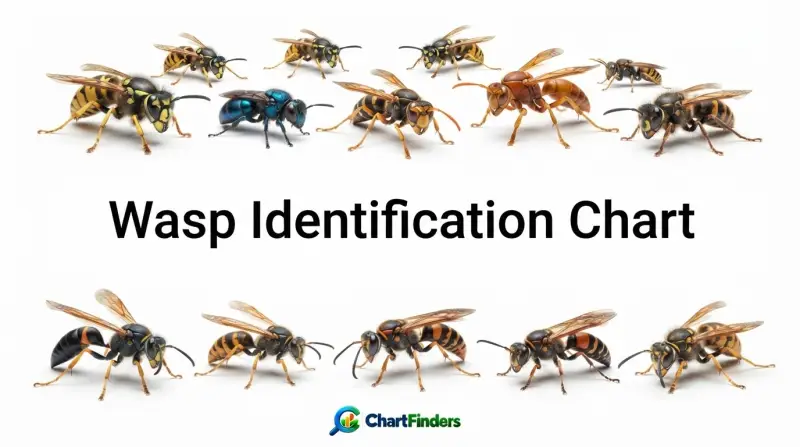
A wasp identification chart is a visual and descriptive diagnostic guide used to distinguish between social and solitary wasp species, such as yellowjackets, paper wasps, hornets, and mud daubers. Accurate identification relies on examining physical traits (body shape, color patterns, waist structure), nest architecture, and seasonal behavioral patterns. This differentiation is critical for effective urban pest management, environmental conservation, and human safety.
Urban pest management requires split-second decisions based on accurate species identification. Treating a subterranean yellowjacket colony requires entirely different protocols, personal protective equipment (PPE), and application strategies than removing an aerial paper wasp nest or leaving a beneficial solitary mason wasp undisturbed. Misidentifying a beneficial pollinator as an aggressive social pest leads to unnecessary pesticide applications and ecological harm, while treating aggressive species with amateur methods risks severe stings, anaphylaxis, and property liability.
Understanding the structural morphology, nesting habits, and defensive triggers of local wasps transforms a dangerous guessing game into a systematic, strategic operation. This master reference guide provides professional-grade identification criteria, seasonal activity forecasts, behavioral profiles, and structural distinctions to help you diagnose wasp pressures accurately and execute appropriate urban pest control measures safely.
Wasp Identification Chart
- Accurate wasp identification separates aggressive social species (yellowjackets, hornets) from generally docile solitary species (mud daubers, cicada killers).
- Physical morphology—particularly abdominal banding, waist thickness, and antenna length—provides the primary basis for visual classification.
- Nest architecture (papery combs, enclosed football-shaped envelopes, mud tubes, or subterranean cavities) serves as a definitive diagnostic indicator.
- Seasonal population peaks in late summer dictate heightened defensive aggression and specific baiting versus trapping strategies.
- Safety precautions, including proper protective gear and structural identification prior to treatment, remain mandatory for all urban pest control interventions.
Navigating wasp identification requires a structured approach that examines morphology, nesting habits, and environmental context. The following comprehensive reference table outlines the distinguishing characteristics, behavioral tendencies, and typical nesting sites of the most common wasp species encountered in urban and suburban environments.
| Wasp Group / Species | Body Length & Color | Waist Type | Nest Structure | Behavior & Aggression |
|---|---|---|---|---|
| Yellowjackets (Vespula spp.) | 3/8 to 5/8 inch; bright yellow and black bands; compact, robust body. | Short, thick petiole (narrow waist). | Subterranean voids, hollow walls, abandoned rodent burrows; covered grey paper envelope. | Highly aggressive when disturbed; multiple stings; scavenger attracted to human food. |
| Paper Wasps (Polistes spp.) | 3/4 to 1 inch; slender bodies; dark brown, reddish, or yellow markings; long dangling legs. | Very slender, pinched waist (petiole). | Open, single-tier umbrella-shaped paper combs without protective outer envelopes; under eaves, branches. | Moderately defensive near nest; rarely scavenge at picnic sites; beneficial garden predators. |
| Bald-faced Hornets (Dolichovespula maculata) | 5/8 to 3/4 inch; robust black body with distinct white or ivory facial markings and tail segments. | Short, thick waist. | Large, grey, paper-mache, pear-shaped aerial nests hanging high in trees or on building structures. | Extremely defensive of nesting territory; aggressive when approached within several feet; spray venom. |
| European Hornets (Vespa crabro) | 3/4 to 1 3/8 inch (large); reddish-brown head and thorax, yellow-and-black striped abdomen. | Thick waist. | Hollow tree cavities, wall voids, and dark structural voids; open paper comb inside cavities. | Can be active at night (attracted to lights); defensive if nest is threatened; loud buzzing sound. |
| Mud Daubers (Sceliphron caementarium) | 1 inch; extremely long, thread-like waist; black, metallic blue, or yellow-marked. | Extremely long, thread-like petiole. | Small, lumpy mud tubes or organ-pipe cells plastered against walls, masonry, or protected structures. | Solitary; non-aggressive; rarely sting unless trapped directly against skin; pest controllers of spiders. |
| Cicada Killers (Sphecius speciosus) | 1 1/8 to 1 5/8 inch (very large); black with distinct yellow abdominal markings; reddish wings. | Thick, robust waist. | Ground burrows in sandy, well-drained soil with horseshoe-shaped mounds of excavated dirt. | Solitary; males are territorial and dive-bomb humans but lack stingers; females rarely sting unless handled. |
The comparative data above highlights how physical dimensions and nest structures immediately separate social pests from solitary neighbors. Understanding these core categories allows pest management professionals and property owners to apply targeted solutions rather than blanket treatments.
Understanding Wasp Taxonomy and Morphology
Wasps belong to the insect order Hymenoptera, suborder Apocrita, which also includes bees and ants. The most critical morphological feature used in any identification chart is the connection between the thorax and the abdomen. Social wasps like yellowjackets and hornets feature a relatively thick connection, whereas thread-waisted wasps like mud daubers feature an elongated, highly constricted petiole.
Coloration is another valuable indicator, though subject to natural variation across geographic regions and subspecies. True yellowjackets feature high-contrast black and yellow or black and white banding across the abdomen. Paper wasps often exhibit reddish-brown or orange pigmentation alongside yellow markings, paired with characteristically long legs that dangle noticeably during flight. Hornets—particularly the bald-faced hornet—are technically large aerial yellowjackets distinguished by their striking white facial markings rather than true taxonomic hornet classification, with the exception of the introduced European hornet.
Social vs. Solitary Wasps: The Fundamental Split
Before implementing any control strategy, you must determine whether the wasp in question is a social or solitary species. This distinction dictates population dynamics, colony longevity, and defensive behaviors.
Social Wasps (Yellowjackets, Paper Wasps, Hornets)
- Colony Structure: Form complex colonies containing a fertilized queen, sterile female workers, and reproductive males. Populations scale from dozens (paper wasps) to thousands (yellowjackets and bald-faced hornets) by late summer.
- Lifespan: Annual colonies. Workers die off in late autumn; only fertilized queens overwinter in sheltered diapause locations to start new nests the following spring.
- Foraging Habits: Aggressive foragers. Yellowjackets are notorious scavengers, seeking protein and sugar sources at human garbage cans, picnic tables, and pet bowls.
Solitary Wasps (Mud Daubers, Mason Wasps, Cicada Killers)
- Colony Structure: No colonies, workers, or queens. Each female constructs her own individual nest, provisions it with paralyzed prey (spiders, caterpillars, cicadas), lays an egg, and seals it.
- Lifespan: Adults live for several weeks during the warm summer months, overlapping generations depending on species.
- Foraging Habits: Specialized hunters. They do not scavenge human food, sweets, or garbage. Their focus remains strictly on capturing specific host insects for their larvae.
Detailed Species Profiles
Mastering wasp identification requires examining individual species profiles in detail. Each species occupies a distinct ecological niche and presents unique management challenges in urban settings.
Yellowjackets: The Subterranean and Structural Threat
Yellowjackets are the most common culprits behind painful stings in urban environments. Workers measure 3/8 to 5/8 of an inch and feature bright, contrasting yellow and black abdominal patterns. Their colonies are typically hidden from view, established underground in abandoned rodent burrows, beneath landscape timbers, or inside exterior wall voids of residential structures.
As summer progresses into late August and September, insect populations peak while natural prey insects decline. This drives yellowjackets to become aggressive scavengers around human food and trash. Treating a yellowjacket nest requires locating the exact entrance hole, applying residual dust or liquid insecticide directly into the cavity, and sealing entry points only after complete colony eradication to prevent secondary pest invasions.
Paper Wasps: The Open-Air Umbrella Nests
Paper wasps are slender insects, approximately 3/4 to 1 inch long, characterized by long, dangling legs and a deeply pinched waist. They construct open, single-tier paper combs that resemble miniature inverted umbrellas, usually suspended from protected architectural overhangs, deck railings, porch ceilings, or thick tree branches.
Unlike yellowjackets, paper wasps are reluctant stingers, defending their nests only when direct physical contact occurs or when the nest is heavily vibrated. Because their colonies rarely exceed a few dozen individuals, targeted aerosol knockdown treatments applied at dusk—when all foragers have returned—offer rapid and straightforward resolution.
Bald-Faced Hornets: The Aerial Papery Giants
Bald-faced hornets are easily recognized by their robust, 5/8 to 3/4-inch black bodies accented by distinctive white or ivory markings on the face and thorax tip. They construct large, football-to-basketball-sized aerial nests made of chewed wood pulp mixed with saliva, resulting in a tough, grey, multi-layered paper-mache envelope high in trees or attached to building gables.
These insects are intensely protective of their nesting territory and will launch coordinated attacks if humans approach within several feet of the suspension point. Professional removal often requires specialized extendable pole applicators or complete enclosure bagging techniques due to the aggressive defense and sheer population size inside the mature nest.
European Hornets: The Nocturnal Invaders
The European hornet is a true hornet and stands out as the largest social wasp commonly found in North America, with workers measuring up to 1 3/8 inches. They feature a reddish-brown head and thorax with yellow-and-black striped abdomens. They prefer nesting inside dark cavities, such as hollow trees, wall voids, and large attics.
A unique behavioral trait of the European hornet is its nocturnal activity. Workers frequently fly at night, driven to porch lights and striking windows with a heavy, audible thud. While less aggressive away from their nest than yellowjackets, a disturbed colony inside a wall void warrants extreme caution and professional structural remediation.
Mud Daubers and Cicada Killers: The Misunderstood Solitary Giants
Homeowners frequently panic upon encountering mud daubers or cicada killers due to their intimidating size. Mud daubers feature extremely long, thread-like waists and construct hardened mud tubes on brick walls or garage ceilings. Cicada killers reach up to 1 5/8 inches long with dramatic yellow-and-black markings, excavating large sandy soil burrows.
Despite their menacing appearance, these solitary wasps present minimal risk. Mud daubers rarely sting unless squeezed directly. Male cicada killers patrol nesting territories aggressively with loud, intimidating flight paths, but males lack stingers entirely, and females are singularly focused on hunting cicadas. Control measures are rarely necessary unless turf aesthetics or heavy burrowing compromises retaining walls.
Seasonal Activity Cycles and Behavioral Shifts
Wasp behavior changes predictably across the calendar year. Understanding this seasonal cycle allows property owners to anticipate pest pressures and implement preventive measures before colonies reach aggressive maturity.
| Season | Biological Stage | Colony Activity & Size | Human Risk & Management Focus |
|---|---|---|---|
| Spring (April – May) | Queen Emergence & Nest Initiation | Founding queens emerge from diapause, build small starter nests, and lay first brood. | Low population; high visibility of individual queens. Focus on spring queen trapping and sealing structural entry points. |
| Early Summer (June – July) | Worker Production & Expansion | First worker generations mature; nest architecture expands rapidly; larval feeding dominates. | Moderate activity. Workers focus on insect protein collection. Ideal window to eliminate small nests safely. |
| Late Summer (August – September) | Colony Peak & Nutritional Shift | Maximum population (hundreds to thousands); new reproductives produced; natural prey declines. | Peak aggression. Scavenging behavior spikes around sweets and proteins. Extreme caution required near nests. |
| Autumn (October – November) | Colony Decline & Dispersal | Workers die off with first freezes; new mated queens leave to find overwintering hibernation sites. | Erratic, dying workers become sluggish. Nests become inactive and disintegrate over winter. |
As the table illustrates, late summer represents the high-risk operational window. Pest control strategies must pivot from preventative sealing in spring to active nest suppression and sanitation management during peak autumn foraging periods.
Practical Identification and Inspection Checklist
When inspecting a property for wasp activity, follow a systematic verification protocol to confirm species identity and nesting locations safely.
- Observe Flight Vectors: Stand at a safe distance and track flight paths. Frequent darting in and out of a specific hole in the ground or siding indicates a structural cavity nest (yellowjackets). Slow, hovering approaches toward an open umbrella nest indicate paper wasps.
- Examine Nest Architecture: Inspect overhangs for open paper combs (paper wasps), enclosed grey paper footballs high in trees (bald-faced hornets), hardened mud cylinders on masonry (mud daubers), or bare dirt mounds in turf (cicada killers).
- Evaluate Body Morphology: Note the waist thickness (pinched vs. thick), overall size, color banding (bright yellow vs. reddish-brown), and leg positioning during flight.
- Assess Aggression Triggers: Determine if the insects are foraging passively on flowers/garbage or actively defending a localized perimeter.
- Determine Control Protocol: Match the confirmed species and nest location to the appropriate treatment method (aerosol knockdown, structural dust injection, or leaving solitary wasps undisturbed).
Common Identification Mistakes and Edge Cases
Mistakes during the identification phase frequently lead to ineffective treatments or accidental stings. Recognizing common look-alikes prevents these errors.
- Confusing Honeybees with Yellowjackets: Honeybees are fuzzy, amber-brown, and collect pollen on their hind legs; yellowjackets are sleek, bright yellow and black, and hairless. Treating honeybees as pests is discouraged due to their critical pollination value.
- Misidentifying Hoverflies as Wasps: Syrphid flies (hoverflies) mimic wasp coloration perfectly to deter predators, but they possess only two wings (true flies) instead of four, have short antennae, and hover motionless in mid-air like helicopters. They are entirely harmless pollinators.
- Assuming All Ground-Nesting Insects are Bees: Subterranean nests with high worker traffic are almost exclusively yellowjackets rather than ground-nesting solitary bees, which do not form defensive colonies.
- Ignoring Solitary Wasp Behavior: Treating solitary mud daubers or cicada killers with broad-spectrum insecticides is often unnecessary and wasteful, as their populations naturally disperse and pose negligible stinging threats.
Frequently Asked Questions
How can I tell if a nest belongs to yellowjackets or paper wasps?
Yellowjackets build enclosed nests hidden inside cavities like the ground, wall voids, or hollow trees, featuring a small entrance hole with high worker traffic. Paper wasps construct exposed, open-comb nests shaped like inverted umbrellas suspended directly under eaves, deck roofs, or tree branches.
Do all wasps sting, and which ones are the most aggressive?
Only female wasps possess stingers (modified ovipositors). Social wasps like yellowjackets and bald-faced hornets are notoriously aggressive and will attack in swarms if their nest is approached. Solitary wasps, such as mud daubers and cicada killers, are docile, rarely sting unless trapped against human skin, and do not defend communal nests.
Why do wasps become so aggressive in late summer?
By late August and September, wasp colonies reach peak population sizes numbering in the thousands. At the same time, natural insect prey sources dwindle. This nutritional shortage forces worker wasps to forage aggressively for human sugars, proteins, and garbage, resulting in frequent, defensive encounters with humans.
Can I remove a wasp nest myself, or should I hire a professional?
Small, accessible paper wasp nests hanging from low eaves can often be treated safely at dusk using a commercial aerosol wasp spray with a jet stream. However, large yellowjacket nests in wall voids, subterranean colonies, or massive bald-faced hornet nests high in trees require professional protective equipment, specialized dust formulations, and experienced structural remediation.
What attracts wasps to my property in the first place?
Wasps are attracted to structural nesting sites (open eaves, hollow trees, unsealed wall voids, and gaps in masonry), sources of fresh water (pools, leaking spigots, damp soil), and abundant food supplies (fallen rotting fruit, uncovered garbage cans, open sugary drinks, and outdoor pet food dishes).
Conclusion
Accurate species identification serves as the foundation of safe and effective urban pest control. By analyzing physical morphology, nest architecture, and seasonal behavior using a reliable identification chart, property owners and pest management professionals can distinguish between hazardous social pests and beneficial solitary pollinators. Implement systematic inspection protocols, respect seasonal behavioral shifts, and apply targeted control measures to maintain a safe, pest-free environment with minimal ecological disruption.