
Managing uric acid levels and minimizing the risk of painful gout flares requires a precise understanding of dietary purines. When the body breaks down purines—natural chemical compounds found in human cells and many foods—it produces uric acid as a metabolic byproduct. While the kidneys typically filter out excess uric acid, a diet chronically overloaded with high-purine foods, paired with factors like fructose and alcohol consumption, can overwhelm this filtration system. This often leads to hyperuricemia, where sharp monosodium urate crystals accumulate in joints and surrounding tissues.
Navigating this metabolic landscape without a reliable guide can feel overwhelming. Food choices that seem superficially healthy, such as certain nutrient-dense vegetables or seafoods, can quietly sabotage uric acid management. Conversely, heavily restricting all purines is unnecessary and nutritionally risky, as many plant-based purine sources do not carry the same gout risk as purines from animal or marine sources. This master guide explores the science of purines, provides an exhaustive structural analysis of food categories, breaks down the latest findings regarding fructose and alcohol interactions, and equips you with a practical decision framework for daily meal planning.
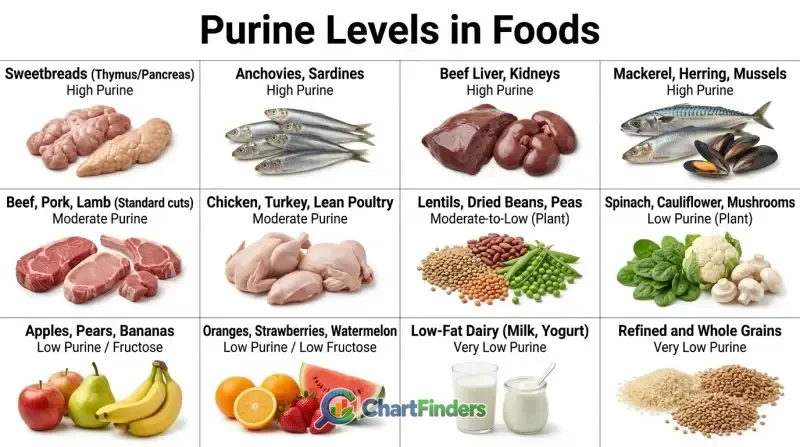
Understanding the Purine Food Chart and Uric Acid Dynamics
- Purines are natural nitrogenous compounds found in body tissues and various foods, breaking down into uric acid during digestion.
- Dietary purines account for roughly 15-20% of circulating uric acid, while the remaining 80-85% is produced internally by normal metabolic turnover.
- Foods are generally classified into low (<50 mg/100g), moderate (50–150 mg/100g), and high (>150 mg/100g) purine tiers.
- Plant-based purine sources (such as beans, lentils, and spinach) do not increase gout risk to the same degree as purines from meat and seafood.
- Added sugars, particularly fructose, and alcoholic beverages (especially beer) dramatically accelerate uric acid production and impair renal excretion.
- Hydration and weight management play co-equal roles alongside dietary purine restriction in maintaining healthy serum uric acid levels.
To use a purine food chart effectively, you must first understand how the body processes these compounds. For decades, medical science viewed uric acid strictly as a useless waste product. Modern clinical insights recognize that uric acid also acts as an endogenous antioxidant and plays a role in vascular health. However, when serum concentrations push past saturation thresholds (typically above 6.0 to 7.0 mg/dL depending on individual biology and sex), crystallization occurs. Approximately 90% of the body’s uric acid regulation is internal, meaning that while diet is critical, it operates within a larger metabolic system influenced by genetics, renal function, insulin resistance, and cellular turnover.
When you consume purine-rich foods, digestive enzymes break down the purine bases—adenine and guanine—into hypoxanthine and xanthine, which the enzyme xanthine oxidase ultimately converts into uric acid. Foods vary wildly in their purine density. Organ meats and small pelagic fish sit at the extreme upper end of the spectrum, packing upwards of 400 to 800 milligrams of purines per 100 grams. On the flip side, fresh fruits, refined and whole grains, and dairy products sit comfortably at the bottom, offering minimal purine loads that rarely perturb serum uric acid levels.
The Nuance of Plant-Based Versus Animal-Based Purines
One of the most persistent misconceptions in dietary management is that all purines carry an identical physiological risk. Epidemiological and clinical intervention studies have consistently demonstrated that purines derived from meat and seafood significantly elevate the risk of incident gout and recurrent flares. In contrast, purines derived from plant sources—such as lentils, beans, peas, spinach, cauliflower, and mushrooms—show no such association. In fact, purine-rich vegetables are frequently associated with a reduced risk of gout, likely due to their high fiber content, alkalizing properties, antioxidant load, and capacity to promote renal excretion of uric acid.
The Role of Fructose and Alcohol
Evaluating purine content alone paints an incomplete picture. The metabolic pathways of fructose and alcohol intersect directly with purine metabolism in the liver. When the liver metabolizes fructose, it rapidly consumes adenosine triphosphate (ATP), leading to an accumulation of adenosine monophosphate. This cascade accelerates purine degradation, directly driving up uric acid production while simultaneously inhibiting the renal excretion of urate. Similarly, ethanol metabolism increases intracellular adenosine diphosphate and purine breakdown while causing dehydration and lactic acidosis, which competitively inhibits uric acid secretion in the renal tubules. This is why beer, which combines a high concentration of purines (from brewer’s yeast) with alcohol, is uniquely potent at triggering gout attacks.
Comprehensive Purine Content Classification of Common Foods
The following reference table organizes everyday food items across standard purine thresholds. Values are expressed in milligrams of purine per 100 grams (approx. 3.5 ounces) of edible portion, alongside associated fructose content where relevant for metabolic context.
| Food Item | Category | Purine Content (mg/100g) | Fructose (g/100g) | Metabolic & Gout Context |
|---|---|---|---|---|
| Sweetbreads (Thymus/Pancreas) | High Purine | 800+ | 0.0 | Extreme purine density; absolute avoidance recommended during flares. |
| Anchovies, Sardines | High Purine | 300–500 | 0.0 | Small pelagic fish with exceptionally high purine and mineral loading. |
| Beef Liver, Kidneys | High Purine | 200–300 | 0.0 | Organ meats rich in cellular nuclei and metabolic waste precursors. |
| Mackerel, Herring, Mussels | High Purine | 150–250 | 0.0 | Seafood category requiring strict portion control or elimination. |
| Beef, Pork, Lamb (Standard cuts) | Moderate Purine | 100–150 | 0.0 | Moderate purine load; limit to occasional small portions. |
| Chicken, Turkey, Lean Poultry | Moderate Purine | 110–140 | 0.0 | Slightly lower than red meat; skinless preparation preferred. |
| Lentils, Dried Beans, Peas | Moderate-to-Low (Plant) | 70–120 | 0.0 | Plant purines; safe for regular consumption despite medium purine numbers. |
| Spinach, Cauliflower, Mushrooms | Low Purine (Plant) | 20–50 | 0.0 | High-nutrient vegetables that do not trigger hyperuricemia. |
| Apples, Pears, Bananas | Low Purine / Fructose | 8–10 | 4.9–6.4 | Low purine, but moderate-to-high natural fructose requires mindfulness. |
| Oranges, Strawberries, Watermelon | Low Purine / Low Fructose | 5–10 | 2.1–3.4 | Excellent fruit choices with minimal purine and lower free fructose loads. |
| Low-Fat Dairy (Milk, Yogurt) | Very Low Purine | <10 | N/A (Lactose) | Strongly associated with reduced serum uric acid and protective effects. |
| Refined and Whole Grains | Very Low Purine | 10–30 | 0.0 | Staple energy sources with negligible impact on uric acid synthesis. |
When reviewing the table above, notice how categorizations rely heavily on the origin of the food. While lentils and beef both hover around 100 mg/100g of purines, their physiological impacts diverge sharply due to differences in amino acid profiles, fiber content, and metabolic processing in the human liver.
Deep Dive: Purine Profiles Across Specific Food Groups
To build an effective, sustainable dietary routine, it helps to examine how individual food groups stack up in terms of purine density, nutritional value, and potential impact on systemic inflammation.
Meats, Poultry, and Organ Meats
Animal tissues contain high concentrations of nucleic acids (DNA and RNA), making animal-derived proteins the primary dietary driver of hyperuricemia. Organ meats—including liver, kidneys, brain, and sweetbreads—represent the absolute peak of purine concentration, frequently exceeding 400 mg per 100g. Red meats (beef, lamb, pork) occupy the moderate-to-high tier (110–160 mg/100g), while poultry (chicken and turkey breast) sits slightly lower. Extractives, gravies, and meat broths concentrate purines into a liquid medium, making them particularly potent triggers for acute gout attacks even when the meat portion itself is modest.
Seafood and Shellfish
The marine environment offers diverse protein sources, but many popular choices are notoriously high in purines. Small pelagic fish consumed whole—such as anchovies, sardines, and herring—contain dense concentrations of cellular matter and bones, driving purine counts past 300 mg/100g. Shellfish, including mussels, scallops, shrimp, and crab, also carry moderate-to-high purine loads. Conversely, freshwater fish and certain white fish species generally feature lower purine levels, though moderation remains essential.
Dairy and Eggs
Dairy products occupy a uniquely advantageous position in purine management. Skim milk, low-fat yogurt, and cottage cheese contain virtually zero purines. , clinical studies indicate that dairy proteins—specifically casein and lactalbumin—promote the excretion of uric acid through the kidneys (uricosuric effect). Eggs are also extremely low in purines, making dairy and eggs primary protein anchors for individuals restricting meat and seafood.
Vegetables, Legumes, and Plant Proteins
For decades, individuals with gout were advised to strictly avoid vegetables like asparagus, spinach, cauliflower, and mushrooms because of their moderate purine numbers. Contemporary nutritional science has overturned this restriction. Clinical cohort studies prove that consumption of purine-rich vegetables does not increase the risk of hyperuricemia or gout. Legumes (beans, lentils, chickpeas) provide valuable plant protein and fiber without the inflammatory and purine-driven risks associated with animal proteins.
Fruits and Natural Fructose Considerations
Most fresh fruits feature exceptionally low purine counts (typically under 15 mg/100g). However, the metabolic profile of fruit introduces the variable of fructose. While whole fruits contain moderate amounts of fructose bound to fiber, vitamins, and antioxidants—slowing absorption—processed foods and beverages sweetened with high-fructose corn syrup (HFCS) introduce massive, unbuffered fructose loads that rapidly deplete hepatic ATP and accelerate uric acid synthesis. Choosing whole, fresh berries, citrus fruits, and melons allows for optimal vitamin intake without triggering metabolic stress.
Practical Decision Framework for Daily Meal Planning
Translating purine charts into sustainable kitchen habits requires a structured approach. Rather than relying on rigid, punitive elimination diets that are difficult to maintain, successful long-term uric acid management relies on balanced substitution and portion calibration.
The Plate-Method for Low-Uric Acid Eating
- Vegetable Foundation (50%): Fill half your plate with low-purine vegetables, leafy greens, and colorful non-starchy produce. These provide vital alkalizing minerals and antioxidants.
- Quality Complex Carbohydrates (25%): Incorporate whole grains like brown rice, quinoa, whole oats, or moderate portions of starchy root vegetables to sustain energy without relying on refined sugars.
- Smart Protein Selection (25%): Opt for low-fat dairy, eggs, plant-based proteins (lentils, tofu, beans), or strictly portion-controlled servings of poultry, ensuring total animal protein stays within clinical guidelines.
- Hydration as a : Water is the ultimate flushing agent. Maintaining a daily intake of 2.5 to 3 liters of water dilutes urinary uric acid concentrations and assists renal clearance, significantly reducing the probability of crystal precipitation.
Common Mistakes and Clinical Pitfalls
When individuals first encounter a purine food chart, several common misunderstandings often derail their dietary efforts:
- Treating all purines as identical: Eliminating nutritious plant foods like beans and spinach while continuing to consume alcohol or sugary beverages fails to address the true dietary drivers of hyperuricemia.
- Overlooking hidden sugars and HFCS: Focusing exclusively on low-purine meats while ignoring processed foods, sodas, and commercial baked goods loaded with high-fructose corn syrup undermines overall metabolic health.
- Crash dieting and rapid weight loss: Severely starving the body or adopting aggressive, unsupervised ketogenic diets can mobilize cellular tissue rapidly, flooding the bloodstream with endogenous purines and triggering severe gout flares.
- Neglecting hydration during physical activity: Dehydration concentrates serum uric acid levels. Failing to replenish fluids adequately during exercise or warm weather creates an acute risk environment for crystal formation.
- Ignoring kidney function and medical oversight: Diet is a powerful adjunctive tool, but it cannot always replace pharmacological interventions (such as xanthine oxidase inhibitors) when underlying metabolic or renal conditions require medical management. Always consult a healthcare professional for personalized guidance.
Frequently Asked Questions
No. Small pelagic fish like anchovies, sardines, and mackerel, along with shellfish like mussels and scallops, contain very high purine levels (>150 mg/100g). However, many white fish species and certain other marine options feature moderate-to-low purine profiles. Portion control and frequency of consumption remain key factors in managing overall intake.
Epidemiological research shows that purines from plant sources do not increase the risk of gout. Plant foods are typically rich in dietary fiber, vitamin C, potassium, and antioxidants, which support overall metabolic health and enhance the renal excretion of uric acid, counteracting the purine load.
Multiple large-scale prospective studies have found an inverse relationship between regular coffee consumption and serum uric acid levels. Coffee contains polyphenols and other compounds that may inhibit xanthine oxidase or improve insulin sensitivity, though it should not be viewed as a standalone cure for hyperuricemia.
Alcohol—especially beer—combines high purine content (from brewing yeast) with ethanol metabolism. Alcohol metabolism depletes hepatic energy stores, accelerates purine degradation into uric acid, and generates lactic acid, which impairs the kidneys’ ability to excrete urate, leading to rapid serum spikes.
Not necessarily. While strict elimination is often recommended during acute gout flares, long-term management typically emphasizes moderation, variety, and an overall dietary pattern rich in hydration, low-fat dairy, and plant foods, rather than complete deprivation of every moderate-purine food item.
Conclusion
Mastering the purine food chart is not about strict, joyless restriction; it is about understanding how food interacts with your body’s metabolic pathways. By distinguishing between high-risk animal purines and protective plant purines, minimizing added fructose and alcohol, and prioritizing consistent hydration, you can take proactive control of your uric acid levels. Sustainable dietary changes, paired with professional medical guidance, provide a reliable foundation for long-term joint health and metabolic wellness.