
Quick Answer: In the wild, quokkas typically have a lifespan of 10 to 15 years. Their longevity is influenced heavily by environmental pressures, predation, and habitat stability. In managed zoological care, protected conditions can slightly extend this window, though wild populations remain vulnerable due to disease, habitat loss, and localized resource constraints.
The quokka (Setonix brachyurus) captures global attention with its permanent, cheerful expression and unique social behavior. Behind the viral photographs and island-hopping tourism lies a complex biological reality. Understanding the lifespan of this small macropod requires examining the intersection of evolutionary adaptations, ecological constraints, and conservation biology. From pouch life to senior adulthood, a quokka’s years are shaped by seasonal rainfall, predatory threats on mainland Australia, and the relative sanctuary of isolated strongholds like Rottnest Island and Bald Island.
Analyzing the quokka lifespan chart provides more than just a set of age brackets; it offers a diagnostic lens into macropod demography, reproductive strategies, and the physiological toll of surviving in fire-prone, Mediterranean-type ecosystems. This article explores the stages of quokka development, comparative survival metrics across different habitats, environmental determinants of longevity, and the ongoing conservation challenges that dictate whether these animals reach their natural biological ceiling.
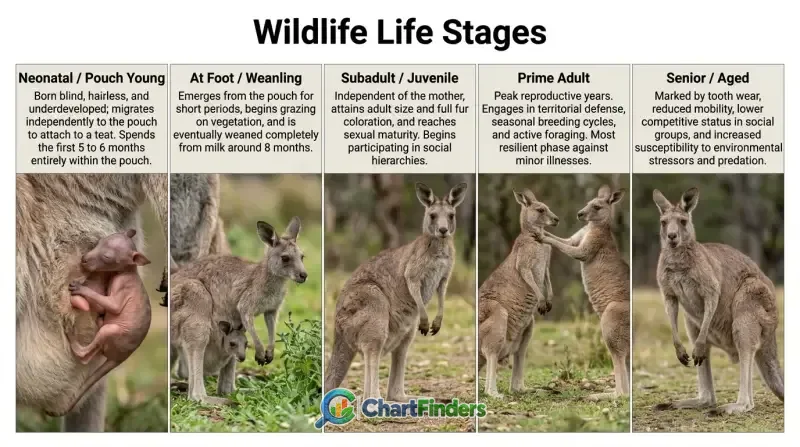
Quokka Lifespan Chart and Developmental Stages
- Wild quokkas average a lifespan of 10 to 15 years, while protected environments can sometimes support slightly older individuals.
- Development begins with an extremely altricial pouch young (joey) phase lasting approximately six months before permanent emergence.
- Sexual maturity is reached around 1 to 2 years of age, marking the transition into full reproductive capacity.
- Habitat isolation plays a decisive role in survival; mainland populations face intense pressure from introduced predators like red foxes.
- Classified as vulnerable by the IUCN, quokka populations have declined significantly over recent decades due to habitat fragmentation and development.
Mapping out a quokka’s life cycle involves tracking distinct physiological and behavioral phases. Because macropods invest heavily in early pouch care followed by a prolonged juvenile phase, age milestones occur at specific developmental intervals. The following chart outlines the key milestones across a quokka’s normal lifespan.
| Life Stage | Age Range | Primary Characteristics & Milestones |
|---|---|---|
| Neonatal / Pouch Young | Month 0 – 6 | Born blind, hairless, and underdeveloped; migrates independently to the pouch to attach to a teat. Spends the first 5 to 6 months entirely within the pouch. |
| At Foot / Weanling | Month 6 – 12 | Emerges from the pouch for short periods, begins grazing on vegetation, and is eventually weaned completely from milk around 8 months. |
| Subadult / Juvenile | Year 1 – 2 | Independent of the mother, attains adult size and full fur coloration, and reaches sexual maturity. Begins participating in social hierarchies. |
| Prime Adult | Year 3 – 8 | Peak reproductive years. Engages in territorial defense, seasonal breeding cycles, and active foraging. Most resilient phase against minor illnesses. |
| Senior / Aged | Year 9 – 15+ | Marked by tooth wear, reduced mobility, lower competitive status in social groups, and increased susceptibility to environmental stressors and predation. |
This structural progression highlights the vulnerability of early life stages. A high proportion of mortality occurs during the transition from pouch young to independent subadults, as inexperienced juveniles face steep learning curves in foraging and predator avoidance.
Visualizing Quokka Survival Probability by Age
To understand population dynamics, researchers look at survivorship curves that track the probability of living to a certain age. While infant mortality in the pouch is relatively low due to maternal protection, post-weaning mortality spikes sharply. The table below illustrates the relative survival probability across major life phases for wild quokkas.
| Life Stage Phase | Estimated Relative Survival Probability (%) | Primary Mortality Factors |
|---|---|---|
| Pouch Stage (0–6 Months) | 85% – 90% | Maternal stress, pouch abandonment, disease |
| Weaning to Subadult (6–12 Months) | 50% – 60% | Predation, starvation during dry seasons, lack of shelter |
| Prime Adult (3–8 Years) | 70% – 80% (annual survival) | Accidents, disease outbreaks, extreme drought, predation |
| Senior Adult (9–15+ Years) | 10% – 20% | Senescence, tooth wear, severe environmental stress |
Biological Characteristics and Evolutionary Adaptations
The quokka is a small macropod, generally weighing between 2.5 and 5 kilograms and measuring roughly 40 to 54 centimeters in length, excluding its tail. It shares anatomical traits with kangaroos and wallabies, including powerful hind legs adapted for hopping, a muscular tail used primarily for balance, and a specialized digestive system.
Unlike many other macropods, quokkas possess a distinct adaptation that allows them to climb low trees—often up to two meters off the ground—when seeking succulent leaves or evading ground-level hazards. This arboreal tendency is particularly pronounced in populations inhabiting areas with dense thickets of swamp peppermint (Agonis linearis).
Reproductive Strategy and Pouch Life
Quokkas utilize a breeding system tied closely to seasonal environmental cues. In the southern parts of their range, breeding typically occurs in late summer or autumn (January to March). Following a gestation period of roughly 28 days, a single, highly underdeveloped joey is born.
A remarkable reproductive adaptation in quokkas is embryonic diapause. If a female conceives during a period of environmental stress or if her current pouch young is still dependent, the newly fertilized blastocyst remains dormant in the uterus. Should the first joey perish or leave the pouch, the dormant embryo reactivates, ensuring continuous reproductive output without the metabolic strain of simultaneous gestation and lactation.
Habitat Dynamics: Rottnest Island vs. Mainland Populations
A critical variable in any quokka lifespan analysis is geographic location. Quokkas inhabit two primary environments: island reserves (most notably Rottnest Island and Bald Island) and fragmented mainland pockets in southwest Western Australia.
Rottnest Island Sanctuaries and Pressures
Rottnest Island hosts the largest and most robust wild population of quokkas. Historically, the island lacked native terrestrial mammalian predators, allowing populations to thrive despite periodic droughts. However, life on Rottnest is not without modern challenges. The island’s popularity as a recreational destination introduces risks ranging from vehicle strikes to human-provided foods that disrupt natural foraging behaviors and digestive health.
, development for tourism places pressure on available freshwater lenses and shade cover, forcing quokkas into closer contact with human infrastructure.
Mainland Vulnerabilities
Mainland quokka populations face an entirely different set of survival obstacles. Unlike island reserves, the mainland hosts introduced predators, most notably the red fox (Vulpes vulpes) and feral cats (Felis catus). Foxes represent a devastating threat to ground-dwelling marsupials of this size.
Additionally, mainland habitats are heavily impacted by European settlement, agricultural clearing, and altered fire regimes. High-intensity bushfires can decimate local colonies instantly, destroying dense understory vegetation that quokkas rely on for daytime shelter and predator concealment. Consequently, mainland quokkas often experience shorter average lifespans and fragmented, isolated demographics.
Comparative Analysis: Wild vs. Zoological Care Longevity
To fully grasp how environmental factors dictate quokka longevity, it is instructive to compare life metrics between wild colonies and managed zoological facilities. The structural differences in mortality sources, diet stability, and veterinary intervention create distinct demographic profiles.
| Metric / Parameter | Wild Populations (e.g., Rottnest Island & Mainland) | Managed Zoological Care |
|---|---|---|
| Average Lifespan | 10 to 15 years | 12 to 16+ years (occasional outliers exceed 17 years) |
| Primary Cause of Mortality | Predation (mainland), starvation/drought, disease outbreaks, vehicle strikes | Age-related senescence, chronic degenerative conditions |
| Dietary Stability | Fluctuates seasonally; dependent on native vegetation and rainfall; occasionally disrupted by human handouts | Consistently balanced botanical and herbivore formulations with controlled caloric intake |
| Predation Risk | High on mainland (red foxes, feral cats); low to moderate on island reserves | Zero terrestrial predation risk; secure enclosures |
| Veterinary Intervention | None (natural selection dictates survival) | Preventative medicine, parasite control, rapid treatment of injuries and infections |
Conservation Status and IUCN Assessment
The International Union for Conservation of Nature (IUCN) classifies the quokka as Vulnerable. Over recent decades, the total species population has experienced a decline of at least 50 percent, driven primarily by habitat degradation, predation by introduced carnivores, and climate-induced drying trends in southwest Western Australia.
Efforts to reverse these trends involve intensive management programs. Conservationists implement controlled burns to maintain a mosaic of vegetation ages, establish fox-baiting corridors across mainland reserves, and monitor disease outbreaks. Historical attempts to reintroduce quokkas to mainland sanctuaries have met with mixed success due to persistent fox predation, underscoring the necessity of integrated predator control before translocation efforts can succeed.
Common Misconceptions and Management Challenges
Public perception of quokkas is often shaped by social media trends, leading to several widespread myths regarding their care, diet, and natural behavior.
- Myth: Quokkas are domesticated pets. While they frequently approach humans on Rottnest Island due to habituation, they remain wild, untamed marsupials with sharp claws and defensive bite reflexes when cornered.
- Myth: Human food is a beneficial supplement. Feeding human snacks (bread, chips, human waste) causes severe digestive distress, malnutrition, and fatal metabolic conditions like lumpy jaw.
- Myth: Island populations are entirely safe from decline. Even on Rottnest Island, overcrowding during dry years can trigger mass mortality events, disease outbreaks, and nutritional bottlenecks.
- Myth: Quokkas do not need free-standing water. While they obtain a significant amount of moisture from succulent vegetation, they still require access to fresh water during extended summer droughts.
Frequently Asked Questions
In the wild, quokkas generally live between 10 and 15 years. Environmental factors such as drought, disease, and predation on the mainland influence whether an individual reaches the upper end of this range.
Yes. In managed zoological facilities with veterinary care, balanced diets, and protection from predators, quokkas can occasionally exceed their typical wild lifespan, sometimes living up to several years past the standard wild maximum.
For mainland quokkas, introduced predators like red foxes and feral cats are the primary threat. For island populations, habitat loss from human development, vehicle strikes, and nutritional stress from human interference pose the most significant risks.
Quokkas typically reach sexual maturity between 1 and 2 years of age. Females can produce one joey per year under favorable environmental conditions, utilizing embryonic diapause if necessary.
The IUCN lists quokkas as vulnerable because their overall population has declined by more than 50 percent over recent decades, driven by widespread habitat fragmentation, altered fire regimes, and introduced predators.
Quokkas rely on behavioral and physiological adaptations. They seek out dense, shaded understories to reduce moisture loss, climb trees to forage on more succulent leaves, and utilize metabolic water conservation strategies until seasonal rains return.
Conclusion
The quokka lifespan chart reflects a delicate balance between biological resilience and ecological vulnerability. While these marsupials possess sophisticated reproductive mechanisms—such as embryonic diapause—and adaptable foraging habits, they remain tightly bound to the health of their natural environments. Whether navigating the predator-free scrublands of island sanctuaries or surviving against the odds in fragmented mainland thickets, the quokka’s longevity depends entirely on proactive habitat preservation, strict management of human interaction, and ongoing predator control.