
Understanding the life expectancy and aging trajectories of rhinoceroses is foundational for modern wildlife conservation, population viability analysis, and habitat management. As ancient megafauna facing intense anthropogenic pressures—ranging from the illegal international horn trade and habitat fragmentation to climate fluctuations and emerging diseases—rhinos occupy a delicate ecological niche. Analyzing a rhino lifespan chart requires looking beyond a single numerical average. Age milestones are influenced by a complex interplay of biology, sex, environmental stressors, and active conservation interventions.
(Reference: Guidelines for the in situ Re-introduction and Translocation …)This comprehensive guide explores the multi-faceted dimensions of rhinoceros longevity. We examine how different species age, the biological and ecological factors that curtail or extend their lives, the differences between wild and captive populations, and the methodologies scientists use to track age in the field. By synthesizing historical data with modern conservation science frameworks—such as the African Rhinoceros Conservation Framework and IUCN guidelines—this article serves as an authoritative resource for researchers, wildlife managers, and conservation enthusiasts alike.
Explore our detailed breakdown on Squirrel Lifespan Chart.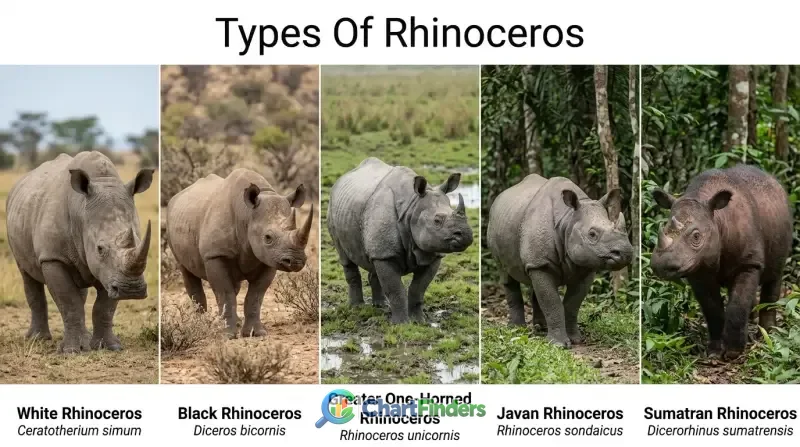
Rhino Lifespan Chart and Species Longevity Profiles
- General Range: Most wild rhinoceros species live between 35 and 45 years, with exceptional individuals reaching up to 50–55 years under optimal conditions.
- Species Variance: Larger species like the white rhinoceros generally exhibit slightly higher maximum lifespans than smaller, forest-dwelling counterparts like the Sumatran and Javan rhinos.
- Captivity vs. Wild: While captive rhinos are protected from predators and poachers, they often face chronic health challenges such as pododermatitis (foot rot), obesity, and reproductive senescence.
- Conservation Impact: Long generation times and low reproductive rates mean rhino populations recover slowly from poaching losses, underscoring the of structured conservation frameworks.
- Aging Indicators: Field researchers and biologists determine age through dental wear patterns, horn ring analysis, body size metrics, and skin fold development.
To understand how rhinoceroses age, it is essential to review a structured lifespan chart detailing the distinct characteristics, typical wild lifespans, maximum recorded ages, and conservation status of each extant species. The table below outlines these vital statistics, providing a comparative baseline for the family Rhinocerotidae.
| Common Name | Scientific Name | Typical Wild Lifespan | Max Recorded Lifespan (Captive/Wild) | Conservation Status | Primary Geographic Range |
|---|---|---|---|---|---|
| White Rhinoceros | Ceratotherium simum | 40 – 50 years | Up to 55 years | Near Threatened | Sub-Saharan Africa |
| Black Rhinoceros | Diceros bicornis | 35 – 50 years | Up to 45+ years | Critically Endangered | Eastern and Southern Africa |
| Greater One-Horned Rhinoceros | Rhinoceros unicornis | 35 – 45 years | Up to 47 years | Vulnerable | India and Nepal |
| Javan Rhinoceros | Rhinoceros sondaicus | 35 – 40 years (Estimated) | Uncertain (Poorly documented in captivity) | Critically Endangered | Java, Indonesia (Ujung Kulon) |
| Sumatran Rhinoceros | Dicerorhinus sumatrensis | 35 – 40 years (Estimated) | 32 years | Critically Endangered | Sumatra and Borneo, Indonesia |
When analyzing this data, it becomes clear that rhinoceroses are classic K-selected species. This means they produce very few offspring—typically giving birth to a single calf every 2 to 5 years—and invest heavily in their rearing and protection. Consequently, individual longevity is directly tied to population persistence; every adult lost prematurely to poaching or environmental degradation represents a severe blow to genetic diversity and population recovery rates.
Comparative Analysis of Rhino Longevity Across Species
While the family Rhinocerotidae shares general physiological traits, subtle evolutionary adaptations dictate distinct lifespan parameters. White rhinos, specialized grazers with broad flat lips suited for cropping short grasses, inhabit open savannas where natural predation on adults is virtually nonexistent outside of human interference. This ecological stability allows them to consistently reach the upper limits of their lifespan bracket.
Conversely, browsers like the black rhino face dietary complexities, thorny vegetation, and higher frequencies of intraspecific aggression. Territorial battles, horn gouging, and injuries sustained while navigating dense scrub can lead to premature mortality, lowering the average realized lifespan in the wild compared to their white rhino relatives. Forest-dwelling species like the Sumatran and Javan rhinos face immense demographic fragility due to small, fragmented populations, where disease or localized environmental catastrophes can significantly truncate life expectancy across whole cohorts.
Biological Stages of a Rhino’s Life
A rhino’s journey from newborn calf to senior elder involves distinct developmental phases. Each stage carries unique vulnerabilities, behavioral shifts, and physiological milestones that dictate overall longevity.
1. Calfhood and Dependency (Ages 0–3)
The first three years of a rhino’s life are the most perilous. Newborn calves are vulnerable to apex predators such as lions, hyenas, and tigers (depending on the geographic region). Mother rhinos are fiercely protective, using their horns and immense mass to shield their young. During this phase, the calf relies entirely on maternal milk before transitioning fully to grazing or browsing. Mortality rates during this window heavily influence overall cohort survival and population growth rates.
2. Adolescence and Dispersal (Ages 3–7)
As calves approach sub-adulthood, mothers typically give birth to a new calf, prompting the weaning and eventual displacement of the older offspring. Adolescent rhinos often form loose peer groups or roam independently. This phase is marked by high exploratory behavior, which can bring them into conflict with dominant territorial adults, predators, or human agricultural settlements.
3. Prime Reproductive Years (Ages 7–30)
Prime adulthood is the longest phase of a rhino’s life. Females typically reach sexual maturity earlier (around 4–6 years) than males (7–10 years). During this expansive window, healthy adults contribute actively to the gene pool. Males engage in intense ritualized combat for territory and mating access, while females undergo multiple gestation cycles, each lasting approximately 15 to 18 months depending on the species.
4. Senescence and the Post-Reproductive Phase (Ages 30+)
As rhinos enter their fourth decade, signs of biological aging become pronounced. Teeth wear down smooth from decades of grinding abrasive, fibrous vegetation, making foraging increasingly difficult and inefficient. Vision and hearing may decline, muscle mass decreases, and joint stiffness sets in. In the wild, elderly rhinos with worn teeth often succumb to malnutrition, or they become vulnerable to predation and natural disease vectors.
Key Factors Influencing Rhino Lifespan
A rhino’s theoretical maximum lifespan is rarely achieved without navigating a gauntlet of external and internal pressures. Conservation scientists categorize these influences into several core areas:
- Anthropogenic Threats: Poaching for the illegal international rhino horn trade remains the single greatest driver of unnatural mortality, cutting short the lives of prime breeding adults. Habitat loss, agricultural encroachment, and human-wildlife conflict further compress their natural ranges.
- Nutritional Ecology and Dental Health: Rhinos are hindgut fermenters requiring vast quantities of roughage. The ultimate physiological limiting factor for wild rhino longevity is dental wear. Once the molars are worn down past a functional threshold, nutritional extraction plummets, leading to starvation or systemic weakness.
- Disease and Parasites: Natural pathogens, including anthrax, tuberculosis, and various parasitic infestations, pose ongoing threats. In isolated populations, disease outbreaks can decimate age classes rapidly.
- Intraspecific Aggression: Territorial disputes among males frequently result in severe puncture wounds, broken bones, and secondary infections that can prove fatal, particularly in densely managed or confined reserves where natural dispersal is restricted.
Wild Versus Captive Longevity
Comparing the lifespan of wild rhinoceroses to those housed in accredited zoos and sanctuaries reveals fascinating insights into animal physiology and environmental stressors.
In managed care, rhinos are shielded from apex predators, poachers, and periodic severe droughts. Advanced veterinary medicine allows for the targeted treatment of injuries, parasite control, and specialized nutritional supplementation. Consequently, captive rhinos frequently reach the upper bounds of longevity, with some individuals surpassing 50 years.
However, captivity introduces its own pathology. Lack of abrasive terrain and reduced natural movement often leads to chronic foot and joint conditions, such as pododermatitis (foot rot) and arthritis. Dietary differences can cause obesity and hepatic stress. , space constraints in zoos limit natural social dynamics and territorial behaviors, which can impact psychological well-being and reproductive output.
Methodologies for Determining Rhino Age in the Field
Wildlife biologists and conservation rangers rely on standardized morphological and physiological indicators to estimate the age of living or deceased rhinos. Accurate age profiling is essential for demographic modeling and monitoring population health under frameworks established by international wildlife authorities.
Tooth Eruption and Wear Analysis
The most precise indicator of age—particularly in post-mortem analysis or captured tranquilized individuals—is dental inspection. Calves exhibit predictable milk teeth eruption sequences. In older animals, the rate of enamel erosion and dentin exposure on the molars provides a reliable chronological timeline.
Horn Annulation and Morphology
Rhino horns are composed of compressed keratin, growing continuously throughout the animal’s life. While annual growth rings can sometimes be observed microscopically or via cross-sections, weathering and wear at the tip make external ring counting unreliable for exact aging in older adults. However, overall horn length, base circumference, and curvature provide strong clues regarding maturity and sex.
Body Metrics and Skin Folds
In the field, visual estimation relies on body mass proportion, head-to-body ratio, and the development of skin folds (particularly prominent in greater one-horned and Javan rhinos). Calves show smooth, pinkish skin and lack defined folds, whereas senior rhinos display heavily calloused, cracked skin shields and sagging profiles.
Frequently Asked Questions
Most wild rhinoceros species have an average lifespan ranging between 35 and 45 years. Variations occur based on the species, environmental conditions, and pressure from poaching and natural predation.
The white rhinoceros (Ceratotherium simum) typically exhibits the highest longevity, with wild individuals frequently reaching 40 to 50 years of age and captive specimens occasionally surpassing 55 years.
Researchers determine rhino age by examining tooth wear patterns, dental eruption schedules in juveniles, horn size and development, body proportions, and skin characteristics in the field.
Captive rhinos often reach maximum potential lifespans because they are protected from poaching, starvation during droughts, and apex predators. However, they face distinct captive health challenges such as foot problems and obesity.
Poaching drastically skews demographic charts by disproportionately removing prime breeding adults in their absolute physical prime (ages 10–25), drastically lowering the average realized lifespan across populations and threatening species survival.
Conclusion
The lifespan chart of a rhinoceros is much more than a simple numerical timeline; it is an ecological metric reflecting the resilience and vulnerability of some of the planet’s most magnificent megafauna. Ranging from 35 to over 50 years depending on the species, a rhino’s life is shaped by delicate ecological balances, complex social structures, and mounting human pressures. By understanding the biological stages, environmental determinants, and aging metrics of rhinoceroses, conservationists can better deploy targeted strategies—such as the African Rhinoceros Conservation Framework—to ensure these ancient giants continue to roam natural landscapes for generations to come.