
The life of a sea turtle is an epic journey of endurance, navigation, and biological adaptation spanning decades across vast oceanic ecosystems. From microscopic hatchlings scrambling across moonlit sand to massive, solitary adults gliding through pelagic zones, these ancient mariners have navigated Earth’s oceans for over a hundred million years. Understanding how long sea turtles live requires looking past a single number and examining the complex interplay of biology, environmental pressures, and human impacts that shape every stage of their life history.
Determining the exact lifespan of sea turtles has historically challenged marine biologists due to their highly migratory habits, expansive marine ranges, and the lack of permanent bone growth rings that traditional terrestrial animals possess. However, modern scientific advancements—ranging from skeletochronology and tagging studies to genetic tracking—have provided unprecedented clarity regarding how these animals grow, mature, and age. This comprehensive guide explores the biological mechanisms of sea turtle aging, comparative species lifespans, the perilous developmental milestones they must clear, and the conservation realities that dictate whether a hatchling will fulfill its multi-decade potential.
Sea Turtle Lifespan
- Wild sea turtles typically live for 50 years or more, with certain species potentially exceeding 70 to 80 years under optimal environmental conditions.
- Sexual maturity is a slow process, usually taking between 20 and 30 years depending on the species, local water temperatures, and available food resources.
- The reproductive lifespan of a mature female sea turtle spans approximately 30 years, during which she nests at multi-year intervals.
- Mortality is heavily skewed toward early life stages; fewer than 1% of eggs and hatchlings survive to adulthood due to terrestrial and marine predation.
- Anthropogenic threats, including accidental bycatch, marine plastic pollution, and coastal development, remain the primary factors curtailing natural lifespans.
Biological Foundations of Longevity and Growth
Sea turtles are ectothermic (cold-blooded) reptiles, meaning their body temperatures are heavily influenced by the ambient water temperatures of their environment. This physiological trait directly impacts their metabolic rates, feeding efficiency, and somatic growth curves. Unlike mammals or birds that experience rapid, determinate growth ending in adulthood, many reptiles exhibit indeterminate growth patterns, though growth slows dramatically once sexual maturity is reached.
The juvenile phase of a sea turtle’s life is characterized by rapid development fueled by high-protein diets, though overall growth rates can fluctuate wildly based on oceanic productivity and thermal regimes. In colder waters, metabolic slowdown can lead to reduced feeding and slower growth, extending the juvenile period. Conversely, warm-water foraging grounds often accelerate growth, though they do not necessarily shorten the timeline to maturity because physiological maturation requires reaching specific structural size thresholds rather than just a set chronological age.
Skeletochronology: How Scientists Age Sea Turtles
Because sea turtles lack traditional aging markers like mammalian teeth, marine scientists utilize a specialized laboratory technique known as skeletochronology to estimate their age. This method involves analyzing microscopic growth marks deposited within the bone tissues of deceased turtles—most commonly the humerus bone of the front flippers.
Similar to counting tree rings, bone cross-sections reveal alternating light and dark bands that correspond to seasonal shifts in growth rates. Rapid summer growth produces wider bands, while slower winter growth forms narrower, denser lines. By calibrating these bone layers with known-age captive turtles and mark-recapture field data, researchers can construct robust growth models to estimate the absolute age of stranded or accidentally caught wild specimens. However, interpreting these rings becomes increasingly difficult in older adults as bone remodeling over decades can obscure or erase the earliest innermost growth markers.
Comparative Analysis of Sea Turtle Lifespans Across Species
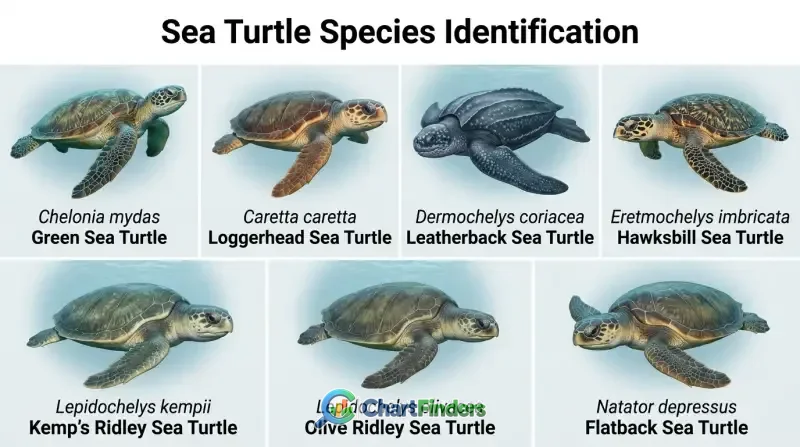
The seven recognized extant species of sea turtles exhibit distinct ecological niches, dietary preferences, and geographic distributions, all of which influence their growth rates and overall longevity profiles. While precise maximum lifespans remain difficult to measure for wild populations, long-term observational studies and demographic models provide clear baselines for each major species.
| Species | Common Name | Average Wild Lifespan | Age at Sexual Maturity | Primary Foraging Diet |
|---|---|---|---|---|
| Chelonia mydas | Green Sea Turtle | 50–75+ years | 25–35 years | Seagrasses, algae (herbivorous adults) |
| Caretta caretta | Loggerhead Sea Turtle | 47–67+ years | 30–35 years | Crustaceans, mollusks, bottom-dwelling invertebrates |
| Dermochelys coriacea | Leatherback Sea Turtle | 30–50+ years | 15–20 years | Gelatinous zooplankton (jellyfish, salps) |
| Eretmochelys imbricata | Hawksbill Sea Turtle | 30–50+ years | 20–30 years | Sponges, anemones, coral reef invertebrates |
| Lepidochelys kempii | Kemp’s Ridley Sea Turtle | 30–50 years | 10–16 years | Crabs, fish, marine mollusks |
| Lepidochelys olivacea | Olive Ridley Sea Turtle | 50+ years | 12–15 years | Crabs, shrimp, jellyfish, tunicates |
| Natator depressus | Flatback Sea Turtle | 50+ years | 25–30 years | Sea cucumbers, soft corals, crustaceans |
As detailed in the comparative breakdown above, lifespan and developmental timelines vary significantly. For instance, the leatherback sea turtle—the largest living reptile on Earth—exhibits a relatively fast growth rate and reaches maturity sooner than hard-shelled counterparts, driven primarily by an energy-dense but nutritionally demanding diet of jellyfish. In contrast, green sea turtles transition from omnivorous hatchlings to strictly herbivorous adults, grazing extensively on seagrass meadows, which supports a slower, more deliberate growth trajectory toward a long adult lifespan.
The Stages of a Sea Turtle’s Life History
A sea turtle’s multi-decade lifespan is divided into distinct ecological phases, each presenting unique physiological demands, habitat shifts, and survival hurdles. Understanding these phases clarifies why reaching adulthood is such a monumental biological achievement.
1. The Embryonic and Hatchling Phase
Life begins underground in a subterranean nest incubated by warm sand. Temperature plays a critical role during this stage; not only does it dictate incubation duration (typically 45 to 70 days), but it also determines the sex of the hatchlings through Temperature-Dependent Sex Determination (TSD). Warmer sand produces predominantly females, while cooler sand produces males.
Upon hatching, baby turtles engage in a synchronized emergence, digging upward through the sand over several days before bursting onto the surface—usually at night to evade daytime predators like ghost crabs, shorebirds, and canids. Their frantic sprint to the surf initiates a period known as the “lost years,” where hatchlings swim continuously offshore into pelagic convergence zones and sargassum mats.
2. The Juvenile Pelagic and Neritic Phases
During the “lost years,” juvenile sea turtles drift with oceanic currents, hiding within floating seaweed mats where they feed on tiny invertebrates and plankton. This pelagic stage can last anywhere from several years to over a decade depending on the species. Once juveniles attain a specific size refuge threshold—large enough to deter many gape-limited predators—they recruit back to coastal neritic waters, shallow bays, estuaries, and coral reefs to establish permanent foraging grounds.
3. The Adult Reproductive Phase
Reaching sexual maturity marks the transition into adulthood. Mature sea turtles migrate hundreds or thousands of years between permanent foraging grounds and ancestral nesting beaches. Females return to the specific regional beaches where they were born, using geomagnetism and chemical cues to navigate across ocean basins. Once on the nesting beach, a female will lay multiple clutches of eggs within a single nesting season, separated by multi-year intervals (typically 2 to 4 years) spent recovering body condition and foraging at sea.
Natural and Anthropogenic Mortality Factors
While biological senescence—the natural deterioration of physiological function over time—does occur, very few sea turtles in the wild die of old age. Instead, environmental pressures and human activities truncate their potential lifespans.
Natural Predation and Environmental Pressures
Natural mortality is heavily front-loaded. During the egg and hatchling stages, predation rates exceed 99%. Feral mammals, birds, fish, and crabs consume vast quantities of young turtles. Once sea turtles enter the juvenile and adult phases, natural predators diminish significantly, limited primarily to large marine predators such as tiger sharks and killer whales targeting sub-adults and adults.
Environmental stressors also exact a heavy toll. Cold-stunning events—sudden drops in shallow water temperatures—can induce hypothermic shock in sea turtles, rendering them immobile and prone to stranding. Harmful algal blooms (red tides) produce neurotoxins that accumulate in the food web, causing acute poisoning and mass mortality events across all age classes.
Anthropogenic Threats and Human Impacts
Human activities represent the most severe and pervasive threat to sea turtle longevity:
- Commercial Bycatch: Accidental entanglement in gillnets, longlines, and shrimp trawls remains a leading cause of mortality for sub-adult and adult sea turtles worldwide.
- Marine Plastic Pollution: Ingestion of floating plastics, abandoned ghost nets, and microplastics causes intestinal blockages, internal lacerations, and starvation, affecting individuals from pelagic juveniles to breeding adults.
- Coastal Development and Light Pollution: Artificial beachfront lighting disorients emerging hatchlings away from the ocean toward inland hazards, while shoreline armoring destroys nesting habitats.
- Climate Change: Rising global temperatures skew hatchling sex ratios heavily toward females, threatening long-term reproductive population viability, while sea-level rise inundates critical nesting beaches.
Frequently Asked Questions
Because sea turtles do not have permanent skeletal markers in soft tissues, scientists use skeletochronology—the analysis of microscopic growth rings within cross-sections of bone, primarily the humerus. By counting these alternating dense and porous layers much like tree rings, researchers can estimate the age of wild or stranded specimens.
In general, wild sea turtles face severe environmental pressures, diseases, and human-induced hazards that limit their lifespans. Well-maintained aquariums and rehabilitation facilities can protect turtles from these threats, but captive longevity is highly variable and depends on husbandry standards, tank design, and veterinary care. Many healthy individuals thrive for decades in professional zoological care.
Because individual wild sea turtles cannot be easily tracked across an entire 70-to-80-year lifespan without continuous long-term tagging programs, exact records for the oldest wild individual are difficult to verify. However, demographic models and mark-recapture studies confirm that green turtles and loggerheads regularly exceed 50 to 60 years of age in natural marine environments.
Sea turtles are ectotherms whose metabolic and growth rates are constrained by water temperature and the nutritional quality of their diet. Because they must attain a robust structural size before they can successfully migrate, compete for mates, and produce large clutches of eggs, accumulating sufficient body mass is a gradual process requiring two to three decades.
From a purely physiological standpoint, biological sex does not inherently dictate lifespan length in sea turtles. However, adult females experience significant physiological stress and mortality risks associated with long-distance migrations to nesting beaches, terrestrial nesting activities, and high energetic output during egg production, which can sometimes impact overall survival rates compared to males.
Conclusion
The lifespan of a sea turtle is a to resilience forged over millions of years of evolution. Spanning half a century or more, their lives connect distant marine ecosystems, from open-ocean pelagic realms to coastal seagrass beds and sandy nesting beaches. Safeguarding these ancient reptiles requires recognizing that their longevity depends not only on their biological adaptability, but on human stewardship of the marine environment they call home.