
The relationship between domestic felines and their coats is a marvel of evolutionary engineering. A cat’s fur is not merely an aesthetic asset; it is a sophisticated, multi-layered biological system designed for thermal insulation, sensory feedback, and physical defense. Yet, modern pet owners frequently face scenarios where nature’s design collides with indoor living, severe matting, or intense seasonal shedding. This friction brings up a contentious grooming practice: shaving the cat.
Deciding whether to take clippers to a feline companion requires a careful balancing act. While medical necessity or extreme hygiene issues sometimes make a lion cut or full-body clip unavoidable, aesthetic preferences or casual convenience rarely justify the stress and physiological risks involved. Understanding the full spectrum of shaving cats pros and cons requires looking past superficial appearances to examine skin biology, behavioral psychology, and veterinary guidelines.
Shaving Cats Pros And Cons: A Complete Veterinary Perspective
- Matting Relief: Shaving is often the only humane solution for severe, pelleted pelts that pull painfully on a cat’s skin.
- Shedding Reduction: A full clip drastically cuts down loose hair circulating in the home, though it is a temporary fix.
- Thermal Disruption: Shaving removes the cat’s natural insulation, making them vulnerable to both overheating and hypothermia.
- Skin Vulnerability: Nude skin lacks defense against UV rays, scratches, bites, and abrasions.
- Behavioral Stress: The noise of clippers and the sensation of exposure can induce severe anxiety or alter a cat’s social standing in multi-cat households.
- Coat Alteration Risk: Post-clipping alopecia can occur, resulting in permanent or semi-permanent changes to fur texture and color.
- Veterinary Consultation: Underlying medical conditions like hyperthyroidism or arthritis must be ruled out before choosing to shave.
To navigate the complexities of feline grooming, a structured comparison of the advantages and disadvantages is essential. The following table breaks down the primary considerations pet owners must weigh.
| Consideration Area | The Pros (Advantages) | The Cons (Disadvantages) |
|---|---|---|
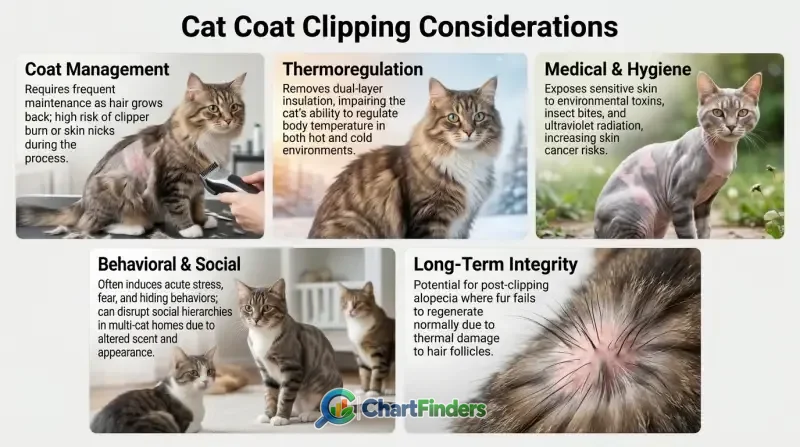
| Coat Management | Instantly removes heavy, unmanageable mats and tangles; drastically reduces household dander and shedding. | Requires frequent maintenance as hair grows back; high risk of clipper burn or skin nicks during the process. |
| Thermoregulation | Provides immediate, temporary relief for long-haired cats suffering in extreme, non-air-conditioned heat waves. | Removes dual-layer insulation, impairing the cat’s ability to regulate body temperature in both hot and cold environments. |
| Medical & Hygiene | Makes topical medication application, wound monitoring, and management of urine/fecal soiling much easier for senior or disabled cats. | Exposes sensitive skin to environmental toxins, insect bites, and ultraviolet radiation, increasing skin cancer risks. |
| Behavioral & Social | Can improve comfort and activity levels in severely matted cats who were previously restricted in movement. | Often induces acute stress, fear, and hiding behaviors; can disrupt social hierarchies in multi-cat homes due to altered scent and appearance. |
| Long-Term Integrity | None directly, other than resetting a neglected, unbrushable coat back to a clean slate. | Potential for post-clipping alopecia where fur fails to regenerate normally due to thermal damage to hair follicles. |
Reviewing this data highlights that while shaving serves as a powerful medical and crisis-management tool, it introduces significant physiological and psychological compromises. The decision should never be made lightly or for human convenience alone.
The Biological Purpose of a Cat’s Coat
To understand why shaving carries risks, one must examine feline coat anatomy. Most domestic cats possess a complex dual coat consisting of guard hairs (the coarse outer layer that repels moisture and dirt) and an undercoat (the fine, dense layer responsible for thermal insulation).
This system works like double-paned glass. In the summer, the undercoat thins out, and the trapped air space helps insulate the cat against external heat while shielding the skin from direct solar radiation. In the winter, the undercoat thickens. Stripping this system away via a full-body shave leaves the cat completely exposed to environmental extremes.
The Benefits of Shaving: When It Is Necessary
Despite the risks, there are clear clinical and practical scenarios where shaving is not only beneficial but necessary for animal welfare.
Managing Severe Matting and Pelting
When long-haired breeds like Persians, Maine Coons, or long-haired domestic mixes are neglected or experience rapid coat felting, brushing becomes impossible. Severe mats pull agonizingly tight on the underlying skin, restricting blood flow, causing open sores, and hiding parasites. In these extreme cases, clipping the mats away is the only humane option, offering instant physical relief.
Hygiene and Senior Care
Elderly, arthritic, or obese cats often lose the flexibility required for self-grooming. This leads to urine and fecal contamination around the hindquarters, which attracts flies and causes painful dermatitis (urine scald). A sanitary shave (often called a “hygiene clip” or “pants cut”) around the rear eliminates this risk and simplifies daily care for owners.
Medical Interventions and Parasite Control
Veterinarians frequently clip sections of a cat’s coat—or perform full body clips—prior to surgeries, ultrasounds, or the treatment of severe dermatological conditions such as ringworm, flea infestations, or miliary dermatitis. Removing the hair allows topical treatments to penetrate directly into the epidermis where they are needed most.
The Drawbacks of Shaving: Risks and Complications
The negative consequences of shaving extend far beyond aesthetics. Cat owners must evaluate several potential hazards before scheduling a grooming appointment.
Compromised Thermoregulation and Sunburn
A common misconception is that shaving a cat keeps them cooler in the summer, much like a human haircut. In reality, a cat’s fur protects them from heat absorption and sunburn. Shaved cats are highly susceptible to solar dermatitis and squamous cell carcinoma, particularly white-eared or light-furred individuals exposed to direct window light or outdoor UV rays.
Skin Trauma and Clipper Burn
Feline skin is remarkably thin, elastic, and delicate compared to canine skin. The subcutaneous layer is loose, making it easy for inexperienced groomers to accidentally nick, cut, or severely irritate the skin with clipper blades. Clipper burn—a painful friction rash—is a frequent complication of improper technique.
Behavioral Stress and Psychological Impact
Grooming is an inherently stressful event for many cats, but the sensory shock of being shaved can amplify anxiety. Without whiskers on their body and the tactile feedback of their fur, some cats become disoriented. , in multi-cat households, a freshly shaved cat looks and smells unfamiliar, which can trigger redirected aggression, bullying, or ostracization from feline housemates.
Post-Clipping Alopecia and Coat Changes
Because hair growth cycles in cats are regulated by ambient temperature and photoperiod, shaving can disrupt normal follicle activity. This is particularly common in medium-to-dark coated breeds (like Siamese mixes), where the skin cools down during shaving, causing the regrown hair to emerge darker (temperature-sensitive pigmentation). More concerning is post-clipping alopecia, where the fur refuses to grow back for months, or remains permanently patchy.
Evaluating Your Cat: A Practical Decision Framework
Determining whether your cat is a candidate for a shave requires a systematic assessment of their health, coat condition, and lifestyle. Use the following criteria to guide your decision-making process:
- Coat Condition Assessment: Are there pelleted mats pulling at the skin, or is the coat simply shedding heavily? If it’s shedding, daily brushing, undercoat rakes, and dietary adjustments are safer alternatives.
- Health and Mobility Status: Is the cat physically capable of grooming themselves? Senior cats with hip dysplasia or arthritis often benefit from localized sanitary clips.
- Environment: Is the cat strictly indoor, and is the home climate-controlled? Shaved outdoor cats face extreme danger from weather, predators, and UV radiation.
- Temperament: Does the cat panic during routine handling? If a cat requires heavy sedation or anesthesia for a shave, the physiological risks of the drugs must be weighed against the benefits of the haircut.
Alternatives to Full-Body Shaving
Before committing to a drastic shave, explore less invasive grooming strategies that mitigate shedding and matting without stripping the cat’s protective layer.
| Alternative Method | Best Used For | Mechanism / Execution |
|---|---|---|
| Line Brushing & De-shedding | Seasonal shedding, preventing early-stage tangles. | Using a metal greyhound comb or specialized de-shedding tool down to the skin layer daily. |
| Sanitary Trim (Sani-Cut) | Hygiene maintenance around the rear for long-haired cats. | Clipping only the fur around the anus and inner thighs, leaving the rest of the coat intact. |
| Comb-Out / Mat Splitting | Targeting isolated small mats before they felt. | Using a mat splitter or fingers to tease apart tangles vertically rather than pulling horizontally. |
| Professional Dematting | Moderate coat neglect under expert care. | Performed by a certified feline master groomer who can safely remove tangles without breaking the skin. |
Frequently Asked Questions
Yes, temporarily. When you shave a cat, you remove the loose undercoat and guard hairs that would normally end up on your furniture and clothing. However, this is a short-term fix; as the coat begins to grow back, shedding will resume. , the regrowing undercoat can sometimes shed more intensely or appear coarser during the transition period.
Not always. In many breeds—particularly color-pointed cats like Siamese or Himalayan mixes—the fur that regrows after shaving comes in noticeably darker. This occurs because the skin temperature drops when exposed, triggering melanin production in hair follicles. In other cases, older cats or those with underlying endocrine disorders may experience delayed regrowth or a woolly, faded coat texture.
Generally, no. A cat’s coat acts as a natural insulator against ambient heat, preventing the sun’s rays from hitting the skin directly. While long-haired cats may seem uncomfortable during summer heatwaves, shaving them rarely improves their comfort unless they are severely matted. Providing air conditioning, clean fresh water, and tiled cool surfaces is far more effective than removing their natural thermal protection.
It is strongly discouraged. Human hair clippers operate at different speeds and often run much hotter than professional animal clippers, increasing the severe risk of burning feline skin. , human clippers easily snag and slice loose feline skin folds. If a cat must be shaved, it should be done by an experienced professional groomer or veterinary technician using specialized, cool-running blades.
Prevention requires a consistent maintenance routine. Daily or weekly brushing with a steel comb that reaches down to the skin prevents loose undercoat hairs from intertwining. Incorporating Omega-3 fatty acid supplements into their diet can also improve skin and coat elasticity, reducing static and tangling. For cats that hate traditional brushes, grooming mitts or introducing sessions paired with positive reinforcement (like treats) can make maintenance manageable.
Conclusion
Shaving a cat is a significant intervention with distinct physiological and behavioral trade-offs. While it remains an invaluable tool for resolving severe, painful matting, managing geriatric hygiene challenges, and assisting with specific veterinary treatments, it should never be undertaken lightly for human convenience or aesthetic trends. By understanding the protective function of the feline coat and exploring targeted alternatives like sanitary trims and diligent brushing, owners can protect their cat’s health, comfort, and natural beauty.