
Few feline breeds command as much instant recognition and passionate devotion as the Siamese. With their signature striking blue eyes, contrasting color points, and sleek, athletic builds, they look like living pieces of art. Yet, bringing a Siamese cat into your home is vastly different from adopting a quiet, independent domestic shorthair. These cats are dynamic, emotionally intense, and deeply invested in the daily lives of their human families.
Understanding whether a Siamese cat fits your lifestyle requires looking far beyond their elegant appearance. To make an informed decision, potential owners must balance the profound emotional rewards of sharing a life with this breed against the significant behavioral, time, and financial commitments they demand. This comprehensive guide breaks down the complete spectrum of Siamese cat pros and cons, examining their personality traits, daily care requirements, health profile, and long-term suitability for various households.
Siamese Cat Pros And Cons: The Complete Master Guide
- Unrivaled Affection: Siamese cats form intense emotional bonds with their owners, often acting more like dogs in their loyalty and desire for constant companionship.
- High Vocalization: They are exceptionally chatty cats with loud, distinctive voices that they use frequently to express opinions, demands, and greetings.
- Demanding of Attention: Because they crave constant mental and social stimulation, leaving them alone for long workdays can trigger severe separation anxiety and depression.
- Sleek and Low-Maintenance Coat: Their fine, short single coats require only weekly brushing and minimal grooming effort compared to long-haired breeds.
- Distinct Health Vulnerabilities: They are prone to specific medical conditions, including dental periodontal disease, progressive retinal atrophy (PRA), inflammatory bowel disease (IBD), and lower urinary tract issues.
- Lifespan and Vitality: With proper indoor care and premium nutrition, a healthy Siamese cat typically enjoys a long lifespan of 10 to 15 years—and frequently longer.
When evaluating any cat breed, a side-by-side comparison of the advantages and challenges provides a necessary foundation. The table below outlines the core characteristics of Siamese cats, contrasting their celebrated positive attributes with the potential hurdles owners commonly face.
| Category | Siamese Pros (Advantages) | Siamese Cons (Challenges) |
|---|---|---|
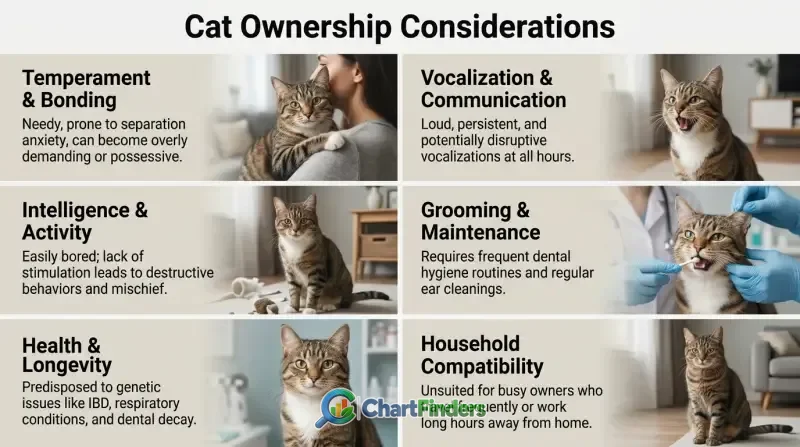
| Temperament & Bonding | Extremely affectionate, dog-like loyalty, highly social with family members. | Needy, prone to separation anxiety, can become overly demanding or possessive. |
| Vocalization & Communication | Expressive, communicative, and entertaining conversational partner. | Loud, persistent, and potentially disruptive vocalizations at all hours. |
| Intelligence & Activity | Highly trainable, learns tricks easily, enjoys interactive puzzle toys and games. | Easily bored; lack of stimulation leads to destructive behaviors and mischief. |
| Grooming & Maintenance | Short, fine coat sheds very little; weekly brushing is usually sufficient. | Requires frequent dental hygiene routines and regular ear cleanings. |
| Health & Longevity | Generally robust athletic build with a respectable average lifespan (10–15+ years). | Predisposed to genetic issues like IBD, respiratory conditions, and dental decay. |
| Household Compatibility | Thrives in multi-pet homes with active dogs and cat-friendly companions. | Unsuited for busy owners who travel frequently or work long hours away from home. |
Analyzing these attributes reveals that the Siamese cat is not a passive background pet. Instead, they are active participants in household dynamics. To truly understand what living with a Siamese entails, we must examine their psychological, physical, and medical traits in detail.
The Undeniable Advantages (Pros) of Owning a Siamese Cat
The enduring popularity of the Siamese breed is well-earned. For the right owner, their unique personality traits make them some of the most rewarding feline companions on earth.
Deep Emotional Bonding and “Dog-Like” Loyalty
Unlike aloof cat breeds that tolerate humans primarily at feeding time, Siamese cats view their owners as central figures in their universe. They are famous for greeting you at the door, following you from room to room, and insisting on sitting in your lap or sleeping directly under the covers at night. This fierce loyalty has earned them the reputation of being “dog-like.” If you want a cat that actively seeks out physical touch, participates in your evening routine, and offers unwavering emotional support, the Siamese excels in this area.
Exceptional Intelligence and Trainability
Siamese cats possess sharp, inquisitive minds. Their high intelligence makes them remarkably easy to train compared to more independent breeds. Many Siamese owners successfully teach their cats to walk on a leash, fetch small toys, and respond to verbal cues or clicker training. This intellectual horsepower also means they quickly figure out how doors, latches, and treat cabinets work, turning everyday household objects into interactive puzzles.
Low-Maintenance Grooming Requirements
Unlike long-haired breeds such as Persians or Maine Coons, which require daily detangling and intensive coat maintenance, the traditional and modern Siamese sports a sleek, short, fine single coat. Lacking a dense undercoat, they shed very little. A quick weekly session with a soft rubber brush or grooming mitt is usually more than enough to remove loose hairs and keep their coat shining with a healthy gloss.
Dynamic Playfulness Throughout Life
Kittenhood energy in a Siamese does not fade easily into old age. These cats retain a playful, kittenish curiosity well into their adult and senior years. Whether they are chasing feather wands, playing high-speed games of tag around the living room, or investigating grocery bags, a Siamese ensures that your home never feels boring or stagnant.
The Significant Challenges (Cons) of Owning a Siamese Cat
While their virtues are formidable, the very traits that make Siamese cats so charming can also present significant challenges. Prospective owners must honestly assess whether they possess the lifestyle and patience required to manage these hurdles.
Intense Vocalization and Loud Demands
The legendary Siamese voice is unmistakable. Unlike the soft purr or occasional meow of other cats, the Siamese voice is often described as raspy, loud, and remarkably human-like in inflection. They do not just communicate when hungry; they narrate their entire day. They will tell you about their morning, complain about closed doors, demand playtime, and announce their presence as they enter a room. For owners who value absolute peace and quiet, a Siamese can quickly become overwhelming.
Severe Separation Anxiety and Loneliness
Because they form such intense attachments to their human families, Siamese cats struggle immensely with isolation. Leaving a Siamese alone in an empty house for 8 to 10 hours a day while you work outside the home is a recipe for behavioral disaster. Neglected Siamese cats frequently develop severe separation anxiety, manifesting as excessive vocal weeping, destructive scratching, house-soiling, or compulsive grooming. They truly thrive best in households where someone is home for significant portions of the day, or where they have a compatible feline companion.
High Need for Mental and Physical Stimulation
A bored Siamese is a destructive Siamese. Their agile bodies and brilliant minds require constant outlets. If left without interactive toys, climbing structures, or puzzle feeders, they will invent their own entertainment—which often includes knocking items off shelves, opening cabinets, or scaling curtains. Keeping a Siamese happy requires a proactive approach to environmental enrichment.
Health Vulnerabilities and Veterinary Needs
While generally robust, the Siamese gene pool carries predispositions to several hereditary and acquired health conditions. Owners must budget for proactive veterinary care and be vigilant about monitoring changes in weight, breathing, and dental health.
- Dental Periodontal Disease: Siamese cats are genetically prone to gingivitis and rapid tartar accumulation, making weekly toothbrushing or professional cleanings essential.
- Gastrointestinal Sensitivity (IBD): Many Siamese lines suffer from sensitive stomachs and are prone to inflammatory bowel disease (IBD) and chronic vomiting.
- Respiratory Issues: Due to their distinct facial structure and heritage, some Siamese cats are susceptible to asthma and upper respiratory infections.
- Congenital Eye Conditions: Historically known for crossed eyes and kinked tails (genetic quirks now mostly bred out of show lines), they remain susceptible to progressive retinal atrophy (PRA).
Understanding Siamese Coat Variations and Body Types
When discussing Siamese cats, it is helpful to understand that the breed has evolved over decades, leading to distinct visual and structural variations that influence both their appearance and physical handling.
Traditional Siamese (Applehead)
The traditional Siamese, often called the “Applehead” due to its rounded skull and robust, heavier-boned body, closely resembles the original cats imported from Thailand in the 19th century. They tend to be slightly calmer, stockier, and less extreme in voice and body shape than their modern counterparts, though they share the signature point coloration and striking blue eyes.
Modern Siamese
The modern show-ring Siamese features an extreme wedge-shaped head, large flared ears, a very long, slender, tubular body, and whip-like tails. While stunning and athletic, modern Siamese cats are often described as having an even more intense, high-strung temperament and higher vocal activity levels than traditional lines.
Regardless of whether you choose a traditional Applehead or a modern wedge-headed Siamese, all recognized Siamese cats share the genetic temperature-sensitive albinism that creates their classic color points (seal point, chocolate point, blue point, and lilac point) on their face, ears, paws, and tail against a lighter body.
Daily Care and Lifestyle Integration
Integrating a Siamese cat into your home requires deliberate preparation. Meeting their physical and emotional requirements prevents behavioral issues and ensures a harmonious household.
Environmental Enrichment Strategies
To prevent destructive boredom, set up your home to challenge your cat’s intellect and agility:
- Vertical Space: Install sturdy cat trees, wall shelves, and window perches so they can survey their territory from above.
- Interactive Toys: Rotate puzzle feeders, automated motion toys, and feather wands regularly so playtime never grows stale.
- Companion Animals: If you work long hours, consider adopting a pair of bonded Siamese cats or matching them with another high-energy, confident cat or dog.
Grooming and Preventive Health Maintenance
Establish a regular routine to address their specific grooming needs:
- Coat & Skin: Weekly brushing with a rubber grooming mitt removes loose dander and maintains their coat’s natural sheen.
- Dental Hygiene: Introduce feline-safe toothpaste and a soft toothbrush gradually. Aim for weekly brushing to stave off periodontal disease.
- Ear Inspections: Check their ears bi-weekly for wax buildup or debris, cleaning gently with a vet-approved cotton ball solution.
To help visualize daily and weekly routines, the maintenance schedule below breaks down essential care tasks, recommended frequencies, effort levels, and consequences of neglect:
| Care Task | Recommended Frequency | Effort Level | Consequence of Neglect |
|---|---|---|---|
| Coat Brushing | Weekly | Low | Mild shedding increase, dander accumulation |
| Litter Box Cleaning | Daily (or automated) | Medium (manual) / Low (automated) | Elimination outside box, behavioral anxiety |
| Ear Cleaning | Every 2 weeks | Low | Debris buildup, infection risk |
| Tooth Brushing | Weekly | Medium | Periodontal disease progression, gingivitis |
| Eye Wiping | As needed (2–3x weekly) | Low | Tear staining, mild irritation |
Common Mistakes to Avoid When Adopting a Siamese
First-time Siamese owners sometimes make critical errors in judgment that lead to frustration for both human and feline. Avoid these common pitfalls:
- Assuming they are independent: Do not treat a Siamese like a typical “cat-loaf” house pet. Ignoring their need for interactive social time will result in behavioral acting-out.
- Punishing vocalizations: Yelling at a chatty Siamese for meowing only stresses them out and increases their vocal volume. Acknowledge them, redirect their energy, or address the underlying need (hunger, boredom, or a closed door).
- Neglecting dental care: Waiting until bad breath or severe tooth decay appears before visiting the vet often results in costly extractions. Proactive brushing is vital.
- Isolating them in small rooms: Shutting a Siamese away from family activities during long workdays triggers severe anxiety. Create an open, stimulating environment for them.
Frequently Asked Questions
Yes, Siamese cats can be fantastic companions for children, provided the children are taught to respect the cat’s boundaries. Because Siamese cats are playful, energetic, and highly interactive, they often enjoy participating in games of fetch and tag with older children. However, their high energy and sensitivity mean they may become stressed or swat if handled roughly by toddlers.
No. Siamese cats have very short, fine single coats without a heavy insulating undercoat. They shed significantly less than long-haired breeds or double-coated cats like Maine Coons or British Shorthairs, making them relatively easy to manage regarding household hair and dander.
Keeping a single Siamese cat while working a standard full-time office job (8 to 10 hours away daily) is generally discouraged unless special arrangements are made. Without companionship or stimulation, lonely Siamese cats suffer from acute separation anxiety, leading to excessive vocalizing, depression, and destructive household behaviors. Many owners successfully manage this by adopting two bonded cats or arranging mid-day pet-sitter visits.
Vocalization is a deeply ingrained genetic trait of the breed. Siamese cats use their voice not merely as a reaction to immediate stimuli, but as a sophisticated tool to converse with their humans. They want to be included in every household event, and their distinct, loud meows are their primary way of expressing opinions, demanding attention, and greeting their favorite people.
With proper indoor care, premium nutrition, and routine veterinary checkups, healthy Siamese cats typically live between 10 and 15 years (averaging 10 to 12.5 years in many modern veterinary metrics). Many individuals easily surpass 15 years of age, remaining playful, affectionate, and alert well into their senior years.
Conclusion
The Siamese cat is an extraordinary feline—brilliant, deeply loving, vocal, and eternally youthful. For owners who view a pet as an active family member rather than a passive home accessory, the pros of loyalty, intelligence, and constant companionship far outweigh the cons.
However, their intense emotional needs, loud voices, and demand for engagement mean they are not suited for every household. By understanding what makes a Siamese thrive—and honestly assessing your own lifestyle, schedule, and patience—you can determine if welcoming one of these striking blue-eyed beauties into your home is the right choice for both you and your future feline companion.