
Understanding the life expectancy and biological milestones of sloths requires moving beyond simple averages to examine the complex interplay between wild ecological pressures and protected captive environments. As arboreal mammals inhabiting the tropical rainforests of Central and South America, sloths have evolved a unique suite of metabolic and behavioral adaptations that govern their aging process. However, their lifespan is rarely a straightforward statistic; it varies drastically depending on whether they navigate the daily hazards of the rainforest canopy or reside in the secure, managed habitats of zoological institutions, rescue centers, and sanctuaries.
For researchers, conservationists, veterinarians, and wildlife enthusiasts, evaluating a sloth lifespan chart provides critical insights into mammalian longevity, metabolic conservation, and the impact of human encroachment on wild populations. This master guide explores the physiological mechanics, environmental determinants, species-specific variations, taxonomic classifications, age-estimation criteria, and data challenges that define how long these remarkable creatures survive.
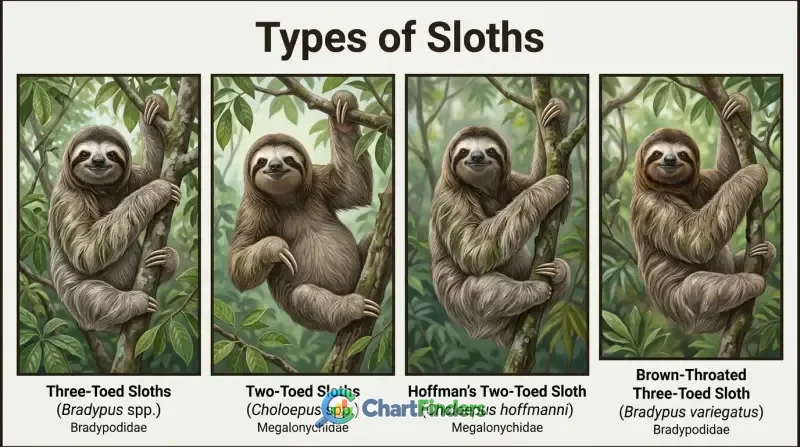
Sloth Lifespan Chart and Comparative Longevity Metrics
- Wild sloths generally face a life expectancy of 20 to 30 years, though many succumb much earlier to predation, habitat loss, and power line accidents.
- Captive sloths routinely exceed their wild counterparts, with well-documented cases reaching 40 to 50 years of age due to consistent nutrition, parasite control, and veterinary medicine.
- Two-toed sloths (genus Choloepus) and three-toed sloths (genus Bradypus) exhibit different metabolic rates, dietary specializations, and coping mechanisms that influence their longevity.
- Accurate field data collection is exceptionally difficult due to dense canopy cover, cryptic coloration, solitary nature, and the logistical constraints of remote Neotropical research stations.
- Anthropogenic threats, including deforestation, forest fragmentation, domestic dog attacks, vehicular trauma, and electrical power line electrocution, drastically truncate the natural lifespan of wild individuals.
- Geriatric indicators in sloths include severe dental wear on enamel-free peg teeth, muscle atrophy, reduced grasping endurance, joint stiffness, and coarsened pelage.
To understand how environmental conditions alter the trajectory of a sloth’s life, researchers rely on comparative frameworks that contrast wild survival realities with protected longevity. The following data highlights the distinct milestones observed across different environments, taxonomic families, and individual species.
| Sloth Category / Species | Taxonomic Family | Wild Average Lifespan | Captive Maximum Lifespan | Primary Mortality Factors in Wild |
|---|---|---|---|---|
| Three-Toed Sloths (Bradypus spp.) | Bradypodidae | 20 – 30 years | 35 – 45 years | Harpy eagles, jaguars, canopy fragmentation |
| Two-Toed Sloths (Choloepus spp.) | Megalonychidae | Not well-documented (estimated ~20 yrs) | 40 – 50 years | Predation, power lines, habitat loss |
| Hoffman’s Two-Toed Sloth (Choloepus hoffmanni) | Megalonychidae | 15 – 25 years (estimated) | 43+ years (e.g., ‘Miss C’) | Infectious disease, vehicular trauma |
| Brown-Throated Three-Toed Sloth (Bradypus variegatus) | Bradypodidae | 20 – 30 years | 35 years | Avian predators, domestic dog attacks |
This comparative overview demonstrates a profound divergence: captive sloths frequently double the lifespan of their wild counterparts. This gap is not merely a product of safety from predators; it reflects the mitigation of chronic starvation risks during droughts, extreme weather fluctuations, heavy parasite loads, and untreated physical trauma.
Visualizing Sloth Longevity: Wild Versus Captive Environments
When analyzing quantitative metrics regarding sloth survival, visual representation helps clarify the extreme variance between natural and managed settings. The data below contrasts average and maximum recorded ages.
Sloth Longevity Comparison (Wild vs. Captive)
Maximum recorded ages and average life expectancies in years.
25 yrs
20 yrs
40 yrs
49 yrs
As illustrated by the comparison above, wild survival rarely reaches the upper boundaries seen in zoological facilities. While a healthy wild sloth can endure for three decades, it must constantly navigate ecological hazards that abruptly terminate its life.
Biological and Metabolic Drivers of Sloth Aging
To understand sloth longevity, one must examine their unique physiological adaptations. Sloths possess an extraordinarily low metabolic rate, consuming a fibrous diet of leaves that yields minimal caloric energy. This slow metabolism acts as a double-edged sword regarding lifespan.
On one hand, low metabolic output reduces oxidative stress and cellular wear-and-tear, a physiological mechanism often associated with longevity in slow-moving or cold-blooded animals. Their body temperature fluctuates widely with ambient environmental conditions—ranging from roughly 24°C to 33°C—which further depresses energy expenditure during cooler weather. This energy-conservation strategy allows them to survive periods of food scarcity or digestive stasis that would prove fatal to other mammals of similar size.
Conversely, this low metabolic rate compromises their ability to recover from trauma. Because digestion can take up to a month, and thermoregulation relies heavily on behavioral adjustments (such as moving into sunlight or dense foliage), a sick or injured sloth struggles to mount a rapid metabolic defense against infection, poison, or physical shock. , their multi-chambered stomach relies on precise symbiotic bacterial fermentation; any disruption in ambient temperature or diet can cause digestive shutdown.
Taxonomic Distinctions: Three-Toed Versus Two-Toed Lifespans
The order Pilosa separates living sloths into two distinct families: Bradypodidae (three-toed sloths, genus Bradypus) and Megalonychidae (two-toed sloths, genus Choloepus). These groups diverged millions of years ago, resulting in distinct ecological niches and physiological traits that influence their life spans.
Three-Toed Sloths (Genus Bradypus)
Three-toed sloths are strict folivores, specializing almost exclusively in the leaves of specific canopy trees like Cecropia. Their digestive systems rely on a complex, multi-chambered stomach populated by specialized symbiotic bacteria. Because their diet is exceptionally low in energy, their movements are agonizingly slow. Field studies indicate that wild three-toed sloths live between 20 and 30 years when undisturbed. However, their strict dietary specialization makes them notoriously difficult to maintain in captivity, where improper diet frequently leads to premature mortality.
Two-Toed Sloths (Genus Choloepus)
Two-toed sloths are larger, more robust, and less specialized in their diet. While they remain primarily folivorous, they readily supplement their intake with fruit, flowers, bark, and occasional small insects. This dietary flexibility allows them to adapt more readily to captive environments, where institutional diets can replicate their nutritional needs. Consequently, two-toed sloths—such as Hoffman’s two-toed sloth (Choloepus hoffmanni) and Linnaeus’s two-toed sloth (Choloepus didactylus)—hold the longevity records in captivity, with documented specimens surpassing 40 to 50 years of age.
Wild Versus Captive Realities: Why the Lifespan Gap Exists
The discrepancy between wild and captive lifespans is one of the most pronounced features of sloth biology. Examining the day-to-day conditions of both environments clarifies why longevity metrics diverge so sharply.
Wild Survival Pressures
In their native Neotropical habitats, sloths face constant ecological dangers. Major natural predators include the harpy eagle, crested eagle, ocelot, and jaguar. While sloths possess cryptic coloration (often enhanced by symbiotic green algae growing in their fur) and remain largely motionless to avoid detection, an attack in the canopy is frequently fatal.
Beyond predation, wild sloths face severe anthropogenic threats. Deforestation and forest fragmentation force sloths to descend to the ground more frequently, exposing them to vehicular trauma, domestic dog attacks, and ground predators. , urban expansion introduces uninsulated power lines; sloths attempting to traverse electrical wires suffer catastrophic electrocutions, which account for a high percentage of wildlife rescue admissions across Central America.
Protected Institutional Environments
In accredited zoos, rescue centers, and sanctuaries, external mortality factors are largely eliminated. Protected from apex predators, provided with precisely calibrated nutritional formulas, and granted immediate veterinary intervention for illnesses, captive sloths experience minimal premature mortality. Veterinary care includes treatment for parasitic infections, dental maintenance, and management of age-related conditions such as arthritis. This medical safety net allows them to reach their absolute genetic senescence limits, with record-holders like ‘Miss C’ reaching 43 years in captivity and the absolute record reaching 49 years.
The Challenges of Field Research and Data Collection
Accurately charting the lifespan of wild sloths presents significant methodological hurdles for field biologists. Several factors explain why long-term demographic studies remain scarce:
- Inaccessible Habitat: Sloths spend nearly their entire lives high in the rainforest canopy, often 30 meters or more above the ground, making constant visual tracking difficult.
- Cryptic Nature: Their slow movement, silent behavior, and camouflage against foliage render them nearly invisible during standard wildlife surveys.
- Capture Stress: Capturing, tagging, and repeatedly sampling wild sloths induces severe physiological stress, which can inadvertently compromise their health and skew survival data.
- Logistical Constraints: Long-term ecological funding in remote Neotropical field stations often fluctuates, preventing multi-decade tracking of individual cohorts from birth to natural death.
Because of these obstacles, much of what is known about wild longevity relies on long-term radio-telemetry projects, community science reporting, and retrospective analysis of rescue center intake records rather than continuous life-table tracking from birth.
Practical Guidelines for Assessing Sloth Age and Health
For wildlife rehabilitators, veterinarians, and researchers examining an individual sloth, estimating age requires evaluating a combination of morphological and dental markers. Unlike many mammals, sloths do not possess continuous-root incisors or easily readable tooth eruption schedules past adolescence.
Key Indicators of Maturity and Aging
- Dental Wear: Sloth teeth are simple, peg-like molars and premolars without enamel, which continuously grow and wear down against opposing teeth. Extreme dental flattening, loss of sharp occlusal edges, and deep wear grooves generally indicate an older adult.
- Pelage and Skin Condition: Younger sloths exhibit fine, soft fur and vibrant coloration (often yellowish-green due to symbiotic green algae growing in hair cuticular channels). Older individuals may display coarser hair, patchy hair loss, or greying around the face.
- Muscular Tone and Mobility: Younger adults demonstrate robust grip strength and agile climbing mechanics. Geriatric sloths often show signs of muscle atrophy, reduced grasping endurance, and joint stiffness indicative of osteoarthritis.
- Claw Growth and Integrity: While claws grow continuously, older sloths may exhibit splitting, unusual curvature, or excessive wear depending on their historical substrate exposure in the wild versus captive enclosures.
Common Misconceptions Regarding Sloth Lifespan
Several persistent myths surround the biology and life expectancy of sloths. Addressing these misconceptions clarifies the realities of their existence:
- Myth: Sloths die immediately upon touching the ground. While ground travel increases their vulnerability to predators and accidents, sloths are surprisingly robust swimmers and can crawl effectively across soil when necessary. Ground exposure is dangerous, but it is not an instantaneous death sentence.
- Myth: Captive sloths live shorter lives due to stress. While poorly managed captive conditions or illegal the pet trade cause devastatingly high mortality rates, sloths housed in professional, accredited zoological facilities consistently outlive their wild counterparts.
- Myth: All sloth species have identical lifespans. Significant physiological differences exist between two-toed and three-toed genera, affecting their dietary resilience, metabolic rates, and overall longevity.
Frequently Asked Questions
The maximum verified age for a captive sloth is 49 years. Several individual sloths in zoological care have surpassed four decades of life, benefiting from protected environments, specialized diets, and continuous veterinary oversight.
Captive sloths are shielded from the primary causes of wild mortality, which include predation by harpy eagles and jaguars, severe weather events, food scarcity during droughts, parasitic overload, and anthropogenic hazards like power line electrocutions and road collisions.
No. Sloth teeth lack traditional enamel and are composed of simplified dentin that grows continuously. Because their tooth structure does not form distinct annual growth rings like those found in tree trunks or the teeth of certain carnivores, exact chronological age cannot be reliably determined post-mortem through dental sectioning alone.
Two-toed sloths (genus Choloepus) generally achieve greater longevity in captivity—frequently exceeding 40 years—primarily due to their broader dietary flexibility and more robust digestive adaptations. Three-toed sloths (genus Bradypus) have stricter dietary requirements that make them challenging to maintain long-term outside their native canopy.
Field researchers use a combination of radio telemetry, mark-recapture studies, non-invasive genetic sampling, and long-term behavioral observation plots. However, because tracking canopy-dwelling mammals across dense tropical forests is exceptionally difficult, much of the baseline survival data remains estimated.
Conclusion
The lifespan of a sloth is a to the trade-offs of evolutionary specialization. Balancing a sluggish metabolism, specialized arboreal habits, and extreme vulnerability to habitat disruption, wild sloths typically achieve a life expectancy of 20 to 30 years. When sheltered from ecological hazards and nutritional deficits in captivity, these resilient animals can double that timeline, reaching ages approaching half a century. Understanding these longevity markers highlights not only the biological resilience of sloths but also the urgent need to preserve their fragile Neotropical rainforest habitats from encroaching human pressures.