
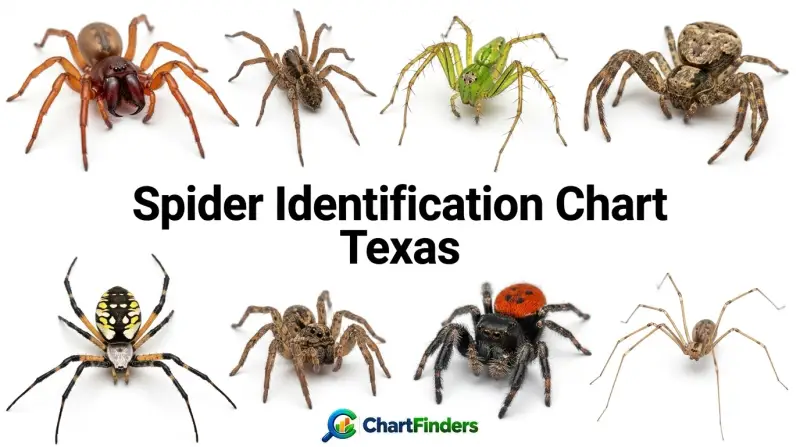
Navigating the sheer biodiversity of arachnids in the Lone Star State can feel overwhelming. From the humid piney woods of East Texas to the arid expanses of West Texas and the subtropical brushlands of the Rio Grande Valley, spiders are a ubiquitous part of the local ecology. While the vast majority of these eight-legged predators are entirely harmless—and actively beneficial by keeping insect populations in check—a few species possess venom capable of causing severe medical complications. When an encounter happens indoors or in a backyard, panic often sets in, leading to unnecessary chemical treatments or dangerous misdiagnoses.
This master guide is designed to cut through the confusion. Rather than relying on old wives’ tales or blurry internet photos, you need a systematic, reliable approach to spider identification. We will break down the defining visual traits, behavioral patterns, preferred habitats, and venom potentials of the most commonly encountered spiders in Texas. By understanding these distinctions, you can safeguard your property, protect your family, and separate dangerous pests from benign neighbors.
Spider Identification Chart Texas
- Texas hosts over 900 spider species, but only two—the Brown Recluse and the Black Widow—pose significant medical threats to humans through venom.
- The Brown Recluse is identified by its distinct violin-shaped dorsal marking and an eye arrangement featuring three pairs (six total eyes) set in a semicircle.
- Black Widows are instantly recognizable by their glossy black bodies and the trademark red or orange hourglass marking on the underside of the abdomen.
- Texas Wolf Spiders are large, hairy, and often mistaken for recluses, but they are robust, active ground hunters that lack the violin mark and possess eight eyes in a distinct stacked pattern.
- Jumping spiders are curious, excellent jumpers with large forward-facing eyes, frequently found in sunny outdoor spots and windowsills.
- Professional pest control management focuses heavily on eliminating clutter, sealing structural entry points, and reducing harborage sites rather than broad-spectrum spraying.
To make quick and accurate assessments in the field, use the following comprehensive spider identification chart. This matrix compares the key physical characteristics, web structures, and behavioral tendencies of the most frequently encountered spiders across Texas.
| Spider Species | Size (Body Length) | Color & Markings | Eye Arrangement | Web Type / Habitat | Venom / Medical Significance |
|---|---|---|---|---|---|
| Brown Recluse (Loxosceles reclusa) | 1/4 to 3/4 inch | Fawn to dark brown; dark violin shape on cephalothorax pointing backward. | 6 eyes arranged in 3 dyads (pairs) in a semicircle. | Irregular, sticky retreat webs in dark, undisturbed areas (attics, boxes). | Necrotic venom; causes localized tissue breakdown and systemic symptoms in rare cases. |
| Southern Black Widow (Latrodectus mactans) | 3/8 to 1/2 inch (females) | Glossy jet black with bright red/orange hourglass on ventral abdomen. | 8 small eyes arranged in two curved rows. | Messy, irregular 3D scaffolding webs close to ground level (woodpiles, sheds). | Neurotoxic venom; causes severe muscle cramps, abdominal rigidity, and systemic pain. |
| Texas Wolf Spider (Family Lycosidae) | 1/2 to 2 inches | Mottled gray, brown, or black; earthy tones providing camouflage. | 8 eyes in 3 rows (4 small bottom, 2 large middle, 2 medium top). | No web; active ground hunter that burrows or hides under debris and rocks. | Mildly venomous; painful bite comparable to a bee sting, non-necrotic. |
| Jumping Spider (Family Salticidae) | 1/8 to 3/4 inch | Compact, hairy, often brightly colored or metallic; stocky build. | 8 eyes with two massive forward-facing lenses giving high visual acuity. | No web; uses silk safety dragline while hunting actively in bright, sunny areas. | Harmless; extremely reluctant to bite; venom poses no medical threat. |
| Orchard Orb Weaver (Leucauge venusta) | 1/4 to 3/8 inch | Vibrant green, silver, yellow, and orange markings on an elongated abdomen. | 8 small eyes in two rows. | Large, highly organized circular wheel webs spun in gardens and shrubs. | Harmless; purely beneficial garden predator feeding on flying insects. |
When analyzing a spider, always cross-reference multiple traits rather than relying on a single feature. Coloration alone can vary widely within the same species depending on age, molt cycle, and environmental conditions, making anatomical features like eye arrangements and distinct markings far more reliable diagnostic tools.
Medically Significant Spiders in Texas
Of all the arachnids crawling across the Lone Star State, only two groups demand immediate caution due to the potency of their venom: recluses and widows. Knowing how to identify these two groups protects you from misidentifying harmless look-alikes while ensuring you take proper precautions when working in dark or cluttered environments.
The Brown Recluse (Loxosceles reclusa)
The Brown Recluse is infamous across Texas, particularly in the northern, central, and eastern regions. Contrary to popular belief, they are not aggressive and will only bite when trapped against human skin—such as when putting on a shoe left on the floor or sliding an arm into a dusty box.
- The Violin Mark: The most cited identifier is the dark, violin-shaped marking on the dorsal side of the cephalothorax (the fused head and thorax). The “neck” of the violin points backward toward the abdomen. However, keep in mind that other harmless spiders can have incidental markings that resemble this shape.
- Legs and Uniformity: Unlike many spiders, their legs are long, slender, and uniformly light brown without any bands, stripes, or prominent spines. Their bodies lack hair (setae), giving them a smooth appearance.
- Eye Pattern: The definitive scientific identifier is the presence of six eyes rather than the standard eight. They are arranged in three distinct pairs (dyads) forming a semicircle on the front of the head.
The Southern Black Widow (Latrodectus mactans)
Widow spiders thrive throughout Texas in sheltered, dimly lit microhabitats. Only adult females are medically significant; males are much smaller, lighter in color, and entirely harmless.
- Appearance: The adult female is strikingly shiny, jet black, and spherical, with a bulbous abdomen that frequently displays a bright red or orange hourglass shape on the underside. Some variants may feature red spots or broken striping.
- Web Architecture: Black widows construct messy, disorganized, highly sticky webs near ground level. If you tap the web with a stick, you will notice its incredible tensile strength compared to the delicate webs of cellar spiders.
- Venom Action: The venom contains latrotoxin, a powerful neurotoxin that affects the nervous system. Bites cause intense local pain followed by painful muscle cramping, rigidity in the abdomen and back, sweating, and nausea. While rarely fatal to healthy adults, a bite requires immediate medical evaluation.
Common Harmless Texas Spiders
The vast majority of spiders encountered by Texans pose zero threat to human health. Recognizing these beneficial species prevents unnecessary panic and preserves the natural pest control ecosystem around your home.
Texas Wolf Spiders (Family Lycosidae)
Wolf spiders are large, robust hunters that frequently wander indoors during seasonal shifts, particularly in autumn when temperatures drop. Because of their size and speed, homeowners often mistake them for brown recluses or tarantulas.
- Physical Build: They are heavily built, densely covered in hair, and colored in earthy shades of gray, brown, and black. Their legs are stout and spiny.
- Behavior: They do not spin webs to catch prey; instead, they chase down insects on foot. Female wolf spiders exhibit unique maternal care, carrying their egg sacs attached to their spinnerets and later carrying hundreds of spiderlings on their backs.
Jumping Spiders (Family Salticidae)
Jumping spiders are among the most charismatic arachnids in Texas gardens and homes. They possess incredible vision and can leap distances up to several times their body length to capture prey.
- Facial Features: They are easily identified by a compact, stocky body and a blunt face featuring two enormous, forward-facing central eyes that give them an intelligent, alert expression.
- Habitat: They are strictly diurnal hunters, thriving in bright, sunny areas along windowsills, garden fences, and exterior walls. They are remarkably docile and rarely bite unless handled roughly.
Orb Weavers (Family Araneidae)
If you walk into a symmetrical, wheel-shaped web strung across a porch or garden path in the late summer or fall, you have likely encountered an orb weaver. Species like the Yellow Garden Argiope or Orchard Orb Weaver display stunning geometrical webs and colorful abdomens. They are completely harmless to humans and act as frontline defenders against mosquitoes, flies, and moths.
Habitat and Geographical Distribution Across Texas
Texas spans multiple distinct ecological zones—ranging from the Piney Woods and Gulf Coast prairies to the Edwards Plateau, Rolling Plains, and Trans-Pecos deserts. Spider distribution is heavily dictated by climate, humidity, and available shelter.
In the humid eastern and coastal sectors, cellar spiders, wolf spiders, and orb weavers thrive in abundance. Meanwhile, the dry, rocky soils of Central and West Texas provide ideal conditions for the Brown Recluse, Texas brown tarantulas, and desert black widows. Indoors, climate-controlled buildings create artificial microclimates where spiders can survive year-round regardless of exterior weather extremes.
| Region | Dominant Climate | Common Spider Species | Primary Harborage Zones |
|---|---|---|---|
| East Texas / Piney Woods | Humid, sub-tropical, heavily forested | Orb weavers, fishing spiders, cellar spiders, southern black widows | Tree bark, dense leaf litter, crawlspaces, damp basements |
| Central Texas / Hill Country | Semi-arid, rocky limestone terrain, hot summers | Brown recluse, Texas wolf spider, orchard orb weaver, tarantulas | Rock crevices, limestone caves, dry woodpiles, undisturbed garages |
| West Texas / Trans-Pecos | Arid desert, extreme temperature swings | Desert blonde tarantula, desert black widow, jumping spiders | Under boulders, desert scrub, deep ground burrows, abandoned rodent holes |
| Gulf Coast / South Texas | High humidity, subtropical brush | Banana spiders (golden silk orb weavers), southern black widows, lynx spiders | Tall coastal grasses, dense shrubbery, outdoor storage sheds |
Practical Prevention and Management Strategy
Effective spider management in Texas relies on integrated pest management (IPM) principles. Spraying liquid insecticides haphazardly across baseboards rarely solves a spider infestation because spiders do not groom themselves like insects and often walk above treated surfaces on long legs. Instead, manage populations by altering the environment.
- Eliminate Harborage Sites: Move firewood piles, bricks, and lumber stacks at least 20 feet away from the exterior foundation of your home. Clear heavy mulch and dense vegetation away from exterior walls.
- Seal Entry Points: Install tight-fitting door sweeps, repair torn window screens, and caulk utility penetrations, cracks in the foundation, and gaps around siding.
- Reduce Indoor Clutter: Minimize cardboard boxes stored directly on garage or attic floors, as these provide ideal harborage for brown recluses. Switch to sealed plastic storage bins.
- Control Insect Populations: Spiders follow their food source. By using yellow exterior bug lights and treating general insect pests, you eliminate the prey base that attracts spiders to your structure.
- Vacuum Regularly: Routinely vacuum corners, baseboards, window tracks, and dark closets to capture spiders, egg sacs, and webs before populations multiply.
Common Mistakes and Identification Pitfalls
Even experienced homeowners and amateur naturalists frequently fall victim to common identification myths. Avoiding these pitfalls ensures you respond appropriately to potential risks.
- Assuming Every Brown Spider is a Recluse: Many harmless species—such as nursery web spiders, grass spiders, and male wolf spiders—are brown, leading to widespread misidentification. Always verify the eye arrangement and violin pattern before panicking.
- Blaming Every Skin Lesion on a Spider Bite: Medical research indicates that true necrotic spider bites are exceedingly rare. Many skin lesions attributed to “brown recluse bites” are actually caused by MRSA infections, staph bacteria, diabetic ulcers, or chemical burns. If you did not catch the spider in the act, consult a medical professional for proper diagnosis.
- Relying Solely on Bug Bombs (Total Release Foggers): Aerosol foggers settle on open horizontal surfaces and rarely penetrate the deep, dark cracks where recluses and widows hide. Targeted crack-and-crevice treatments or professional dusting are vastly more effective.
Frequently Asked Questions
How can I tell the difference between a Brown Recluse and a Wolf Spider?
The easiest distinction is physical build and markings. Brown recluses are small, delicate, light brown, have a violin mark on the back, and possess six eyes in three pairs. Texas wolf spiders are large, hairy, robust, lack a violin mark, and have eight eyes arranged in a distinct three-row pattern.
Are tarantulas dangerous to humans in Texas?
No. Texas is home to several tarantula species (such as the Texas Brown Tarantula). While they look intimidating due to their massive size and hairiness, their venom is mild—comparable to a bee sting—and they are extremely docile. When threatened, they typically flick irritating defensive hairs off their abdomen rather than bite.
What should I do if I am bitten by a Black Widow?
Stay calm, clean the bite area thoroughly with soap and water, apply a cold compress to reduce swelling, and seek immediate medical attention. If possible (and safe to do so without risking another bite), capture or photograph the spider for positive identification to assist medical personnel.
Why am I suddenly seeing so many spiders inside my Texas home?
Sudden indoor spider sightings usually occur during seasonal temperature shifts—such as the onset of autumn cooling or extreme summer heat waves—when outdoor insects and spiders seek shelter, moisture, and stable temperatures inside climate-controlled structures.
Can professional pest control completely eliminate spiders?
Complete eradication of outdoor spiders is impossible due to the natural ecology of Texas. However, a professional pest management strategy can drastically reduce indoor populations, establish protective exterior barriers, and eliminate the structural conditions that invite pests inside.
Conclusion
Encountering spiders in Texas is an inevitable part of living alongside the state’s rich and diverse wildlife. By learning to accurately identify medically significant species like the Brown Recluse and Black Widow while appreciating harmless neighbors like jumping spiders and wolf spiders, you can approach pest management with confidence rather than fear. Focus your efforts on sound exclusion techniques, decluttering, and targeted habitat modification to maintain a safe, comfortable, and spider-controlled home environment.