
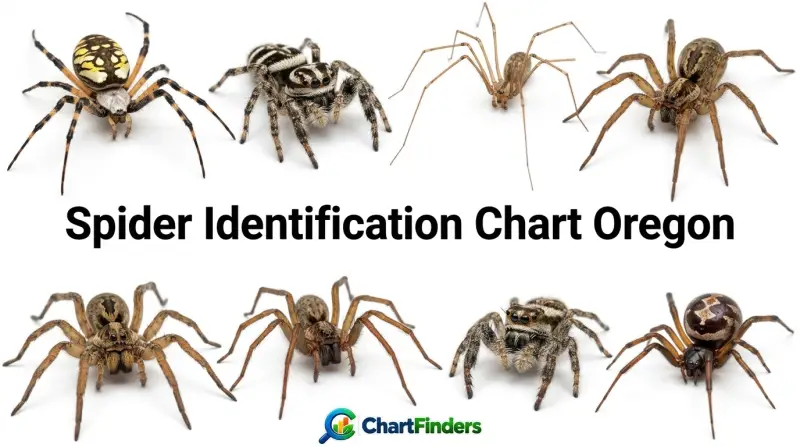
The vast majority of spiders encountered in Oregon are entirely harmless to humans, acting as beneficial generalist predators within local ecosystems. While the region hosts diverse arachnid fauna—including the newly expanding Trichonephila clavata (Joro spider)—only the Western Black Widow (Latrodectus hesperus) possesses medically significant venom in the state, making accurate morphological identification critical for managing encounters.
The Pacific Northwest features an extraordinarily rich arachnid biodiversity, driven by varied microclimates that range from coastal rainforests to arid high deserts. For residents, hikers, and property owners, encountering these eight-legged arthropods is a daily reality, particularly during seasonal shifts when mature specimens seek refuge indoors or engage in mate-seeking behaviors. Unfortunately, widespread sensationalism surrounding invasive species and medically significant venom often leads to unnecessary panic. Distinguishing between a benign orb-weaver, a fast-moving funnel-web grass spider, and a medically hazardous widow requires careful examination of anatomical structures, web architecture, and behavioral patterns.
This reference guide provides an exhaustive breakdown of Oregon’s arachnid population. By examining precise morphological indicators, regional distribution maps, and behavioral ecology, readers can reliably navigate identification challenges, separate regional myths from scientific fact, and understand how to coexist safely with these essential biological controllers.
Spider Identification Chart Oregon
- Only one native arachnid in Oregon poses a genuine medical threat: the Western Black Widow (Latrodectus hesperus).
- The brown recluse (Loxosceles reclusa) is not native to Oregon; reported bites or sightings nearly always involve local look-alikes such as hobo spiders or giant house spiders.
- The Joro spider (Trichonephila clavata), native to East Asia, is expanding its geographic footprint along the West Coast, but it remains harmless to humans and constructs massive, golden-hued aerial webs.
- Most common household spiders—including cellar spiders (Pholcidae) and grass spiders (Agelenidae)—are timid, non-aggressive, and ecologically valuable pest controllers.
- Accurate identification relies on examining eye arrangement, spinneret morphology, and cephalothorax markings rather than relying solely on coloration or size.
To systematically identify arachnids found throughout the Pacific Northwest, observers must rely on standardized morphological categories. The following comprehensive reference matrix outlines the primary spider families, invasive arrivals, and look-alikes encountered across Oregon habitats.
| Common Name | Scientific Name | Approximate Size (Body) | Web Architecture | Venom / Medical Significance | Key Identification Clues |
|---|---|---|---|---|---|
| Western Black Widow | Latrodectus hesperus | 8–15 mm (Females) | Irregular, messy, three-dimensional tangle close to the ground | Medically significant (Neurotoxic) | Glossy black body with a distinctive red or orange hourglass marking on the ventral abdomen. |
| Hobo Spider | Eratigena agrestis | 11–14 mm | Non-sticky, horizontal sheet web with a funnel-shaped retreat | Historically debated; modern consensus considers bites non-necrotic and minor | Brownish body with chevron (V-shaped) patterns on the dorsal abdomen; lacks distinct leg banding. |
| Giant House Spider | Eratigena atrica | 10–18 mm | Large, flat funnel-web in dark corners, basements, or woodpiles | Harmless (Minor mechanical puncture only) | Robust, hairy brown legs and body; darker markings on the cephalothorax; significantly larger than the hobo spider. |
| Joro Spider | Trichonephila clavata | 17–25 mm (Females) | Large, complex orb-shaped web exhibiting a distinct golden sheen | Harmless (Non-aggressive, low toxicity) | Bright yellow and slate-blue horizontal bands across the dorsal abdomen; long, banded legs. |
| Banded Garden Spider | Argiope trifasciata | 15–25 mm (Females) | Large orb web featuring a thick, zig-zag stabilization web (stabilimentum) | Harmless | Silver-grey cephalothorax with striking yellow, silver, and black transverse bands on the abdomen. |
| Yellow Sac Spider | Cheiracanthium punctorium | 5–10 mm | No aerial web; constructs a silken tubular retreat in leaves or wall corners | Mildly venomous; localized pain and redness, rarely necrotic | Pale yellow-green coloration; dark line running down the dorsal abdomen; prominent anterior spinnerets. |
| Long-Bodied Cellar Spider | Pholcus phalangioides | 7–9 mm | Irregular, chaotic 3D tangle in damp, dark structural voids | Harmless | Extremely long, spindly legs; pale grey-brown body; rapid vibrating defense mechanism when disturbed. |
Evaluating this data requires understanding that size measurements typically exclude leg span, focusing strictly on the combined length of the cephalothorax and abdomen. , geographical distribution within Oregon heavily influences encounter rates; species such as the Western Black Widow thrive east of the Cascades and in southern interior valleys, while giant house spiders and cellar spiders dominate humid coastal and urban western environments.
Anatomical Foundations of Arachnid Taxonomy
Proper identification demands moving beyond casual observation and examining specific anatomical traits. All spiders possess two primary body segments: the cephalothorax (fusion of the head and thorax) and the abdomen (opisthosoma), joined by a narrow pedicel. Diagnostic features used by entomologists include:
- Eye Arrangement (Ocular Pattern): Most true spiders possess eight simple eyes arranged in two rows of four. The size, spacing, and curvature of these rows separate families (e.g., Lycosidae possess a distinct pair of very large secondary eyes).
- Chelicerae and Fangs: The mouthparts used to inject venom. In Mygalomorphs (such as tarantulas), fangs move vertically parallel to the body axis; in Araneomorphs (the vast majority of Oregon spiders), fangs oppose each other like pinchers.
- Spinnerets: Silk-spinning appendages located at the posterior ventral tip of the abdomen. The number, length, and positioning of spinnerets assist in distinguishing funnel-web weavers from gnaphosid ground spiders.
Medically Significant Species in Oregon: Fact Versus Fiction
Public anxiety regarding arachnid envenomation is frequently fueled by urban legends and misdiagnosed dermatological lesions. Within Oregon, the landscape of medically significant species is exceptionally narrow.
The Western Black Widow (Latrodectus hesperus)
The Western Black Widow is the sole native species in Oregon capable of delivering systemically dangerous venom. Females possess potent latrotoxins that trigger massive acetylcholine release across motor nerve terminals, resulting in severe muscle cramping, abdominal rigidity, diaphoresis, and hypertension.
Morphologically, adult females are unmistakable: glossy jet-black bodies measuring up to 15 mm, bearing a brilliant red or orange hourglass figure on the underside of the globose abdomen. Juveniles and males exhibit various white, red, and brown striping patterns and are rarely capable of inflicting a significant human bite. Widows are characteristically reclusive, selecting sheltered, low-traffic microhabitats such as woodpiles, meter boxes, under unmaintained agricultural equipment, and dry crawlspaces.
The Brown Recluse Myth (Loxosceles reclusa)
A persistent misconception across Oregon is the presence of the brown recluse spider. Entomological surveys confirm that Loxosceles reclusa is native to the Midwestern and Southeastern United States and does not maintain established populations in Oregon. Reports of “brown recluse bites” in the Pacific Northwest are invariably misdiagnoses of MRSA (methicillin-resistant Staphylococcus aureus) infections, tick-borne illnesses, necrotic chemical burns, or reactions to secondary bites from non-lethal local species.
Invasive and Expanding Species: The Joro Spider Context
In recent years, biogeographical shifts have brought increased attention to non-native species establishing footholds in North America. The Joro spider (Trichonephila clavata), native to temperate regions of East Asia, has captured public interest due to its rapid range expansion.
While established populations are concentrated primarily in the southeastern United States, individual specimens and expanding lines are monitored closely across western states, including parts of Oregon. Identifying characteristics of the Joro spider include:
- Visual Appearance: Striking yellow and slate-blue transverse bands across the dorsal abdomen, with females growing up to an inch in body length.
- Web Architecture: Construction of massive, multi-layered orb webs characterized by a distinct golden proteinaceous silk that glitters intensely in direct sunlight.
- Ecological Impact: Joro spiders are prolific predators of invasive agricultural pests, including the brown marmorated stink bug. Despite their intimidating size, they are extraordinarily docile, possess venom specialized for insect prey that is harmless to humans and domestic pets, and utilize ballooning (dispersal via silken threads in the wind) to expand their geographic range.
Common Household and Garden Look-Alikes
Homeowners frequently panic when encountering large, fast-moving spiders indoors. Understanding the behavioral traits and structural markers of common benign species prevents unnecessary chemical applications.
Giant House Spiders and Hobo Spiders (Agelenidae Family)
Members of the funnel-web weaver family (Agelenidae) are among the most frequently encountered spiders inside Oregon residences during late summer and autumn mating seasons.
- Giant House Spider (Eratigena atrica): These are among the largest indoor spiders in the state. They construct dense, flat sheet webs terminating in a tubular retreat in dark corners, behind furniture, or within basements. They are heavily patterned with mottled browns and dirty yellows.
- Hobo Spider (Eratigena agrestis): Historically vilified as a dangerous necrotizing agent, contemporary arachnological toxicology has largely exonerated the hobo spider. Controlled studies demonstrate their venom does not cause severe necrotic lesions in humans. They feature distinct herringbone or chevron markings down the center of the abdomen and uniformly colored, unbanded legs.
Cellar Spiders (Family Pholcidae)
Often colloquially misidentified as “daddy longlegs” (which are actually harvestmen, an entirely different arachnid order, Opiliones), cellar spiders inhabit upper corners of rooms, garage rafters, and damp basements. They possess remarkably delicate, elongated legs and tiny bodies. When disturbed, they engage in a rapid gyroscopic bouncing motion within their web, blurring their silhouette to confuse potential avian or mammalian predators.
Ecological Role and Pest Control Value
Spiders represent the pinnacle of terrestrial invertebrate predation. As obligate carnivores, native Oregon spider populations consume millions of structural and agricultural pests annually, including mosquitoes, flies, aphids, fungus gnats, and agricultural beetles.
Utilizing broad-spectrum chemical insecticides indoors to eradicate harmless orb-weavers or cellar spiders is generally counterproductive. Doing so often eliminates natural predation pressure while triggering secondary outbreaks of resilient structural pests. Sustainable pest management relies on non-chemical exclusion tactics: sealing foundation cracks, installing fine-mesh window screens, removing dense vegetative mulch from immediate building perimeters, and managing indoor humidity levels.
Frequently Asked Questions
Are there any dangerous spiders native to Oregon besides the black widow?
No. While several species—such as yellow sac spiders and hobo spiders—can deliver a defensive mechanical bite resulting in localized pain, swelling, or minor inflammation, the Western Black Widow is the only native species in Oregon with medically significant, systemic neurotoxic venom.
How can I tell the difference between a hobo spider and a giant house spider?
Size and leg morphology are primary indicators. Giant house spiders (Eratigena atrica) are substantially larger, possessing distinctly hairy legs with faint banding. Hobo spiders (Eratigena agrestis) are smaller, exhibit distinct V-shaped chevron patterns on the dorsal abdomen, and feature uniform, unbanded legs.
Is the brown recluse spider found in Oregon?
No. The brown recluse (Loxosceles reclusa) is not established in Oregon. Encounters or suspected necrotic bites attributed to brown recluses in the Pacific Northwest are almost universally misdiagnoses of bacterial infections (such as staph), tick-borne illnesses, or localized allergic reactions.
What should I do if I find a Western Black Widow near my home?
Do not attempt to handle the spider with bare hands. Wear heavy leather gloves and long sleeves if you must move items where they congregate. Widows can be relocated outdoors safely by gently nudging them into a sealed container using a long stick, or targeted with EPA-registered structural aerosol insecticides if located in high-traffic children or pet areas.
Do Joro spiders pose a threat to pets or humans in Oregon?
No. Joro spiders are completely harmless to humans and domestic companion animals. Their chelicerae are generally too weak to easily puncture human skin, and their venom is highly specialized for immobilizing small flying insects caught in their golden webs.
Conclusion
Navigating Oregon’s arachnid biodiversity requires separating scientific observation from persistent cultural myths. While the state supports a vast array of species ranging from massive orb-weavers to subterranean cellar dwellers, the actual threat of envenomation is remarkably low, anchored solely by the Western Black Widow. By relying on precise anatomical identification—such as ocular arrangements, abdominal patterns, and web architecture—residents can accurately classify local populations, appreciate their in natural pest suppression, and maintain safe, informed coexistence with the region’s beneficial arthropods.