
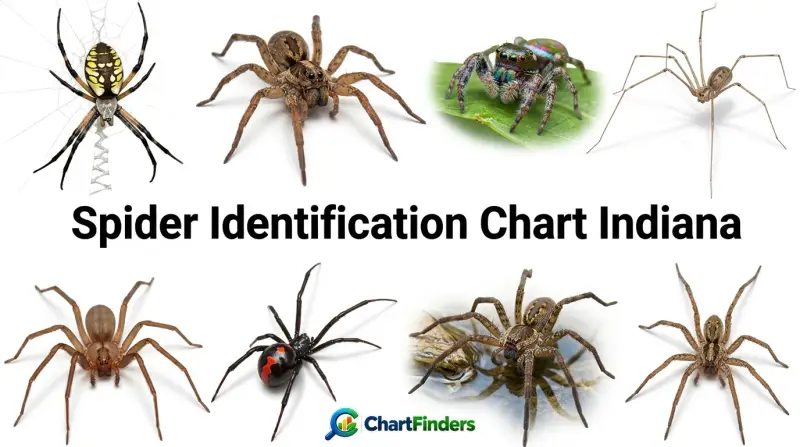
The state of Indiana boasts an exceptionally rich arachnid biodiversity, with ongoing state surveys cataloging over 450 distinct spider species across multiple families. From the subterranean burrows of mygalomorphs to the complex sheet webs of Linyphiidae, these eight-legged arthropods serve as vital apex regulators of insect populations. However, encountering these creatures in basements, crawlspaces, gardens, and living areas frequently prompts questions regarding their taxonomy, biology, and potential medical significance.
For homeowners, pest management professionals, and amateur naturalists alike, distinguishing between harmless orb-weavers, wandering hunters, and the state’s medically important venomous species requires a structured approach. Popular culture often mislabels common household interlopers, such as wolf spiders or grass spiders, as dangerous threats. Conversely, inconspicuous brown spiders are sometimes overlooked despite requiring cautious handling. This guide provides a comprehensive anatomical, behavioral, and ecological framework for identifying Indiana spiders, moving beyond superficial color descriptions to examine the definitive diagnostic features used by academic entomologists.
Spider Identification Chart Indiana
- Indiana houses over 450 spider species, including recent taxonomic additions across newly recorded families and genera.
- Medically significant species in Indiana are limited to the Brown Recluse (Loxosceles reclusa) and Black Widows (Latrodectus species).
- Eye arrangements (ocular patterns) and ocular grouping serve as primary diagnostic features separating families like Lycosidae and Salticidae.
- Web architecture offers strong initial clues, distinguishing irregular tangled spaces (Theridiidae) from orderly geometric spirals (Araneidae).
- Ventral markings, such as the classic red hourglass on Latrodectus, or dorsal cephalothorax patterns, like the violin on Loxosceles, provide rapid visual confirmation.
- Most Indiana spiders possess chelicerae too short or weak to puncture human dermal layers, rendering them harmless to humans.
Systematic identification of Indiana’s arachofauna requires an understanding of key morphological milestones. Spiders belong to the order Araneae, characterized by a fused cephalothorax (prosoma) and abdomen (opisthosoma) connected by a narrow pedicel. Below is a detailed comparative matrix categorizing the most commonly encountered spider families and medically important taxa in Indiana, highlighting their structural characteristics, web types, and microhabitats.
| Family / Common Name | Scientific Name Examples | Diagnostic Morphological Features | Web Architecture | Typical Microhabitat |
|---|---|---|---|---|
| Theridiidae (Cobweb Spiders) | Latrodectus varians, Parasteatoda tepidariorum | Globular abdomen, slender legs, combed setae on fourth tarsus. | Irregular, three-dimensional tangled scaffolding. | Dark, undisturbed corners, woodpiles, basements, undisturbed structural voids. |
| Sicariidae (Recluse Spiders) | Loxosceles reclusa | Six eyes in three dyads; uniform brown coloration; distinct dorsal violin marking on prosoma. | Irregular, messy sheet used as a daytime retreat, not an aerial trap. | Dry, dark, undisturbed environments; cardboard boxes, closets, beneath bark. |
| Lycosidae (Wolf Spiders) | Hogna spp., Tigrosa spp., Rabidosa spp. | Large posterior median eyes; robust legs; active hunting posture; carries egg sac on spinnerets. | No aerial web; constructs ground burrows or hunts nomadically. | Leaf litter, grassy fields, garden mulch, basement perimeters. |
| Agelenidae (Funnel-Weavers) | Agelenopsis spp., Eratigena spp. | Elongated posterior spinnerets; patterned dorsal abdomen; fast running speed. | Horizontal sheet web terminating in a tubular retreat funnel. | Tall grass, shrub bases, window wells, exterior foundation corners. |
| Salticidae (Jumping Spiders) | Phidippus audax, Bold Phidippus | Large, forward-facing anterior median eyes; compact, hairy body; exceptional visual acuity. | No web for capturing prey; spins silk shelter (retreat) for molting/eggs. | Sunlit exterior walls, foliage, fences, indoor windowsills. |
| Araneidae (Orb-Weavers) | Argiope aurantia, Araneus diadematus | Diverse abdominal shapes (spiny, triangular, globose); strong leg spines. | Vertical, highly geometric wheel-shaped orb web with sticky spiral threads. | Gardens, between tree branches, porch overhangs, open meadows. |
| Thomisidae (Crab Spiders) | Misumena vatia, Xysticus spp. | Crab-like lateral scuttling gait; elongated first two pairs of legs; variable camouflage coloring. | No web; ambush predators lying in wait on floral surfaces. | Flower heads, vegetation, bark surfaces. |
When analyzing this matrix, researchers and property owners must note that structural variations require microscopic examination in ambiguous cases. However, macroscopic attributes—such as the six-eyed arrangement of recluse spiders versus the eight-eyed layout of nearly all other Indiana taxa—provide reliable field benchmarks.
Anatomical Framework for Indiana Spider Identification
To accurately determine a spider’s identity beyond surface-level guesses, an entomological breakdown of specific anatomical structures is required. Spiders display extreme morphological specialization suited to their predatory life history.
Prosoma (Cephalothorax) and Ocular Arrangements
The anterior body section, or prosoma, houses the central nervous system, venom glands, sucking stomach, and attachment points for walking appendages and mouthparts. The arrangement, size, and spacing of the eyes (oculi) on the clypeus are the single most definitive taxonomic characters used to separate families:
- Lycosidae (Wolf Spiders): Possess eight eyes arranged in three distinct rows (4 small anterior, 2 very large median, 2 lateral/posterior), giving them forward-facing binocular vision for nocturnal hunting.
- Salticidae (Jumping Spiders): Feature enormous anterior median eyes capable of acute image formation and color perception, flanked by three smaller pairs arranged in a rectangular layout around the cephalothorax.
- Sicariidae (Recluse Spiders): Uniquely possess only six eyes, arranged in three distinct pairs (dyads) forming a semicircle or horseshoe shape on the anterior margin of the prosoma. Most other spiders possess eight eyes.
Opisthosoma (Abdomen) and Spinneret Morphology
The soft, unsegmented abdomen contains the respiratory book lungs or trachea, heart, digestive cecae, and silk-producing apparatus. The terminal end features spinnerets—jointed appendages that extrude silk proteins synthesized by internal silk glands. Agelenidae (grass spiders) are easily recognized in the field by their conspicuously elongated posterior spinnerets projecting beyond the rear abdominal margin, which they use to rapidly lay down structural lines for their sheet webs.
Chelicerae and Venom Delivery Systems
Oral appendages consist of basal chelicerae and terminal fangs. In most spiders, chelicerae operate in a parallel, gnawing motion (labidognath), whereas mygalomorphs operate in a parallel, downward-striking motion (orthognath). The structural integrity and gape of these fangs dictate whether a species can penetrate human epidermis. Many harmless garden species possess chelicerae too delicate to pierce thick stratum corneum.
Taxonomic Distribution and Recent Indiana Discoveries
Indiana’s changing landscapes, ranging from the dune ecosystems of the north to the unglaciated hills of the south, support an extraordinarily diverse arachnofauna. Recent state-wide faunistic studies this richness. Comprehensive surveys examining thousands of individual spider specimens have cataloged dozens of new and updated state records, expanding our understanding of local biodiversity.
These targeted sampling efforts have established the presence of multiple new spider families and numerous genera previously unrecorded within state borders. For instance, recent records identified representatives from families such as Antrodiaetidae (folding-door trapdoor spiders), Ctenizidae (wafer-lid trapdoor spiders), Cybaeidae (soft-spider cave and forest dwellers), and Oecobiidae (wall spider inhabitants). , seventeen new genera have been added to the Indiana checklist, including Ceratinopsidis, Dipoena, Eidmannella, Epiceraticelus, Idionella, Larinia, Lepthyphantes, Lupettiana, Microneta, Neon, Oreonetides, Paracornicularia, Phylloneta, Spintharus, Styloctetor, Tapinocyba, and Talanites. This continuous taxonomic updating emphasizes that home and field identification requires keeping pace with evolving scientific literature.
Medically Significant Spiders of Indiana
While the vast majority of Indiana’s 450+ spider species are entirely harmless or possess venom toxic only to insect prey, two distinct groups warrant careful identification due to their medical relevance. Understanding their habits, anatomical signatures, and venom properties prevents unnecessary panic while ensuring appropriate caution.
Northern and Southern Black Widow (Latrodectus species)
Indiana represents a transitional geographic zone where both the Northern Black Widow (Latrodectus variolus) and the Southern Black Widow (Latrodectus mactactans) can occasionally be found, though the northern species is more firmly established.
- Morphology: Adult females are glossy jet-black, globular, and measure roughly 8 to 10 millimeters in body length (excluding legs). The ventral surface of the abdomen typically features a bright red or orange hourglass marking, though in northern species, this mark may be split into two separate red spots or geometric bars. Males are significantly smaller, lighter in color, and adorned with harmless red and white lateral stripes.
- Web and Habitat: They construct irregular, disorganized, three-dimensional cobwebs close to ground level in dark, sheltered spaces. Common outdoor refuges include stacked firewood, hollow logs, stone retaining walls, and dense brush. Indoors, they favor unheated crawlspaces, deep basement corners, and rarely disturbed storage boxes.
- Venom Pathology: Black widow venom contains a potent neurotoxin called alpha-latrotoxin. This compound triggers massive, unregulated acetylcholine and norepinephrine release at nerve terminals, resulting in severe systemic symptoms known as latrodectism. Clinical manifestations include severe localized pain, rigid abdominal muscle cramping, diaphoresis (sweating), hypertension, and nausea. While extremely painful, fatalities are exceedingly rare with modern medical intervention.
The Brown Recluse (Loxosceles reclusa)
The brown recluse is firmly established across the southern half of Indiana, with sporadic populations and accidental introductions occurring further north. This nocturnal hunter is frequently misidentified due to the widespread popular tendency to label any brown spider as a “reclusid.”
- Morphology: Small to medium-sized, ranging from 6 to 20 millimeters in body length. Coloration is uniform yellowish-brown to dark brown without contrasting abdominal bands or stripes. The definitive diagnostic feature is the dark, violin-shaped marking on the dorsal surface of the prosoma, with the “neck” of the violin pointing backward toward the abdomen. Crucially, confirmation requires verifying the ocular arrangement: exactly six eyes arranged in three dyads (pairs), lacking the typical eight-eyed configuration of other brown-toned spiders like wolf or funnel-weaver spiders.
- Habitat: True to their common name, brown recluses seek out dry, dark, undisturbed locations. In human structures, they inhabit cardboard storage boxes, inactive clothing piles on floors, shoes left undisturbed in closets, behind heavy furniture, and deep within structural wall voids.
- Venom Pathology: Brown recluse venom contains sphingomyelinase D, an enzyme that destroys cell membranes and triggers localized tissue necrosis, vascular thrombosis, and complement activation. Most bites result in a mild, self-limiting local reaction. However, in certain cases, the bite develops into a necrotic ulcer (“necrotic arachnidism”) requiring extensive wound management. Systemic reactions (loxoscelism) are rare but can involve fever, hemolytic anemia, and thrombocytopenia.
Common Non-Venomous Look-Alikes in Indiana
Because the public is naturally hyper-vigilant regarding medically significant taxa, harmless native spiders are frequently misidentified as dangerous threats. Understanding the key differences prevents indiscriminate eradication of beneficial predators.
Wolf Spiders (Family Lycosidae) vs. Recluse Spiders
Large wolf spiders (genera such as Hogna and Tigrosa) are frequently mistaken for brown recluses due to their brown coloration and roaming habits. However, wolf spiders are much larger (up to 35mm body length), heavily bristled, feature prominent eye arrangements with huge posterior median eyes, and lack any violin marking on the cephalothorax. Wolf spiders do not build webs; they hunt actively across the ground.
Grass Spiders (Family Agelenidae) vs. Recluse Spiders
Grass spiders (Agelenopsis species) build conspicuous sheet webs in lawns and foundation landscaping. They feature longitudinal dark stripes on the cephalothorax (contrasting with the solid violin of the recluse) and prominently visible posterior spinnerets. They are fast-running, entirely harmless garden inhabitants.
Cellar Spiders (Family Pholcidae) vs. Black Widows
Often called “daddy long-legs” (not to be confused with harvestmen, which are non-spider arachnids), cellar spiders hang upside down in erratic webs in basement corners. While their globular abdomens resemble black widows, cellar spiders possess extremely long, delicate legs and lack any red hourglass marking. They are harmless and occasionally prey upon other household spiders.
Field Identification Protocol: Step-by-Step Methodology
When encountering an unidentified spider in an Indiana home or landscape, field naturalists and homeowners can apply the following systematic decision tree to determine its identity and potential risk level.
- Examine the Ocular Field: Using a magnifying glass or macro lens, count the eyes. If the specimen exhibits exactly six eyes arranged in three distinct pairs, treat it with caution as a potential Sicariid (Loxosceles reclusa). If it possesses eight eyes, eliminate the recluse family entirely.
- Inspect the Cephalothorax Pattern: Look at the dorsal prosoma. Does it display a clear, dark violin shape with the handle pointing toward the rear? If absent, and the cephalothorax features stripes or uniform coloration, evaluate alternative families.
- Analyze Abdominal Markings: Check the ventral side for a red hourglass (Latrodectus) or examine the dorsal patterns for characteristic leaf-like markings (Araneidae) or mottled grey/brown camouflage (Lycosidae).
- Assess Web Architecture: If the spider is found inside a web, observe its structure. Is it an orderly vertical wheel (orb-weaver), a messy three-dimensional tangle in a dark corner (cobweb spider), or a flat horizontal sheet ending in a retreat tube (grass spider)? Ground runners (wolf spiders, jumping spiders) do not construct prey-capture webs.
- Evaluate Behavioral Response: Does the spider freeze or flee rapidly when disturbed (typical of recluses and wolf spiders), or does it bounce rapidly within its web when threatened (common behavior in cellar spiders and some orb-weavers)?
Frequently Asked Questions
Are brown recluse spiders common throughout all of Indiana?
No. While established and frequently encountered in the southern and southwestern counties of Indiana, the brown recluse is rare or absent in northern Indiana counties. Occasional specimens found further north are almost invariably transported accidentally via shipping boxes, luggage, or furniture from endemic regions.
How can I distinguish a harmless wolf spider from a brown recluse?
Wolf spiders are considerably larger, hairier, and feature distinct racing stripes on the cephalothorax along with a prominent eye arrangement dominated by two large posterior eyes. Brown recluses are smaller, smooth-looking, have a uniform brown appearance with a violin-shaped prosoma marking, and possess precisely six eyes arranged in three dyads.
Do black widow spiders live outdoors or indoors in Indiana?
Black widows primarily inhabit sheltered outdoor microhabitats such as woodpiles, stone walls, hollow stumps, and dense garden vegetation. They only venture indoors when seeking shelter from extreme cold or drought, typically settling in undisturbed, dark structural zones like crawlspaces, window wells, and deep basement storage areas.
What should I do if I suspect I have been bitten by a medically significant spider?
Wash the bite site thoroughly with mild soap and water, apply a cool compress to manage local inflammation, and seek immediate professional medical evaluation. Capture or safely photograph the spider if possible—without risking another bite—to assist medical personnel in confirming the species identity and guiding treatment protocols.
Are there any newly discovered spider species in Indiana?
Yes. Recent arachnological surveys of Indiana specimens have identified numerous new and updated state records, including representatives from families such as Antrodiaetidae, Ctenizidae, Cybaeidae, and Oecobiidae, alongside dozens of newly recorded genera, reflecting the state’s diverse and continuously documented microhabitats.
Conclusion
Mastering spider identification in Indiana requires moving past reflexive fears and adopting an analytical approach grounded in morphology, ocular configuration, and behavioral ecology. While the state harbors over 450 unique arachnid species that contribute significantly to ecological balance and natural pest suppression, recognizing the diagnostic markers of the northern/southern black widow and the brown recluse ensures appropriate safety precautions. By utilizing structured anatomical keys, property owners and naturalists can confidently distinguish between harmless garden inhabitants and the few medically significant species sharing the Indiana landscape.