
The term “bats” anchors two entirely distinct yet prominent subject domains: the remarkable order of flying mammals that comprise nearly a fifth of all mammalian species on Earth, and the high-performance implements used across baseball and softball. While these subjects share a homonym, understanding either requires a deep dive into specific sub-types, regulatory frameworks, anatomical adaptations, and performance characteristics. In the natural world, Chiroptera diversity spans tiny bumblebee bats weighing less than a penny to flying foxes with wingspans exceeding five feet. In the athletic world, choosing the correct bat involves navigating strict governing body standards, drop weights, material blends, and barrel lengths.
This master guide examines both categories with uncompromising depth. We will explore the ecological classifications, dietary guilds, and evolutionary adaptations of biological bats, alongside the engineering, material sciences, and standardization rules governing modern athletic bats. By breaking down these distinct categories, this resource equips field researchers, wildlife enthusiasts, athletes, and coaches with precise, authoritative knowledge.
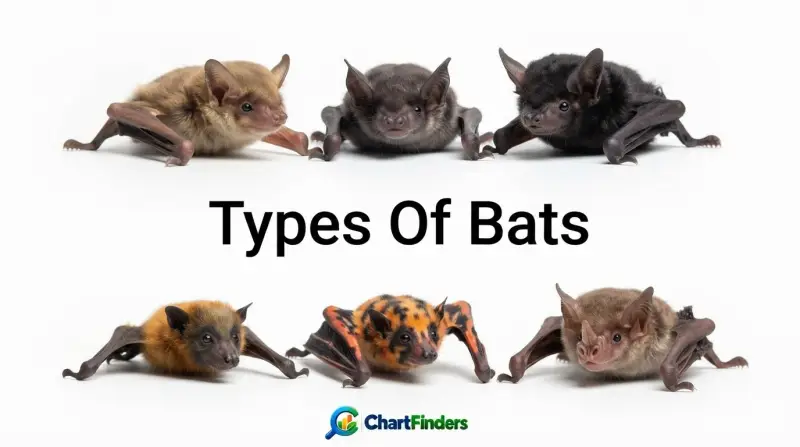
Types Of Bats
- Biological bats are divided into Megabats (Megachiroptera) and Microbats (Microchiroptera), though modern phylogenetic studies increasingly support alternative suborder groupings like Yinpterochiroptera and Yangochiroptera.
- Dietary niches among flying mammals include frugivores, nectarivores, insectivores, carnivores, and sanguivores (true vampire bats).
- Athletic bats are strictly regulated by governing bodies (e.g., USA Baseball, USSSA, BBCOR) to manage batted-ball exit speeds and player safety.
- Material science heavily influences sports bat performance, utilizing wood species like maple and ash, alongside aerospace-grade aluminum alloys and multi-wall composite carbon fibers.
- Conservation status varies wildly across mammal species, with island endemics and cave-dwelling insectivores facing severe pressures from habitat loss and fungal diseases like White-Nose Syndrome.
To fully understand the scope of bats, one must analyze both their biological taxonomy and their athletic engineering. The following sections provide an exhaustive breakdown of both worlds, beginning with the natural diversity of mammalian chiropterans and transitioning into the performance standards of sports equipment.
Biological Classification and Evolutionary Divergence
The order Chiroptera represents one of the most successful adaptive radiations in mammalian history. Traditionally, mammalogists split bats into two primary suborders:
- Megachiroptera (Megabats): Consisting of a single family (Pteropodidae), these animals are commonly known as flying foxes or fruit bats. They generally possess large eyes, lack laryngeal echolocation (with the exception of Rousettus species that use tongue clicks), and rely heavily on exceptional vision and olfaction.
- Microchiroptera (Microbats): Comprising all other families, these bats typically rely on laryngeal echolocation to navigate and hunt in total darkness. They feature specialized facial leaves, traguses, and complex inner ear structures designed to process returning ultrasonic pulses.
Modern molecular phylogenetics has reorganized these taxa into Yinpterochiroptera (linking megabats with rhinolophoid microbats) and Yangochiroptera (encompassing all remaining echolocating microbats). Despite this genetic revision, the ecological and morphological distinctions remain vital for field identification.
Ecological Guilds and Dietary Types
Bats occupy diverse ecological roles dictated by their specialized morphological adaptations. Their dietary guilds drive global seed dispersal, forest regeneration, nocturnal pollination, and agricultural insect suppression.
| Dietary Guild | Primary Diet | Key Adaptations | Representative Species | Ecological Role |
|---|---|---|---|---|
| Frugivores | Fruit, figs, nectar | Broad molars, strong jaws, specialized digestive tracts | Mariana fruit bat (Pteropus mariannus), Egyptian fruit bat | Seed dispersal, reforestation |
| Insectivores | Moths, beetles, mosquitoes, flies | High-frequency echolocation, large pinnae, acute agility | Mexican free-tailed bat (Tadarida brasiliensis), Little brown bat | Pest suppression, nocturnal predation |
| Nectarivores | Nectar, pollen | Elongated muzzles, brush-tipped tongues, hovering flight | Mexican long-tongued bat (Choeronycteris mexicana) | Plant pollination (cacti, agaves) |
| Carnivores / Piscivores | Small vertebrates, frogs, fish, other bats | Enlarged hind claws, powerful gape, specialized echolocation | Greater bulldog bat (Noctilio leporinus), Spectral bat | Vertebrate population regulation |
| Sanguivores | Fresh blood (mammals/birds) | Heat-sensing nose pits, specialized anticoagulants (draculin) in saliva | Common vampire bat (Desmodus rotundus) | Ecosystem balance in tropical/subtropical zones |
Each dietary specialization requires precise physical traits. For instance, nectarivorous species possess tongues that extend deep into floral tubes, while piscivorous bats drag specialized gaffing claws across water surfaces to snatch ripples created by swimming fish.
Notable Mammalian Bat Species
Field researchers and conservationists track hundreds of distinct species worldwide. Several key species illustrate the vast ecological breadth of the order:
- Mariana Fruit Bat (Pteropus mariannus): A prominent Old World megabat native to Micronesia, playing a critical role in seed dispersal across isolated island ecosystems.
- Mexican Free-Tailed Bat (Tadarida brasiliensis): Renowned for forming massive maternal colonies numbering in the millions, these microbats consume staggering volumes of agricultural pests nightly.
- Mexican Long-Tongued Bat (Choeronycteris mexicana): A specialized nectar-feeding migrant dependent on columnar cacti and agaves across the southwestern United States and Mexico.
- Northern Long-Eared Bat (Myotis septentrionalis): A forest-dwelling insectivore heavily impacted by White-Nose Syndrome across North America, prompting rigorous survey guidelines from federal agencies.
Athletic Bats: Materials, Standards, and Performance
Shifting from zoology to athletics, “bats” refer to the rigid implements used in baseball and softball. The engineering of these tools has evolved from simple hand-carved timber into high-tech composites governed by strict governing body certifications designed to protect players and preserve the integrity of the game.
Baseball Bat Standards and Governing Bodies
Choosing an athletic bat requires understanding the regulatory standards enforced across different leagues and age groups:
- BBCOR (Bat-Ball Coefficient of Restitution): Mandated for high school (NFHS) and collegiate (NCAA) play in baseball. BBCOR standards restrict the trampoline effect of non-wood barrels, ensuring exit velocities do not exceed those of a solid wood bat.
- USA Baseball: The standard required for youth organizations including Little League, Babe Ruth, and PONY. USA Baseball certified bats are engineered to perform like wood, regardless of whether they are constructed from aluminum or composite materials.
- USSSA: A more permissive standard utilized in travel ball circuits. USSSA bats feature a 1.15 BPF (Bat Performance Factor) rating, allowing for higher exit velocities and greater trampoline effect than USA Baseball equivalents.
Bat Construction Materials
The material composition of a sports bat dictates its durability, vibration feedback, sweet spot size, and price point:
- Wood Bats: Crafted from timber such as maple, ash, and birch. Maple offers maximum hardness and stiffness for elite power hitters; ash provides a more flexible, forgiving grain structure; birch bridges the gap by offering flexibility with rapid break-in periods.
- Aluminum / Alloy Bats: Constructed from aerospace-grade aluminum alloys (such as scandium or zinc-aluminum blends). They require zero break-in time, perform consistently across cold temperatures, and offer balanced swing weights.
- Composite Bats: Built using layered carbon fiber sheets impregnated with high-strength resins. Composites allow manufacturers to fine-tune weight distribution and barrel flex, creating massive sweet spots that expand over time as the fibers break in.
- Hybrid Bats: Combine an alloy barrel with a composite handle. This hybrid design delivers the stiffness and immediate pop of metal with the vibration-dampening comfort of carbon fiber, exemplified by models like the Marucci CATX Rckless Hybrid.
| Bat Material Type | Primary Composition | Break-In Period | Typical Governing Standards | Performance & Feel Profile |
|---|---|---|---|---|
| Wood | Maple, Ash, Birch | None | MLB, MiLB, BBCOR, USA | Traditional feedback, distinct sweet spot, zero trampoline effect. |
| Aluminum / Alloy | Scandium, Zinc-Aluminum | None | USA, USSSA, BBCOR | Stiff, highly durable, immediate pop, cold-weather reliable. |
| Composite | Carbon Fiber / Resin | 100–200 hits | USA, USSSA, BBCOR | Maximum trampoline effect, massive sweet spot, vibration dampening. |
| Hybrid | Alloy Barrel + Composite Handle | Minimal | USA, USSSA, BBCOR | Firm barrel feedback with reduced hand sting on mishits. |
Selection, Identification, and Practical Guidelines
Whether conducting ecological field surveys for protected chiropterans or sizing a youth athlete for a new season, adopting a structured, methodological approach prevents costly mistakes and ensures accurate outcomes.
Field Identification and Surveying Protocols for Mammalian Bats
When studying bats in the wild, researchers rely on a combination of visual sightings, mist-netting, guano analysis, and passive acoustic monitoring. Modern acoustic detectors record ultrasonic echolocation calls, which are subsequently analyzed through specialized software.
- Habitat Assessment: Identify roosting sites, including caves, abandoned mines, hollow trees, and bridge expansion joints.
- Acoustic Deployment: Position directional microphones along flyways or foraging corridors prior to dusk, ensuring firmware and software versions match current regional survey guidelines (such as USFWS standards).
- Data Extraction: Run recordings through approved classification algorithms to separate high-frequency pulses and identify species-specific characteristic frequencies (Fc).
- Ethical Handling: If physical capture is authorized, utilize trained handlers wearing rabies-vaccinated precautions and appropriate PPE to minimize stress to the animal.
Selecting the Correct Athletic Bat
For baseball and softball players, selecting the proper equipment involves evaluating physical dimensions, drop weight, and league regulations:
- Verify League Certification: Check whether the local league mandates USA Baseball, USSSA, BBCOR, or pure wood. Using an illegal bat results in immediate game disqualification.
- Determine Drop Weight: The “drop” is the numerical difference between length (inches) and weight (ounces). A 30-inch bat weighing 20 ounces has a -10 drop. Younger players require higher drops (-10 to -12) for bat speed, while high school and collegiate players use -3 (BBCOR).
- Evaluate Swing Profile: Balanced bats favor contact hitters seeking bat control, while end-loaded bats concentrate mass toward the barrel tip to maximize power for stronger sluggers.
Common Mistakes and Misconceptions
Misunderstandings regarding both types of bats frequently lead to safety hazards, regulatory infractions, or ecological mismanagement.
- Assuming All Bats Are Blind: A persistent myth claims all bats are blind. In reality, megabats possess exceptional eyesight, and all microbats can see quite well, utilizing echolocation merely as an advanced sensory overlay for nocturnal hunting.
- Handling Wild Bats Barehanded: A common amateur mistake is picking up a grounded bat. Because bats can act as vector species for rabies, any direct contact without professional training and vaccination requires immediate medical evaluation.
- Ignoring Bat Break-In Periods: Many players damage composite sports bats by hitting heavy weighted training balls or playing in freezing temperatures below 50°F, which causes brittle composite resins to fracture.
- Confusing USA and USSSA Standards: Purchasing a USSSA 1.15 BPF bat for a league governed by USA Baseball rules results in an unusable piece of equipment that fails pre-game inspections.
Frequently Asked Questions
Do all bats use echolocation?
No. While most microbats use laryngeal echolocation to navigate and capture prey, members of the family Pteropodidae (megabats) generally do not. Megabats rely on large, highly developed eyes and an acute sense of smell to locate fruit, flowers, and nectar.
What is the difference between a USA Baseball bat and a USSSA bat?
USA Baseball certified bats are strictly regulated to perform similarly to wood bats, keeping exit speeds lower for safety in youth leagues like Little League. USSSA bats utilize a 1.15 BPF standard, permitting a higher trampoline effect and greater batted-ball velocity favored in travel ball tournaments.
Why are vampire bats called that, and do they attack humans?
Sanguivorous bats are termed “vampire bats” because their entire diet consists of fresh blood. Out of more than 1,400 bat species, only three feed on blood—primarily livestock and wild birds. While they can occasionally bite humans if sleeping unprotected outdoors, human encounters are rare and easily prevented by simple structural barriers like window screens.
What does BBCOR stand for in baseball bats?
BBCOR stands for “Bat-Ball Coefficient of Restitution.” It measures the energy retained when a ball collides with a bat barrel. BBCOR-certified bats must maintain a threshold of .500 or lower, ensuring aluminum and composite barrels perform with no more trampoline effect than a solid ash or maple wood bat.
How can I manage bat roosts on my property humanely?
If bats roost in residential attics or structures, the only humane and legal method is exclusion. This involves sealing all secondary entry points while installing one-way doors over primary exits during safe seasonal windows (avoiding maternity seasons when flightless pups are present) so bats can exit but cannot re-enter.
Conclusion
Whether examining the complex ecological networks sustained by flying mammals or evaluating the technological engineering of modern athletic equipment, understanding the nuances of bats requires careful attention to classification, function, and regulation. Biological chiropterans serve as indispensable keystones of global ecosystems, driving pollination, seed dispersal, and insect control. Conversely, athletic bats represent pinnacle achievements in material science and sports engineering, where precise standards govern safety and competitive fairness. By respecting the biological realities of natural wildlife and adhering to the regulatory frameworks of athletic gear, researchers, conservationists, and athletes alike can navigate these two distinct worlds with absolute confidence.