
The typical lifespan of a ladybug spans from one to two years under optimal environmental conditions, though many wild specimens complete their biological cycle within a single year. Their longevity is heavily governed by seasonal diapause (hibernation), ambient temperature, and food availability across four distinct life stages: egg, larval instars, pupa, and imago (adult).
(Reference: Life Cycle of a Ladybug – Mating & Life Stages – Insect Lore)Understanding the temporal dynamics of coccinellid development requires looking far beyond simple mortality statistics. For entomologists, agriculturalists, and naturalists alike, mapping out the precise chronological milestones of these beneficial coleopterans provides critical insight into pest management, biological control efficacy, and ecological resilience. Because these insects undergo complete metamorphosis (holometabolism), their physiological needs, metabolic rates, and environmental vulnerabilities shift dramatically from one morphological phase to the next. Analyzing a comprehensive ladybug lifespan chart illuminates how temperature, photoperiod, and nutritional intake dictate whether a specimen succumbs to environmental stressors within weeks or successfully navigates multiple seasons of diapause.
Explore our detailed breakdown on Quokka Lifespan Chart.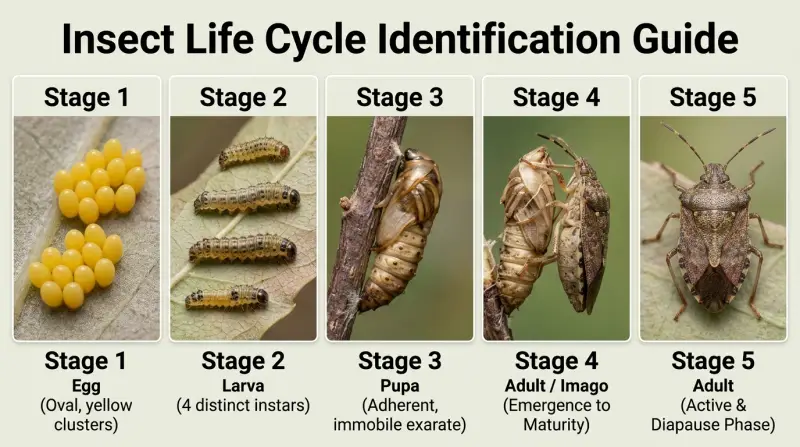
Ladybug Lifespan Chart and Developmental Chronology
- Ladybugs undergo holometabolous development, progressing through four distinct morphological stages: egg, larva, pupa, and adult (imago).
- Total development time from oviposition to adult emergence typically ranges from 20 to 45 days, heavily dependent on thermal units and aphid density.
- Adult coccinellids possess a baseline natural lifespan of 1 to 2 years in the wild, extended significantly by winter diapause.
- Species-specific variations, such as those found in the seven-spotted ladybug (Coccinella septempunctata) versus smaller taxa, alter developmental timelines.
- Environmental stressors, pesticide exposure, and parasitoids like Dinocampus coccinellae are primary factors shortening natural longevity.
To fully comprehend the temporal architecture of coccinellid longevity, one must evaluate the duration of each developmental instar alongside adult survival curves. The following data outlines the biological timeline of a typical temperate-zone coccinellid, such as Coccinella septempunctata, under favorable laboratory and field conditions.
| Life Stage | Morphological Form | Duration | Primary Metabolic Focus |
|---|---|---|---|
| Stage 1 | Egg (Oval, yellow clusters) | 3 – 7 Days | Embryogenesis; cellular differentiation. |
| Stage 2 | Larva (4 distinct instars) | 20 – 30 Days | Voracious predation; lipid accumulation. |
| Stage 3 | Pupa (Adherent, immobile exarate) | 3 – 12 Days | Histolysis and histogenesis (metamorphosis). |
| Stage 4 | Adult / Imago (Emergence to Maturity) | 1 – 2 Weeks post-emergence | Sclerotization, sexual maturation, reproduction. |
| Stage 5 | Adult (Active & Diapause Phase) | Up to 1 – 2 Years total | Overwintering, mating, dispersal, senescence. |
As detailed in the table above, the transition from an embryonic zygote to a reproductive imago is swift, yet it requires precise environmental triggers. Below, we break down each phase of the ladybug lifespan chart through an anatomical and physiological lens.
Embryonic Stage (Oviposition to Eclosion)
Female coccinellids deposit clusters of 10 to 50 spindle-shaped, yellow or orange eggs on the underside of foliage, strategically close to aphid colonies. This ensures that upon eclosion, neonate larvae instantly encounter a viable food source. Embryogenesis within the chorion takes approximately three to seven days, depending on ambient thermal energy. During this time, the internal blastoderm differentiates into larval tissues, eventually leading to the chewing open of the chorion by the newly formed first-instar larva.
Larval Instars and Predatory Growth
The larval phase represents the primary trophic engine of the ladybug life cycle. Possessing an elongated, campodeiform body plan equipped with robust mandibles, the larva passes through four distinct instars separated by ecdysis (molting).
- First Instar: Lasts roughly 3 to 5 days. The neonate feeds on small aphids or insect eggs, its cuticle still soft and darkly pigmented.
- Second Instar: Spans 3 to 4 days. The larva grows rapidly, shedding its old exoskeleton to accommodate increased hemolymph volume and muscle mass.
- Third Instar: Extends across 4 to 6 days. Markings become more distinct, and daily predation rates surge as metabolic demands spike.
- Fourth Instar: The longest larval stage, lasting 7 to 10 days. The mature larva consumes up to hundreds of aphids daily, storing vast lipid reserves in its fat body to fuel the upcoming pupal histolysis.
Pupal Metamorphosis
Upon completing the fourth instar, the larva anchors its abdominal apex to a leaf stem or bark surface, entering a prepupal resting phase. The subsequent pupal stage lasts between 3 and 12 days. Internally, a profound structural reorganization occurs: larval tissues undergo histolysis (dissolution via phagocytic action), and imaginal discs rapidly proliferate through histogenesis to construct adult anatomical systems, including compound eyes, elytra, membranous wings, and the reproductive apparatus.
Adult Imago Emergence and Sexual Maturation
When eclosion concludes, the newly emerged imago is soft-bodied and pale yellow, lacking the characteristic melanized spot patterns. Over the subsequent 24 to 48 hours, the cuticle undergoes sclerotization (tanning and hardening), and the bright red or orange pigmentation with black spots fully manifests. Sexual maturity is not instantaneous; most species require an additional 7 to 14 days of heavy aphid feeding before adults are physiologically capable of mating and viable oviposition.
Comparative Longevity Across Major Coccinellidae Genera
While the baseline biological design remains conserved across the family Coccinellidae, distinct genera and species exhibit noticeable variations in their overall lifespan charts. Environmental adaptations, geographic distribution, and overwintering strategies heavily influence how long individual specimens persist.
| Species Name | Common Name | Geographic Range | Typical Adult Lifespan |
|---|---|---|---|
| Coccinella septempunctata | Seven-Spotted Ladybug | Palearctic, North America | 1.0 – 1.5 Years |
| Harmonia axyridis | Asian Lady Beetle | Asia, North America, Europe | Up to 2.0 – 3.0 Years |
| Hippodamia convergens | Convergent Lady Beetle | North America | 1.0 Year (Wild/Diapause dependent) |
| Adalia bipunctata | Two-Spotted Ladybug | Holarctic | 1.0 Year |
As demonstrated in the comparative matrix, species such as Harmonia axyridis frequently display enhanced physiological resilience and aggressive foraging strategies that allow them to push the outer limits of ladybug longevity, occasionally surviving up to three years under ideal laboratory conditions or protected overwintering aggregations.
The Physiology of Diapause and Overwintering Longevity
The primary mechanism that extends a ladybug’s lifespan beyond a single warm season is diapause—a state of arrested physiological development and metabolic depression triggered by shortening day lengths (photoperiod) and declining ambient temperatures.
Metabolic Suppression
As autumn approaches, adult ladybugs cease reproduction and begin seeking protected microhabitats, such as leaf litter, bark crevices, or structural voids in human dwellings. Once settled in an aggregation site, their metabolic rate drops precipitously. Oxygen consumption decreases by over 80%, and heart rate slows to a fraction of its active baseline.
Cryoprotectants and Thermal Tolerance
To survive sub-zero temperatures without lethal ice crystal formation within their cellular matrices, coccinellids synthesize low-molecular-weight cryoprotectants—primarily glycerol, sorbitol, and specialized thermal hysteresis proteins. These biochemical compounds depress the supercooling point of their hemolymph. Without this physiological adaptation, wild adult ladybugs would perish within days of the first autumn frost, severely truncating the species’ overall lifespan curve.
Environmental and Ecological Factors Governing Lifespan
A ladybug’s realized lifespan rarely matches its maximum physiological potential. Numerous biotic and abiotic pressures act as mortality vectors throughout both the immature and adult phases.
Trophic Availability and Nutritional Stress
Because both larval instars and adult imagos are obligate predators—primarily feeding on Sternorrhyncha (aphids, scale insects, and adelgids)—their survival is inextricably linked to prey density. Insufficient aphid populations during the fourth larval instar lead to stunted pupae, deformed imagos, or outright starvation. Conversely, an abundance of high-quality prey maximizes lipid storage, bolstering immune function and enhancing overwintering survival rates.
Parasitoids, Pathogens, and Predators
Throughout their life cycle, coccinellids face intense predation from spiders, insectivorous birds, and small mammals. , specialized endoparasitoids pose a severe threat. The braconid wasp Dinocampus coccinellae, for instance, oviposits inside adult ladybugs; the resulting wasp larva consumes the host’s non-vital organs from the inside out, ultimately killing the imago just as the wasp spins its cocoon beneath the paralyzed beetle’s legs.
Anthropogenic Factors and Chemical Exposure
The application of broad-spectrum synthetic insecticides, neonicotinoids, and organophosphates in agricultural and horticultural settings significantly curtails ladybug longevity. Sub-lethal chemical exposures impair locomotor activity, disrupt mating behaviors, and compromise detoxification enzymes located in the ladybug’s fat body, leading to premature mortality.
Common Misconceptions Regarding Ladybug Age and Lifespan
Public perception of insect biology is often clouded by folklore and visual misinterpretations. Clarifying these misconceptions is essential for accurate entomological understanding.
- The Spot-Count Age Myth: A pervasive old wives’ tale claims that the number of black spots on a ladybug’s elytra indicates its age in years. In reality, spot count is a fixed, species-specific genetic trait (or a morphological polymorphism within a species, such as Harmonia axyridis) and has zero correlation with chronological age.
- Uniform Lifespan Expectations: Many assume all ladybugs live for the exact same duration. In practice, lifespan varies radically based on whether an individual emerges early in spring (experiencing a shorter adult life focused on immediate reproduction) versus late summer (entering prolonged diapause and living for over a year).
- Indoor Survival Realities: Bringing overwintering ladybugs indoors often backfires. The ambient warmth and low humidity of heated homes break their diapause prematurely, forcing them to expend vital metabolic reserves without access to prey or water, resulting in rapid mortality within weeks.
Frequently Asked Questions
The larval stage is relatively brief, lasting approximately 20 to 30 days across four instars. In contrast, the adult (imago) stage spans from several months to over a year, depending heavily on whether the insect successfully enters and survives winter diapause.
While ladybugs frequently seek indoor shelter to overwinter, artificial indoor climates are generally detrimental. Heated homes prevent them from maintaining the metabolic suppression required for diapause, causing them to deplete their fat reserves and dehydrate within a few weeks.
No. The pigmentation pattern on a ladybug’s elytra is fully established during the sclerotization phase immediately following adult eclosion and remains unchanged throughout its entire life.
Emergence from diapause is governed primarily by photoperiod (increasing daylight hours) and rising ambient thermal units in early spring. Once temperatures consistently exceed species-specific thresholds and environmental cues signal the return of aphid activity, the beetles resume active foraging and mating.
Starvation resulting from fluctuating prey populations, severe winter conditions that overwhelm cryoprotective mechanisms, and predation by birds and parasitic wasps are the leading natural drivers of mortality across coccinellid populations.
Conclusion
The ladybug lifespan chart is a dynamic biological profile shaped by physiological adaptations, environmental pressures, and strict metabolic milestones. From the rapid, voracious growth of the larval instars to the profound metabolic slowdown of winter diapause, coccinellids display remarkable resilience across their one-to-two-year maximum lifespan. Recognizing the distinct phases of their development—and the ecological variables that threaten them—underscores their as top-tier beneficial predators in both natural and agricultural ecosystems.