
Navigating selective eating—whether dealing with a cautious toddler, a sensory-sensitive child, or an adult trying to overcome lifelong dietary restrictions—requires more than just trial and error at the dinner table. The kitchen can easily become a battleground of high emotions, wasted groceries, and nutritional anxiety. When meals feel unpredictable, both caregivers and selective eaters lose confidence.
This is where structured organization changes the . Instead of viewing food choices as a chaotic daily puzzle, a methodical food chart offers a clear, objective view of the nutritional landscape. It acts as a dashboard for safe foods, a tracker for micro-steps toward new tastes, and a blueprint for reducing mealtime stress. This comprehensive master guide explores how to build, implement, and maintain a functional picky eater food chart backed by nutritional strategies and behavioral feeding principles.
Understanding the Picky Eater Food Chart
- Organizes foods into transparent categories (Proteins, Carbs, Fruits, Vegetables) to quickly reveal nutritional gaps and safe harbor options.
- Shifts the mealtime focus from immediate consumption to low-pressure, consistent sensory exposure (“stretch nights”).
- Prioritizes family-style components rather than fully assembled meals to lower anxiety and give selective eaters a sense of control.
- Helps track micro-progress over weeks and months, recognizing that acceptance of a new food is a gradual behavioral timeline.
- Acts as a bridge between picky eating preferences and balanced nutrition, ensuring essential minerals like iron, zinc, and calcium are met through preferred delivery vehicles.
A picky eater food chart is not a rigid menu forcing compliance. Rather, it is a dynamic assessment and tracking tool. For years, feeding specialists have noted that selective eaters rely heavily on sensory properties—such as color, texture, temperature, and brand consistency. When we attempt to force new foods without a system, we often trigger the body’s natural neophobia (the fear of the unknown).
A well-constructed chart organizes the culinary landscape into manageable components. It helps you see that while a child or adult may reject a mixed casserole, they comfortably eat plain white rice, toasted bread, and specific chicken nuggets. By mapping out these “safe foods” alongside “stretch foods,” you create a visual roadmap that guides grocery shopping, meal prep, and gradual dietary expansion.
The Core Philosophy: Expansion Through Low-Pressure Exposure
The biggest mistake in managing selective eating is viewing a new food as an all-or-nothing proposition. Traditional pressure (“eat three more bites”) activates the fight-or-flight response in sensitive eaters, reinforcing avoidance behavior.
A food chart operationalizes low-pressure exposure. Research and practical feeding frameworks show that a new food may need to be presented five, ten, or even fifteen times before a selective eater feels comfortable enough to interact with it—let alone taste it. The chart provides a tracking mechanism for these exposures, turning a rejected food into a long-term project rather than an immediate mealtime failure.
Nutritional Mapping: Essential Categories and Safe Sources
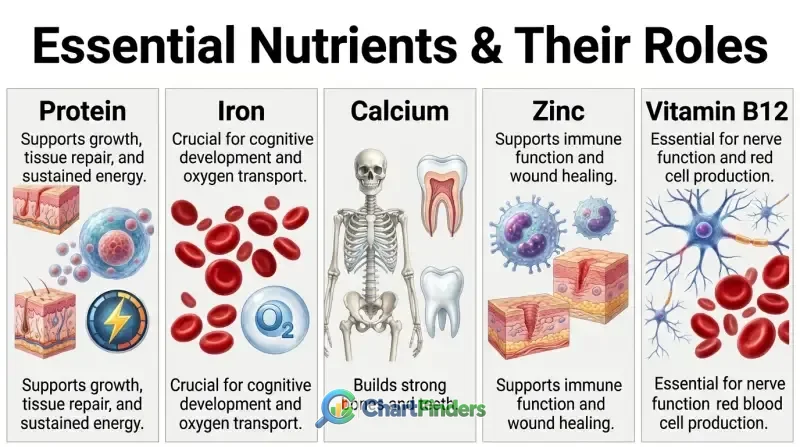
When dealing with a restricted diet, monitoring macronutrients and key micronutrients prevents nutritional deficiencies. The following matrix outlines how to map essential nutrients against picky-eater-friendly and fortified sources.
| Nutrient | Why It Matters | Picky-Eater-Friendly & Accessible Sources | Integration Strategy |
|---|---|---|---|
| Protein | Supports growth, tissue repair, and sustained energy. | Peanut butter, beans, lentils, tofu, chickpeas, edamame, chicken nuggets. | Smooth spreads on toast; crispy roasted chickpeas; blending silken tofu into smoothies or mac and cheese sauces. |
| Iron | Crucial for cognitive development and oxygen transport. | Lentils, fortified cereals, white beans, spinach (blended). | Use fortified breakfast cereals as a dry snack; blend mild-tasting white beans into pureed soups or pasta sauces. |
| Calcium | Builds strong bones and teeth. | Fortified plant milk, dairy milk, fortified orange juice, tahini, white beans. | Substitute standard milk with fortified alternatives in oatmeal and baking; use smooth tahini in mild sauces. |
| Zinc | Supports immune function and wound healing. | Chickpeas, lentils, oats, pumpkin seeds, peanut butter. | Bake oats into familiar muffin textures; use smooth nut butters as a dip for apples or crackers. |
| Vitamin B12 | Essential for nerve function and red blood cell production. | Fortified plant milk, fortified nutritional yeast, fortified breakfast cereals. | Sprinkle mild nutritional yeast over popcorn or buttered pasta for a subtle savory note. |
When reviewing this nutritional map, look closely at your current household inventory. You will often discover that while carbohydrate sources (pasta, crackers, bread) are abundant, protein and micronutrient vectors are tightly restricted. The chart serves as your guide to selecting bridge foods that share sensory similarities with current favorites while introducing missing nutrients.
Designing Your Custom Food Chart: Step-by-Step Framework
Building a picky eater food chart requires collaboration and observation. Avoid designing it in isolation; instead, build it based on what the eater currently consumes reliably.
Step 1: Conduct a Food Inventory Audit
For one week, list every single food item the eater consumes without a fight. Do not judge the list. Whether it is brand-specific chicken nuggets, plain buttered noodles, or specific yellow-colored crackers, write them down. Organize them into four primary columns: Proteins, Carbohydrates, Fruits, and Vegetables.
Step 2: Identify Sensory Profiles
Examine the inventory audit for patterns. Ask yourself:
- Texture: Do they only eat crunchy foods (chips, pretzels) or soft, smooth foods (yogurt, mashed potatoes)?
- Color: Is there a “beige diet” bias where brightly colored fruits and vegetables are automatically rejected?
- Temperature: Are foods preferred hot, room temperature, or cold?
- Brand/Packaging: Does a change in store-brand packaging trigger a refusal?
Step 3: Establish the Three-Tier Chart Structure
Divide your working chart into three actionable tiers:
- Safe Foods: Guaranteed acceptances that provide reliable comfort and baseline nutrition. These should always be present at meals to ensure the eater feels secure.
- Bridge Foods: Foods that closely resemble safe foods in texture or color but introduce a new element (e.g., swapping plain noodles for chickpea-based pasta, or introducing a mild cheese dip for crackers).
- Stretch Foods: Completely novel items introduced in tiny, non-threatening portions solely for visual or tactile exploration without the expectation of consumption.
Component-Based Meal Prep: The Modern Approach
One of the most effective strategies for executing a picky eater food chart is shifting from fully assembled meals to family-style, component-based prep. When meals arrive at the table fully mixed—such as a casserole, a loaded salad, or a pre-sauced pasta dish—selective eaters often experience immediate visual anxiety.
Instead, prep individual components separately. For example, when serving tacos, separate the shells, seasoned beans, shredded cheese, sour cream, and diced tomatoes into individual bowls. This gives the selective eater autonomy.
- Autonomy Reduces Anxiety: Allowing the eater to assemble their own plate (or choose not to touch certain components) drastically lowers behavioral resistance.
- Shared Visual Exposure: Even if they only put plain tortillas and cheese on their plate, they are repeatedly exposed to the other components sitting safely in communal bowls across the table.
- Zero Short-Order Cooking: Everyone eats from the same spread, eliminating the need for the cook to prepare a separate meal while still accommodating safe food access.
Tracking Progress: The Long-Term Timeline
Palate expansion does not happen overnight. A common pitfall is abandoning a new food after one or two rejections. Tracking progress on your food chart helps visualize the gradual desensitization process.
Consider the progression timeline often observed in feeding therapy:
- Visual Tolerance: The food is present on the table or plate without causing distress.
- Interaction: The eater is willing to help carry, wash, or place the food on a serving tray using a utensil.
- Smell/Touch: The eater interacts with the food using fingers or smells it without gagging.
- Taste/Licking: A tentative lick or bite is taken, often immediately spat out into a napkin without judgment.
- Consumption: Small, consistent bites are swallowed.
When you map exposures on a chart, you celebrate steps 1 through 4 as major victories rather than viewing them as failures because the food wasn’t fully eaten.
Common Pitfalls and How to Avoid Them
Even with a well-designed food chart, behavioral traps can stall progress. Keep the following cautions in mind:
1. Hiding Foods Deceptively
While blending spinach into smoothies or pureeing beans into pasta sauce can boost nutrition, covertly hiding foods can backfire severely if discovered. If a selective eater feels tricked, trust breaks down, and they may begin distrusting all foods—even previously safe ones. Use transparent modifications instead: let them know, “I put some white bean puree in this creamy pasta sauce today to make it extra smooth.”
2. Creating a Short-Order Kitchen
A food chart should prevent short-order cooking, not fuel it. If the chart results in you cooking three separate meals every night, the system needs adjustment. Ensure every meal contains at least one reliable safe food item, but do not cook a separate entrée if the eater chooses to bypass the rest of the meal.
3. Using Food as a Reward or Punishment
Tying vegetables to dessert (“If you eat two carrots, you can have ice cream”) inadvertently teaches the brain that carrots are an unpleasant chore and dessert is the ultimate prize. Keep emotional neutrality around all categories on the chart.
Frequently Asked Questions
Begin with an inventory of those exact safe foods, no matter how limited. Even if it is just white toast, butter, and one brand of chicken nuggets, write them down. Your immediate goal is not expansion; it is mapping out their current sensory comfort zone. Once documented, introduce bridge foods that vary by only one attribute (e.g., a slightly different brand of bread toasted to the exact same crispness).
Yes. Adult selective eating (often rooted in ARFID—Avoidant/Restrictive Food Intake Disorder, sensory processing sensitivity, or childhood habits) responds exceptionally well to structured charts. Adults can use the matrix to track nutritional deficiencies, plan gradual exposures, and systematically conquer food anxieties without shame.
Frequency depends on the individual’s anxiety level. For highly sensitive eaters, introducing one stretch food per week—or even keeping the same stretch food on the table for multiple consecutive days without demanding they eat it—is ideal. Consistency and low pressure matter far more than speed.
This is a common and stressful occurrence in selective eating. It is usually driven by a subtle manufacturing change, texture variation, or sensory fatigue. Do not panic or force the issue. Remove that food from the active safe list temporarily, lean on other established safe foods from your chart, and reintroduce the rejected food in a different form or after a few weeks have passed.
Yes. By tracking accepted versus rejected foods over time, clear patterns emerge. If every rejected food shares a slimy texture or a green color, you gain actionable data that can be shared with an occupational therapist, pediatric feeding specialist, or registered dietitian specializing in selective eating.
Conclusion
Managing selective eating requires patience, structure, and a pivot away from mealtime power struggles. A picky eater food chart transforms chaos into clarity, offering an objective dashboard to monitor nutrition, honor sensory boundaries, and gently expand dietary horizons through component-based prep and low-pressure exposure. By treating food expansion as a gradual, long-term journey rather than a nightly battle, you a healthier, more confident relationship with food for life.