
The rise in popularity of hairless felines has captured the attention of cat enthusiasts worldwide. With their distinct wrinkled skin, large expressive ears, and suede-like texture, these cats look entirely unique compared to traditional furry breeds. Yet, beneath their striking appearance lies a very specific set of biological traits that fundamentally change what it means to care for a domestic cat. Bringing a hairless cat into your home is not a passive experience; it is an active, highly involved commitment that requires understanding how their physiology differs from normal felines.
Many prospective owners assume that because these cats lack a coat, they are low-maintenance pets that eliminate sweeping and grooming hassles. In reality, the opposite is true. Their unique skin and metabolic requirements demand daily and weekly routines that traditional cat owners never have to consider. This comprehensive guide explores the reality of hairless cats, breaking down their undeniable charms, their considerable daily care burdens, their health profiles, and how to determine if one is truly right for your lifestyle.
Pros And Cons Of Hairless Cats
- Hairless cats, primarily the Sphynx breed, are exceptionally affectionate, highly social, and thrive on human companionship.
- They are not truly hypoallergenic; while they shed less visible hair, they still produce dander and the Fel d 1 protein.
- Their bare skin requires frequent bathing, oil wiping, and ear cleaning because they lack fur to absorb natural body oils.
- Temperature regulation is critical—they easily get cold in winter and sunburned in summer, requiring indoor-only living.
- They carry predispositions to specific genetic conditions, most notably hypertrophic cardiomyopathy (HCM) and hereditary skin issues.
- Financial and time commitments for a hairless cat are significantly higher than for standard coated breeds.
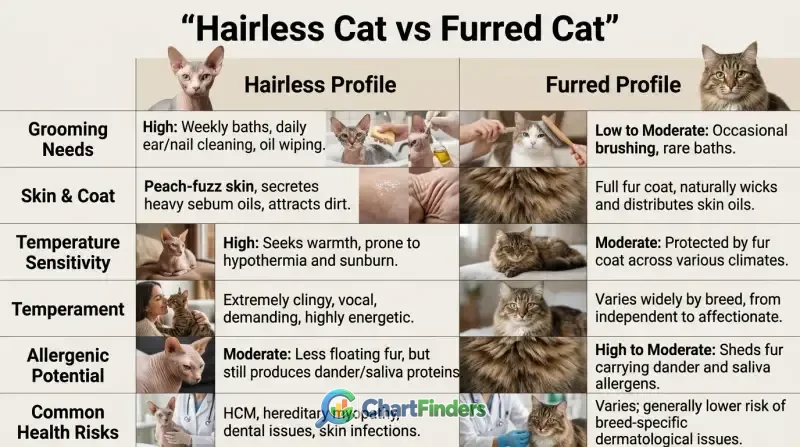
Evaluating the pros and cons of hairless cats requires balancing their magnetic personalities against their intensive daily management needs. To give you an immediate, comprehensive overview of what separates these cats from standard felines, the following comparison matrix outlines their core physiological, behavioral, and practical differences.
| Category | Hairless Cats (Sphynx Focus) | Standard Coated Cats |
|---|---|---|
| Grooming Needs | High: Weekly baths, daily ear/nail cleaning, oil wiping. | Low to Moderate: Occasional brushing, rare baths. |
| Skin & Coat | Peach-fuzz skin, secretes heavy sebum oils, attracts dirt. | Full fur coat, naturally wicks and distributes skin oils. |
| Temperature Sensitivity | High: Seeks warmth, prone to hypothermia and sunburn. | Moderate: Protected by fur coat across various climates. |
| Temperament | Extremely clingy, vocal, demanding, highly energetic. | Varies widely by breed, from independent to affectionate. |
| Allergenic Potential | Moderate: Less floating fur, but still produces dander/saliva proteins. | High to Moderate: Sheds fur carrying dander and saliva allergens. |
| Common Health Risks | HCM, hereditary myopathy, dental issues, skin infections. | Varies; generally lower risk of breed-specific dermatological issues. |
As illustrated in the table above, the physical absence of fur triggers a cascade of secondary care requirements. Understanding these mechanics is vital for anyone considering adoption or purchase.
The Undeniable Advantages of Owning a Hairless Cat
For the right owner, the unique traits of hairless cats make them peerless companions. Their charming disposition and striking aesthetic create deep bonds that few traditional cat owners experience.
- Unmatched Affection and Sociability: Hairless cats are universally renowned as “velcro cats.” They crave physical contact, frequently sleeping under the covers with their owners, perching on shoulders, and demanding attention the moment you walk through the door.
- High Intelligence and Playfulness: They possess a dog-like curiosity. Sphynx and similar hairless breeds can often be taught to play fetch, walk on a leash, and figure out puzzle toys with ease.
- Fascinating Visual and Tactile Appeal: Their peach-fuzz skin feels like warm suede or a hot water bottle. Their unique, elfin facial features make them true conversation starters and stunning visual animals.
- Reduced Loose Shedding: While they are not allergen-free, you will not find clumps of fur on your furniture, clothes, or carpets, making house cleaning simpler in terms of stray hair removal.
The Significant Drawbacks and Challenges
The disadvantages of hairless cats are rooted firmly in biology. Without fur to protect them from the environment or manage their natural secretions, these cats present unique challenges.
- Intensive Skincare and Bathing Regimen: Cats naturally produce sebum to lubricate and protect their skin. In coated cats, fur absorbs this oil. In hairless cats, sebum accumulates on the skin, creating a sticky, brownish residue that stains furniture, clothes, and requires weekly bathing.
- Constant Ear and Claw Maintenance: Without hair to filter dust and debris, ear wax builds up rapidly, requiring weekly cleanings. Their claws also accumulate sebum and dirt quickly, demanding frequent cleaning and trimming.
- Extreme Vulnerability to Environmental Elements: Hairless cats cannot regulate their body temperature as efficiently as coated cats. They require a warm indoor climate, sweaters in the winter, and pet-safe sunscreen during sunny months. They are strictly indoor animals.
- Higher Veterinary and Maintenance Costs: Due to their predisposition to certain genetic conditions, specialized dietary needs, and frequent grooming supplies, the cost of ownership over a hairless cat’s lifetime is notably higher than average.
Understanding the Physiology of Hairless Cats
To truly understand why hairless cats require such specialized care, one must look at the genetic and physiological mutation responsible for their lack of a coat. The most common hairless breed, the Sphynx, traces its origins to a natural genetic mutation in Toronto, Canada, in 1966, where a hairless kitten was born to a domestic shorthair. Breeders selectively preserved this recessive gene.
Despite their naked appearance, most hairless cats are not completely bare. They are usually covered in a microscopic layer of down or peach fuzz. If you run your hand along a Sphynx, it feels warm and soft, but this fuzz offers zero insulation against cold drafts or UV radiation.
, because they lack hair follicles that distribute and trap oils across a full coat, their sebaceous glands work overtime. This oil production is completely normal, but it means their skin acts like a sponge for dust, lint, and environmental grime. If left unwashed, this buildup can lead to blocked pores, acne breakouts (especially around the chin), and skin infections.
Classifications and Variations of Hairless Breeds
While the Sphynx is the undisputed poster child for hairless felines, several other distinct breeds and genetic lines exist worldwide, each carrying unique physical and structural characteristics:
| Breed Name | Origin & Mutation Type | Distinctive Features |
|---|---|---|
| Sphynx (Canadian Sphynx) | Canada (1966); recessive mutation. | Wrinkled skin, lemon-shaped eyes, pot belly, heavy build. |
| Don Sphynx (Donskoy) | Russia (1987); dominant mutation. | Webbed toes, distinct wrinkles, can grow a winter coat in cold climates. |
| Peterbald | Russia (1994); Donskoy x Oriental Shorthair cross. | Sleek, whip-like tail, wedge-shaped head, elegant oriental body structure. |
| Bambino | USA (2005); Sphynx x Munchkin cross. | Dwarfism, short legs, long body, large upright ears. |
Health Profile and Genetic Vulnerabilities
While hairless cats can live long lives—often between 12 and 15 years when properly cared for—they do possess specific genetic predispositions that every owner must monitor.
Cardiac Health: Hypertrophic Cardiomyopathy (HCM)
Hypertrophic cardiomyopathy is the most common heart disease in cats, and certain hairless lines carry an increased genetic risk. HCM causes the walls of the heart to thicken, reducing its efficiency. Ethical breeders screen their breeding cats annually using echocardiograms to minimize passing this condition to kittens. Prospective owners should always request cardiac clearance documentation from breeders.
Dermatological Conditions
Paradoxically, naked skin does not mean trouble-free skin. Aside from regular oil accumulation, hairless cats are susceptible to:
- Urticaria Pigmentosa: A hereditary skin condition causing itchy, crusty lesions or dark pigment spots on the skin.
- Feline Acne: Blackheads and pustules around the chin due to blocked oil glands, often exacerbated by plastic food and water bowls.
- Sunburn and Skin Cancer: Without melanin-rich fur protection, light-skinned hairless cats can easily burn, putting them at risk for squamous cell carcinoma.
- Hereditary Myopathy: A congenital muscle weakness disorder that affects motor function, swallowing, and overall stamina in certain bloodlines.
Dental and Metabolic Needs
Hairless cats have high metabolic rates because they burn extra calories simply trying to maintain their body temperature. They require nutrient-dense, high-protein diets and often eat more food by weight than a coated cat of the same size. Additionally, they are prone to periodontal disease, making daily or regular tooth brushing a critical health requirement.
The Allergy Myth: Are Hairless Cats Hypoallergenic?
One of the most persistent misconceptions is that hairless cats are safe for people with severe cat allergies. This is medically incorrect.
Cat allergies are not typically triggered by fur itself, but by the Fel d 1 protein found in a cat’s saliva, urine, and sebaceous gland secretions. When cats groom themselves, their saliva dries on their skin and fur, turning into airborne dander.
Because hairless cats still groom themselves, they still deposit Fel d 1 proteins onto their skin. When their oily skin secretions accumulate and shed micro-dander into the air, allergic individuals will still experience reactions. While some allergy sufferers report tolerating hairless cats better because they lack floating fur and can be easily wiped down with a damp cloth daily, they are not hypoallergenic.
Practical Care Guide for Hairless Cat Owners
Managing the daily routine of a hairless cat requires discipline and consistency. Establishing a predictable schedule prevents health complications and keeps your home clean.
The Weekly Bathing Routine
Bathing a cat is notoriously difficult, but many hairless cats tolerate or even enjoy warm baths if acclimated from kittenhood. Use a veterinarian-recommended, pH-balanced hypoallergenic shampoo. Avoid harsh human soaps or baby washes, which can strip their delicate skin barrier or cause chemical irritation. After bathing, towel-dry them thoroughly and keep them away from cold drafts until they are completely dry.
Ear and Nail Maintenance
Check and clean their ears weekly using a vet-approved ear-cleaning solution and soft cotton balls or pads. Never use Q-tips inside the ear canal. For their claws, wipe away accumulated gunk with a warm washcloth and trim their nails every 10 to 14 days to prevent scratching injuries.
Environmental Temperature Control
Keep your home climate-controlled, ideally staying above 70°F (21°C). Provide plenty of warm sleeping spaces, such as self-warming beds, heated pads designed specifically for pets, and cozy cat sweaters during colder months. Ensure they have zero access to unshaded windows where they could burn in the summer sun.
Frequently Asked Questions
They do not strictly need clothes in a properly heated indoor home, but sweaters and shirts help them stay warm during cooler months and protect their skin from minor scratches or direct sunlight. If you dress your cat, ensure the clothing is breathable, fits comfortably, and does not restrict movement.
Yes. Beyond the initial high purchase price from an ethical breeder, their ongoing care costs are elevated. They require specialized high-calorie food, frequent grooming supplies, professional veterinary cardiac screenings, and potentially higher heating bills to keep your home warm enough for them.
Hairless cats should be kept strictly indoors. Without fur, they have no defense against sharp outdoor brush, sudden drops in temperature, predators, or harmful ultraviolet rays that cause severe sunburn and skin cancer.
Yes. Because they lack an insulating layer of fur, their body temperature drops quickly in cool environments. They actively seek out warm surfaces, laps, blankets, and sunny spots to stay comfortable.
Sphynx cats are exceptionally social, friendly, and outgoing, making them wonderful companions for families with children and other household pets like dogs or coated cats. Their constant desire for interaction means they rarely hide and love being part of a busy household.
Conclusion
Hairless cats are magnificent, deeply affectionate companions, but they are fundamentally high-maintenance pets that demand an extraordinary level of hands-on care. The decision to bring one into your home should never be made based on appearance alone. If you are prepared to commit to weekly baths, meticulous skin care, environmental temperature management, and the potential for increased veterinary vigilance, a hairless cat will reward you with a level of love, loyalty, and personality that is unmatched in the feline world.