
Understanding the life span of a honey bee is fundamental to both professional apiculture and urban pest management or agricultural pollination strategy. Unlike many solitary insects where every adult shares a uniform life cycle, the honey bee colony operates as a single superorganism. Within this complex social structure, biological destiny, genetic expression, and environmental stress factors dictate how long an individual bee will survive. From the heavy labor demands of summer foraging to the protected winter cluster inside a managed hive, longevity is directly tied to caste and seasonal pressure.
This comprehensive guide examines the biological mechanisms, chronological stages, environmental variables, and comparative metrics that govern the lifespan of honey bees. Whether you are managing an apiary, troubleshooting a stinging insect issue, or studying entomology, mastering these details provides critical insight into the health and resilience of honey bee colonies.
Explore our detailed breakdown on Quail Bird Lifespan.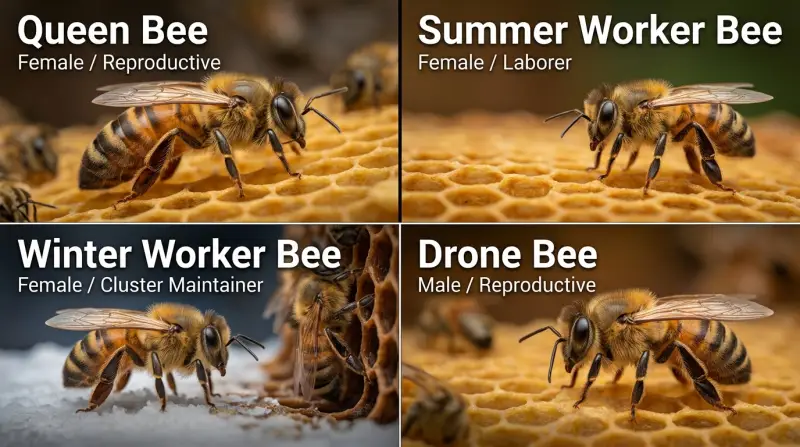
Honey Bee Lifespan
- Caste Determines Longevity: Lifespan is strictly divided by caste—queens live years, workers live weeks to months, and drones live a few weeks.
- Summer vs. Winter Workers: Summer worker bees burn out rapidly from intense foraging labor (3 to 6 weeks), whereas winter worker bees can live for 4 to 6 months to sustain the hive through cold weather.
- The Queen’s : A queen bee’s longevity (up to 5 years) depends on continuous egg-laying capacity and her pheromonal output, which holds the colony together.
- Drone Expiry: Drones do not forage or defend the hive; their short lifespan (typically 2 to 4 weeks) ends abruptly upon mating or starvation during seasonal culls.
- Nutritional Impact: Continuous royal jelly consumption throughout the larval stage is the sole biological switch that transforms a female larva into a long-lived queen instead of a short-lived worker.
The study of honey bee lifespan involves evaluating three distinct castes: the queen, the worker, and the drone. Each caste undergoes the same fundamental holometabolous life cycle—egg, larva, pupa, and adult—yet their adult lifespans diverge radically based on their physiological design and behavioral duties.
| Bee Caste | Sex / Role | Average Adult Lifespan | Maximum Lifespan | Primary Factor Limiting Lifespan |
|---|---|---|---|---|
| Queen Bee | Female / Reproductive | 2 to 3 Years | Up to 5 Years | Depletion of sperm reserves, disease, or supersedure by workers. |
| Summer Worker Bee | Female / Laborer | 3 to 6 Weeks | 8 Weeks | Wing fraying, flight muscle degradation, and foraging stress. |
| Winter Worker Bee | Female / Cluster Maintainer | 4 to 6 Months | 7 Months | Fat-body nutrient depletion and winter cluster survival. |
| Drone Bee | Male / Reproductive | 2 to 4 Weeks | 8 Weeks (Seasonal) | Death after mating or expulsion/starvation by workers before winter. |
The table above highlights the stark contrasts in longevity among hive members. While a queen can outlive generations of her own worker offspring, a summer worker bee may complete its entire adult life cycle in less than a month.
The Biological Foundation of Honey Bee Development
Before an adult honey bee begins its lifespan countdown, it spends approximately 21 days developing through distinct physical stages within a hexagonal wax cell. For worker bees, this development takes 21 days (3 days as an egg, 6 days as a larva, and 12 days as a capped pupa). Queens develop faster, emerging in just 16 days due to a richer diet of royal jelly, while drones take 24 days.
Cell capping marks the transition to the pupal stage, where complete metamorphosis reorganizes larval tissues into adult anatomy. Once the adult bee chews its way out of the cell, its chronological age begins, but its physiological aging rate depends heavily on external stimuli.
Caste-Specific Lifespan Breakdowns
1. The Queen Bee (Apis mellifera Monarch)
The queen is the biological heart of the colony. Capable of laying up to 2,000 eggs per day at peak production, her longevity is crucial for colony survival. Under optimal health and environmental conditions, a queen honey bee lives between 2 to 5 years. However, in modern commercial beekeeping, queens are frequently replaced every 1 to 2 years because their egg-laying rate and pheromone production decline over time, increasing the risk of the colony attempting an unscheduled supersedure or swarming.
2. Worker Bees (Summer vs. Winter Broods)
Worker bees represent the vast majority of the colony population. Their lifespan is uniquely plastic, split into two distinct operational categories:
- Summer Workers: Hatched during the active spring and summer nectar flows, these bees burn through their physiological reserves at an accelerated rate. Working inside the hive as cleaners and nurses for the first half of their lives, they transition to field foragers. The relentless physical stress of flight, navigation, and foraging reduces their adult lifespan to roughly 3 to 6 weeks.
- Winter Workers (Diutinus Bees): Hatched in late autumn, these bees do not forage intensively. Instead, their physiology adapts by accumulating high levels of vitellogenin (a protein-fat reserve) in their fat bodies. This specialized brood, often called diutinus bees, can survive for 4 to 6 months, keeping the cluster warm through freezing temperatures until spring brood-rearing begins.
3. Drone Bees (The Colony Males)
Drones are haploid males produced from unfertilized eggs. Their sole evolutionary purpose is to mate with a virgin queen. Possessing no stingers, unable to forage for nectar, and incapable of grooming themselves efficiently, drones rely entirely on worker bees for feeding. Their lifespan typically spans 2 to 4 weeks. Those that survive the mating flights face a grim reality in autumn: as resources dwindle, worker bees forcefully expel drones from the hive, leaving them to starve or freeze outside the entrance.
Environmental and Ecological Stressors Impacting Longevity
A honey bee’s potential lifespan is rarely achieved in nature due to a barrage of environmental stressors. Urban and agricultural landscapes introduce variables that can prematurely curtail a bee’s life:
- Pathogens and Parasites: The parasitic varroa mite (Varroa destructor) feeds on bee fat bodies and hemolymph, transmitting deadly viruses such as Deformed Wing Virus (DWV). A single varroa infestation can cut a worker bee’s lifespan in half.
- Pesticide Exposure: Neonicotinoids and other systemic agricultural chemicals disrupt honey bee neurological function, impairing foraging navigation and causing premature death away from the hive.
- Nutritional Deficits: Monoculture farming reduces floral diversity, depriving bees of essential amino acids and pollen variety necessary for robust immune function and cellular repair.
Practical Identification and Management Considerations
When assessing bee activity around structures or managing managed hives, recognizing age-related traits helps differentiate healthy colonies from failing ones:
- Inspect Forager Condition: Field bees with frayed, ragged wings and shiny, hairless thoraxes are elderly summer workers nearing the end of their natural 6-week lifespan.
- Evaluate Cluster Density: In late winter, a thriving hive will maintain a tight cluster of long-lived winter workers surrounding the queen. Loose, disorganized clusters during cold snaps indicate nutritional failure or high varroa loads.
- Monitor Queen Vigor: Spotty brood patterns and aggressive drone-laying (laying workers) indicate that the original queen has died or failed, signaling an urgent need for intervention.
Frequently Asked Questions
A queen bee lives significantly longer than a worker bee. While a queen can survive for 2 to 5 years, a worker bee’s lifespan ranges from just 3 to 6 weeks during the busy summer season, though winter workers can live up to 4 to 6 months.
Summer worker bees experience intense physiological stress. Their flight muscles, wings, and metabolic systems degrade rapidly due to constant foraging flights, heavy nectar loads, and defending the hive against predators and rival insects.
No. Drones do not possess stingers (which are modified ovipositors found only in females), nor do they have pollen baskets or mouthparts designed for foraging. They depend entirely on worker bees to feed them until they reach sexual maturity.
Yes. Worker bees hatched in late autumn undergo a physiological transformation, accumulating high levels of proteins and fats in their bodies. This physiological adaptation, known as becoming a winter bee or diutinus bee, allows them to survive for several months until spring arrives.
Premature queen mortality is typically caused by disease, exposure to agricultural pesticides, poor nutritional quality during larval development, mechanical injury during hive inspections, or being superseded (replaced) by the worker bees when her pheromone levels drop.
Conclusion
The lifespan of a honey bee is a marvel of evolutionary biology, perfectly tailored to balance individual sacrifice with collective colony survival. From the multi-year reign of the queen and the relentless, short-lived labor of summer foragers to the resilient winter clusters, every bee’s life span serves the greater superorganism. Understanding these timelines equips beekeepers, researchers, and pest control professionals with the foundational knowledge required to support pollinator health and diagnose hive distress effectively.