
Quick Answer: The adult horse fly lifespan typically ranges from 30 to 60 days, though their complete life cycle—from egg through larval and pupal stages—spans anywhere from several months to over a year (and frequently 1 to 3 years in colder climates). Females have a shorter adult lifespan once they begin laying eggs, while males generally die shortly after mating.
Few insects command as much immediate dread from livestock owners, equestrians, and outdoor enthusiasts as the horse fly (family Tabanidae). Known for their painful, flesh-tearing bites and relentless pursuit of warm-blooded hosts, these robust pests are a seasonal nuisance of epic proportions. Yet, beneath their menacing reputation lies a complex biological timeline shaped by aquatic and semi-aquatic larval phases, environmental triggers, and distinct developmental stages. Understanding how long horse flies live, how they progress through metamorphosis, and what environmental factors dictate their survival is critical for effective pest management and animal welfare.
Explore our detailed breakdown on Quail Bird Lifespan.This comprehensive guide explores every facet of the horse fly lifespan, examining the distinct developmental stages, seasonal emergence patterns, environmental vulnerabilities, comparisons with related tabanids, and practical considerations for mitigating their impact on horses, livestock, and humans.
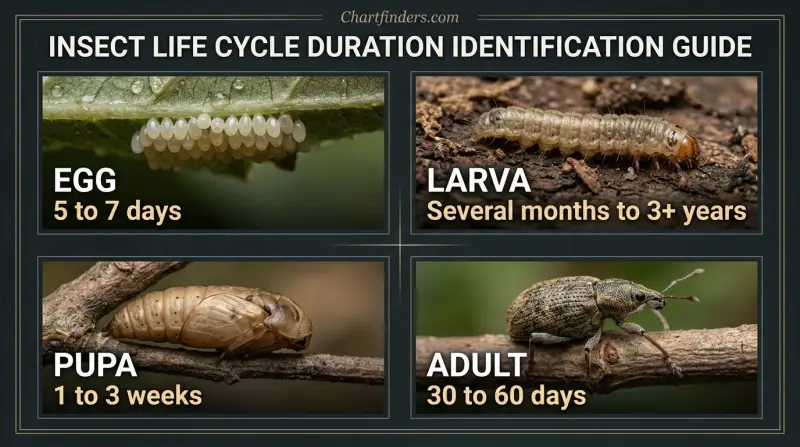
Horse Fly Lifespan and Developmental Biology
- Total Life Cycle: Spans from several months to over 3 years, heavily dependent on species, geographic location, and environmental temperature.
- Adult Longevity: Free-roaming adult horse flies generally live between 30 and 60 days under optimal conditions.
- Larval Stage Duration: The grub-like larvae spend the vast majority of their existence—often 1 to 3 years in certain species—burrowing in mud and wet soil.
- Gender Disparities: Males have shorter lifespans focused entirely on locating and mating with females; females require blood meals to develop eggs and live longer.
- Environmental Dependence: High humidity, standing water, and warm temperatures accelerate development, whereas drought and cold force larvae into prolonged dormancy (diapause).
- Complete Metamorphosis: Tabanids undergo holometabolous development, progressing through four distinct life stages: egg, larva, pupa, and adult.
To fully grasp the lifespan of a horse fly, one must look beyond the buzzing adult stage that plagues pastures during summer afternoons. The vast majority of a horse fly’s life is spent hidden away in moist, anaerobic environments as a voracious larva. Examining each stage of development provides a clearer picture of why these insects are so difficult to eradicate once established.
| Life Stage | Duration | Habitat / Location | Primary Activity |
|---|---|---|---|
| Egg | 5 to 7 days | Vegetation overhanging water or wet mud | Incubation and hatching |
| Larva | Several months to 3+ years | Mud, stream banks, pond edges, wetlands | Feeding on organic matter and small invertebrates; growth |
| Pupa | 1 to 3 weeks | Drier soil above water lines | Non-feeding transformation into winged adult |
| Adult | 30 to 60 days | Open pastures, woodlands, around hosts | Mating, host-seeking, blood-feeding, egg production |
The table above outlines the dramatic contrast between the prolonged developmental phases spent in the soil and the short, intense window of adult activity. Managing horse fly populations requires understanding that targeting only the flying adults leaves the extensive underground reservoir untouched.
The Egg Stage: Beginning the Cycle
The horse fly life cycle initiates when an adult, fertilized female deposits a distinct mass of eggs. Females typically select overhanging vegetation, tree branches, bridge supports, or structures situated directly above water sources, marshes, or saturated ditch banks. A single female can lay anywhere from 25 to 1,000 eggs in a tightly packed, whitish, brownish, or grayish mass coated with a chalky, protective secretion that shields them from predators, parasitoid wasps, and desiccation.
Under warm summer conditions, these eggs incubate rapidly, hatching within 5 to 7 days. Once the tiny larvae emerge, gravity or wind drops them directly into the wet mud or water below, where their long journey toward adulthood begins.
The Larval Stage: The Prolonged Underworld Phase
Unlike the short-lived adults, horse fly larvae can endure for a remarkably long time. Depending on the species and environmental temperature, the larval stage lasts from several months to multiple years. In temperate climates, many tabanid species overwinter as larvae multiple times, entering a state of metabolic arrest called diapause when temperatures drop.
Morphologically, horse fly larvae resemble segmented, cylindrical grubs or caterpillars without legs, featuring tapered ends and distinct mouthparts. They are carnivorous or omnivorous scavengers, feeding on decaying organic matter, earthworms, insect larvae, and small aquatic organisms. Because they possess sharp, hook-like mandibles, they are capable of cannibalism when population densities in the mud become too high.
The Pupal Stage: The Transitional Phase
When the larva reaches full maturity—typically by late spring or early summer—it migrates away from the saturated water’s edge toward slightly drier, elevated soil. Here, it burrows just beneath the surface and transforms into a pupa.
The pupal stage is a non-feeding, transitional period lasting roughly 1 to 3 weeks. Externally immobile, the insect undergoes intense internal histolysis and reorganization, breaking down larval tissues to build the complex structures of the adult fly, including compound eyes, powerful flight muscles, and specialized mouthparts.
The Adult Stage: The Final 30 to 60 Days
Upon completing metamorphosis, the adult horse fly splits the pupal case, pushes its way to the soil surface, and pumps fluid into its newly formed wings. Once the exoskeleton hardens and dries, the adult takes flight. Total adult longevity ranges between 30 and 60 days, during which time physiological imperatives dictate their behavior.
Comparative Analysis of Tabanid Development and Biology
To fully understand the tabanid family, it is helpful to compare true horse flies with their close relatives, deer flies, across several key biological and behavioral metrics.
| Parameter | True Horse Fly (Tabanus spp.) | Deer Fly (Chrysops spp.) |
|---|---|---|
| Average Adult Size | Large (10 to 25+ mm) | Smaller (7 to 10 mm) |
| Wing Patterns | Clear or uniformly tinted, no bands | Distinct smoky or dark bands across wings |
| Adult Lifespan | 30 to 60 days | 3 to 5 weeks |
| Primary Host Target | Lower body and legs of large livestock (horses, cattle) | Head, neck, and shoulders of humans and mammals |
| Larval Environment | Stream banks, pond edges, wetlands, some aquatic | Wet organic soils, woodland seeps |
Behavioral Drivers Influencing Adult Longevity
An adult horse fly’s lifespan is not uniform across sexes; biological roles create stark differences in daily behavior and survival rates.
Male vs. Female Lifespan Dynamics
- Males: Male horse flies do not bite. Their mouthparts lack the slashing blades found in females, restricting them to feeding exclusively on nectar, plant sap, and pollen. Their primary evolutionary purpose is mating. Once they emerge, form mating swarms, and successfully fertilize females, males typically die within a couple of weeks, significantly shortening their overall adult lifespan compared to females.
- Females: Female horse flies require a high-protein blood meal to develop their eggs. Armed with specialized, scissor-like mouthparts that slice capillaries to create a small pool of blood, females actively hunt hosts—including horses, cattle, deer, and humans. Because egg production occurs in discrete batches, a single female may seek multiple hosts over her lifetime, extending her active adult phase up to two months depending on predation, weather, and host availability.
Environmental and Climatic Pressures
Weather plays a massive role in shortening or extending the active window of adult horse flies. They are notoriously diurnal, preferring warm, sunny, and humid conditions. High winds, heavy rainfall, and cold snaps ground them, reducing their ability to forage for food or hosts. Conversely, prolonged drought dries out the larval breeding grounds, drastically cutting down future generations while forcing surviving adults into intense competition for dwindling moisture and host resources.
Geographic and Seasonal Variations in Lifespan
The progression of the horse fly lifespan is deeply tied to latitude and local climate patterns. In tropical and subtropical regions, continuous warmth allows for continuous breeding cycles, with multiple generations emerging year-round. In these zones, the strict seasonality seen in temperate climates disappears.
In temperate zones, however, the life cycle is tightly synchronized with seasonal shifts:
- Spring Emergence: Overwintered larvae pupate as soil temperatures rise in April and May, leading to the first major wave of adult emergence by late spring.
- Summer Peak: Generations overlap during the peak heat of July and August, resulting in the highest density of biting adults.
- Autumn Decline: As photoperiods shorten and temperatures drop, adults die off naturally, and surviving larvae burrow deep into the mud to brace for winter dormancy.
In coastal or high-humidity regions, certain species manage to squeeze out two distinct generations per year, while larger species residing in northern climates require a full two to three years just to complete their larval development.
Practical Management Implications
Knowing that adult horse flies only live for 30 to 60 days might suggest that waiting them out is an option, but overlapping generations ensure a steady stream of new adults throughout the warm months. Effective management requires targeting vulnerabilities across the entire life cycle rather than focusing solely on adult control.
Targeting the Larval Habitat
Because larvae depend on saturated soils, pond edges, and poorly drained ditches, altering the micro-environment can suppress local populations:
- Drainage Improvement: Grading pastures, clearing blocked culverts, and eliminating stagnant, shallow standing water reduces the available muddy nurseries where larvae thrive.
- Vegetation Management: Clearing tall weeds and brush along pond banks removes the preferred oviposition (egg-laying) sites for gravid females.
Managing Adult Populations
Controlling adult horse flies is notoriously difficult because they do not readily feed on treated surfaces or traditional insecticides used in fly baits. Effective strategies include:
- Trapping Systems: Specialized traps (such as Nzi traps or shiny black sphere traps that mimic large animals) exploit the visual hunting cues of horse flies, capturing high volumes of seeking females.
- Physical Protection for Livestock: Utilizing fly sheets, masks, and shelters gives horses and cattle necessary relief during peak daylight hours when horse fly activity is highest.
Common Misconceptions Regarding Horse Flies
Misunderstandings about horse fly biology often lead to ineffective control efforts. Clarifying these points ensures better pest management strategies:
- Myth: Adult horse flies overwinter in barns. Unlike house flies or cluster flies, adult horse flies do not seek shelter in structures to survive winter. They die off completely with the first hard frosts. Only immature larvae survive sub-zero temperatures buried safely in the mud.
- Myth: All horse flies bite humans. Only adult females bite, and most species exhibit strong host preferences for large livestock (horses and cattle) or wild ungulates (deer), though they will readily bite humans when preferred hosts are absent.
- Myth: Insecticides applied to pastures wipe out horse flies. Spraying broad-spectrum chemicals across open pastures rarely impacts horse fly larvae safely insulated deep within wetland mud or stream banks, and it frequently destroys beneficial insect populations instead.
Frequently Asked Questions
While an adult female requires blood to develop eggs, both males and females can survive short periods by feeding on plant nectar, sap, and water. However, without access to food and favorable humidity, adult horse flies generally succumb within a few days. Their total natural adult lifespan caps out at roughly 30 to 60 days regardless of continuous host availability.
It is rare for horse flies to bite indoors. Horse flies rely heavily on visual cues—such as movement, dark silhouettes, and polarized light reflections—to locate hosts in open outdoor environments. They rarely enter homes or barns intentionally, though an accidental stray may wander through an open door and attempt to bite if trapped.
This mass emergence is driven by thermal accumulation in the spring. As soil temperatures in pond banks and marshes rise past specific biological thresholds, larvae that have spent months or years maturing simultaneously trigger their pupation sequence, leading to a synchronized wave of adult emergence.
Yes, horse flies will bite dogs and cats, particularly outdoor working dogs or pets kept near rural pastures, wetlands, or wooded areas. Their painful bites can cause localized swelling, irritation, and distress in domestic pets, though cattle and horses remain their primary targets.
Both belong to the family Tabanidae and share similar life cycles and biting habits, but they differ in physical appearance and behavior. Deer flies (genus Chrysops) are noticeably smaller, feature patterned or smoky wings, and tend to target the head, neck, and upper shoulders of humans. True horse flies (genus Tabanus) are larger, bulky, possess clear or uniformly tinted wings, and prefer targeting the lower body and legs of large livestock.
Conclusion
The horse fly lifespan is a masterclass in ecological resilience. While individual adult flies live a relatively brief 30 to 60 days, their multi-year larval phase hidden in aquatic and semi-aquatic mud ensures their persistence season after season. By understanding the complete developmental timeline—from egg masses on overhanging reeds to ravenous larvae in the soil and short-lived, blood-seeking adults—property owners can better deploy targeted habitat management and protective measures to safeguard livestock and minimize the nuisance of these formidable biters.