
Encountering unfamiliar coleopteran specimens within a domestic environment inevitably prompts immediate concern regarding structural integrity, stored pantry reserves, and textile preservation. Because the order Coleoptera represents the most species-rich group of organisms on Earth, distinguishing between an innocuous transient intruder and a destructive household pest requires systematic, laboratory-grade examination. A reliable house beetle identification chart serves as an essential diagnostic tool, replacing panic with empirical observation. By breaking down anatomical characteristics—such as antennal segmentation, tarsal formulas, and cuticular coloration—homeowners and pest control specialists can accurately classify specimens and implement targeted remediation protocols.
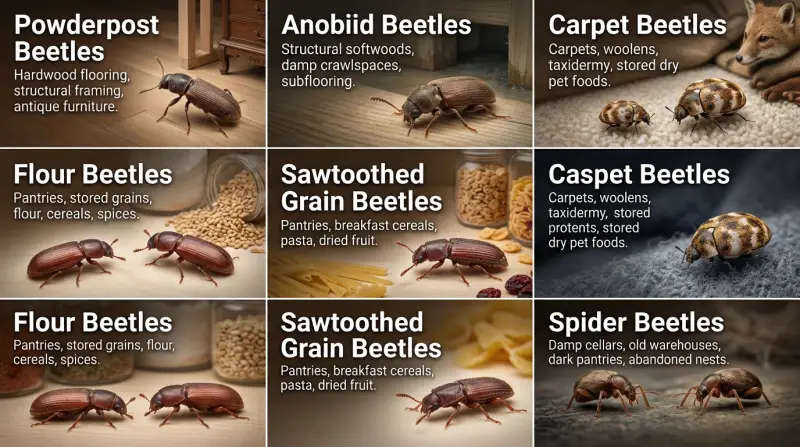
House Beetle Identification Chart
- Accurate beetle identification depends heavily on specialized anatomical features, including antennal clubs, tarsal segment counts, and pronotal contours.
- Household beetles generally fall into three biological categories: wood-boring structural pests, stored-product pantry pests, and fabric-destroying dermestids.
- Frass consistency and exit hole morphology are diagnostic indicators that reveal whether a beetle is actively degrading framing timber or simply feeding on stored dry goods.
- Environmental conditions such as relative humidity and ambient temperature dictate larval development rates and the overall lifecycle duration of household coleopterans.
- Differentiating between beneficial predators (like certain Histeridae or clerid beetles) and actual infesting pests prevents the unnecessary destruction of non-target fauna.
To master domestic entomological identification, one must look past generalized descriptions of “small black bugs” and analyze specific morphological traits under magnification. The following reference matrix outlines the primary coleopteran families encountered in domestic structures, detailing their biological habits, physical dimensions, and key diagnostic identifiers.
Explore our detailed breakdown on Rabbit Breed Identification Chart [Full Reference Chart].| Family / Common Name | Scientific Name (Examples) | Size Range | Morphological Key Identifiers | Primary Domestic Infestation Site | Diagnostic Signage |
|---|---|---|---|---|---|
| Powderpost Beetles | Lyctidae (e.g., Lyctus brunneus) | 3mm – 7mm | Elongate, flattened bodies; reddish-brown to black; 2-segmented antennal club. | Hardwood flooring, structural framing, antique furniture. | Fine, flour-like frass; tiny round exit holes (1-2mm). |
| Anobiid Beetles | Anobiidae (e.g., Anobium punctatum) | 2.5mm – 9mm | Humpbacked pronotum concealing the head; rows of pits on elytra. | Structural softwoods, damp crawlspaces, subflooring. | Gritty, bun-shaped frass pellets; round exit holes (1.5-3mm). |
| Carpet Beetles | Dermestidae (e.g., Anthrenus verbasci) | 2mm – 4.5mm | Oval to round bodies; scaly patterned elytra (mottled white, brown, yellow). | Carpets, woolens, taxidermy, stored dry pet foods. | Bristly larvae (“woolly bears”), cast skins, hair shedding. |
| Flour Beetles | Tenebrionidae (e.g., Tribolium confusum) | 3mm – 4.5mm | Flat, oblong, shiny reddish-brown bodies; gradual or 3-segmented club. | Pantries, stored grains, flour, cereals, spices. | Clumped grain products, musty odor, live crawling adults. |
| Sawtoothed Grain Beetles | Silvanidae (Oryzaephilus surinamensis) | 2.5mm – 3mm | Slender, dark brown; thorax features six distinct sawtooth-like projections on each side. | Pantries, breakfast cereals, pasta, dried fruit. | Contaminated dry foods, erratic crawling in open containers. |
| Spider Beetles | Ptinidae (e.g., Mezium americanum) | 1.5mm – 4.5mm | Globular abdomen, long stilt-like legs, resembling small spiders; missing wings. | Damp cellars, old warehouses, dark pantries, abandoned nests. | Random sightings of slow-moving spider-like forms in quiet areas. |
When analyzing this dataset, note that successful diagnosis relies on correlating physical appearance with environmental context. A beetle discovered wandering across a kitchen countertop requires a completely different diagnostic evaluation than one emerging from a structural floor joist.
Anatomical Breakdown for Field Identification
Field identification without a stereomicroscope demands a working knowledge of external insect anatomy. The coleopteran body divides into three distinct tagmata: the head, thorax, and abdomen.
- The Head and Antennae: Pay close attention to mouthparts (mandibles) and antennal morphology. Are the antennae filiform (thread-like), clavate (clubbed), serrate (saw-toothed), or lamellate (layered plates)? For instance, sap beetles (Nitidulidae) feature abrupt clubbed antennae, whereas darkling beetles (Tenebrionidae) exhibit gradual thickening toward the apex.
- The Pronotum: The dorsal plate covering the first thoracic segment varies wildly. Anobiid beetles possess a hooded pronotum that entirely obscures the head from above, while powderpost beetles feature a flat, parallel-sided thorax.
- The Elytra: Hardened forewings protect the membranous flight wings beneath. Look for striations (grooves), punctation (pits), pubescence (hairs), or colorful scale patterns characteristic of dermestids.
Categorical Breakdown of Household Beetle Families
Domestic coleopterans are generally separated into distinct functional guilds based on their nutritional ecology. Understanding these guilds clarifies why certain species appear in specific micro-habitats.
Wood-Boring Coleopterans (The Structural Threat)
Wood-infesting beetles are the most financially damaging coleopterans encountered in residential architecture. They are broadly divided into three main families based on wood preference and frass characteristics:
- Lyctidae (True Powderpost Beetles): These insects specifically target the starch-rich sapwood of hardwoods such as oak, ash, walnut, and mahogany. Larvae bore through timber, reducing the interior to fine, powdery frass that resembles talcum powder. They rarely attack softwoods or seasoned wood older than roughly ten years unless starch levels remain abnormally high.
- Anobiidae (Anobiid Powderpost / Deathwatch Beetles): Unlike Lyctids, Anobiids readily infest both hardwoods and softwoods, particularly in damp, unheated environments like crawlspaces, basements, and historic structures. Their frass contains characteristic biconvex or bun-shaped fecal pellets.
- Bostrichidae (False Powderpost Beetles): Typically larger than Lyctids, Bostrichids frequently attack freshly logged or unseasoned hardwoods, though they occasionally emerge from hardwood flooring or structural framing constructed from green lumber.
Dermestid Beetles (The Textile and Organic Debris Feeders)
The family Dermestidae includes some of the most persistent museum and household pests. Species such as the varied carpet beetle (Anthrenus verbasci) and the black carpet beetle (Attagenus unicolor) possess larvae equipped with specialized enzymes capable of digesting keratin—the fibrous structural protein found in wool, hair, feathers, leather, and silk.
Adult dermestids are often harmless outdoor pollinators feeding on pollen and nectar, but females actively seek out dark, undisturbed indoor locations to deposit eggs. The resulting larvae are elongate, heavily setose (bristly), and notoriously difficult to eliminate once established in baseboards, air ducts, or wool carpeting reserves.
Stored-Product Pests (The Pantry Invaders)
Stored-product coleopterans exploit dry, processed, or raw agricultural commodities. This guild includes:
- Confused Flour Beetle (Tribolium confusum) and Red Flour Beetle (Tribolium castaneum): Small, reddish-brown beetles that cannot break into unbroken whole kernels but thrive in cracked grains, flour, meal, and baking mixes. Their presence imparts a pungent, disagreeable odor to contaminated food due to quinone secretions.
- Sawtoothed Grain Beetle (Oryzaephilus surinamensis): Easily recognized by the six distinct serrations on each lateral margin of the pronotum. They possess exceptional squeezing capabilities, allowing them to infiltrate poorly sealed packaging.
- Merchant Grain Beetle (Oryzaephilus mercator): Morphologically similar to the sawtoothed grain beetle, but distinguished by the shape of the temple behind the eyes. Merchant grain beetles possess functional wings and are slightly more prone to flight toward light sources.
Diagnostic Clues: Frass, Exit Holes, and Larval Signage
Directly observing an adult beetle is helpful, but forensic entomology relies heavily on indirect architectural evidence. When troubleshooting an active infestation, examine the physical residue left behind.
| Sign Type | Powderpost Beetle (Lyctidae) | Anobiid Beetle (Anobiidae) | Drywood Termite (Comparison) |
|---|---|---|---|
| Frass Texture | Extremely fine, powdery, flour-like. | Coarse, gritty, contains distinct oval/bun-shaped pellets. | Hard, six-sided, perfectly smooth fecal pellets with rounded ends. |
| Exit Hole Shape | Circular, clean-cut, 1mm to 2mm in diameter. | Circular, slightly ragged, 1.5mm to 3mm in diameter. | No round exit holes; instead, kick-out holes plugged with frass. |
| Gallery Structure | Packed tightly with fine powder running parallel to grain. | Irregular, meandering tunnels packed with coarse frass and pellets. | Cleaned-out chambers across and against the wood grain. |
For fabric and pantry pests, look for cast larval skins (exuviae), webbing, clumping in dry goods, or irregular chewing damage on natural fibers. Dermestid larvae often leave behind distinct circular bare patches on woolen garments accompanied by a dense accumulation of golden-brown larval hairs.
Step-by-Step Identification and Inspection Protocol
Executing a methodical investigation prevents misdiagnosis and ensures that remediation efforts target the correct ecological niche.
- Capture and Contain: Secure a specimen using a clean glass vial or transparent container. Avoid crushing the specimen, as crushing damages delicate diagnostic structures like antennal clubs and tarsal counts.
- Macro-Examination: Utilize a jeweler’s loupe (10x to 20x magnification) or a digital stereomicroscope to examine coloration, body shape, pronotal margins, and elytral sculpturing.
- Locate the Source Matrix: Determine where the insect was discovered. If found on structural timber, check for exit holes and test wood firmness with an ice pick. If found in a pantry, inspect all dry food containers, pet foods, birdseed, and decorative dried flower arrangements.
- Assess Activity Status: Fresh frass that is light-colored and piles up cleanly beneath an exit hole indicates an active infestation. Old, discolored frass packed deep within abandoned galleries suggests historical damage that may have already naturally ceased.
- Consult Entomological Keys: Match observed anatomical features against established university extension guides or professional pest keys to confirm species identity.
Common Identification Mistakes and Pitfalls
Misidentifying household beetles frequently leads to wasted expenditure on improper treatments. Avoid these common diagnostic errors:
- Confusing Beetles with Termites: While both cause wood damage, beetles create round exit holes and powdery or pellet-filled frass. Subterranean termites never leave exit holes or loose frass in the open; they consume wood internally while leaving a thin paper shell and build mud tubes. Drywood termites push out hard, six-sided fecal pellets through small kick-out holes.
- Overlooking Alternative Pantry Vectors: Finding flour beetles does not automatically point to a localized structural issue. These insects often arrive inside commercial packaging from grocery stores rather than infesting the house’s framing.
- Misidentifying Beneficial Predatory Beetles: Not all beetles found indoors are pests. Histerid beetles (clown beetles) and certain ground beetles (Carabidae) occasionally wander indoors while hunting other insects. Treating a predatory beetle infestation with structural pesticides is unnecessary and counterproductive.
Frequently Asked Questions
Active wood-boring beetle infestations are characterized by the presence of fresh, brightly colored frass that falls freely from newly created exit holes when tapped. Inactive damage features old, darkened frass packed solidly inside tunnels with no new powdery piles accumulating beneath the wood surface.
Adult carpet beetles are harmless and do not bite. However, the microscopic hairs on carpet beetle larvae can shed and become airborne, causing allergic reactions, skin irritation, contact dermatitis, and respiratory discomfort in sensitive individuals.
Powderpost beetles typically infest furniture during the manufacturing stage if untreated, unseasoned, or improperly kiln-dried hardwood containing active eggs or larvae is utilized. Adult beetles emerge months or years later after completing their subterranean larval development cycle.
Most common pantry pests, such as merchant grain beetles and certain flour beetles, possess functional wings and can engage in weak flight, though they are primarily observed crawling rapidly across pantry shelves, countertops, and inside unsealed food containers.
Eliminating stored-product beetles requires a thorough inspection and disposal of all infested dry goods. Vacuuming shelving cracks, wiping down pantry interiors with soapy water, and transferring new pantry items into airtight glass or heavy-duty plastic containers prevents re-infestation.
Conclusion
Mastering house beetle identification requires patience, keen observation, and an understanding of insect morphology and ecology. By utilizing a systematic approach—evaluating size, coloration, antennal structure, and environmental context—you can accurately differentiate between destructive structural wood-boring pests, fabric-destroying dermestids, and harmless transient visitors. Proper identification remains the of effective, targeted pest management, ensuring that domestic spaces remain secure, clean, and structurally sound.