
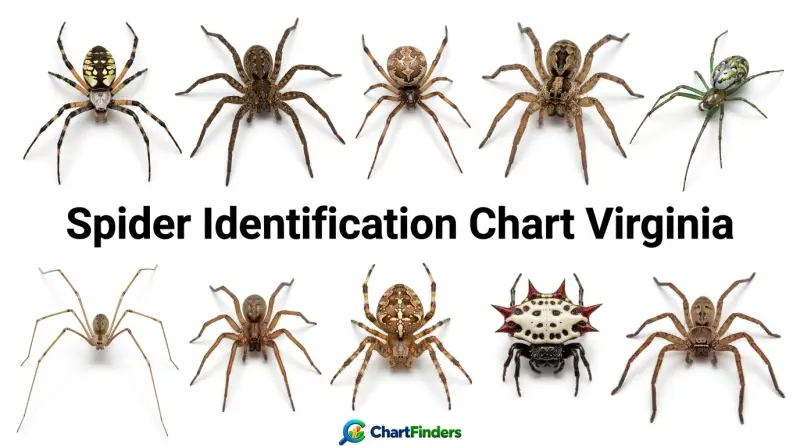
The Commonwealth of Virginia possesses a rich arachnid fauna, shaped by diverse physiographic provinces ranging from the coastal plains of the Tidewater region to the high-elevation ridges of the Blue Ridge and Allegheny Mountains. For property owners, agriculturalists, and naturalists alike, encountering these eight-legged arthropods is a routine occurrence. While arachnophobia is a common psychological response, systematic entomological observation reveals that true danger is exceptionally rare. The vast majority of Virginia’s resident spiders serve as crucial biological control agents, suppressing populations of dipteran vectors, lepidopteran agricultural pests, and Blattodea.
Nevertheless, the presence of venomous taxa necessitates a rigorous, data-driven approach to identification. Misidentification frequently leads to unwarranted eradication of beneficial species or, conversely, dangerous complacency regarding medically significant ones. This master reference guide establishes a comprehensive framework for diagnosing spider species encountered within Virginia residences and surrounding landscapes. By examining morphological specializations, venomic profiles, ecological niches, and habitat preferences, readers can accurately evaluate potential encounters and implement appropriate management strategies.
Spider Identification Chart Virginia
- Virginia hosts only two medically significant venomous spiders: the Black Widow (Latrodectus spp.) and the Brown Recluse (Loxosceles reclusa).
- Visual identification requires careful examination of anatomical traits, including eye counts (most species possess eight eyes arranged in specific patterns, while Loxosceles possesses six).
- Web morphology provides vital diagnostic clues, ranging from the irregular, three-dimensional tangle of Theridiidae to the high-tensile orb webs of Araneidae.
- Wolf spiders (Lycosidae) and fishing spiders (Pisauridae) are frequently mistaken for dangerous species due to their large size and aggressive defensive postures when cornered.
- Professional pest management intervention is strongly recommended when medically significant populations are identified within inhabited structures.
To assist in rapid field diagnosis, the following structural breakdown organizes Virginia’s most commonly encountered spider taxa by morphological family, venom significance, ecological habits, and anatomical identifiers. Use this reference matrix to cross-reference physical characteristics observed during inspection.
| Common Name | Scientific Taxon | Medical Significance | Key Anatomical Identifiers | Web Architecture / Habit |
|---|---|---|---|---|
| Northern / Southern Black Widow | Latrodectus variolus / mactans | High (Neurotoxic venom) | Shiny jet-black exoskeleton; distinct red/orange hourglass or spot pattern on ventral abdomen; eight eyes in two rows. | Irregular, sticky, three-dimensional scaffolding webs built near ground level in dark, undisturbed voids. |
| Brown Recluse | Loxosceles reclusa | High (Necrotic venom) | Uniform light brown to tan color; dark violin-shaped marking on dorsal cephalothorax; six eyes arranged in three dyads. | Irregular, loose retreat webs in dark, dry, undisturbed crevices (woodpiles, cardboard boxes, closets). |
| Daring Jumping Spider | Phidippus audax | None (Low-potency venom; reluctant biter) | Compact, robust, hairy body; metallic green or bronze chelicerae; large, forward-facing anterior median eyes. | No permanent web; active diurnal hunter utilizing silk draglines for navigation and jumping calculations. |
| Carolina Wolf Spider | Hogna carolinensis | None (Mechanical bite only; minor pain) | Large, robust body (up to 35mm); mottled gray-brown coloration; prominent posterior median and posterior lateral eyes. | No permanent web; ground-dwelling nocturnal hunter; constructs silk-lined burrows or hides under debris. |
| Barn Funnel Weaver / Grass Spider | Agelenopsis spp. | None | Brownish with distinct longitudinal stripes on cephalothorax; prominent, elongated posterior spinnerets. | Sheet-like, non-sticky horizontal webs terminating in a tubular retreat funnel. |
| Yellow Sac Spider | Cheiracanthium inclusum | Moderate (Mild localized tissue irritation) | Pale yellow to light green coloration; black-tipped chelicerae; eight uniform eyes. | Constructs silken tube-like retreats in corners, ceilings, and under leaf litter; nocturnal hunter. |
The matrix above highlights the critical distinction between dangerous taxa and harmless look-alikes. Understanding these baseline parameters prevents misdiagnoses, particularly regarding the differentiation between reclusive species and common cellar or grass spiders.
Anatomical Foundations of Arachnid Morphology
Accurate taxonomic identification requires an understanding of basic spider anatomy. The arachnid body plan is divided into two primary tagmata: the cephalothorax (prosoma) and the abdomen (opisthosoma), joined by a narrow pedicel. On the cephalothorax, entomologists examine the ocular arrangement. While most true spiders possess eight eyes arranged in two rows of four, modifications in number and placement are diagnostic. For instance, the Sicariidae family (which includes the brown recluse) possesses precisely six eyes arranged in three pairs (dyads): one median pair and two lateral pairs.
Chelicerae (mouthparts) and pedipalps are also critical. Males exhibit modified terminal segments on their pedipalps used for sperm transfer, resembling tiny boxing gloves. The spinnerets, located at the posterior ventral tip of the abdomen, vary in length, number, and configuration across families, playing an essential role in silk production and web construction.
Medically Significant Spiders in Virginia
While the vast majority of Virginia’s spider species possess venom targeted exclusively at invertebrate prey—utilizing specialized digestive enzymes to liquefy internal tissues—two specific groups possess venom chemistry capable of inflicting severe pathological symptoms in humans. Homeowners must be intimately familiar with the morphology and behavioral ecology of these two taxa.
The Genus Latrodectus: Black Widows
Virginia is home to two primary species of black widow spiders: the Northern Black Widow (Latrodectus variolus) and the Southern Black Widow (Latrodectus mactans). Both species thrive across diverse habitats throughout the state, frequently colonizing man-made structures such as crawl spaces, meter boxes, woodpiles, and stone retaining walls.
Morphological Identification
Adult female black widows are easily recognized by their globose, highly polished jet-black abdomens. The ventral surface typically displays a bright red or orange hourglass-shaped marking, though in L. variolus, this pattern may be broken into two separate red spots. Females measure approximately 8 to 13 millimeters in body length, excluding legs. Adult males and immature instars are significantly smaller, exhibiting lighter brown or gray patterning with white, red, or yellow lateral stripes, and are generally harmless to humans.
Venom Pathology and Clinical Symptoms
Black widow venom is a potent neurotoxin containing latrotoxin, which stimulates massive, unregulated exocytosis of neurotransmitters at motor nerve terminals. Envenomation results in latrodectism. Clinical manifestations rarely include localized necrosis but rather systemic symptoms: intense muscular rigidity spreading from the site of the bite to the abdomen, chest, and back, accompanied by severe cramping, diaphoresis, hypertension, nausea, and anxiety. While rarely fatal to healthy adults due to modern antivenom and supportive care, bites constitute a medical emergency, particularly for children, the elderly, and individuals with cardiovascular compromised health.
The Brown Recluse (Loxosceles reclusa)
The presence of the brown recluse (Loxosceles reclusa) in Virginia is a frequent subject of debate among pest management professionals and arachnologists. While established populations exist in limited pockets of western and southwestern Virginia, true encounters east of the Blue Ridge Mountains are exceptionally rare, with most reported sightings attributable to misidentified hobo spiders (Tegenaria agrestis), wolf spiders, or cellar spiders (Pholcidae).
Morphological Identification
Distinguishing Loxosceles reclusa from harmless brown spiders requires strict attention to morphological details. The brown recluse features:
- A uniform, light brown to grayish-tan coloration across the cephalothorax and abdomen without contrasting bands, stripes, or spots.
- A distinct dark brown, violin-shaped marking on the dorsal surface of the cephalothorax, with the neck of the fiddle pointing backward toward the abdomen.
- An absence of spines on the legs (legs are covered in fine, delicate hairs).
- An ocular arrangement consisting of precisely six eyes grouped in three distinct pairs (dyads), contrasting with the eight eyes of most other brown-toned spiders.
Venom Pathology and Clinical Symptoms
The venom of the brown recluse contains sphingomyelinase D, an enzyme that destroys cell membranes and triggers local inflammatory cascades. Envenomation results in loxoscelism. Most bites produce mild, self-limiting localized irritation. However, in sensitive individuals, the bite site may progress over several days to form a sunken, necrotic ulcer with a characteristic “bullseye” appearance. Systemic reactions (viscerocutaneous loxoscelism), including fever, chills, hemolysis, and thrombocytopenia, are extremely rare but demand immediate hospitalization.
Common Harmless Spiders Frequently Confused with Dangerous Species
The psychological stress associated with potential spider bites often leads to the unwarranted destruction of beneficial, harmless species. Understanding the morphology of common look-alikes prevents unnecessary ecological disruption.
Wolf Spiders (Family Lycosidae)
Wolf spiders, particularly large representatives of the genus Hogna and Tigrosa, are frequently mistaken for brown recluses or tarantulas due to their robust size (up to 35mm body length) and agile movements. Unlike recluses, wolf spiders are heavily armored, featuring mottled brown, gray, and black coloration patterns. Crucially, they possess a distinct ocular arrangement characterized by two very large posterior median eyes positioned above a row of four smaller anterior eyes. Wolf spiders do not build webs; they hunt actively across the ground and carry their egg sacs attached to their spinnerets.
Fishing Spiders (Family Pisauridae)
Large fishing spiders, such as Dolomedes tenebrosus, are often found near aquatic habitats, wooded areas, and occasionally on the exterior walls of residential homes. They rival wolf spiders in size and possess long, sprawling legs capable of rapid locomotion across water surfaces. While their sheer size inspires panic, their venom is mild, and they are exceptionally reluctant to bite unless physically trapped against human skin.
Grass Spiders and Funnel Weavers (Family Agelenidae)
Grass spiders construct extensive, non-sticky sheet webs in lawns, shrubbery, and foundation corners. They feature distinctive longitudinal stripes on the cephalothorax and elongated, prominent posterior spinnerets. They are frequently confused with wolf spiders or venomous species, but they are entirely harmless to humans and play an essential role in regulating insect populations.
Jumping Spiders of Virginia: Colorful and Inquisitive Hunters
Jumping spiders (Family Salticidae) represent one of the most successful and visually distinct arachnid families in Virginia. The daring jumping spider (Phidippus audax) is readily identifiable by its compact, velvety body, striking black and white abdominal markings, and iridescent, metallic green or bronze chelicerae.
Salticids possess the sharpest vision of all arthropods, facilitated by large, forward-facing anterior median eyes capable of resolving high-definition images and calculating precise distances for their legendary predatory leaps. They do not spin webs for capturing prey; instead, they stalk insects during daylight hours, anchoring a silk dragline before launching themselves onto their target. Their inquisitive behavior—often turning to track human movement—combined with their docile nature makes them fascinating subjects for observation rather than pests requiring control.
Web Architecture as an Identification Tool
When the spider itself is hidden, the geometry and placement of its web offer robust diagnostic clues for field identification.
- Orb Webs (Family Araneidae): Circular, highly symmetrical wheels of silk constructed in open spaces, gardens, and doorways. Built by garden spiders and orb-weavers, which are entirely harmless.
- Tangle / Cobwebs (Family Theridiidae): Irregular, three-dimensional scaffolds of high-tensile silk constructed in dark, enclosed corners, crawl spaces, and structural voids. Characteristic of black widows and common cobweb spiders (Parasteatoda tepidariorum).
- Sheet and Funnel Webs (Family Agelenidae): Horizontal, tightly woven silk sheets laid across grass or structural crevices, terminating in a tubular retreat where the spider lies in wait. Built by grass spiders and funnel weavers.
- Silken Retreats (Family Cheiracanthiidae / Salticidae): Small, opaque silken sacs spun in wall corners, beneath bark, or inside rolled leaves, serving as daytime resting chambers rather than hunting snares.
Practical Field Identification Framework
When confronting an unknown spider in a Virginia residential or commercial setting, entomologists recommend applying a systematic, step-by-step diagnostic sequence before determining management protocols.
- Assess Size and Body Proportions: Measure or estimate the body length (excluding legs). Extremely large specimens (>25mm) are almost universally wolf spiders, fishing spiders, or nursery web spiders, none of which are medically dangerous in Virginia.
- Examine Coloration and Markings: Look for warning colors. Does the specimen exhibit a shiny black abdomen with a red ventral hourglass? Suspect Latrodectus spp. Does it show a uniform tan body with a dorsal violin shape? Suspect Loxosceles reclusa. If it exhibits mottled stripes, spots, or vibrant metallic mouthparts, it is a harmless hunting or orb-weaving species.
- Evaluate Ocular Arrangement (If Safely Observable): Utilize a magnifying glass or macro photography to count eyes. Six eyes arranged in three pairs point toward Loxosceles; eight eyes arranged in specific configurations point toward harmless families.
- Inspect Surrounding Web Structure: Determine whether the web is a neat geometric orb, a messy subterranean tangle, or a flat grassy sheet. Connect the web topology to the taxonomic families outlined previously.
- Determine Location and Habitat: Note where the specimen was discovered. Finding a spider in an open, sunlit living room strongly suggests an accidental wanderer from the outside (such as a wolf spider or jumping spider), whereas discovering specimens in dark, undisturbed utility boxes or woodpiles warrants heightened personal protective equipment.
Common Identification Mistakes and Diagnostic Pitfalls
Even experienced homeowners frequently fall victim to common cognitive and observational errors when identifying spiders. Avoiding these pitfalls ensures accurate risk assessment.
- Assuming Every Brown Spider is a Brown Recluse: The vast majority of brown spiders submitted for identification in Virginia are harmless male wolf spiders, nursery web spiders, or grass spiders. The true brown recluse has a very restricted geographical footprint in the state.
- Conflating Pain with Medical Significance: Many large, harmless spiders (such as wolf spiders and large orb-weavers) possess robust chelicerae capable of puncturing human skin, resulting in mechanical pain similar to a bee sting. Pain alone does not indicate systemic venom toxicity.
- Ignoring Juvenile Morphological Variations: Juvenile black widows and various orb-weavers exhibit drastically different coloration patterns compared to mature adults, often leading to misclassification as dangerous exotic species.
- Relying Solely on Bite Symptoms Without Specimen Recovery: Countless skin lesions attributed by patients to “spider bites” are actually manifestations of bacterial infections (such as Methicillin-resistant Staphylococcus aureus or MRSA), dermatological conditions, or insect stigmata. Without a recovered specimen, medical professionals must exercise extreme caution before diagnosing envenomation.
Frequently Asked Questions
How many venomous spider species live in Virginia?
There are only two medically significant venomous spider groups established in Virginia: black widow spiders (Latrodectus species) and the brown recluse spider (Loxosceles reclusa). While nearly all spiders possess venom to subdue insect prey, the venom of other resident species is either chemically incapable of causing significant human pathology or delivered in quantities too small to pose a medical threat.
How can I distinguish a brown recluse from a harmless wolf spider?
The primary distinguishing features involve eye count, body pattern, and leg morphology. A brown recluse has exactly six eyes arranged in three pairs and a uniform brown body marked by a dark violin shape on the cephalothorax, with smooth legs lacking spines. A wolf spider possesses eight eyes (with two significantly larger posterior eyes), a heavily mottled or striped hairy body, and prominent leg spines.
Are jumping spiders in Virginia dangerous to pets or children?
No. Jumping spiders (Family Salticidae) possess weak venom and are exceptionally docile. They will only attempt to bite if physically compressed against human skin or handled roughly, and the resulting reaction is typically no more severe than a mild mosquito bite. They pose no threat to domestic cats or dogs.
What should I do if I find a black widow spider in my home?
If you discover a black widow spider, avoid direct physical contact. Wear thick leather work gloves and long sleeves if attempting sanitation or removal. You can destroy the specimen using an aerosolized, EPA-registered knockdown pesticide labeled for arachnids, or physically remove it using a long-handled tool into a sealed container. For heavy infestations in crawl spaces or utility vaults, contact a licensed pest management professional.
Do brown recluse spiders spin traditional orb webs?
No. Brown recluse spiders do not spin geometric orb webs or silky sheets. They construct irregular, loose retreat webs consisting of sticky silk threads utilized primarily as daytime shelters in dark, undisturbed locations such as behind stored boxes, inside shoes, within unused clothing piles, or beneath heavy furniture.
Conclusion
Navigating the rich arachnid biodiversity of Virginia requires a balance of scientific observation and rational caution. While the Commonwealth hosts medically significant species—namely the black widow and the brown recluse—the probability of an unprovoked encounter resulting in severe envenomation remains statistically low. By mastering the morphological identifiers, ocular arrangements, and web architectures outlined in this identification guide, property owners can accurately distinguish between dangerous taxa and beneficial ecological partners, ensuring safe, informed, and balanced environmental management.