
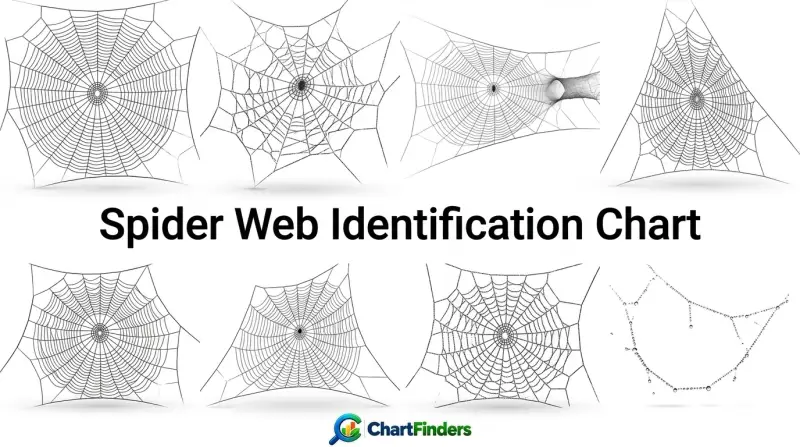
The structural morphology of an arachnid snare is not merely a random accumulation of silk; it is an extension of the arthropod’s phenotype, dictated by evolutionary pressures, neurological wiring, and specific predatory strategies. When attempting to survey or manage local synanthropic fauna, visual analysis of these silken architectures often provides the quickest route to identification, frequently before the cryptic occupant is ever observed. While many lay observers rely on casual estimation, professional pest control and academic arachnology demand a rigorous, morphologically grounded approach to web classification.
Understanding the intricacies of silk architecture requires an appreciation of protein chemistry, spinneret mechanics, and microhabitat selection. Different spider families utilize specialized spinning spigots to produce distinct proteinaceous threads—ranging from dry, cribellate capture wool to highly viscous, aqueous glue-droplet spirals. By utilizing a systematic spider web identification framework, observers can decipher these biological signatures, differentiating between benign garden dwellers and medically significant hazards. This master reference guide explores the anatomical mechanics of spider silk, categorizes the primary web typologies found across North America, provides a comparative diagnostic matrix, and outlines clinical and ecological safety protocols.
Spider Web Identification Chart and Diagnostic Framework
- Web geometry is taxonomically informative, typically aligning with specific spider families rather than individual species.
- Orb webs (Araneidae) feature geometric radial and spiral symmetry, whereas irregular cobwebs (Theridiidae) present a chaotic, three-dimensional tangle.
- Sheet webs (Linyphiidae) and funnel webs (Agelenidae/Hexathelidae) utilize horizontal or tubular designs adapted for subterranean or ground-level ambush predation.
- Medically significant species, such as the black widow, construct crude, irregular gumfoot webs in dark, protected microhabitats near ground level.
- Differentiating between true orb weavers and other web-builders prevents unnecessary eradication of beneficial, non-venomous garden predators.
To accurately read a silken trap, an observer must look past simple dimensions and evaluate structural architecture, tension points, anchoring substrates, and silk consistency. The following diagnostic matrix details the primary structural categories, associated spider families, web locations, and typical occupant characteristics.
| Web Type | Primary Family | Common Structural Features | Typical Location | Medical Significance / Risk |
|---|---|---|---|---|
| Orb Web | Araneidae (Orb Weavers) | Symmetrical circular wheels with radial spokes and sticky spiral capture threads. | Open spaces between vegetation, structural eaves, doorways. | None; generally docile garden predators. |
| Irregular Cobweb | Theridiidae (Cobweb Spiders) | Three-dimensional, messy tangles with vertical “gumfoot” anchor lines. | Underside of furniture, corners of basements, crawlspaces, woodpiles. | High (Black Widow genus Latrodectus spp. present). |
| Funnel Web | Agelenidae (Grass Spiders) | Horizontal sheet web terminating in a tubular retreat. | Lawns, low-lying shrubs, window wells, rockeries. | Low to moderate (North American grass spiders pose minimal systemic risk). |
| Sheet Web | Linyphiidae (Sheetweb Weavers) | Fine, horizontal non-sticky silk sheets with knockdown barrier threads above. | Low vegetation, leaf litter, damp soil interfaces. | None; negligible risk to humans. |
| Tubular / Burrow Silk | Various (e.g., Segestriidae, Lycosidae) | Silken tubes lining crevices, bark, or soil without broad capture sheets. | Tree bark, brick masonry gaps, underground burrows. | Low (occasional defensive bite if handled directly). |
Analyzing this data requires noting that webs are dynamic structures. Environmental factors such as wind velocity, relative humidity, and prey availability constantly alter web construction parameters. Therefore, identification relies on evaluating baseline architectural blueprints rather than transient irregularities.
Anatomical Mechanics of Arachnid Silk Production
To understand why webs differ so drastically, one must examine the abdomen of the spider. Spiders possess up to six distinct pairs of spinnerets, each connected to specialized internal silk glands. These glands synthesize liquid scleroprotein solutions—primarily fibroin proteins rich in glycine and alanine—which undergo a molecular phase transition into solid, high-tensile-strength fibers as they are extruded through the spigots.
Different families secrete different silk formulations:
- Ampullate Glands: Produce major and minor ampullate silk, utilized for draglines and structural frame threads. This silk exhibits an extraordinary strength-to-weight ratio, rivaling high-grade steel wire.
- Flagelliform Glands: Produce the core fibers of the capture spiral in orb webs, prized for elasticity.
- Agglutinates Glands: Coat the flagelliform fibers with aqueous droplets of glycoproteins that act as a viscous glue to retain struggling insect prey.
- Cribellate Glands (in primitive taxa): Produce a vast matrix of ultrafine, wool-like dry fibrils rather than liquid glue, mechanically entangling insect setae.
Classifying Orb Webs and the Family Araneidae
The orb web represents the apex of geometric web engineering. Constructed primarily by members of the family Araneidae (common orb weavers) and Tetragnathidae (long-jawed orb weavers), these iconic spirals are engineered to intercept flying insect prey such as Diptera (flies) and Lepidoptera (moths).
The construction sequence is an instinctive behavioral choreography. First, the spider releases a drifting bridge thread caught by ambient air currents, anchoring to a distant point. The spider crosses this line, reinforces it, and constructs a loose “Y” or framework. Next, non-sticky radii are laid out symmetrically from a central hub, connected by a temporary spiral. Finally, the spider lays down the definitive sticky capture spiral from the outside inward, consuming the temporary spiral as it progresses. The animal typically positions itself head-down at the hub or retreats to a peripheral leaf shelter connected by a signal thread.
Decoding Irregular Cobwebs and the Family Theridiidae
In stark contrast to the mathematical precision of the orb web, the irregular cobweb lacks structural symmetry. Engineered primarily by the family Theridiidae (comb-footed spiders), these three-dimensional scaffolds are constructed in protected, low-airflow microhabitats.
Theridiidae spiders utilize comb-like rows of serrated setae on their fourth tarsal segments to pull sticky silk from their spinnerets, flinging it over structural obstacles. A defining diagnostic feature of medically significant theridiids, such as the black widow (Latrodectus spp.), is the presence of “gumfoot” lines—vertical silk threads anchored under high tension to the substrate. When a crawling insect like a beetle or ant encounters these foot-lines, the anchor snaps, lifting the insect off the ground and suspending it for the spider to haul upward.
Sheet Webs, Funnel Webs, and Ground Architectures
Not all traps rely on suspended aerial geometry. Sheet web weavers (family Linyphiidae) spin a dense, horizontal, non-sticky platform of silk close to the ground or within low-lying canopy foliage. Above this sheet, the spider constructs a chaotic network of vertical knockdown threads. Flying insects strike these upper barrier threads, lose momentum, and drop onto the horizontal sheet, where the waiting spider bites them through the silk mesh.
Funnel-web architectures—constructed by grass spiders (family Agelenidae)—feature a flat, densely woven horizontal sheet that terminates in a tubular silk retreat. The spider lurks inside this tubular funnel, sensing vibrational changes transmitted across the sheet when an arthropod walks across it. While North American agelenids are frequently misidentified as the notoriously dangerous funnel-web spiders of Australia (family Hexathelidae, genus Atrax), local grass spiders are native North American species whose bites, while painful, lack neurotoxic systemic consequences.
Distinguishing Dangerous Webs: Widows and Recluses
A primary concern for property owners utilizing a spider web identification chart is separating harmless synanthropic species from medically significant vectors. In North America, primary medical concern centers on two genera: Latrodectus (widow spiders) and Loxosceles (recluse spiders).
The Loxosceles Anomaly: The Myth of the Recluse Web
A common misconception in pest management is that the brown recluse (Loxosceles reclusa) spins a distinct, identifiable web matrix. In reality, Loxosceles species do not construct structural capture webs. Their silk is used exclusively to spin irregular, papery retreats, egg sacs, and resting shelters in dark, undisturbed voids—such as inside cardboard boxes, behind baseboards, beneath stacked firewood, or within undisturbed clothing.
If an observer discovers a complex, geometric, or sticky web, it can be categorically stated that the occupant is not a brown recluse. Recluses are active, wandering nocturnal hunters that leave their hiding spots to forage rather than waiting in a traditional silken trap.
Identifying Widow Spider Habitats and Silk Signatures
Black widows (Latrodectus spp.), conversely, rely entirely on their webs. Their silken architecture is characterized by:
- Location: Low to the ground, subterranean, or sheltered spaces protected from rain and direct sunlight (e.g., meter boxes, under patio furniture, crawlspace foundation vents, woodpiles).
- Silk Density: Extremely tough, resilient, and crackling silk strands that resist breaking when pulled.
- Coloration & Debris: The webs often accumulate discarded insect exoskeletons, dust, and organic debris due to their sticky, multi-layered nature.
- Occupant Posture: The female widow typically hangs upside down in the center of the web, exposing her diagnostic crimson or orange hourglass marking on the ventral abdomen.
Comprehensive Arachnid and Web Comparison Matrix
To further assist in field identification, the following matrix compares structural silk properties, primary families, typical occupant behavior, and relative human risk profiles:
| Spider Family | Web/Retreat Architecture | Silk Protein Type | Hunting Strategy | Medical Risk / Notes |
|---|---|---|---|---|
| Araneidae | Vertical orb web with sticky spirals | Ampullate & Flagelliform | Wait at hub for flying prey | Zero risk; highly beneficial garden controllers. |
| Theridiidae | 3D irregular tangle with gumfoot lines | Ampullate & Acinerate | Ground-level ambush for crawlers | High risk if Latrodectus (black widow) is present. |
| Agelenidae | Horizontal sheet with tubular retreat | Piriform & Ampullate | Vibrational ambush | Low risk (grass spiders); non-venomous systemically. |
| Linyphiidae | Flat sheet with knockdown threads | Pyriform & Acinerate | Strike through sheet from below | Zero risk; tiny spiders consuming micro-insects. |
| Loxoscelidae | No capture web; papery retreats only | Ampullate (shelter-only) | Active nocturnal foraging | High risk (brown recluse); necrotic venom. |
Diagnostic Checklist for Field Identification
When encountering an unknown web in a residential or commercial setting, follow this systematic diagnostic sequence to determine the most likely arachnid family:
- Evaluate Overall Geometry: Is the web a symmetrical flat wheel (Orb Weaver), a horizontal sheet with a funnel (Grass Spider), a chaotic 3D tangle (Cobweb Spider), or merely a loose retreat in a dark crevice (Recluse/Sac Spider)?
- Test Silk Elasticity and Stickiness: Gently touch a thread with a pencil tip or gloved finger. Does it feel adhesive and elastic (Araneidae/Theridiidae), or dry and papery/wool-like (Linyphiidae/Cribellates)?
- Inspect Microhabitat Parameters: Is the web exposed in mid-air between vegetation, tucked tightly into a structural corner near the floor, or concealed deep inside a dark void?
- Search for the Occupant: Look for visual markers—such as long legs and eye arrangements for wolf/nursery web species, or ventral markings for widow species. Never probe suspected dangerous webs with bare hands.
- Assess Remediation Urgency: Determine if the web belongs to a medically significant species requiring professional eradication or a beneficial garden predator that aids in natural pest suppression.
Common Mistakes and Diagnostic Pitfalls
Even experienced field technicians occasionally misinterpret silken structures due to environmental weathering and overlapping morphological traits. Recognizing these common pitfalls ensures greater accuracy during inspections.
Mistake 1: Confusing Old Orb Webs with Active Cobwebs. Abandoned orb webs often lose their sticky droplets, accumulate dust, and sag into irregular shapes that resemble indoor cobwebs. Always look for the resident spider or fresh radial tension before assuming a non-orb identity.
Mistake 2: Assuming All Tunnel Webs Belong to Dangerous Spiders. The presence of a silken tunnel often triggers panic regarding Australian funnel-webs. In North America, tubular retreats are almost universally constructed by harmless grass spiders (Agelenidae) or crevice weavers (Kukulcania hibernalis).
Mistake 3: Neglecting Microhabitat Context. A web’s location is often more diagnostic than its physical appearance. Finding a messy web five feet off the ground in an open bush points toward certain cobweb-weaving theridiids, whereas finding dense, low-to-the-ground irregular webbing in a dark basement corner elevates the probability of Latrodectus.
Frequently Asked Questions
Do all spiders spin webs to catch prey?
No. While all spiders produce silk throughout their lives for draglines, egg sacs, and nursery retreats, a significant percentage of spider families—including wolf spiders (Lycosidae), jumping spiders (Salticidae), lynx spiders (Oxyopidae), and crab spiders (Thomisidae)—do not construct aerial capture webs. Instead, they operate as active stalkers, ambush hunters, or pursuit predators.
How can I tell if a web belongs to a venomous spider?
In North America, medically significant spiders include widow spiders (Latrodectus spp.) and brown recluses (Loxosceles reclusa). Recluses do not build webs to catch prey. Widows build messy, highly resilient, three-dimensional cobwebs near ground level in dark, protected structural voids, often accompanied by the characteristic glossy black spider bearing a red ventral marking.
Why do spider webs look different in the morning dew?
Dew condensation highlights the microscopic sticky glue droplets on orb and cobwebs. Water droplets collect via capillary action around the viscous glycoprotein glue beads on capture spirals, making invisible structural support lines temporarily visible to the naked eye.
Can spider webs regenerate if damaged?
Many orb-weaving spiders routinely consume their old or damaged webs daily to recycle the scleroprotein amino acids, subsequently spinning an entirely fresh web in minutes. Minor structural tears in non-sticky framework lines may be patched, but heavily damaged capture spirals are typically dismantled and replaced entirely.
What is the strongest type of spider silk?
Major ampullate silk (dragline silk) produced by orb-weaving spiders exhibits the highest tensile strength and toughness, absorbing immense kinetic energy before snapping. Gram for gram, major ampullate silk is significantly stronger than structural steel and exhibits elasticity exceeding high-performance nylon.
Conclusion
Mastering spider web identification transforms an intimidating environmental encounter into an exercise in applied biological science. By understanding the distinct mechanics of silk production, recognizing the architectural parameters of orb, sheet, funnel, and cobweb geometries, and correctly parsing microhabitat data, observers can accurately classify local arachnid fauna. Whether managing residential pest concerns or conducting ecological surveys, utilizing a rigorous, morphology-based identification chart ensures both human safety and a deeper appreciation for the complex predatory engineering of order Araneae.