
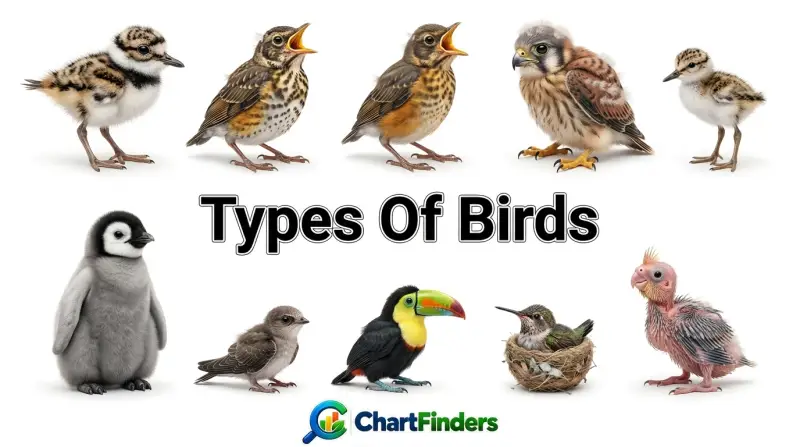
Avian diversity represents one of the most remarkable evolutionary radiations in vertebrate history. From the minuscule Bee Hummingbird to the flightless, muscular Ostrich, birds have colonized virtually every terrestrial, marine, and aerial niche on Earth. Understanding the taxonomy and ecological types of birds requires examining not only how they are classified by modern ornithology, but also how their morphological specializations reflect their foraging strategies, reproductive behaviors, and environmental pressures.
This master guide examines the major taxonomic orders, ecological categories, and functional groupings of birds. It explores the physiological traits uniting the class Aves, details specialized adaptive radiation across distinct habitats, and outlines structured identification frameworks used by field ornithologists. Whether studying waterfowl on inland lakes, tracking raptor migration corridors, or cataloging neotropical passerines, a firm grasp of avian diversity bridges the gap between casual observation and rigorous scientific inquiry.
Types Of Birds: Taxonomy, Morphology, and Ecological Classification
- Modern avian taxonomy divides living birds into two principal groups: Paleognathae (flightless ratites and tinamous) and Neognathae (all other modern birds, encompassing nearly 99% of avian biodiversity).
- Birds are structurally unified by endothermy, bipedalism, high-pressure four-chambered hearts, pneumatic bones, and epidermal structures of beta-keratin known as feathers.
- Ecological classification groups birds by foraging guilds and habitat preferences—such as raptors, shorebirds, waterfowl, game birds, and perching songbirds—regardless of strict phylogenetic proximity.
- Bill morphology, foot structure, and wing shape serve as primary diagnostic keys for determining a species’ ecological role and taxonomic family.
- Recent taxonomic updates by organizations like the American Ornithological Society continue to refine species limits through genomic sequencing, altering how cryptic species complexes are understood.
To fully comprehend the spectrum of avian life, ornithologists utilize two primary lenses: phylogenetic classification (evolutionary descent) and ecological grouping (functional roles in nature). While taxonomy reveals deep historical lineages, ecological types illustrate how natural selection shapes similar physical solutions across unrelated genetic branches through convergent evolution.
Phylogenetic Foundations: Paleognathae vs. Neognathae
All living birds belong to the class Aves, nested within the theropod dinosaur clade. Taxonomically, the class is partitioned into two infraclasses:
- Paleognathae (“ancient jaws”): Characterized by a primitive, structurally complex palatal anatomy. This ancient lineage includes flightless ratites (ostriches, emus, cassowaries, rheas, kiwis) and the volant (flying) tinamous of Central and South America.
- Neognathae (“new jaws”): Encompassing the vast majority of modern bird species (roughly 10,000+ species). This group features a flexible palate and is further divided into Galloanserae (waterfowl and landfowl) and Neoaves (the massive radiation encompassing everything from hummingbirds to falcons and songbirds).
Functional and Ecological Groupings in the Field
While phylogenetic trees map evolutionary history, field ornithologists and ecologists frequently rely on functional groupings based on habitat, morphology, and behavior. These categories make the immense scope of avian biodiversity manageable for field identification and ecosystem analysis.
| Ecological Group | Key Morphological Traits | Representative Families | Primary Foraging Strategy |
|---|---|---|---|
| Passerines (Songbirds) | Anisodactyl feet (three forward, one back), highly developed vocal syrinx. | Fringillidae (Finches), Paridae (Tits), Turdidae (Thrushes) | Insectivory, granivory, nectarivory; varied foraging. |
| Raptors (Birds of Prey) | Hooked bill, powerful talons, acute binocular vision. | Accipitridae (Hawks, Eagles), Falconidae (Falcons), Strigidae (Owls) | Active carnivory; hunting live vertebrate and invertebrate prey. |
| Waterfowl | Webbed feet, waterproof plumage via uropygial gland oil, broad flat bills. | Anatidae (Ducks, Geese, Swans) | Puddling, grazing, diving for aquatic vegetation and invertebrates. |
| Shorebirds & Waders | Long legs, specialized sensitive bills for probing mud or striking fish. | Charadriidae (Plovers), Scolopacidae (Sandpipers), Ardeidae (Herons) | Probing intertidal mudflats, stalking shallow wetlands. |
| Game Birds (Landfowl) | Heavy bodies, short rounded wings, strong scratching feet. | Phasianidae (Pheasants, Quail, Grouse), Odontophoridae (New World Quail) | Ground-dwelling seed and insect foragers. |
| Seabirds | Tubular nasal passages, salt glands, dense hydrophobic plumage. | Procellariidae (Petrels), Alcidae (Auks), Laridae (Gulls, Terns) | Pelagic foraging, plunge-diving, surface-seizing of marine life. |
The table above highlights how physical adaptations correlate directly with ecological niches. A closer examination of these major avian categories reveals the fine-tuning of anatomy to environmental demands.
Detailed Examination of Major Avian Groups
1. Passeriformes: The Perching Birds and Songbirds
Making up over 60% of all living bird species, the order Passeriformes represents the pinnacle of modern avian diversification. Often referred to broadly as songbirds or perching birds, their defining anatomical feature is the arrangement of their toes: three pointing forward and one pointing backward (anisodactyl), with a specialized tendon locking mechanism that allows them to grip branches effortlessly while sleeping.
Passerines are subdivided into suboscines (tyrant flycatchers and allies with innate vocalizations) and oscines (true songbirds with highly complex, learned vocal repertoires controlled by an advanced syrinx). Within this order, ecological roles vary wildly: finches possess stout, conical bills for cracking hard seeds; warblers and vireos feature slender, pointed bills for gleaning caterpillars from foliage; and corvids (crows and jays) exhibit generalized omnivorous adaptations coupled with high encephalization quotients.
2. Raptors: Diurnal and Nocturnal Carnivores
Raptors do not form a single monophyletic taxonomic order, but rather represent an ecological grouping of carnivorous birds sharing convergent morphological adaptations for predation. Diurnal raptors comprise the orders Accipitriformes (hawks, eagles, kites, Old World vultures) and Falconidae (falcons and caracaras), while nocturnal raptors belong to Strigiformes (true owls and barn owls).
- Hunting Adaptations: All raptors possess razor-sharp, recurved talons for dispatching prey and heavily hooked beaks designed to tear flesh.
- Sensory Specializations: Owls (Strigiformes) feature asymmetrical ear openings and facial discs that funnel sound waves to locate small mammals under deep snow or leaf litter with pinpoint accuracy. Diurnal raptors possess foveae with high densities of photoreceptor cells, granting visual acuity up to eight times sharper than that of humans.
- Vulture Specializations: New World vultures (Cathartidae), evolutionarily distinct from Old World vultures, possess acute olfactory bulbs allowing them to smell decaying carrion miles away over dense forest canopies.
3. Waterfowl and Aquatic Birds
Aquatic and semi-aquatic birds encompass several distinct lineages adapted to life on lakes, rivers, estuaries, and oceans. The order Anseriformes (ducks, geese, swans, and screamers) features dense down feathers for thermal insulation and uropygial (preen) gland secretions that maintain feather waterproofing.
Other specialized aquatic groups include:
- Grebes (Podicipediformes) and Loons (Gaviiformes): Exceptional divers with legs set far back on the body, rendering them awkward on land but hydrodynamically supreme in water.
- Cormorants and Darters (Suliformes): Possess un-preened, wettable plumage that reduces buoyancy for deep underwater pursuit of fish, requiring them to spread their wings to dry post-dive.
4. Shorebirds and Wading Birds
The order Charadriiformes contains a vast assemblage of shorebirds (sandpipers, plovers, oystercatchers) alongside gulls, terns, and auks. Shorebirds are famous for epic migratory journeys, flying tens of thousands of kilometers between Arctic breeding grounds and Southern Hemisphere wintering sites. Their bill lengths and shapes vary from the short, pebble-flipping bills of turnstones to the long, down-curved probing instruments of curlews, which detect subterranean invertebrates via mechanoreceptors located in the bill tip.
Wading birds—primarily members of the order Pelecaniformes, such as herons, egrets, and ibises—utilize long necks and stilt-like legs to stalk shallow marshes, striking with lightning speed or sweeping curved bills through water to intercept fish and amphibians.
5. Game Birds (Galliformes) and Flightless Ratites
Galliformes (pheasants, grouse, turkeys, quail, and megapodes) are heavy-bodied, ground-dwelling birds optimized for short, explosive bursts of flight to escape predators, powered by large breast muscles rich in white glycolytic fibers. Their strong, robust feet and short claws are built for scratching soil and leaf litter.
At the opposite structural extreme are the Paleognath ratites. Lacking a keeled sternum—the bony anchor required for flight muscle attachment—these giant birds rely entirely on long, powerful legs capable of high-speed running (such as the Ostrich, which can exceed 40 mph).
Habitat-Based Avian Diversity
Beyond broad taxonomic and functional classifications, ornithologists and field researchers frequently examine birds through the lens of their specific terrestrial and aquatic biomes. Understanding habitat associations illuminates how structural adaptations, foraging strategies, and microclimate tolerances dictate where bird species thrive.
| Habitat Group | Key Environmental Pressures | Representative Bird Families | Primary Behavioral Adaptations |
|---|---|---|---|
| Marshes, Lakes & Rivers | Water fluctuation, aquatic predation, dense emergent vegetation. | Anatidae (Ducks), Ardeidae (Herons), Rallidae (Rails) | Wading, dabbling, diving, concealed nesting in reeds. |
| Oceans & Coastlines | High salinity, pelagic exposure, dynamic wave action. | Procellariidae (Petrels), Alcidae (Auks), Laridae (Gulls) | Tubular salt-excreting glands, plunge diving, soaring on thermal updrafts. |
| Woodlands & Forests | Vertical stratification, canopy cover, dense understory navigation. | Picidae (Woodpeckers), Paridae (Tits), Passerellidae (New World Sparrows) | Zygodactyl feet, gleaning, specialized cavity nesting. |
| Deserts, Grasslands & Open Country | Extreme temperature swings, lack of standing water, high visibility. | Struthionidae (Ostriches), Otididae (Bustards), Alaudidae (Larks) | Cryptic ground coloration, cursorial locomotion, nocturnal torpor or nomadism. |
Avian Anatomy and Identification Frameworks
Accurately identifying and categorizing bird species requires examining structural morphology beyond superficial coloration. Field ornithologists rely on standardized diagnostic zones across the avian body.
Topography of a Bird
Mastering field identification demands familiarity with anatomical landmarks:
- Bill (Culmen and Tomium): Length, curvature, depth, and edge serrations indicate diet and foraging technique.
- Nares: External nasal openings; tubular in pelagic seabirds for excreting excess salt via nasal glands.
- Lore: The soft-feathered region between the eye and the base of the bill, often marked by distinctive contrasting lines or patches.
- Wing Bars and Primaries: Light-colored tips on covert feathers forming distinct bars; the length and projection of primary flight feathers beyond the tail indicate migratory stamina.
- Tarsus and Feet: The lower leg bone (tarsus) may be feathered, brightly colored, or scutellated; toe arrangements include anisodactyl, zygodactyl (two forward, two back, common in woodpeckers and parrots), and syndactyl (fused toes, seen in kingfishers).
By assessing these structural characteristics methodically, observers can narrow an unknown specimen down to family and genus before examining plumage variation, which can fluctuate due to age, sex, season, and molt cycles.
Common Challenges and Misidentifications in Avian Classification
Field identification and taxonomic sorting present several persistent challenges even for experienced ornithologists. Recognizing these pitfalls prevents common diagnostic errors.
1. Plumage Polymorphism and Sexual Dimorphism
Many bird species exhibit extreme variation in appearance between sexes (sexual dimorphism), such as the brilliant breeding plumage of male ducks or warblers compared to their drab, cryptic females. , juvenile plumages often bear little resemblance to adult forms. Species like the Parasitic Jaeger or Red-tailed Hawk also exhibit color morphs (light, dark, and intermediate phases) within the same population, complicating visual identification.
2. Cryptic Species and Genomic Sequencing
With the advent of high-throughput DNA sequencing, ornithology has undergone a quiet revolution. Many birds once classified as a single widespread species based on outward appearance are now recognized as “cryptic species complexes”—genetically distinct lineages that look nearly identical but possess divergent vocalizations and reproductive isolating mechanisms. Ongoing taxonomic reviews by organizations like the American Ornithological Society continue to refine these species limits, demonstrating that morphology alone is sometimes insufficient for definitive classification.
Frequently Asked Questions
How many species of birds are currently recognized globally?
Ornithological authorities generally recognize between 10,000 and 11,000 living species of birds worldwide. This number fluctuates slightly year by year as ongoing genetic research elevates former subspecies to full species rank, describes newly discovered taxa, or integrates modern checklist additions.
What is the difference between a raptor and a scavenger bird?
Raptors actively hunt, capture, and kill live prey using specialized talons and hooked beaks (e.g., hawks, eagles, falcons, owls). Scavengers, such as many vultures and condors, feed primarily on carrion (dead animals) they find via sight or smell. However, some birds blur this line by occasionally scavenging when live prey is scarce.
Why do some birds lack the ability to fly?
Flightlessness has evolved independently dozens of times across different bird lineages, most notably in ratites (ostriches, emus) and island-dwelling species (penguins, flightless cormorants, rails). When birds colonize isolated islands lacking terrestrial mammalian predators, the immense metabolic cost of maintaining flight muscles and a keeled sternum becomes evolutionary dead weight. Over generations, these species evolve reduced wing structures and heavier, more energy-efficient running or swimming anatomies.
What distinguishes a songbird from other types of birds?
True songbirds belong to the suborder Passeri (within the order Passeriformes) and possess a highly specialized vocal organ called a syrinx, coupled with a brain wired for learning and imitating complex vocal patterns. While other birds make sounds—such as the honking of geese or drumming of woodpeckers—their vocalizations are largely innate rather than learned.
How do scientists determine bird classification when physical traits look similar?
When physical traits (convergent evolution) cause two unrelated species to look alike—such as certain swiftlets and swallows—modern ornithologists rely on mitochondrial and nuclear DNA sequencing, behavioral studies, ecological data, and skeletal osteology to establish correct phylogenetic placement.
Avian biology bridges evolutionary history and active environmental conservation. By understanding the divisions of taxonomy, the mechanics of physiological adaptation, and the functional roles birds play across global habitats, observers gain a profound appreciation for this extraordinary surviving lineage of theropod dinosaurs.