
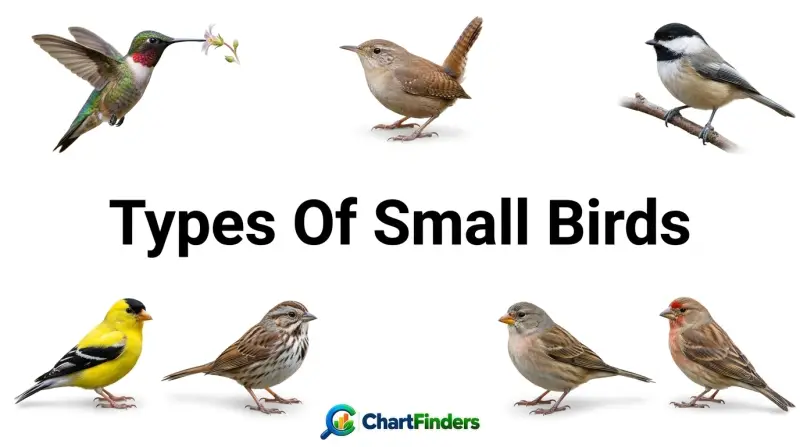
Avian diversity is heavily weighted toward smaller species, which occupy nearly every terrestrial niche on Earth. Understanding what defines a small bird requires moving beyond a simple visual impression to examine ecological roles, anatomical adaptations, and taxonomic groups. Because miniature avian species face distinct metabolic, thermal, and predatory challenges, their evolutionary trajectories have produced fascinating specializations in bill shape, wing morphology, and social behavior.
For field researchers, conservationists, and enthusiastic birders alike, parsing the sheer variety of compact avian life can prove daunting. Similar plumages, cryptic behaviors, and complex migratory patterns often obscure species boundaries. This master guide explores the primary taxonomic groups of small birds, analyzes their anatomical and ecological distinctions, details robust field identification techniques, and provides a structured framework for diagnosing complex field sightings.
Types Of Small Birds
- Small birds typically weigh under 50 grams and require high-calorie diets to fuel rapid metabolic rates.
- The primary families encompass wrens, finches, warblers, and sparrows, each exhibiting distinct anatomical and behavioral adaptations.
- Bill morphology serves as a primary diagnostic tool for separating insectivores, granivores, and nectarivores.
- Raptorial species like the Northern Harrier demonstrate that small body sizes are not exclusively restricted to songbirds or insect-gleaners.
- Field identification demands synchronized evaluation of vocalizations, micro-habitat preferences, and subtle plumage markers rather than reliance on color alone.
- Cryptic species pairs and seasonal plumage shifts represent the most frequent sources of identification errors in the field.
To systematically approach avian identification, ornithologists categorize small birds into distinct functional and taxonomic groups. Each group shares specific morphological traits shaped by millions of years of evolutionary pressure. The following sections examine these core families in detail.
Core Taxonomic Groups and Families
Avian taxonomy groups small birds primarily within the order Passeriformes (perching birds or songbirds), though several notable non-passerines also fit the size criteria. Recognizing these groups allows observers to quickly narrow down potential candidates when encountering an unfamiliar bird in the field.
Finches (Fringillidae)
Finches are quintessential granivorous small birds characterized by short, conical, robust bills adapted for crushing hard seeds. Species such as the American Goldfinch and House Finch exhibit strong sexual dimorphism during breeding seasons, with males sporting vibrant yellow or red plumages. Their flight pattern is distinctly undulatory, marked by rhythmic bursts of wingbeats interspersed with closed-wing dips.
Sparrows (Passerellidae)
New World sparrows are earthy-toned, streaked ground-foragers. Their bills are slightly more slender than those of true finches, reflecting a mixed diet of seeds and insects. Generating an identification can be notoriously difficult due to cryptic brown-and-tan feather patterns; researchers must rely on crown markings, facial stripes, and distinctive, often musical songs.
Warblers (Parulidae)
Wood-warblers are hyperactive, highly migratory insectivores. Most species weigh less than 15 grams. Their slender, pointed bills are precision tools for gleaning caterpillars and flying insects from foliage. Breeding males often display brilliant patches of yellow, blue, black, or chestnut, whereas autumn and female plumages fade into subtle olive-green tones.
Wrens (Troglodytidae)
Wrens are diminutive, energetic birds instantly recognized by their cocked tails and explosive, complex repertoires of song. Clad primarily in barred browns, grays, and buffs, wrens possess slightly decurved bills optimized for probing bark crevices, brush piles, and leaf litter for invertebrate prey.
Small Raptors and Specialized Forms
While most small birds belong to songbird lineages, predatory niches also accommodate diminutive forms. The Northern Harrier, for instance, is a remarkably slender raptor with elongated wings and tail, specializing in low-flight quartering over open marshes and grasslands. Though larger than a warbler, its lightweight, buoyant build places it firmly within the functional spectrum of smaller predatory birds.
Comparative Analysis of Small Bird Families
The following table synthesizes the primary morphological, dietary, and behavioral attributes that distinguish the major small bird groups encountered in field research.
| Bird Group | Typical Weight Range | Primary Diet | Bill Morphology | Primary Habitat | Vocalization Style |
|---|---|---|---|---|---|
| Finches (Fringillidae) | 10–40 g | Seeds, buds, and mast | Short, thick, conical | Open woodlands, fields, suburban edges | Musical, twittering warbles |
| Sparrows (Passerellidae) | 15–50 g | Seeds and ground insects | Short, stout, pointed | Grasslands, scrub, brushy edges | Clear whistles, dry metallic chips |
| Warblers (Parulidae) | 8–25 g | Insects and larvae | Fine, needle-like, slender | Canopy foliage, understory | High-pitched, buzzing trills |
| Wrens (Troglodytidae) | 10–30 g | Insects, spiders | Slightly decurved, fine | Dense thickets, cavities, undergrowth | Loud, bubbling, complex songs |
| Small Raptors (e.g., Harrier) | 300–750 g (relative) | Small mammals, amphibians | Hooked, raptorial | Open wetlands, agricultural fields | High-pitched chattering alarms |
Examining this data highlights how evolutionary pressures directly govern form and function. For instance, the heavy, conical bill of a finch is an absolute prerequisite for cracking fibrous seed coats, whereas the delicate needle-like bill of a warbler would buckle under similar mechanical stress, perfectly illustrating the principle of ecological niche partitioning.
Anatomical and Physiological Adaptations
The biology of small birds is governed by the iron laws of thermodynamics and scaling. Because surface-area-to-mass ratios increase as animals become smaller, miniature homeotherms lose body heat at an alarming rate. Maintaining a core body temperature near 40°C requires extraordinary physiological compensations.
Metabolic Rates and Energetics
Small birds operate at the absolute physiological limit of vertebrate metabolism. A resting warbler or hummingbird maintains a heart rate that can exceed 1,000 beats per minute during flight. To sustain this continuous energy expenditure, an insectivorous small bird must consume up to its own body weight in invertebrate prey daily during peak breeding periods.
During cold nights, certain small bird species utilize regulated hypothermia—known as torpor—to drop their core body temperature and drastically reduce metabolic expenditure. This physiological safeguard prevents starvation when foraging is impossible.
Morphological Specializations for Locomotion
Flight mechanics in small birds favor high maneuverability over sustained high-speed cruising. Elliptical wings, characterized by rounded tips and a large surface area relative to body weight, allow small birds to execute tight turns within dense forest sub-stories and dodge predatory attacks.
- Tail Morphology: Short, stiff tails provide braking power, while elongated or graduated tails assist in steering during erratic insect-sacking flights.
- Tarsus Structure: Ground-dwelling sparrows possess robust tarsi optimized for walking and scratching, whereas arboreal warblers and kinglets feature delicate, highly flexible toes designed for gripping unstable twigs.
- Cranial Kinesis: The upper jaw of many small insectivorous birds is semi-movable relative to the braincase, allowing for split-second adjustments in gape angle when capturing elusive prey.
Field Identification Framework
Accurate identification of small birds requires a disciplined observational sequence. Observers should avoid jumping to conclusions based solely on a flash of color.
- Assess General Silhouette and Size: Compare the subject against known reference species (such as a House Sparrow). Note proportions, tail length, and head shape.
- Examine Bill Proportions: Is the bill seed-crushing thick, insect-gleaning slender, or nectar-probing curved? This instantly eliminates entire taxonomic families.
- Analyze Foraging Behavior and Micro-Habitat: Is the bird actively flushing insects from the upper canopy, probing bark on a vertical trunk, or scratching leaf litter on the shaded forest floor?
- Listen to Vocalizations: In many cases, call notes and songs provide the definitive diagnostic marker, particularly among cryptic warbler and sparrow species.
- Note Plumage Details: Observe wing bars, eye rings, crown stripes, and tail spotting. Distinguish between breeding adult plumage and juvenile or non-breeding morphs.
Common Identification Pitfalls and Limitations
Even experienced field ornithologists encounter diagnostic challenges when evaluating small birds. Recognizing these pitfalls prevents misidentifications and contributes to more reliable citizen science data.
The most frequent error stems from seasonal plumage variation. Many small birds undergo complete or partial pre-basic molts, transforming brilliant breeding males into drab, washed-out non-breeding forms. For example, a male American Goldfinch shifts from striking lemon-yellow to an olive-brown tone that closely resembles certain sparrows.
Another major complication is the existence of cryptic species pairs. Birds such as the Alder Flycatcher and Willow Flycatcher are visually indistinguishable in the field; their identification relies entirely on minute differences in their explosive vocalizations. Observers who rely exclusively on visual confirmation in suboptimal lighting will routinely misclassify these taxa.
Finally, environmental factors such as lighting angle can trick the human eye. Structural coloration, created by light scattering through microscopic air vacuoles in feather barbs (common in bluebirds and swallows), can appear dull gray or black depending on cloud cover and solar azimuth.
Frequently Asked Questions
What is considered a small bird in ornithological terms?
While there is no rigid dimensional cutoff, ornithologists generally classify birds weighing under 50 grams and measuring less than 15 centimeters in total length as small birds. This category primarily includes passerines (songbirds) and a few diminutive non-passerines.
How do I attract small birds to a backyard feeder?
Attracting diverse small bird species requires offering specialized food sources tailored to their diets. Nyjer (thistle) seed and hulled sunflower seeds attract finches, while suet cakes and mealworms appeal to insectivorous species like wrens and warblers. Providing dense protective cover, such as native shrubbery, is equally crucial for reducing predation risk.
Why are some small birds so difficult to identify?
Small bird identification is complicated by rapid movements, dense forest habitats, seasonal plumage changes, and the presence of “sibling species”—different species that share nearly identical external morphology but possess distinct songs and genetic markers.
Do all small birds migrate during winter?
No. While many insectivorous small birds like wood-warblers undertake massive neotropical migrations, many granivorous species—such as house sparrows, chickadees, and resident finches—remain in their breeding ranges year-round, relying on cached food and winter fat reserves.
How can I tell the difference between a sparrow and a finch?
The primary diagnostic distinction lies in bill shape and feeding posture. Finches possess extremely short, deep, conical bills designed for cracking hard seeds and typically feed directly from seed heads or hanging feeders. Sparrows have slightly more slender, pointed bills and spend a significant amount of time foraging directly on the ground by scratching at leaf litter.
Conclusion
Small birds represent a marvel of evolutionary adaptation, balancing extreme physiological demands with remarkable behavioral diversity. Whether evaluating the robust seed-crushing bill of a finch, the delicate foraging maneuvers of a canopy-dwelling warbler, or the acoustic complexity of a territorial wren, careful observation reveals a deeply ordered natural world. By combining an understanding of anatomy, habitat preferences, and vocalizations with disciplined field techniques, observers can master the identification and appreciation of these fascinating avian taxa.