
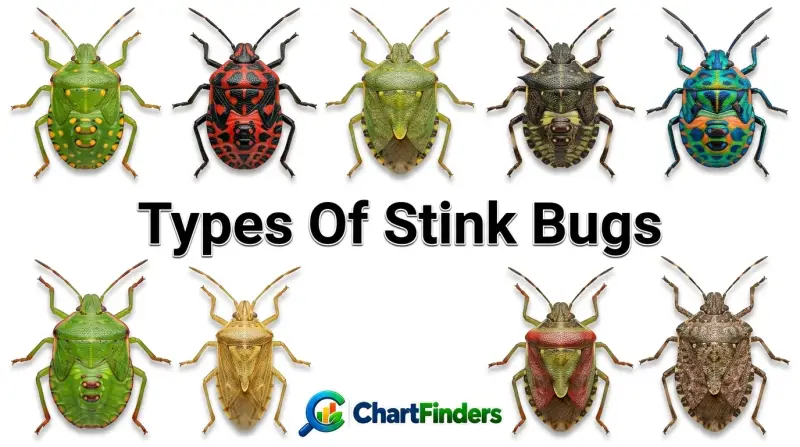
The entomological diversity of true bugs (order Hemiptera, suborder Heteroptera) encompasses thousands of species, yet few families invoke as much agricultural distress and homeowner frustration as the Pentatomidae. Characterized by their distinct shield-like scutellum, segmented antennae, and membranous hemelytra folding flat across the abdomen, these insects have evolved into highly adaptable phytophagous pests and occasional predatory generalists. Navigating the world of these hemipterans requires moving beyond simple pest control generalizations to understand specific morphological markers, life cycle dynamics, and feeding behaviors across various agricultural and structural contexts.
Understanding the taxonomy and behavioral ecologies of different stink bug species is essential for effective integrated pest management (IPM). From invasive polyphagous interlopers that threaten multi-million-dollar fruit and soybean yields to native species that transition between wild hosts and cultivated crops, each variant presents unique scouting challenges, degree-day thresholds, and overwintering strategies. This comprehensive analysis details the anatomical frameworks, identification parameters, ecological roles, and management protocols governing the most prominent stink bug species encountered in field and laboratory environments.
Types Of Stink Bugs
- Stink bugs belong to the family Pentatomidae, easily recognized by their shield-shaped morphology, 5-segmented antennae, and piercing-sucking mouthparts.
- The Brown Marmorated Stink Bug (Halyomorpha halys) is a primary invasive agricultural and nuisance pest distinguished by alternating light and dark bands on its antennae and abdominal edges.
- Native species like the Green Stink Bug (Acrosternum hilare) and Dusky Stink Bug (Euschistus conspersus) present severe economic threats to soybean, cotton, and orchard fruit production.
- Not all pentatomids are herbivorous; beneficial predatory species such as the Spined Soldier Bug (Podisus maculiventris) help suppress lepidopteran and coleopteran pests.
- Chemical control is complicated by overlapping generations, cryptic coloration, and high mobility, necessitating rigorous scouting protocols and reliance on economic injury levels.
To accurately identify and categorize pentatomids, researchers and growers must examine subtle phenotypic markers, host preferences, and geographic distribution patterns. The following evaluation breaks down the major species of stink bugs, contrasting their morphological adaptations and agricultural significance.
| Common Name | Scientific Name | Key Identification Markers | Primary Host Plants | Economic/Ecological Status |
|---|---|---|---|---|
| Brown Marmorated Stink Bug | Halyomorpha halys | White bands on antennae; smooth pronotum margin; alternating dark/light abdominal edge. | Tree fruits, corn, soybeans, ornamentals | Invasive major agricultural and structural nuisance pest. |
| Green Stink Bug | Acrosternum hilare | Vibrant green body; thin yellow or reddish margin on anterior pronotum; longer scent gland ostioles. | Soybeans, cotton, tomatoes, pome and stone fruits | Native agricultural pest causing severe crop deformation. |
| Brown Stink Bug | Euschistus servus | Yellow-brown coloration; rounded humeral angles (shoulders); distinct ventral spots. | Corn, soybeans, wheat, legumes | Major field crop pest, widespread across North America. |
| Harlequin Bug | Murgantia histrionica | Black shield marked with striking red, orange, or yellow patterns. | Brassicaceae (cabbage, kale, mustard) | Specialist pest of cruciferous crops in warmer regions. |
| Spined Soldier Bug | Podisus maculiventris | Sharp, pointed shoulder spines; dark spot on membrane of hemelytra. | Lepidopteran larvae, beetle larvae, soft-bodied insects | Beneficial predatory biological control agent. |
| Red-shouldered Stink Bug | Thyanta custator | Green to brownish-green body; distinctive reddish band across the humeral angles. | Grasses, grains, alfalfa, cotton | Minor to moderate agricultural pest in southern climates. |
The comparative matrix above highlights the morphological variance and ecological diversity within Pentatomidae. While many species share the fundamental shield-shaped architecture, variations in coloration, antennal banding, and pronotal spines dictate species-specific identification pathways.
Anatomical Foundations and General Morphology
To properly study and classify stink bugs, an understanding of their external insect anatomy is mandatory. Like all true bugs in the suborder Heteroptera, pentatomids possess mouthparts modified into a specialized rostrum—a multi-segmented, straw-like labium housing slender stylets designed to pierce plant vascular tissue or insect integument and inject digestive enzymes.
The dorsal surface is dominated by the pronotum (the shield-like first thoracic segment) and the scutellum, a large triangular plate located between the wing bases that gives the insect its characteristic shield profile. The hemelytra (forewings) feature a leathery basal region (corium and clavus) and a membranous apical tip that folds flat across the dorsal abdomen at rest, frequently forming a distinct “X” pattern. Antennae are consistently composed of five distinct segments, a diagnostic trait separating Pentatomidae from many look-alike families such as Coreidae (leaf-footed bugs) or Cydnidae (burrower bugs).
Invasive vs. Native Species Dynamics
The management landscape for pentatomids shifted dramatically with the introduction of invasive species from the Palearctic . Native species typically exist within balanced ecological networks, subjected to native parasitoid wasps (such as Trissolcus species) and generalist predators. However, invasive species often lack co-evolved predators in newly colonized territories, leading to unchecked population surges.
Brown Marmorated Stink Bug (Halyomorpha halys)
Originating from East Asia, Halyomorpha halys has established itself across North America and parts of Europe. It is distinguished easily by the distinct white or pale banding on its antennae (specifically segments 4 and 5) and the alternating dark and light blocks along the connexivum (the outer margin of the abdomen). Unlike native brown species, the outer margin of its pronotum is smooth rather than serrated.
This species is notorious not only for its extensive polyphagous feeding—damaging apples, peaches, corn, soybeans, and ornamental maples—but also for its overwintering behavior. As photoperiods shorten in autumn, adults aggregate in massive numbers, seeking shelter in structural voids, attics, and wall cavities. When disturbed or crushed, metathoracic scent glands release a volatile mixture of aldehydes that produces a pungent odor reminiscent of cilantro or chemical solvents.
Green Stink Bug (Acrosternum hilare)
The green stink bug is a native North American species widely distributed in agricultural ecosystems. Adults are bright green during the summer, occasionally turning dull brownish-green or olive-green as temperatures drop in autumn. They feature a thin, yellowish or reddish line running along the margin of the head and thorax.
Feeding primarily on developing seeds and pods, Acrosternum hilare is a principal pest of soybeans and cotton. In fruit orchards, their stylet penetration causes “cat-facing”—a severe surface deformation and corky tissue necrosis on developing peaches, apples, and pears that renders commercial fruit unmarketable.
Brown Stink Bug Complex (Euschistus species)
The genus Euschistus includes several economically important species, notably the brown stink bug (Euschistus servus) and the dusky stink bug (Euschistus tristigmus). These insects are generally tan to grey-brown, featuring rounded or slightly pointed humeral angles (shoulders) and a heavily pitted (punctate) dorsal surface.
Brown stink bugs are particularly damaging in southern and midwestern row crop production. In field corn, early-season feeding on the growing tip can cause “dead heart” or severe tiller formation, while mid-to-late-season feeding on developing kernels leads to blanking and secondary fungal infections.
Specialized and Predatory Pentatomids
Not all members of Pentatomidae are agricultural pests. The subfamily Asopinae comprises predatory stink bugs that play crucial roles in biological pest suppression.
Spined Soldier Bug (Podisus maculiventris)
The spined soldier bug is a highly adaptable generalist predator easily recognized by the sharp, prominent spines protruding horizontally from its shoulders. Additionally, a small dark spot is typically visible on the membranous tip of its forewings.
Rather than feeding on plant juices, Podisus maculiventris uses its robust, curved rostrum to pierce the cuticle of lepidopteran larvae (such as caterpillars and loopers), beetle larvae, and other soft-bodied agricultural pests. It injects paralytic saliva, liquefies the host’s internal tissues, and consumes the contents. Commercial greenhouse and field operations frequently encourage or release this species as part of biological control programs.
Harlequin Bug (Murgantia histrionica)
A striking exception to the muted colors of many pentatomids, the harlequin bug features a black shield boldly marked with vibrant red, orange, or yellow geometric patterns. It is an obligate specialist on Brassicaceae family crops, including cabbage, kale, collards, radishes, and mustard greens.
Both nymphs and adults feed by extracting plant sap from leaves and stems, causing wilting, stippling, and brown necrotic spots. Because they sequester glucosinolates from their host plants, harlequin bugs are highly unpalatable to most vertebrate predators, reinforcing their aposematic (warning) coloration.
Biology, Life Cycle, and Seasonal Ecology
A thorough comprehension of pentatomid phenology is necessary for predicting when populations will reach damaging thresholds. Most stink bug species undergo hemimetabolous metamorphosis, progressing through egg, nymphal (five instars), and adult stages without a pupal resting phase.
Egg Stage and Oviposition
Females deposit eggs in characteristic clusters on the undersides of leaves, structural surfaces, or host plant stems. The egg morphology varies by species; typically, they are barrel-shaped or spherical, standing upright in neatly arranged geometric arrays. Eggs feature a hinged operculum (lid) through which the first instar nymph eventually emerges. Egg color often changes over time, darkening as the embryonic development completes and red eye-spots become visible through the chorion.
Nymphal Instars and Development
Upon hatching, first-instar nymphs often aggregate around the empty egg mass, relying on maternal provisioning or gut symbionts deposited on the egg surface. Unlike adults, nymphs lack fully developed wings, displaying wing pads instead, and often exhibit completely different color patterns. As they progress through five sequential instars, shedding their exoskeleton at each molt, their body size increases and wing pads become more pronounced.
Temperature dictates the duration of development. Under optimal summer conditions (25°C to 30°C), the egg-to-adult cycle is completed in 30 to 45 days, allowing for multiple overlapping generations per year in warmer latitudes. Overwintering occurs exclusively in the adult stage (diapause), with bugs seeking protected microhabitats under tree bark, leaf litter, dead logs, or man-made structures.
Agricultural Impact and Damage Mechanics
The economic injury inflicted by phytophagous stink bugs stems directly from their piercing-sucking feeding mechanism. When a bug selects a feeding site, it probes plant tissue with its stylets, secreting specialized saliva rich in pectinase and other digestive enzymes.
These enzymes break down middle lamellae between plant cells, liquefying the tissue so the insect can ingest the resulting slurry. In developing seeds and grains, this enzymatic breakdown arrests growth, resulting in aborted kernels, shriveled pods, or internal necrosis. In fruit crops, the localized cell death causes sunken, calloused depressions, rendering the fruit unmarketable.
| Crop Type | Target Plant Part | Damage Symptom | Economic Impact |
|---|---|---|---|
| Soybeans | Developing pods and seeds | Flat pods, shriveled seeds, delayed leaf senescence (“green stem syndrome”). | Yield loss, reduced oil content, grading penalties. |
| Corn | Ears, kernels, stalks | Missing kernels, “blanking,” kernel deformation, dead heart in seedlings. | Direct grain loss, lowered test weight, secondary pathogen entry. |
| Tree Fruit (Apples, Peaches) | Fruit surface and flesh | “Cat-facing,” corky brown tissue necrosis, dimpling. | Severe downgrading of fresh-market fruit. |
| Cotton | Bolls, squares | Stained lint, aborted bolls, wart-like growths on internal carpel walls. | Lint degradation, square drop, reduced harvestable yield. |
The table above outlines how feeding mechanics translate to distinct crop pathologies. In row crops like soybeans, late-season feeding can induce green stem syndrome, where plants fail to senesce normally at harvest, complicating mechanical combining.
Scouting and Management Methodologies
Effective management of pentatomid populations requires systematic scouting rather than calendar-based spraying. Because stink bugs are highly mobile and exhibit aggregated spatial distributions—often concentrating field edges bordered by wooded lots or weed hosts—sampling must account for edge effects.
Scouting Tools and Thresholds
- Sweep Nets: Standard in row crops (soybeans, alfalfa), utilizing a 15-inch sweep net across foliage to capture nymphs and adults. Thresholds typically dictate treatment when counts exceed specific numbers per sweep or per foot of row.
- Drop Cloths (Beating Cloths): Widely utilized in cotton and soybean fields, wherein a cloth is placed between two crop rows and plants are vigorously shaken to dislodge insects into the fabric for counting.
- Visual Inspection and Pheromone Traps: Aggregation pheromones and aggregation-associated volatiles are utilized in monitoring traps to detect early-season migration into orchard boundaries and high-value fields.
Integrated Pest Management (IPM) Strategies
Relying solely on broad-spectrum synthetic insecticides often exacerbates pest issues by eliminating beneficial predators and parasitoids. An integrated management framework combines cultural, biological, and chemical interventions:
- Habitat Management: Controlling alternate weed hosts (such as wild mustard, dock, and curly dock) around field perimeters reduces early-season population reservoirs.
- Conservation Biological Control: Preserving native parasitoid wasps (Trissolcus and Telenomus species), which parasitize pentatomid egg masses, helps maintain natural regulation.
- Threshold-Based Chemical Control: Applying insecticides (such as pyrethroids or neonicotinoids) strictly when population densities exceed established economic thresholds, ensuring timing coincides with vulnerable nymphal stages rather than tough, armored adults.
Frequently Asked Questions
Why do stink bugs emit a foul odor when handled?
Stink bugs possess specialized metathoracic scent glands (in nymphs, dorsal abdominal glands) that secrete a defensive chemical cocktail consisting primarily of trans-2-decenal and trans-2-octenal. This chemical deterrent is released when the insect is physically disturbed, crushed, or handled, functioning to repel potential vertebrate and invertebrate predators.
How can you distinguish a stink bug from a boxelder bug or seed bug?
While true bugs share a similar general body shape, true stink bugs (family Pentatomidae) are distinctly shield-shaped, feature 5-segmented antennae, and lack the bright red markings of boxelder bugs (Boisea trivittata) or the elongated bodies of seed bugs (family Lygaeidae). Additionally, stink bugs possess the broad, triangular scutellum that extends across the dorsal thorax.
Are stink bugs harmful to humans or pets?
No. Stink bugs do not bite, sting, or transmit diseases to humans or domestic animals. They possess no venomous apparatus, and their piercing-sucking mouthparts are structurally incapable of piercing human skin. Their only negative impact on households is the nuisance of overwintering aggregations and the unpleasant odor emitted when threatened.
Do stink bugs damage indoor wooden structures like termites do?
No. Stink bugs do not consume, digest, or bore into wood, drywall, or structural framing. When they invade homes in autumn, they enter purely seeking thermal shelter for diapause. They remain largely dormant during winter months and do not reproduce indoors.
How can homeowners prevent stink bugs from entering houses?
Prevention relies on physical exclusion. Homeowners should seal all utility penetrations, repair torn window and door screens, install door sweeps, and caulk gaps around siding, soffits, and rooflines. Exterior application of residual insecticides around entry points in late summer can also help intercept migrating adults before they locate indoor harborages.
Conclusion
The family Pentatomidae represents a fascinating yet economically challenging group of hemipteran insects. From the devastating agricultural impact of invasive interlopers like the brown marmorated stink bug to the beneficial predatory actions of native species such as the spined soldier bug, understanding their distinct anatomies, life cycles, and feeding behaviors is . Through rigorous scouting, economic threshold adherence, and integrated pest management frameworks, agriculturalists and researchers can effectively mitigate the pressures exerted by these resilient shield-shaped bugs.