
Understanding the natural harvest rhythm of agricultural produce is one of the most effective ways to elevate home cooking and optimize nutritional intake. Modern global supply chains make it possible to purchase almost any vegetable at any time of the year, yet this convenience often comes at the expense of flavor, texture, and nutrient retention. Produce picked unripe to endure long-distance transit rarely matches the complexity of a crop allowed to ripen under natural seasonal sunlight. A well-constructed seasonal vegetables chart acts as a practical roadmap, translating agricultural timing into everyday culinary and purchasing decisions.
Beyond taste and nutrition, eating in season anchors our diets to local ecosystems and reduces the environmental footprint associated with heated greenhouses and transcontinental freight. However, navigating regional variations, microclimates, and shifting weather patterns can make seasonal eating feel complex. This guide explores the mechanics of seasonal crop production across the year, breaking down what grows best during each season, how to interpret seasonal charts, and how to maximize the shelf life and culinary utility of peak-harvest vegetables.
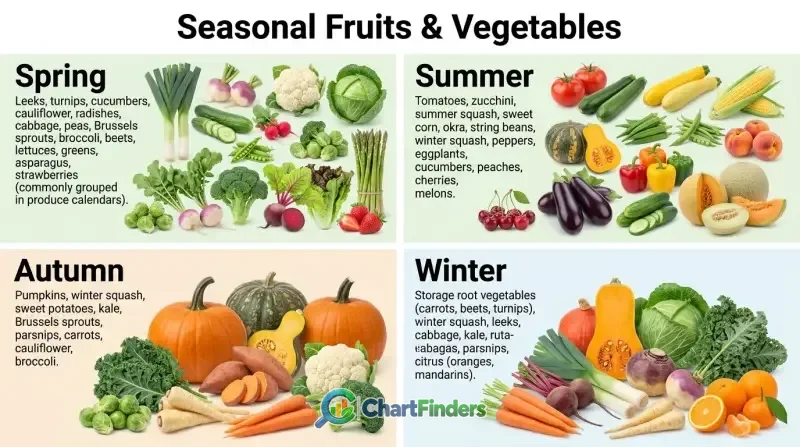
Seasonal Vegetables Chart
- Peak Nutrient Density: Vegetables harvested in their natural season contain higher concentrations of vitamins, minerals, and antioxidants compared to out-of-season alternatives forced under artificial conditions.
- Flavor and Maturity: Crops allowed to mature fully on the plant develop deeper flavor profiles and superior culinary textures.
- Economic and Environmental Value: In-season produce is typically more abundant, lowering market prices while reducing the carbon footprint of food transport and refrigerated storage.
- Regional Adaptation: Seasonal availability shifts according to USDA hardiness zones, regional frost dates, and local microclimates.
- Storage and Preservation: Understanding seasonal gluts allows home cooks to preserve peak-season vegetables through freezing, fermenting, and canning for out-of-season use.
To make sense of furnace-like summer heat waves and freezing winter soils, a structured approach is essential. The following comprehensive seasonal vegetables chart outlines peak harvesting periods across the year, categorizing crops by their ideal growing conditions, botanical classifications, and thermal requirements.
| Season | Representative Months | Key Vegetables in Season | Agronomic Characteristics & Climate Needs | Primary Culinary Applications |
|---|---|---|---|---|
| Spring | March, April, May | Leeks, turnips, cucumbers, cauliflower, radishes, cabbage, peas, Brussels sprouts, broccoli, beets, lettuces, greens, asparagus, strawberries (commonly grouped in produce calendars). | Thrive in cooler soil temperatures (45°F–65°F) and mild air; tolerate late frosts; rapid early-season vegetative growth. | Raw salads, light steaming, quick sautés, risottos, and spring soups. |
| Summer | June, July, August | Tomatoes, zucchini, summer squash, sweet corn, okra, string beans, winter squash, peppers, eggplants, cucumbers, peaches, cherries, melons. | Require high solar radiation, warm nights (above 60°F), and consistent moisture; highly sensitive to frost. | Grilling, roasting, fresh salsas, raw salads, ratatouille, and preservation/canning. |
| Autumn | September, October, November | Pumpkins, winter squash, sweet potatoes, kale, Brussels sprouts, parsnips, carrots, cauliflower, broccoli. | Tolerate dipping temperatures; exposure to light frost often increases sugar content in brassicas and root structures. | Roasting, purées, hearty stews, braising, and long-term cold storage. |
| Winter | December, January, February | Storage root vegetables (carrots, beets, turnips), winter squash, leeks, cabbage, kale, rutabagas, parsnips, citrus (oranges, mandarins). | Dominated by cold-hardy crops, root vegetables stored from autumn, and protected greenhouse or hoop-house greens. | Slow-cooked soups, broths, roasting, heavy stews, and fermented preparations like sauerkraut. |
When analyzing this data, it becomes clear that agricultural output is dictated by plant physiology. Cool-season crops (such as brassicas and leafy greens) convert energy efficiently in lower temperatures and can turn bitter or bolt to seed when exposed to intense summer heat. Conversely, warm-season crops (such as solanaceous plants like tomatoes and peppers) require uninterrupted warmth and long daylight hours to develop their complex sugars and acids.
Decoding Seasonal Shifts: Spring Agronomy and Produce
Spring represents a period of intense agricultural awakening. As winter frost recedes and soil temperatures climb above 45°F to 55°F, farmers transition from dormant root storage to planting fast-maturing cool-weather crops.
- Asparagus: A perennial crop that marks the true beginning of the local spring harvest. Spears emerge rapidly from established crown systems, requiring daily harvesting during peak weeks.
- Leafy Greens and Lettuces: Spinach, arugula, and various mustard greens thrive in high moisture and moderate sunlight. Their tender cell walls make them susceptible to summer heat, which causes premature bolting.
- Root Vegetables: Radishes and early turnips mature in as little as three to four weeks, providing early-season crispness and peppery flavor notes.
The Abundance of Summer: Solanaceous Crops and Cucurbits
Summer is characterized by rapid biomass accumulation and fruit production. Plants belonging to the nightshade (Solanaceae) and gourd (Cucurbitaceae) families dominate this period.
- Tomatoes: Requiring full sun and steady calcium uptake, field-grown summer tomatoes develop an ideal sugar-to-acid balance that greenhouse-grown winter tomatoes cannot replicate.
- Summer Squash and Zucchini: Known for prolific yields, these plants produce tender-skinned fruits with high water content and delicate flavor profiles that excel under quick-cooking methods.
- Sweet Corn: Sugars in sweet corn begin converting to starch immediately after harvest, making peak-summer local corn exceptionally sweet compared to shipped alternatives.
Autumn Transitions: Starch Accumulation and Cold Hardiness
As daylight hours shorten and autumn temperatures drop, plants shift metabolic resources downward into root systems or concentrate sugars within their cell structures to prevent ice crystal formation.
- Winter Squash and Pumpkins: Cured on the vine under autumn sun, varieties like Butternut, Acorn, and Delicata develop thick, protective rinds and dense, starchy flesh capable of months of storage.
- Brassicas: Kale, Brussels sprouts, and collards actually improve in flavor after a light frost. The plant responds to cold stress by releasing natural sugars, reducing bitterness.
- Root Crops: Carrots, parsnips, and beets store energy as carbohydrates, yielding earthy, concentrated flavors when harvested in cool autumn soil.
Winter Resilience: Storage Crops and Protected Agriculture
Winter agriculture relies heavily on cold-storage techniques, root cellars, and protected structures such as unheated high tunnels and hoop houses.
- Storage Roots: Beets, carrots, and turnips harvested at peak autumn maturity can remain viable for months in high-humidity, low-temperature root cellars by entering a state of metabolic dormancy.
- Hardy Greens: Mache, spinach, and kale protected beneath frost blankets continue slow photosynthesis through short winter days.
Nutritional and Economic Advantages of Seasonal Eating
Choosing vegetables according to a seasonal chart delivers measurable benefits for both personal health and household economics. The physiological makeup of a plant is directly tied to its growing environment.
Nutrient Retention and Sunlight Exposure
Photosynthesis is the primary engine of plant nutrition. Vegetables grown during their natural seasons receive optimal daily hours of natural solar radiation, driving the synthesis of phytonutrients, vitamins C and A, and various antioxidant compounds. When crops are cultivated out of season in artificial indoor environments or transported thousands of miles across weeks of cold storage, vital micronutrients degrade. Vitamin C, in particular, breaks down rapidly post-harvest when produce is stored in transit.
Market Economics and Supply Dynamics
Agricultural economics follow the fundamental laws of supply and demand. During a crop’s natural peak harvest window, local and regional markets experience a surplus. This abundance translates directly into lower retail prices for consumers at farmers’ markets and grocery stores. Conversely, purchasing out-of-season vegetables incurs high input costs—including artificial heating, specialized lighting, intensive packaging, and long-distance freight—which are passed directly to the buyer.
Practical Selection and Storage Framework
Maximizing the value of seasonal vegetables requires knowing how to select ideal specimens at the point of purchase and how to store them properly to prevent premature spoilage.
- Visual and Textural Inspection: Look for vibrant, unblemished skin, firm structures (no limp greens or soft spots), and appropriate weight relative to size. Heavy produce indicates high moisture content and freshness.
- Ethylene Management: Understand which vegetables produce ethylene gas (such as tomatoes and peppers) and which are sensitive to it (such as leafy greens and brassicas). Storing them together accelerates decay.
- Moisture Control: Root vegetables require cool, humid environments (such as perforated bags in the crisper drawer), while leafy greens benefit from breathable cloth or paper towels to absorb excess condensation.
- Preservation Planning: During peak seasonal gluts, utilize blanching and freezing, lactic acid fermentation, or pressure canning to preserve excess harvest before spoilage occurs.
Common Mistakes in Seasonal Produce Purchasing
Navigating produce aisles with a seasonal mindset can present challenges. Avoiding these frequent missteps ensures better culinary results and less food waste:
- Assuming All Supermarket Produce Is Local: Supermarkets source globally year-round. Always check signage for regional origin rather than assuming a vegetable is in season locally just because it is stocked.
- Neglecting Microclimates and Frost Dates: A national seasonal chart provides general guidelines. Local frost dates can vary by several weeks depending on elevation, proximity to large bodies of water, and urban heat island effects.
- Improper Ethylene Separation: Storing ethylene-sensitive greens alongside high-ethylene ripening fruits leads to yellowing and rapid decomposition.
- Overbuying During Peaks Without a Preservation Strategy: Purchasing bulk seasonal produce without a plan to cook, freeze, or preserve it often results in food waste.
Frequently Asked Questions
Seasonal vegetables are allowed to ripen fully on the plant under natural sunlight and soil conditions. This natural maturation process maximizes sugar accumulation, complex aromatic compounds, and essential nutrient density, whereas out-of-season crops are often harvested prematurely to withstand long-distance transit and artificial ripening.
USDA plant hardiness zones dictate minimum winter temperatures and growing season length. Gardeners and local farmers in warmer southern zones (Zones 8–10) can grow cool-season crops through winter and harvest early summer crops ahead of northern regions (Zones 3–5), which experience much shorter frost-free growing windows.
Yes. Commercially frozen vegetables are typically flash-frozen within hours of harvest at peak ripeness. This rapid processing locks in vitamins and minerals, often making frozen seasonal produce nutritionally superior to fresh produce that has spent weeks traveling through distribution networks.
Cool-season vegetables (such as brassicas, root crops, and leafy greens) germinate and mature in cooler soil and air temperatures (40°F–65°F) and can withstand light frosts. Warm-season vegetables (such as tomatoes, peppers, squash, and corn) require warm soils (above 60°F) and consistent ambient heat, and they are killed instantly by freezing temperatures.
The most reliable methods include consulting local agricultural extension office calendars, visiting regional farmers’ markets to observe what local growers are actively harvesting, and referencing regional seasonal produce guides tailored to your specific state or hardiness zone.
Conclusion
A seasonal vegetables chart is more than a simple calendar—it is a bridge between natural agricultural cycles and intentional culinary preparation. By syncing food selection with the rhythms of spring greens, summer sun-ripened solanaceous crops, autumn roots, and winter storage varieties, home cooks secure superior flavor, higher micronutrient profiles, and greater economic value. Embracing seasonal eating encourages a more sustainable, mindful relationship with the food we consume year-round.