
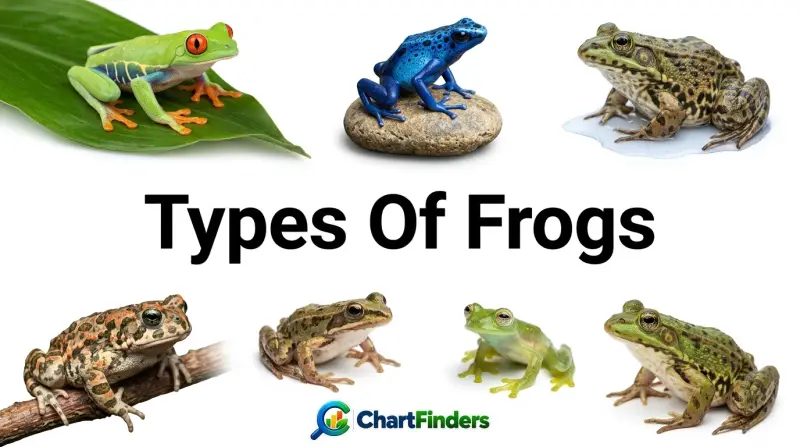
Amphibians represent one of the most astonishing lineages of vertebrate evolution, occupying a pivotal ecological bridge between aquatic and terrestrial environments. Within this class, the order Anura—derived from the Greek words an- (without) and oura (tail)—comprises the vast majority of modern amphibian diversity. While the general public often views frogs as a monolithic group of green, pond-dwelling jumpers, the reality of anuran biology is extraordinarily complex. From tiny microhylids that fit on a fingernail to massive goliath frogs capable of overpowering small prey, and from completely aquatic pipid frogs that never set foot on dry land to arboreal gliders that leap from canopy heights, understanding the types of frogs requires exploring a vast spectrum of evolutionary strategies, anatomical designs, and survival mechanisms.
This master guide provides a comprehensive examination of the various types of frogs, their biological classification, key behavioral adaptations, and the ecological roles they fulfill across the globe. By moving past superficial generalizations, we examine how morphology, habitat specialization, and reproductive modes define the incredible diversity of the anuran world.
Types Of Frogs: Biological Diversity and Ecological Classification
- The order Anura includes over 8,000 recognized species, with new species continually described in tropical biodiversity hotspots like the Andes and Chocó rainforests (such as Pristimantis mecada and Pristimantis fergusoni).
- The distinction between “frogs” and “toads” is largely colloquial; true toads belong to the family Bufonidae and typically feature dry, warty skin, short legs, and prominent parotoid glands.
- Anurans are categorized into diverse ecological guilds, including arboreal, terrestrial, aquatic, fossorial, and semi-aquatic types.
- Reproductive strategies among frogs range from traditional aquatic egg-deposition to direct development, gastric brooding, foam nests, and carrying tadpoles in specialized dorsal pouches.
- Habitat loss, chytrid fungus (Batrachochytrium dendrobatidis), climate change, and pollution present severe conservation challenges to global anuran biodiversity.
To understand the different types of frogs, one must first recognize that the term “frog” is applied loosely across multiple families, while “toad” generally refers to terrestrial anurans with keratinized skin tubercles, parotoid glands, and reduced leaping capabilities. However, all toads are technically frogs from a phylogenetic standpoint. Biologists organize this immense diversity into more than 50 distinct families, reflecting tens of millions of years of evolutionary divergence.
Below is a comparative breakdown of the major families and ecological types of frogs, highlighting their defining anatomical traits, primary habitats, and behavioral patterns.
| Common Group / Family | Scientific Family | Key Anatomical & Physical Traits | Typical Habitat | Behavioral & Reproductive Highlights |
|---|---|---|---|---|
| True Frogs | Ranidae | Sleek, muscular bodies; powerful webbed hind feet; dorsolateral folds often present. | Ponds, lakes, slow-moving streams, and damp forests. | Strong swimmers and jumpers; mostly external fertilization in water; loud vocalizations. |
| Treefrogs | Hylidae | Expanded adhesive toe pads; slender waists; often bright or variable coloration. | Arboreal (trees, shrubs, high vegetation); some aquatic. | Specialized climbing adaptations; vocal males calling from elevated perches; diverse egg-laying sites. |
| True Toads | Bufonidae | Dry, warty skin; prominent parotoid toxin glands behind the eyes; shorter legs. | Terrestrial; ranging from arid deserts to temperate forests and urban gardens. | Walk or hop rather than leap long distances; nocturnal foragers; string-like egg deposition. |
| Poison Dart Frogs | Dendrobatidae | Aposematic (warning) coloration; diurnal activity; skin alkaloids derived from diet. | Leaf litter of Neotropical lowland and montane rainforests. | Maternal/paternal care; tadpoles transported to tiny pools like bromeliad axils; highly territorial. |
| Glassfrogs | Centrolenidae | Translucent ventral (belly) skin revealing internal organs; bright green dorsal coloration. | Canopy and understory vegetation along fast-flowing streams in Central and South America. | Nocturnal; males guard egg clutches deposited on leaves hanging directly over water. |
| Rain Frogs & Flesh-Bellied Frogs | Strabomantidae / Craugastoridae | Direct-developing eggs; robust bodies; adapted for terrestrial leaf-litter life. | Forest floors, montane cloud forests, and subterranean retreats. | Skip the free-swimming tadpole stage entirely; hatchlings emerge as fully formed miniature frogs. |
| Horned & Pacman Frogs | Ceratophryidae | Massive mouths; round, robust bodies; small horn-like projections above the eyes. | Grasslands, scrublands, and forest floors in South America. | Ambush predators that bury themselves in substrate; highly voracious; capable of aestivation. |
| Clawed Frogs & Surinam Toads | Pipidae | Fully aquatic; flattened bodies; lack tongues; possess keratinized claws on hind toes. | Permanently aquatic environments (rivers, lakes, stagnant pools). | Never leave water; lateral line system for detecting movement; unique underwater mating and brooding behaviors. |
This structured overview illustrates that anuran morphology is tightly coupled with ecological niche occupation. The following sections explore these major groups in rigorous detail, examining their evolutionary adaptations and life histories.
Anatomical and Behavioral Specializations Across Major Anuran Families
The evolutionary success of anurans is rooted in their extreme morphological specialization. The skeletal frame of a frog is radically modified for locomotion via saltation (jumping), featuring a fused tail vertebrae (urostyle), elongated hind limbs, and a shock-absorbing pectoral girdle. However, different families have modified these baseline traits to master specific environmental niches.
Arboreal Specialists: Treefrogs (Hylidae and Rhacophoridae)
Arboreal frogs face a constant gravitational challenge: maintaining position on vertical, wet, or smooth vegetation. Families such as Hylidae (New World treefrogs) and Rhacophoridae (Old World treefrogs) have evolved specialized adhesive toe pads. These pads are covered in microscopic epithelial cells separated by mucus-filled channels, creating surface-tension forces that allow the frog to adhere to slick leaves and glass.
, many arboreal species exhibit extreme camouflage. Species like the Red-Eyed Treefrog (Agalychnis callidryas) utilize a strategy of startling predators with sudden flashes of vibrant red eyes and orange feet when disturbed, while remaining cryptically green during resting hours. Certain Old World flying frogs (genus Rhacophorus) possess dramatically enlarged webbing between their fingers and toes, allowing them to parachute between canopy trees.
Terrestrial Crawlers and Scratchers: True Toads (Bufonidae)
Unlike slender, streamlined stream-dwellers, true toads of the family Bufonidae are built for walking and short hops across dry terrestrial surfaces. Their skin is thickened with keratin deposits and packed with granular glands that secrete unpalatable or toxic chemical defenses, most notably from the prominent parotoid glands situated behind the tympanum. Bufonids are remarkably resilient against desiccation compared to soft-skinned aquatic frogs, allowing them to colonize arid environments, grasslands, and high-altitude slopes where moisture is scarce.
Stream and Aquatic Specialists: True Frogs (Ranidae) and Pipidae
The family Ranidae represents the quintessential “pond frog,” characterized by powerful, fully webbed hind feet and sleek, hydrodynamic bodies designed for explosive propulsion through water. Species like the American Bullfrog (Lithobates catesbeianus) and the Green Frog (Lithobates clamitans) rely heavily on aquatic environments for escape routes from terrestrial predators.
At the extreme end of aquatic adaptation is the family Pipidae, which includes African Clawed Frogs (Xenopus) and the Surinam Toad (Pipa pipa). Pipids are strictly aquatic, completely lacking tongues and external eardrums. Instead, they capture prey using their front hands and rely on sensitive lateral-line systems—similar to those found in fish—to detect vibrations in murky water.
Fossorial Specialists: Burrowing Frogs (Myobatrachidae, Microhylidae, and Pelobatidae)
Fossorial frogs spend the majority of their lives underground, emerging only during heavy seasonal rains to breed. Many species, such as the Australian Turtle Frog (Myobatrachus gouldii) or spadefoot toads, possess keratinized “spades” on their hind feet that allow them to dig backward into loose soil. This lifestyle shields them from extreme surface temperatures and drought.
Reproductive Strategies and Life-History Diversity
While the textbook lifecycle of a frog involves aquatic egg deposition, free-swimming herbivorous tadpoles, and subsequent metamorphosis into terrestrial juveniles, anuran reproductive strategies exhibit astonishing diversity. Natural selection has driven the evolution of numerous pathways to bypass vulnerable aquatic larval stages.
Direct Development
Many terrestrial and high-altitude frogs—such as members of the diverse family Strabomantidae (including numerous Pristimantis species, such as the recently described Pristimantis mecada from Colombia and Pristimantis fergusoni from Ecuador)—lay large, yolk-rich eggs on damp terrestrial substrates, under logs, or in moss. The entire embryonic and larval development occurs entirely inside the egg capsule. When the capsule hatches, a fully formed juvenile frog emerges, completely bypassing the free-swimming tadpole stage.
Parental Brooding and Transport
Parental investment in anurans ranges from absent to highly complex:
- Dendrobatidae (Poison Dart Frogs): After eggs hatch on the forest floor, parent frogs (either male or female depending on the species) carry the wriggling tadpoles on their backs up into water-filled bromeliad axils, tree hollows, or tiny pools, depositing a single tadpole per micro-pool to prevent cannibalism.
- Pipidae (Surinam Toads): During a complex underwater mating dance, the male presses fertilized eggs into the spongy, specialized skin of the female’s back. The eggs sink into individual pockets where they develop through the tadpole stage, eventually emerging directly as fully formed miniature toads.
- Darwin’s Frogs (Rhinodermatidae): Males of this Chilean family ingest fertilized eggs as they begin to move and store them inside their vocal sacs, where the developing tadpoles complete their metamorphosis before being “spat out” as young froglets.
- foam-nesting frogs (Rhacophoridae and Leptodactylidae): Females whip egg masses into frothy foam nests hanging over water or damp substrate, protecting eggs from desiccation and predation before liquefying and dropping tadpoles into water below.
Global Diversity and Recent Discoveries
Amphibian taxonomy is a dynamic, rapidly evolving scientific field. Herpetologists utilize molecular phylogenetics, bioacoustics, and detailed morphological analysis to untangle cryptic species complexes. According to recent amphibian databases (such as AmphibiaWeb), the global total of recognized amphibian species stands at over 9,000, with frogs and toads (Anura) comprising over 8,000 of those species.
Every year, field expeditions uncover new taxa, particularly in complex tropical topographies such as the Andean cloud forests of South America, the island of New Guinea, and the rainforests of Southeast Asia. For instance, recent scientific descriptions continue to expand our understanding of direct-developing rain frogs, such as Pristimantis mecada from the Serranía del Baudó in Chocó, Colombia, and Pristimantis fergusoni from Ecuador. These discoveries how much of Earth’s amphibian biodiversity remains undocumented and highlight the urgent need for habitat preservation in threatened biodiversity hotspots.
| Amphibian Order | Approximate Species Count | General Body Form | Primary Locomotion |
|---|---|---|---|
| Anura (Frogs & Toads) | 8,011+ | Tailless, compact body, enlarged hind limbs. | Jumping, leaping, walking, swimming, climbing, gliding. |
| Caudata (Salamanders & Newts) | 837 | Elongated body, distinct tail, usually four limbs of equal size. | Walking, undulating swimming. |
| Gymnophiona (Caecilians) | 233 | Limbless, cylindrical, highly ringed (annulated) serpentine body. | Burrowing, serpentine slithering, aquatic swimming. |
The data above illustrates the overwhelming numerical dominance of frogs within the amphibian class, representing roughly 88% of all living amphibian diversity.
Ecological Importance and Conservation Status
Frogs play an irreplaceable role in global ecosystems as both predators and prey. As carnivorous predators during their adult stage, they consume massive quantities of insects, including agricultural pests and disease vectors like mosquitoes. Conversely, tadpoles serve as vital grazers of aquatic algae, helping maintain clean waterways. Because of their permeable skin, complex dual-phase lifecycles (aquatic and terrestrial), and exposed eggs, frogs serve as classic bioindicators; environmental degradation, chemical pollutants, and climate shifts immediately impact anuran populations.
Global amphibian conservation faces unprecedented crises. The primary drivers of population decline include:
- Chytridiomycosis: An infectious disease caused by the amphibian chytrid fungus (Batrachochytrium dendrobatidis and Batrachochytrium salamandrivorans), which attacks keratinized skin layers, disrupting ion transport and causing cardiac arrest.
- Habitat Destruction: Deforestation, agricultural expansion, urbanization, and wetland draining eliminate vital breeding and foraging grounds.
- Climate Change: Altered precipitation patterns dry up ephemeral breeding pools required by pond-breeding anurans, while rising temperatures disrupt physiological processes.
- Environmental Toxins: Agricultural run-off, heavy metals, and endocrine-disrupting pesticides accumulate in aquatic environments, causing developmental deformities and immune suppression.
Frequently Asked Questions
What is the difference between a frog and a toad?
Taxonomically, all toads are frogs, belonging to the order Anura. Colloquially, “toad” refers specifically to members of the family Bufonidae or other terrestrial anurans characterized by dry, warty skin, shorter hind legs adapted for walking or hopping rather than long-distance leaping, and prominent parotoid glands behind the eyes that secrete defensive toxins. True frogs (family Ranidae) typically possess moist, smooth skin, slender bodies, and long, powerful webbed feet designed for aquatic swimming and long leaps.
How many species of frogs exist today?
There are over 8,000 recognized species of frogs and toads worldwide, making up the vast majority of the approximately 9,081 total living amphibian species. This number continues to climb annually as herpetologists discover and formally describe new species in remote tropical regions.
Do all frogs need water to reproduce?
No. While the ancestral and most common reproductive mode involves laying eggs in water that hatch into free-swimming tadpoles, many frog species have evolved alternative strategies. Numerous tropical frogs exhibit direct development, laying eggs on land that hatch directly into tiny, fully formed froglets without ever entering a free-swimming aquatic larval stage.
How do poisonous frogs produce their toxins?
Poisonous frogs—such as members of the family Dendrobatidae (poison dart frogs)—do not synthesize their skin toxins internally. Instead, they sequester alkaloid poisons from their natural diet, which primarily consists of toxic ants, mites, and beetles in the rainforest leaf litter. Captive-raised dart frogs fed a diet devoid of these specific arthropods lose their toxicity entirely.
Why are frog populations declining globally?
Frog populations face a severe extinction crisis driven by a combination of habitat destruction, climate change, chemical pollution, invasive species, and the devastating spread of the amphibian chytrid fungus, which has decimated hundreds of species across the globe over the past several decades.
Conclusion
The extraordinary diversity encapsulated within the types of frogs highlights the wonders of vertebrate adaptation and evolutionary resourcefulness. From the canopy-dwelling treefrog with its adhesive toe pads to the fossorial burrower and the rainforest poison dart frog, anurans have conquered virtually every terrestrial and freshwater ecosystem on Earth. Understanding the distinct biological traits, ecological requirements, and conservation needs of these remarkable amphibians is essential not only for appreciating their natural history but also for safeguarding the health of global ecosystems in which they serve as irreplaceable indicators of environmental integrity.