
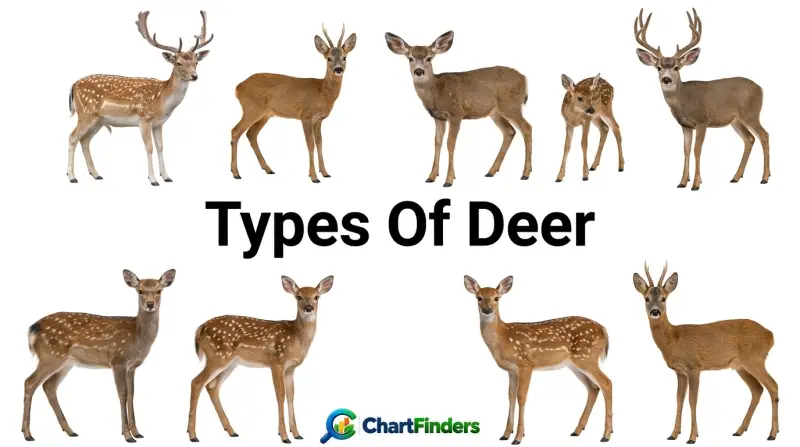
Deer represent one of the most successful and adaptable families of large mammalian herbivores on Earth. Spanning every continent except Antarctica and Australia (though certain species have been successfully introduced to New Zealand and parts of Australia), members of the family Cervidae have evolved to conquer environments ranging from frozen Arctic tundras and dense temperate rain forests to arid scrublands and sweltering tropical jungles. Because of this vast geographic distribution and millions of years of evolutionary divergence, deer exhibit staggering variation in physical size, social structure, reproductive strategies, and antler architecture.
For landowners, wildlife biologists, hunters, and conservationists, accurately distinguishing between the various types of deer is not merely an academic exercise. Management strategies, habitat conservation laws, nutritional requirements, and hunting regulations—such as specialized regional tag allocations, gear options, and seasonal constraints—depend entirely on proper taxonomic identification and behavioral understanding. This comprehensive guide explores the structural taxonomy, major global lineages, North American mainstays, regional variants, anatomical identification clues, ecological roles, common misconceptions, and biological traits that define the diverse world of deer.
Taxonomic Classification and Major Types Of Deer
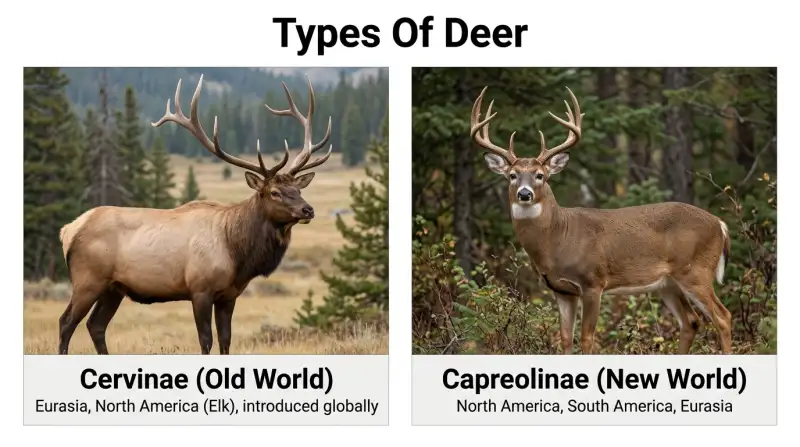
- Cervidae is split into two primary subfamilies: Cervinae (Old World deer, typically featuring complex, multi-tined antlers with brow tines and upper canines in many species) and Capreolinae (New World deer, characterized by bifurcated branching patterns, absence of upper canines, and distinct ankle structures).
- White-tailed deer (Odocoileus virginianus) and Mule deer (Odocoileus hemionus) are the dominant hoofed mammals across North America, with distinct hybridization zones occurring where their territories overlap.
- Antler growth is not merely decorative; it serves as a secondary sexual characteristic governed by photoperiods, testosterone levels, and nutritional intake.
- Metatarsal, tarsal, pre-orbital, and interdigital scent glands play a critical role in intra-species communication, territorial marking, and social bonding during the rut.
- Modern conservation and regulatory frameworks rely heavily on subspecies classification to protect localized gene pools from overharvesting, habitat fragmentation, and disease transmission like Chronic Wasting Disease (CWD).
To understand the full spectrum of deer types, one must first look at the family tree. The family Cervidae belongs to the order Artiodactyla (even-toed ungulates). Within this family, evolution split the group into two main subfamilies that diverged millions of years ago, developing distinct physiological differences in their teeth, bones, and reproductive biology.
The subfamily Cervinae (often referred to as Old World deer, though some species like the elk migrated to the Americas) includes animals such as red deer, fallow deer, sika deer, axis deer, and elk (wapiti). Generally, Cervines possess complex antlers that grow from a main beam featuring a pronounced brow tine, and many species retain upper canine teeth (vestigial fangs). The subfamily Capreolinae (New World deer) includes white-tailed deer, mule deer, moose, caribou, roe deer, and pudu. Capreolines typically lack upper canines and feature a different ankle bone structure, with antlers that traditionally bifurcate rather than sprouting from a single continuous main beam with multiple ascending tines.
| Subfamily | Representative Species | Primary Geographic Range | Antler Structure | Distinctive Behavioral/Physical Trait |
|---|---|---|---|---|
| Cervinae (Old World) | Red Deer, Elk (Wapiti), Sika, Axis, Fallow | Eurasia, North America (Elk), introduced globally | Multi-tined arising from a clear main beam; brow tines present. | Often vocal “bugle” systems during rut; presence of upper canine teeth. |
| Capreolinae (New World) | White-tailed Deer, Mule Deer, Moose, Caribou, Pudu | North America, South America, Eurasia | Typically bifurcated (forking branches); palmated in moose and caribou. | Lacks upper canines; complex metatarsal and tarsal scent-gland variations. |
The table above outlines the foundational split within the Cervidae family. While these two subfamilies establish the macro-taxonomy, individual species display remarkable specialization at the regional and micro-habitat levels.
Major North American Deer Species
While the global deer family includes dozens of species, North America features a distinct subset that captures the vast majority of ecological and sporting attention. The landscape is dominated by two primary species of the genus Odocoileus, alongside massive cervids like the moose and elk.
White-Tailed Deer (Odocoileus virginianus)
The white-tailed deer is arguably the most recognizable and adaptable deer species in the Western Hemisphere. Ranging from southern Canada through the United States, Central America, and down into northern South America, white-tails thrive in edge habitats—transitional zones where dense forests meet agricultural fields, brushlands, or suburban greenbelts.
Physically, white-tails are medium-sized ungulates, with adult bucks typically weighing anywhere from 130 to over 300 pounds depending on latitude (Bergman’s Rule dictates that northern specimens, such as those in Saskatchewan or Maine, grow significantly larger than their southern Florida Key Deer counterparts). Their most distinct identifying feature is the stark white underside of their tail, which they flash as a warning flag when startled. Their antlers consist of a single main beam that sweeps forward, from which individual unbranched tines project upward.
Mule Deer (Odocoileus hemionus)
Native to the western half of North America, the mule deer is adapted to more rugged, open terrain, including high mountain ranges, desert scrublands, and rolling prairies. Mule deer are named for their oversized, mule-like ears, which provide exceptional auditory acuity in windy, open environments.
Unlike white-tails, mule deer antlers bifurcate evenly as they grow—meaning each main beam splits into two equal forks, which then fork again. Their coat is generally lighter gray in winter and reddish-brown in summer, and their tail is thin and white with a distinct black tip, lacking the broad, flag-like white tail of the Odocoileus virginianus. Additionally, mule deer exhibit a characteristic bounding gait known as “pronging” or “stotting,” where all four hooves hit the ground simultaneously, allowing them to clear rocky terrain and tall brush with ease.
Elk / Wapiti (Cervus canadensis)
As one of the largest species within the deer family, the elk (known as wapiti in indigenous languages) occupies mountainous forests and forest-edge habitats across western North America, with reintroduced populations existing in the eastern woodlands and upper Midwest. Adult bulls can weigh between 700 and 1,100 pounds. They are easily identified by their light tan bodies, contrasting dark brown necks, manes, and legs, and massive, sweeping antlers adorned with multiple distinct points. During the autumn breeding season, bull elk produce an iconic, high-pitched bugle that drops into a series of deep grunts.
Moose (Alces alces)
The moose is the absolute giant of the Cervidae family. Found in boreal and mixed deciduous forests across Canada, Alaska, the Pacific Northwest, the upper New England states, and the Rocky Mountains, adult moose can weigh up to 1,500 pounds and stand over six feet tall at the shoulder. They are instantly recognizable by their bulbous snout, overhanging upper lip, the pendant-like skin flap hanging from the throat called a “bell,” and the massive, flat, palmated antlers grown exclusively by the bulls.
Caribou / Reindeer (Rangifer tarandus)
Inhabiting the tundras, taigas, and mountainous regions of the far north, caribou (known as reindeer when domesticated in Eurasia) are unique because both males and females typically grow antlers. Their hooves are broad and deeply split, expanding in soft snow or mud to act like natural snowshoes, and shrinking in the hard winter months to provide traction on ice.
Exotic and Introduced Deer Species
Beyond native wildlife, several exotic deer species have been introduced to various parts of the world—most notably through private game ranches, conservation initiatives, and accidental escapes—establishing self-sustaining feral or wild populations.
- Axis Deer (Axis axis): Native to the Indian subcontinent, axis deer (or chital) are famous for their permanent reddish-brown coats covered in striking white spots. They do not drop their antlers on a synchronized seasonal schedule; instead, an individual buck’s antler cycle is tied to its birth date. They have established significant wild populations in regions like Texas and parts of Hawaii.
- Fallow Deer (Dama dama): Originating from the Mediterranean region and Eurasia, fallow deer are highly variable in color, ranging from traditional spotted chestnut coats to deep chocolate brown and stark white (melanistic and leucistic color phases). Bucks feature distinct, heavy, palmated antlers similar to miniature moose.
- Sika Deer (Cervus nippon): Native to East Asia, sika deer are compact, highly adaptable animals that resemble small elk. They are known for their high-pitched whistling bugle during the rut and their ability to hybridize with native red deer and white-tailed deer in isolated instances.
- Red Deer (Cervus elaphus): Closely related to the North American elk, European red deer are slightly smaller, darker in coloration, and favor dense temperate woodland ecosystems. They have been successfully introduced to New Zealand, Argentina, and various private estates worldwide.
Anatomical and Physiological Identification Clues
When observing deer in the field, reliable identification requires analyzing a combination of skeletal, muscular, and behavioral clues. Field biologists and hunters look at specific morphological markers to separate species, determine age classes, and assess physical health.
Antler Morphology and Growth Cycles
Antlers are unique to the deer family (with rare exceptions like female caribou) and are composed of true bone. Unlike horns—which are permanent, hollow sheaths grown over a bony core found in bovids (sheep, goats, cattle)—antlers are shed and regrown annually.
The growth cycle is driven entirely by photoperiod (day length). As daylight increases in spring, rising testosterone levels stimulate rapid antler growth. The growing bone is encased in “velvet,” a highly vascularized layer of skin packed with nerves and blood vessels that delivers oxygen and minerals to the developing bone. By late summer, falling testosterone levels cause the blood supply to constrict, the velvet dies and dries up, and the bucks aggressively rub their antlers against trees and shrubs to strip the remaining tissue, exposing the hardened, polished bone underneath. After the breeding season concludes in winter, specialized cells called osteoclasts dissolve the connection at the pedicle, causing the antlers to drop off.
Scent Glands and Communication
Deer possess an system of cutaneous scent glands that serve as chemical messaging centers. Recognizing where these glands are located helps researchers understand how deer navigate their social hierarchies:
- Pre-orbital Glands: Located just below the inside corner of the eyes, these glands secrete a waxy, pungent substance that deer deposit onto twigs and overhanging branches by rubbing their faces against them.
- Tarsal Glands: Situated on the inside of the hocks (ankles) of the hind legs, tarsal glands produce a musky secretion. Bucks frequently urinate over their tarsal glands during the rut, allowing the urine to mix with the scent and stain the hair dark—a behavior known as rub-urination.
- Metatarsal Glands: Located on the outside of the lower hind legs, these glands vary drastically by species. White-tailed deer have small metatarsal glands, mule deer have significantly larger ones, and this anatomical difference is often used as a definitive taxonomic separator.
- Interdigital Glands: Found between the toes on all four hooves, these glands leave a distinct scent trail wherever the animal walks, allowing members of a family group to track one another through dense cover.
Ecological Roles and Habitat Adaptations
Deer are keystone herbivores that profoundly shape plant communities, forest regeneration, and predator-prey dynamics. As selective browsers and grazers, their feeding habits directly influence the understory structure of forests.
In balanced ecosystems, moderate browsing helps control invasive plant species and promotes structural diversity in the forest canopy. However, overabundant deer populations—often driven by the removal of apex predators like wolves, cougars, and grizzly bears, combined with human landscape modifications—can overbrowse preferred plant species such as oak, hemlock, and native wildflowers. This selective feeding pressure can drastically alter forest regeneration, leading to monocultures of unpalatable ferns or invasive shrubs.
Behaviorally, deer have evolved sophisticated survival strategies against predation. Their eyes are positioned on the sides of their head, granting them a panoramic field of vision spanning roughly 310 degrees, though this comes at the cost of limited binocular depth perception. To compensate, they frequently bob and weave their heads to gauge distance. Paired with an acute sense of smell capable of detecting microscopic scent molecules on the wind, and large, independently rotating pinnae (ears) that catch faint sounds over hundreds of yards, deer represent some of the most finely tuned sensory organisms in the wild.
Common Misconceptions and Identification Errors
Even experienced outdoorsmen occasionally misidentify deer species or misinterpret biological signs due to regional anomalies, coat variations, and biological hybridization.
One of the most frequent errors involves assuming that antler size directly correlates with chronological age. While older bucks generally carry larger antlers, nutrition, genetics, and environmental stressors play an overwhelming role. A stressed two-year-old buck in poor habitat may grow stunted, spike antlers, while a well-nourished yearling in prime agricultural country can produce a respectable multi-point rack.
Another common point of confusion occurs in geographic overlap zones—such as the western plains and foothills where white-tailed deer and mule deer ranges converge. In these transition zones, interbreeding can occur, producing fertile hybrid offspring. These “mule-whitey hybrids” often exhibit confusing morphological traits, such as a white-tailed deer’s facial pattern and tail combined with a mule deer’s bifurcated antlers and larger ears, making field identification challenging without genetic testing.
Frequently Asked Questions
What is the difference between deer horns and antlers?
True deer do not have horns; they grow antlers. Horns (found on animals like sheep, goats, and antelopes) are permanent structures made of a bony core covered by a sheath of keratin (the same protein found in human fingernails) and are never shed. Antlers are made entirely of bone, are grown annually by males (and occasionally females, as in caribou), and are shed every year after the breeding season.
Are elk and moose considered deer?
Yes. Both elk and moose belong to the family Cervidae, making them true members of the deer family. “Deer” functions both as a specific term for smaller cervids (like white-tails and mule deer) and as a broad umbrella term encompassing all 50+ species within the Cervidae family.
Why do deer shed their antlers every year?
Antler shedding is triggered by a drop in testosterone levels following the autumn rut. Once the breeding season ends, the high energetic cost of maintaining heavy bone structures is no longer supported by hormonal output. A specialized layer of cells separates the antler base from the skull pedicle, causing the antlers to fall off so the animal can conserve energy through harsh winter months and grow a larger, stronger set the following spring.
Can female deer grow antlers?
In most deer species, antlers are an exclusively male secondary sexual characteristic governed by high levels of testosterone. However, female caribou (reindeer) regularly grow antlers to help them compete for scarce food resources beneath snowpack during the winter. In other species, such as white-tailed deer, rare genetic or hormonal anomalies—such as elevated testosterone levels or congenital ovarian conditions—can occasionally cause a doe to grow velvet or hardened antlers.
How do you tell the difference between a white-tailed deer track and a mule deer track?
While both species leave a classic heart-shaped cloven hoof print, white-tailed deer tracks tend to be narrower, more pointed, and teardrop-shaped. Mule deer tracks are generally broader, rounder, and blunter at the tips. Additionally, because mule deer have larger dewclaws and different ankle articulation, their dewclaws will occasionally leave imprints in soft mud or deep snow where a white-tail’s would not.
Conclusion
The vast diversity of deer types—ranging from the diminutive pudu of South America and the ubiquitous white-tail of North American woodlands to the towering moose of the northern taiga—highlights the remarkable evolutionary adaptability of the family Cervidae. By mastering the physiological markers, behavioral patterns, and ecological classifications of these animals, wildlife observers and conservationists ensure that these magnificent ungulates continue to thrive across their native and introduced ranges for generations to come.