
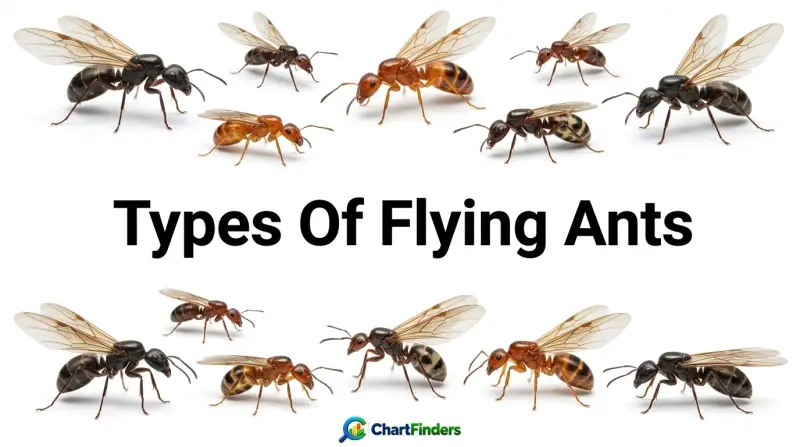
The phenomenon of a sudden swarm of winged insects appearing overnight across an urban landscape or rural garden often triggers panic regarding potential property damage or pest infestations. Entomologically speaking, however, this airborne spectacle represents one of the most vital ecological milestones in an ant colony’s lifecycle. Understanding the nuances of these winged reproductives requires looking past the common moniker “flying ant” and examining the specific subfamilies, anatomical adaptations, ecological behaviors, and morphological distinctions that separate harmless garden dwellers from structural wood-boring species or aggressive stingers.
When examining the complex taxonomy of these insects, researchers and pest management professionals evaluate distinct morphological markers, geographical distribution patterns, and seasonal emergence triggers. Climate variations, such as warming temperatures, increasingly influence the timing of these mass mating events, shifting emergence cycles earlier into the summer months. This comprehensive resource explores the biological classifications, anatomical identification protocols, species comparisons, and practical management strategies required to understand and navigate the various types of flying ants encountered in nature and residential environments.
Types Of Flying Ants
- Flying ants are morphologically distinct reproductive alates (males and virgin queens) possessing wings, compound eyes, and specialized thoracic musculature, rather than a separate species.
- Nuptial flights are synchronized meteorological events triggered by temperature, humidity, and barometric pressure shifts, maximizing outbreeding success.
- The four primary groups commonly observed include Lasius niger (common black ant), Camponotus spp. (carpenter ant), Myrmica spp. (red ant), and invasive Solenopsis spp. (fire ant).
- Accurately distinguishing flying ants from subterranean termites requires evaluating three key anatomical features: pinched abdomens (pedicels), elbowed antennae, and unequal fore- and hind-wing sizing.
- Colony founding strategies vary widely: some species rely on claustral nest-founding (where the queen seals herself in a chamber and uses fat reserves), while others utilize social parasitism.
- Management approaches depend entirely on species identification; beneficial garden foragers require no intervention, whereas structural wood-boring or stinging species necessitate targeted baiting or barrier treatments.
To accurately categorize the various types of flying ants, one must evaluate them through both taxonomic and ecological lenses. While hundreds of individual species produce alates, certain groups dominate residential encounters and ecological research due to their abundance, geographic range, or economic impact. The following sections examine the prominent genera and species encountered during seasonal swarming periods.
The Common Black Garden Ant (Lasius niger)
Lasius niger is arguably the most frequently observed flying ant across temperate zones, particularly in Europe and parts of North America. Often associated with “Flying Ant Day”—a colloquial term for synchronized regional swarming events—these insects emerge following warm, humid weather with low wind speeds.
- Morphology: Virgin queens reach up to 15mm in length and exhibit a robust, glossy dark brown or black exoskeleton. Males are considerably smaller, measuring roughly 3 to 5mm, and feature a slender body structure.
- Behavior: Workers clear exit tunnels in soil, paving cracks, or lawns days in advance. Once atmospheric conditions align, thousands of alates launch simultaneously to minimize avian and mammalian predation through sheer numerical saturation.
- Ecological Role: Post-mating, queens shed their wings, burrow into soil, and initiate a new colony through claustral histolysis (breaking down their own flight muscles to feed their first brood). They present no structural threat to timber and are beneficial soil aerators.
Carpenter Ants (Camponotus species)
Carpenter ants represent some of the largest native ants encountered in forested and residential settings. Unlike termites, which consume cellulose, carpenter ants excavate galleries within damp or decaying wood exclusively for nesting architecture.
- Morphology: Alate carpenter ants are notably large. Queens can span up to 20mm with an expansive wing span, while males are smaller. Their bodies display a matte black, dark red, or bi-colored reddish-black pigmentation.
- Emergence Timing: Unlike outdoor-dependent species, indoor-nesting carpenter ant colonies can produce alates inside heated structures as early as late winter or spring, signaling an established internal infestation.
- Significance: The presence of winged carpenter ants indoors is a primary diagnostic indicator of structural moisture problems and compromised wooden building components, requiring prompt professional inspection.
Red Ants and Fiery Myrmicine Species (Myrmica and Solenopsis)
Stinging ants within the subfamily Myrmicinae possess functional stingers, setting them apart from the formic acid-spraying subfamily Formicinae (which includes Lasius and Camponotus). When their alates take flight, encounters can result in painful stings if the insects are mishandled.
- Myrmica rubra (European Fire Ant / Red Ant): Native to Palearctic regions and introduced elsewhere, these aggressive red ants produce alates that swarm from mid-to-late summer. Their sting produces a sharp, burning sensation lasting several hours.
- Solenopsis invicta (Red Imported Fire Ant): A notorious invasive species across subtropical and tropical zones. Alates emerge in large numbers following spring or summer rainfall events. Mated queens fly considerable distances on wind currents to establish new mound systems, presenting substantial agricultural, ecological, and medical challenges.
Pavement Ants (Tetramorium caespitum)
Originating in Europe and now widespread in North America, pavement ants nest beneath concrete slabs, stones, and asphalt. Their winged reproductives frequently emerge indoors through expansion joints or near basement foundations during early spring or summer.
- Morphology: Small, dark brown to blackish alates measuring approximately 3 to 4mm in length. They feature parallel lines (grooves) on the head and thorax.
- Behavior: Swarms are often triggered by indoor heating during early spring or natural atmospheric pressure drops outdoors, making them a common household nuisance during seasonal transitions.
| Species / Group | Typical Size (Queen) | Coloration | Swarming Season | Structural Risk | Stinging Capability |
|---|---|---|---|---|---|
| Lasius niger (Black Garden Ant) | 9 – 15 mm | Glossy Black / Dark Brown | Mid-to-Late Summer | None (Soil/Garden nester) | None (Forms acid spray only) |
| Camponotus spp. (Carpenter Ant) | 13 – 20 mm | Matte Black / Red-Black | Spring to Early Summer | High (Excavates damp wood) | None (Bites and sprays formic acid) |
| Myrmica rubra (Red Ant) | 6 – 7 mm | Reddish-Brown | Mid-Summer | None (Soil/Grass nester) | High (Has functional stinger) |
| Solenopsis invicta (Fire Ant) | 8 – 10 mm | Reddish-Copper to Dark Brown | Spring / Summer post-rain | Low (Mound builder) | Severe (Venomous stinger) |
| Tetramorium caespitum (Pavement Ant) | 3 – 4 mm | Dark Brown | Spring to Summer | Negligible (Nests in soil/concrete) | Low / Weak stinger |
The comparative matrix above details the critical metrics utilized by entomologists and pest control operators to segregate harmless environmental species from those requiring active mitigation. Understanding these baseline parameters prevents unnecessary chemical applications against beneficial insect populations.
Anatomical and Morphological Identification
Differentiating flying ants from other winged insects—most notably subterranean and drywood termites—is essential for determining whether an observed swarm requires structural intervention or simple observation. Misidentification frequently leads to improper chemical treatments or unwarranted panic.
Ant Alate Anatomy
True ants belong to the insect order Hymenoptera, sharing a phylogenetic lineage with bees and wasps. Their bodies are segregated into three distinct tagmata: head, mesosoma (thorax), and metasoma (abdomen).
- The Pedicel: The narrow constriction between the mesosoma and metasoma. Ants possess one or two distinct nodes (petiole and postpetiole) in this region, creating a pinched, wasp-like waist.
- Antennae: Ant antennae are distinctly elbowed (geniculate), featuring a long basal segment (scape) followed by shorter articulated flagellar segments.
- Wings: Alates possess four membranous wings. The forewings are significantly longer and broader than the hindwings, and they feature a reduced, specialized venation pattern. Upon landing and mating, females actively detach their wings along a basal pre-formed fracture line.
Ants vs. Termites: Diagnostic Distinctions
Termites belong to the order Blattodea (closely related to cockroaches). When homeowners report “flying ants,” they frequently have encountered swarming reproductives (alates) of subterranean termites (family Rhinotermitidae). Evaluating three key anatomical criteria provides immediate differentiation:
- Body Shape: Ants possess a heavily constricted, pinched waist. Termites feature a broad, straight-sided body with no distinct waist constriction.
- Antennae Structure: Ants have bent, elbowed antennae. Termites display straight, beaded, string-of-beads antennae.
- Wing Symmetry: Ants have unequal wing pairs (longer front wings, shorter rear wings). Termites possess four wings of identical length, shape, and venation, which are significantly longer than the insect’s entire body.
Biological Mechanics of Nuptial Flights
The emergence of flying ants is not a random occurrence; it is governed by rigorous evolutionary biology and precise environmental synchronization. Understanding these biological mechanisms explains why swarms appear suddenly across entire geographic regions on identical days.
Environmental Triggers
Alate production occurs within mature colonies over several months, but actual flight is delayed until external climatic conditions reach precise thresholds. Key meteorological drivers include:
- Barometric Pressure: A sudden drop in atmospheric pressure, often preceding summer thunderstorms, signals ideal high-humidity conditions that prevent delicate alate wings from desiccation during flight.
- Temperature and Sunlight: Warm ambient temperatures (typically exceeding 20°C / 68°F) paired with low wind velocities optimize aerial maneuverability and long-range dispersal.
- Precipitation: Saturated soil resulting from recent rainfall softens subterranean earth, allowing worker ants to excavate emergency exit portals rapidly.
The Mating Process and Colony Founding
Once airborne, males and virgin queens participate in aerial mating swarms, minimizing inbreeding through asynchronous local emergence across different colonies. Mating occurs on the wing or upon landing on vegetation.
- Fate of the Males: Male alates serve a singular reproductive purpose. Having transferred genetic material to the queen, males possess no foraging capabilities and perish within hours or days post-flight.
- Claustral vs. Non-Claustral Foundation: Newly mated queens drop to the earth, discard their wings by rubbing them against soil or grooming appendages, and seek a nesting site. In claustral species (e.g., Lasius), the queen seals herself inside a subterranean chamber, surviving entirely on metabolized wing muscle histolysis until her first worker brood emerges. Non-claustral species must forage externally for sustenance during initial colony establishment.
Common Mistakes in Managing Flying Ants
Misinterpreting the presence of flying ants frequently leads to ineffective remediation efforts, wasted financial resources, and unnecessary environmental chemical loading.
- Treating Outdoor Swarms with Residual Insecticides: Spraying massive outdoor swarms of beneficial garden ants (like Lasius niger) with surface sprays is futile. Nuptial flights occur over open airspace, and outdoor alates originate from subterranean nests that surface sprays cannot penetrate. , these flights naturally conclude within hours.
- Confusing Swarming Ants with Termites: Applying localized ant bait to structural termite swarms leaves the underlying timber-destroying infestation entirely unaddressed, leading to severe structural damage over time.
- Ignoring Indoor Emergence Sites: Finding flying ants indoors during winter or early spring is rarely a random migration from outside; it almost universally indicates an active, mature colony nesting within wall voids, subflooring, or structural timber (such as carpenter ants). Treating only the visible winged insects without locating the central nest guarantees repeated emergence.
- Over-reliance on Aerosol Space Sprays: Knocking down visible indoor alates with pyrethrin aerosols only addresses the symptom. Because alates represent less than 5% of a mature colony’s population, thousands of workers and fertile queens remain safely concealed within structural cavities.
Frequently Asked Questions
Are flying ants dangerous or capable of biting humans?
Most flying ants, such as common garden ants (Lasius spp.), are entirely harmless; they possess neither stingers nor powerful mandibles capable of breaking human skin, relying instead on spraying formic acid as a defensive mechanism. However, alates belonging to stinging species (such as fire ants or red ants) can inflict painful, venomous stings, while large carpenter ants can deliver a sharp defensive pinch if trapped against skin.
Why do flying ants suddenly appear all at once in my neighborhood?
Simultaneous regional emergence—colloquially called “Flying Ant Day”—is an evolutionary survival strategy known as predator saturation. By synchronizing emergence across thousands of colonies in response to identical temperature, humidity, and barometric cues, ants overwhelm insectivores (such as birds, amphibians, and spiders). This massive numerical surplus ensures that a sufficient percentage of mated queens survive to establish new colonies.
Do flying ants cause structural damage to houses?
The vast majority of flying ants do not damage buildings. Soil-nesting species simply use lawns, patios, and garden beds as launchpads. The sole exception involves wood-boring species, particularly carpenter ants (Camponotus spp.). If carpenter ant alates emerge indoors, it indicates an established colony nesting inside damp structural lumber, requiring professional pest inspection and remediation.
How long do flying ant swarms last?
An individual nuptial flight is brief, typically lasting from a few hours to a single afternoon. Once mating concludes, surviving queens shed their wings and burrow underground, while males die off. However, depending on weather fluctuations and species diversity within an area, localized sporadic swarming events can intermittently recur across a region over a span of several weeks during mid-summer.
Should I kill flying ants found inside my home?
Killing individual visible alates provides temporary cosmetic relief, but it does not solve the underlying issue. If you find multiple winged ants indoors—particularly outside of the normal mid-summer swarming window—it strongly suggests an indoor nesting site. Inspect window frames, damp basements, crawlspaces, and wooden structures for signs of frass or moisture damage to locate the parent colony.
Conclusion
The seasonal appearance of flying ants is a fascinating, highly coordinated natural event rather than an omen of impending household disaster. While the sudden emergence of winged insects can cause understandable alarm, proper identification separates harmless soil-dwelling foragers from structurally destructive wood-boring species or stinging insects. By evaluating anatomical markers such as waist constriction, wing geometry, and antennal structure, property owners and pest management professionals can accurately diagnose potential risks and apply proportionate, targeted management strategies when intervention is genuinely required.