
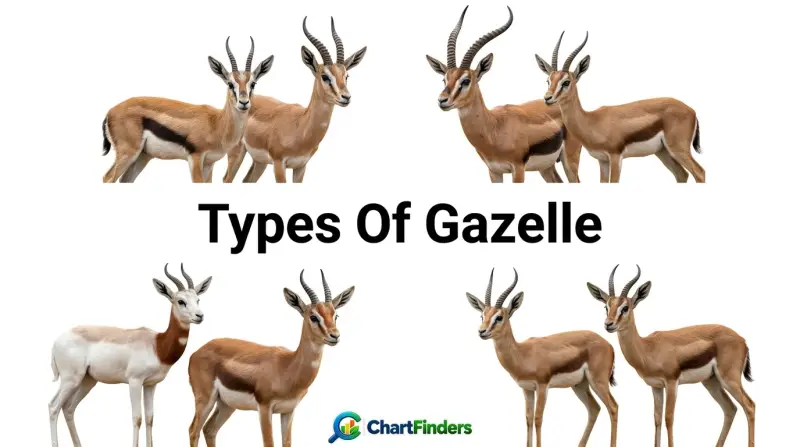
The term “gazelle” evokes immediate images of astonishing speed, slender frames, and breathtaking leaps across sun-drenched savannahs. Yet, far from being a single uniform animal, the gazelle group represents a fascinating branch of the bovid family characterized by extraordinary evolutionary adaptation. Spanning two continents, these medium-sized antelopes have mastered environments ranging from the hyper-arid wastes of the Sahara to the sweeping grasslands of East Africa. Understanding the types of gazelle requires looking past superficial similarities to examine deep taxonomic divisions, specialized survival strategies, distinct physical conformations, and critical conservation challenges facing modern populations in an increasingly altered world.
For centuries, human fascination with gazelles has been documented in poetry, art, and ecological study. Their very name, derived from the Arabic word ghazal, is synonymous with grace and beauty. However, modern mammalogy and wildlife conservation demand a rigorous look at these animals. Habitat fragmentation, agricultural expansion, and historic overhunting have severely tested the resilience of many gazelle species, turning once-abundant herds into vulnerable populations managed through targeted international conservation strategies. This comprehensive guide explores the taxonomy, diverse species, physical adaptations, behavioral ecologies, and conservation statuses that define the world’s various types of gazelles.
Types Of Gazelle
- Taxonomic Complexity: Gazelles are split across three primary genera—Gazella, Nanger, and Eudorcas—following genetic revisions that replaced older, broader classifications.
- Arid Adaptations: Many gazelle species can survive without ever drinking standing water, obtaining sufficient moisture entirely from vegetation and metabolic water production.
- Anti-Predator Stotting: A defining behavioral trait across multiple species is “stotting” (or pronking)—stiff-legged, high-bounding leaps that signal physical fitness and discourage pursuit by predators.
- Sexual Dimorphism: While males of almost all species possess prominent, ringed horns, females in certain species are hornless or bear significantly smaller, slender horns.
- Conservation Crisis: Several gazelle species, including Cuvier’s gazelle and the Dama gazelle, face severe extinction risks and depend heavily on international CITES protections and captive-breeding frameworks.
- Geographic Division: African gazelles inhabit savannahs and semi-deserts, while Asian counterparts (often referred to as goitered or mountain gazelles) occupy steppes, deserts, and rocky mountain terrain.
To fully understand the diversity found among gazelles, one must first recognize that the vernacular term “gazelle” is applied loosely by observers to many slim, fast-running antelopes. Scientifically, they belong to the subfamily Antilopinae, tribe Antilopini. Historically, almost all true gazelles were lumped into the single genus Gazella. However, twentieth- and twenty-first-century molecular and morphological studies prompted taxonomists to reclassify several prominent species into distinct genera: Nanger and Eudorcas. This division reflects millions of years of evolutionary divergence shaped by geography, climate, and ecological niches.
The following detailed comparison examines the primary groups, species, and ecological traits that define the spectrum of gazelles found across the globe.
| Common Name | Scientific Name | Primary Genus | Native Range | Habitat Type | Approx. Weight Range | Conservation Status |
|---|---|---|---|---|---|---|
| Thomson’s Gazelle | Eudorcas thomsonii | Eudorcas | East Africa (Kenya, Tanzania) | Grasslands, savannahs | 15–35 kg | Least Concern (Declining) |
| Red-Fronted Gazelle | Eudorcas rufifrons | Eudorcas | Sahel belt (Sub-Saharan Africa) | Arid scrub, semi-desert | 12–30 kg | Vulnerable |
| Grant’s Gazelle | Nanger granti | Nanger | East Africa | Arid savannahs, open bush | 40–80 kg | Least Concern |
| Dama Gazelle | Nanger dama | Nanger | Sahel and Sahara (North/West Africa) | Sub-desert, arid scrub | 40–75 kg | Critically Endangered |
| Cuvier’s Gazelle | Gazella cuvieri | Gazella | North Africa (Morocco, Algeria, Tunisia) | Open forests, mountainous terrain | 15–35 kg | Vulnerable |
| Goitered Gazelle | Gazella subgutturosa | Gazella | Central Asia, Middle East | Deserts, semi-deserts, gravel plains | 18–40 kg | Vulnerable |
| Mountain Gazelle | Gazella gazella | Gazella | Levant, Arabian Peninsula | Hills, coastal plains, mountain valleys | 16–30 kg | Endangered |
This structural table highlights how geographic separation and distinct evolutionary pressures have shaped the morphology, weight class, and habitat preferences of each major lineage. Below, we examine these categories in greater depth to understand how individual species survive and interact with their environments.
The African Savannah Specialists: Genus Eudorcas
The genus Eudorcas contains some of the most recognizable gazelles on Earth, famously inhabiting the sweeping savannahs and open plains of East Africa as well as the scrublands of the Sahel. These animals are typically medium-sized, highly social, and adapted to mixed feeding and grazing strategies.
Thomson’s Gazelle (Eudorcas thomsonii)
Often affectionately called “tommies,” Thomson’s gazelles are among the most abundant antelopes in the Serengeti ecosystem. Instantly recognizable by the distinct black stripe running along their flanks between their tan upper bodies and white bellies, tommies are a primary prey base for cheetahs, lions, and hyenas. They weigh between 15 and 35 kilograms and exhibit remarkable agility. Their social structure is fluid, consisting of bachelor herds, territorial adult males that mark their domains with dung and preorbital gland secretions, and maternal herds that move across the plains in search of fresh, nutrient-rich grasses.
Red-Fronted Gazelle (Eudorcas rufifrons)
Inhabiting the arid Sahel belt running horizontally across Africa just south of the Sahara, the red-fronted gazelle is closely related to Thomson’s gazelle but adapted to harsher, more fragmented scrublands. It features a noticeably reddish face and forehead, lighter overall coloration to reflect solar radiation, and shorter horns. Due to intensive pastoralism, habitat loss, and unregulated hunting across its Sahelian range, populations have fragmented significantly.
The Large Savannah and Desert Dwellers: Genus Nanger
Species belonging to the genus Nanger are characterized by their larger body size, longer legs, and often pale or striking facial markings. These antelopes are capable of traveling vast distances across semi-arid zones in search of ephemeral water and vegetation.
Grant’s Gazelle (Nanger granti)
Grant’s gazelle is substantially larger than Thomson’s gazelle, standing up to 90 centimeters at the shoulder and weighing up to 80 kilograms. Found in East Africa, Grant’s gazelles favor drier, more open country and wooded savannahs than tommies. A key physiological advantage is their ability to tolerate very high temperatures and go without drinking water for extended periods, relying on woody browse and shrubs that retain moisture during dry seasons. Their coats are pale fawn with a stark white patch that extends prominently onto their rumps above the tail.
Dama Gazelle (Nanger dama)
The Dama gazelle is the largest of all gazelles, standing up to a meter tall. Historically ranging widely across the Sahara and Sahel, its numbers have plummeted due to uncontrolled hunting and extreme habitat degradation, leading to its classification as Critically Endangered. The Dama gazelle features a distinctive reddish-brown head and neck contrasted with a pure white body and underbelly. Conservation breeding programs, such as those historically managed by international zoos and specialized reserves in North Africa, represent the primary hope for preventing the total extinction of wild-born lineages.
The True Gazelles: Genus Gazella
The genus Gazella represents the core group of “true gazelles,” encompassing species distributed across both North Africa and the Middle East into Central Asia. These animals are exceptionally hardy, thriving in rocky hills, rugged mountains, and austere desert environments.
Cuvier’s Gazelle (Gazella cuvieri)
Also known as the Edmi, Cuvier’s gazelle is endemic to the mountainous and hilly regions of North Africa, specifically Morocco, Algeria, and Tunisia. Unlike lowland savannah gazelles, Cuvier’s gazelle is exceptionally agile on steep, rocky slopes and open forest floors. It is distinguished by its remarkably dark, almost greyish-brown coat—an adaptation providing camouflage against rocky outcrops—and long, heavily ringed horns found in both sexes. Under conservation strategies coordinated via international frameworks like the CMS Sahelo-Saharan Antelopes Action Plan, protected areas and reintroduction initiatives strive to stabilize fragmented wild populations.
Goitered Gazelle (Gazella subgutturosa)
Spanning an immense geographic range from the deserts of the Middle East through Central Asia into Mongolia and western China, the goitered gazelle (sometimes called the Persian gazelle) is uniquely adapted to cold winters and hot, dry summers. The common name derives from the noticeable enlargement of the larynx and thyroid region in adult males during the breeding season, which aids in vocalization. Unlike many African species, goitered gazelles rarely leap in the traditional stotting fashion; instead, they rely on sheer speed across flat gravel plains and sandy deserts to evade predators such as wolves and snow leopards.
Mountain Gazelle (Gazella gazella)
Native to the Levant and parts of the Arabian Peninsula, the mountain gazelle favors hilly terrain, coastal plains, and inland valleys. It possesses slender, slightly divergent horns and a sleek, tawny coat. Human infrastructure development, road networks, and feral dog predation pose severe localized threats, making ongoing wildlife corridor management essential for maintaining genetic diversity among fragmented groups.
Anatomical and Physiological Adaptations
Survival in hyper-arid and predator-dense ecosystems requires specialized biological machinery. Gazelles have evolved several remarkable physiological mechanisms that set them apart from other ungulates.
Water Conservation and Thermal Regulation
Many gazelle species inhabit environments where surface water is seasonal or completely absent. To cope, they utilize a suite of water-saving strategies:
- Concentrated Urine and Dry Feces: Their kidneys are highly efficient at reabsorbing water, producing highly concentrated urine and dry pellet feces to minimize moisture loss.
- Behavioral Micro-Climatology: During peak daylight hours, gazelles seek shade under acacia trees or reduce physical activity, resting during the hottest periods and feeding during early morning, late afternoon, or night.
- Hyperthermia Tolerance: Rather than expending precious body water on panting or sweating to cool down, some species are capable of allowing their core body temperature to rise significantly during the day, offloading the accumulated heat during cool desert nights.
Locomotion and Anti-Predator Mechanics
Speed is the signature defense mechanism of all gazelles. Top-tier sprinters like Thomson’s gazelles can reach sustained bursts of up to 80 kilometers per hour (50 miles per hour). Beyond sheer velocity, gazelles utilize complex behavioral signals when detecting predators:
- Stotting (Pronking): When approached by a predator such as a cheetah or jackal, a gazelle will often perform stiff-legged vertical leaps with all four feet leaving the ground simultaneously. Evolutionary biologists have demonstrated that stotting serves as an honest signal of physical vigor and health, communicating to the predator that the individual is strong, alert, and too difficult to catch.
- Vigilance and Herd Dynamics: Gazelles graze with heads frequently raised to scan the horizon. In open country, visual communication spreads rapidly through the herd, triggering coordinated flight responses.
Conservation Challenges and Management Strategies
The status of the world’s gazelles varies dramatically by species, but the overarching trend points toward significant conservation concern. While generalist species like Thomson’s gazelle remain relatively numerous despite localized declines, desert-adapted and range-restricted species face severe pressures.
Primary Threats
Habitat fragmentation remains the single greatest threat to wild gazelle populations. As human populations expand across the African Sahel, the Middle East, and Central Asia, traditional nomadic migration routes are bisected by fenced agricultural lands, highways, and industrial projects. Additionally, unregulated poaching for meat and trophies, combined with competition from domestic livestock for limited grazing resources, places intense pressure on wild herds.
International Frameworks and Recovery Plans
Protecting migratory desert ungulates requires cross-border cooperation. Organizations such as the International Union for Conservation of Nature (IUCN) and agreements like the Convention on the Conservation of Migratory Species of Wild Animals (CMS) have established specialized frameworks—such as the Sahelo-Saharan Antelopes Action Plan—to coordinate habitat restoration, anti-poaching enforcement, and carefully monitored captive-breeding reintroductions. Flagship initiatives for species like Cuvier’s gazelle and the Dama gazelle demonstrate that targeted intervention can pull species back from the brink of extinction.
Frequently Asked Questions
What is the difference between a gazelle and an antelope?
All gazelles are antelopes, but not all antelopes are gazelles. “Antelope” is a broad, catch-all term for a diverse group of even-toed ungulates in the family Bovidae that are neither cattle, sheep, nor goats. “Gazelle” refers specifically to a distinct group of medium-sized, swift-running antelopes within the tribe Antilopini, primarily characterized by ringed horns in males, pale coats, and specialized desert adaptations.
Do female gazelles have horns?
Horn presence varies by species and sex. In many species—such as Thomson’s gazelle, Grant’s gazelle, and Cuvier’s gazelle—both males and females possess horns, though female horns are generally shorter, thinner, and less heavily ringed. In other species, females are entirely hornless or possess only rudimentary horn buds.
How fast can a gazelle run?
Most gazelle species can run at impressive speeds to escape fast predators like cheetahs and wild dogs. Species like Thomson’s gazelle can reach top sprint speeds of approximately 80 km/h (50 mph) and maintain remarkable endurance and maneuverability, executing sharp, zig-zag turns that confound pursuers.
How do gazelles survive without drinking water?
Desert-adapted gazelles obtain nearly all their required moisture from the vegetation they consume, such as succulent leaves, roots, and flowers, particularly when feeding at night or dawn when plants absorb atmospheric moisture. , their highly efficient kidneys and specialized nasal passages minimize respiratory and excretory water loss.
What are the main predators of gazelles?
In African ecosystems, gazelles are hunted primarily by cheetahs, lions, leopards, spotted hyenas, and African wild dogs, while jackals and large raptors frequently target newborn fawns. In Asian and Middle Eastern habitats, primary predators include wolves, snow leopards, and historically Caspian tigers.
Conclusion
The diverse types of gazelle represent an extraordinary pinnacle of mammalian adaptation, perfectly engineered for speed, endurance, and survival in some of the harshest environments on Earth. From the iconic savannah tommies of East Africa to the rugged mountain-dwelling Cuvier’s gazelles of North Africa and the sweeping desert herds of Asia, these graceful antelopes are vital components of their respective ecosystems. Ensuring the long-term survival of vulnerable and critically endangered gazelle species requires sustained international cooperation, rigorous habitat preservation, and active management strategies that balance human development needs with the ecological requirements of the world’s most magnificent runners.