
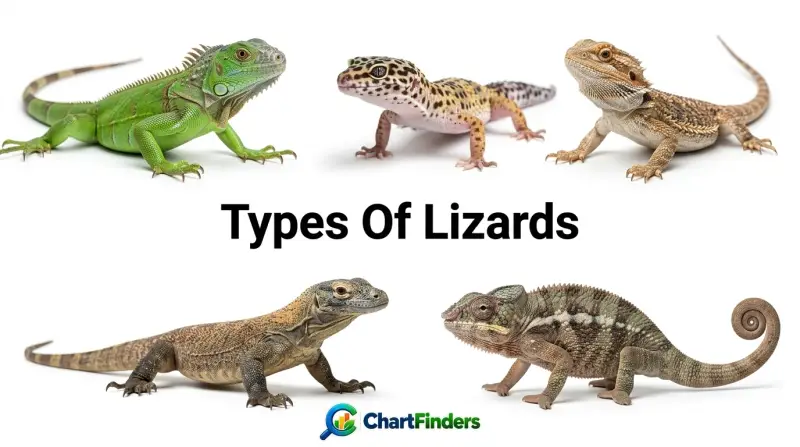
Lizards represent one of the most successful, diverse, and ecologically varied groups of terrestrial vertebrates on Earth. Spanning thousands of distinct species found on every continent except Antarctica, these remarkable reptiles have adapted to nearly every terrestrial environment imaginable—from scorching hyper-arid deserts and dense, humid rainforests to rocky mountain ledges and suburban backyards. Understanding the different types of lizards requires looking beyond simple physical appearance to examine their evolutionary lineages, physiological adaptations, behavioral traits, and specific environmental requirements.
For prospective pet owners, conservationists, field biologists, and general enthusiasts, navigating the taxonomy and biology of lizards can initially seem overwhelming. Genomic studies, taxonomic revisions, and ongoing field discoveries continue to reshape our understanding of how various lizard families relate to one another and how new species emerge. This guide explores the major groups, examines iconic and popular species, evaluates behavioral distinctions, details captive care fundamentals, and highlights the ecological challenges facing modern lizard populations.
Types Of Lizards: A Comprehensive Taxonomic And Ecological Overview
- Lizards are grouped into major categories like geckos, iguanas, monitors, skinks, and chameleons, each featuring unique physiological and behavioral adaptations.
- Popular beginner pet species, such as the leopard gecko and bearded dragon, thrive in captivity due to predictable dietary needs and manageable temperaments.
- Recent genomic research has significantly updated lizard taxonomy, frequently splitting established groups into multiple new species based on complete DNA analysis.
- Habitat specialization varies dramatically, ranging from terrestrial ground-dwellers and arboreal tree-climbers to semi-aquatic swimmers and fossorial burrowers.
- Conservation status is a growing concern, with many wild lizard populations facing habitat loss, climate shift pressures, and illegal wildlife trade threats.
To understand the sheer breadth of lizard diversity, herpetologists divide the suborder Lacertilia into numerous families and infraorders. Each group has evolved specialized morphological traits suited to specific ecological niches, defensive strategies, and foraging methods.
The Gecko Family (Gekkonidae and Related Families)
Geckos are among the most widespread and recognizable lizards on earth. Known for their lack of eyelids in many species (which they clean by licking with their tongues), nocturnal habits, and extraordinary vertical-climbing abilities, geckos have conquered diverse habitats. Their toe pads are covered in microscopic setae (hair-like structures) that utilize van der Waals forces to adhere to glass, smooth stone, and foliage.
- Leopard Geckos (Eublepharis macularius): Terrestrial, ground-dwelling geckos native to the arid regions of Asia. Unlike many other geckos, they possess moveable eyelids and lack adhesive toe pads. They are the quintessential beginner pet reptile.
- Crested Geckos (Correlophus ciliatus): Arboreal lizards from New Caledonia featuring distinctive crests above their eyes and prehensile tails. They thrive on specialized fruit-and-insect diets and moderate ambient room temperatures.
- Tokay Geckos (Gekko gecko): Large, vocal, and famously defensive Asian geckos known for their striking blue-gray coloration speckled with bright orange spots. They are strictly recommended for experienced keepers due to their powerful bite.
Iguanians (Iguanidae and Related Families)
The iguana clade encompasses a vast array of New World lizards, ranging from large, herbivorous tree-dwellers to agile desert runners. Iguanids are characterized by strong limbs, powerful jaws, and often impressive display structures like dewlaps, dorsal crests, and spines.
- Green Iguanas (Iguana iguana): Large, arboreal herbivores native to Central and South America. While juveniles are commonly sold in pet stores, adults require massive custom enclosures and a strict diet of leafy greens, presenting a significant long-term husbandry challenge.
- Bearded Dragons (Pogona vitticeps): Omnivorous, semi-arboreal lizards from Australia. Famed for their docile nature, communicative “beard” puffing, and head-bobbing behaviors, they are a of the reptile hobby.
- Anoles (Anolis species): Small, highly active arboreal lizards often called “American chameleons” due to their ability to shift shades of green and brown. They rely heavily on visual territorial displays and insect hunting.
Monitor Lizards (Varanidae)
Monitors are large, highly intelligent, carnivorous lizards found across Africa, Asia, and Australia. Characterized by long necks, forked tongues used for chemoreception (similar to snakes), powerful tails, and sharp claws, monitors are apex predators in their ecosystems.
- Savannah Monitors (Varanus exanthematicus): Robust, ground-dwelling African monitors that specialize in eating invertebrates like snails and insects. They require intense UV lighting, high ambient heat, and deep substrate for burrowing.
- Asian Water Monitors (Varanus salvator): Massive, semi-aquatic predators capable of reaching over six feet in length. They demand extensive aquatic enclosures, expert handling, and substantial dietary resources.
- Ackie Monitors (Varanus acanthurus): Dwarf monitors native to Australia. Reaching only two feet in length, they offer the intelligence, active foraging behavior, and visual appeal of larger monitors in a much more manageable captive footprint.
Skinks (Scincidae)
Skinks form the largest family of lizards, characterized by sleek, cylindrical bodies, smooth, overlapping cycloid scales, and often reduced or vestigial limbs in burrowing lineages. Most skinks are terrestrial or fossorial, spending much of their time under leaf litter, rocks, or loose soil.
- Blue-Tongued Skinks (Tiliqua species): Heavy-bodied, short-legged Australian skinks famous for their vivid blue tongues, which they flash defensively against predators. They are omnivorous, highly intelligent, and generally docile.
- Fire Skinks (Mochlus fernandi): Beautiful West African ground skinks featuring brilliant red flanks, gold-speckled backs, and shiny, iridescent scales. They are secretive burrowers that require high humidity.
Chameleons (Chamaeleonidae)
Chameleons are highly specialized arboreal lizards renowned for their zygodactylous feet (fusion of toes into opposing bundles for gripping branches), independently mobile turret eyes, projectile tongues, and rapid color-changing abilities mediated by specialized dermal cells called iridophores.
- Panther Chameleons (Furcifer pardalis): Native to Madagascar, these chameleons display brilliant coloration depending on their regional locality. They require screened enclosures with specialized cross-ventilation, live plants, and precise hydration management through dripping water systems.
- Veiled Chameleons (Chamaeleo calyptratus): Hardy, casque-bearing chameleons from the mountains of Yemen and Saudi Arabia. They consume both insects and plant matter, making them slightly more adaptable in captivity than other chameleon species.
| Lizard Group | Primary Habitat | Dietary Specialization | Activity Cycle | Typical Temperament | Representative Species |
|---|---|---|---|---|---|
| Geckos | Arboreal / Terrestrial | Insectivorous / Frugivorous | Nocturnal or Crepuscular | Docile to Defensive | Leopard Gecko, Crested Gecko |
| Iguanians | Arboreal / Desert / Rock-Dwelling | Herbivorous / Omnivorous | Diurnal | Calm to Highly Territorial | Bearded Dragon, Green Iguana |
| Monitors | Terrestrial / Arboreal / Aquatic | Carnivorous | Diurnal | Alert, Intelligent, Bold | Ackie Monitor, Asian Water Monitor |
| Skinks | Terrestrial / Fossorial / Leaf Litter | Omnivorous / Insectivorous | Diurnal | Secretive to Docile | Blue-Tongued Skink, Fire Skink |
| Chameleons | Arboreal (Branches, Canopy) | Insectivorous | Diurnal | Solitary, Easily Stressed | Panther Chameleon, Veiled Chameleon |
The comparison table above highlights the fundamental ecological divisions separating these major groups. Understanding whether a lizard requires high vertical space for climbing, subterranean substrate for burrowing, or specialized UVB lighting for vitamin synthesis is essential for proper identification and care.
Physiological Adaptations And Evolutionary Success
Lizards have survived for over 250 million years through a series of remarkable evolutionary innovations. Their physiological traits allow them to colonize extreme environments where other ectothermic vertebrates struggle.
Scales, Shedding, and Integumentary Defense
Unlike amphibians, whose permeable skin requires constant moisture, lizard skin is covered in keratinized epidermal scales that minimize water loss. This protective armor prevents desiccation in arid environments. Unlike snakes, which typically shed their skin in a single, unbroken piece, most lizards shed their skin in ragged flakes or patches.
Beyond waterproofing, many lizards utilize their scales for thermoregulation, predator deterrence, and camouflage. Horned lizards (Phrynosoma) possess modified, sharp cranial horns and spiky body scales that deter predators, while some species can squirt foul-tasting blood from the corners of their eyes when severely threatened.
Autotomy: The Mechanics of Tail Loss
A classic defensive adaptation shared by many lizard families is caudal autotomy—the ability to voluntarily detach part of their tail when grabbed by a predator. The tail is constructed with pre-formed fracture planes in the vertebrae. Specialized sphincter muscles instantly contract around blood vessels upon separation to prevent excessive blood loss, while the detached tail continues to wriggle, distracting the attacker while the lizard escapes.
While most lizards can regenerate a replacement tail, the regenerated appendage is typically composed of cartilage rather than bone and often lacks the original coloration, scale pattern, and fat storage capacity.
Sensory Systems and Communication
Lizards rely heavily on a combination of visual, auditory, and chemical cues to navigate their world. Diurnal species, such as anoles and dragons, possess acute color vision and communicate through complex behavioral displays, including push-ups, head-bobbing, and the flashing of bright dewlaps.
Conversely, many ground-dwelling and nocturnal lizards rely on the Jacobson’s organ (vomeronasal organ). By flicking their forked or fleshy tongues, they capture airborne chemical particles and press them against the roof of their mouth, effectively tasting the chemical scent trails of prey, predators, and potential mates.
Popular Beginner Pet Species Versus Advanced Keepers’ Challenges
The reptile keeping hobby has expanded significantly, driven by captive-breeding programs that supply healthy, robust specimens without placing pressure on wild populations. However, matching a lizard’s biological needs with a keeper’s experience level is critical.
The Ideal Beginner Profile: Leopard Geckos and Bearded Dragons
Species like the leopard gecko and bearded dragon succeed in captivity because their physiological thresholds are relatively forgiving. Leopard geckos require terrestrial floor space rather than tall arboreal enclosures, and they thrive on a steady diet of commercially bred insects supplemented with calcium and vitamins. Bearded dragons are diurnal, tolerant of gentle handling, and readily accept a mix of insects and fresh vegetables.
Neither species requires complex overhead high-output UVB lighting setups of the same intensity as desert monitors or high-altitude chameleons, reducing initial setup complexity and operational error.
Advanced Challenges: Chameleons and Large Monitors
In contrast, species like panther chameleons and water monitors demand specialized husbandry expertise. Chameleons suffer rapidly from stagnant air, incorrect humidity levels, and improper supplementation leading to metabolic bone disease (MBD). Their hydration must be managed via misting systems or dripping leaves, as they rarely drink from standing water bowls.
Large monitor lizards, such as the Nile monitor or Asian water monitor, grow rapidly, exhibit powerful defensive instincts, and require dedicated room-sized enclosures with reinforced structural integrity, heavy-duty heating arrays, and deep swimming pools. They are strictly suited for advanced keepers with substantial resources.
Conservation Status, Genomic Discoveries, And Ecological Pressures
Recent scientific assessments highlight both the fragility and resilience of lizard populations worldwide. Modern genomic studies utilizing complete DNA sequencing have fundamentally transformed herpetological taxonomy. Long-established species complexes are frequently split into multiple distinct endemic species as cryptic lineages are genetically identified.
Simultaneously, wild populations face severe anthropogenic pressures. Habitat destruction driven by agricultural expansion, urbanization, and deforestation remains the primary threat to endemic island and rainforest species. , introduced invasive species—such as feral cats, rats, and cane toads—devastate native lizard populations that evolved without defenses against mammalian predators.
Climate change poses an increasingly documented threat to thermal-sensitive species. Many lizards have strict temperature ranges in which they can forage. As ambient temperatures rise, lizards are forced to spend more time retreating to cool burrows, drastically reducing the daily time window available for feeding and reproduction. This behavioral restriction, known as “thermal restriction,” leads to localized population declines, particularly in desert and tropical montane ecosystems.
Practical Decision Framework For Choosing A Lizard
Selecting the right lizard requires evaluating personal lifestyle, available space, financial commitment, and tolerance for specialized maintenance. Use the following decision framework to evaluate prospective species:
- Evaluate Available Space: Determine if your home can accommodate a terrestrial enclosure (floor-space dominant) or an arboreal enclosure (height dominant). Large monitors and iguanas ultimately require dedicated custom room enclosures.
- Assess Daily Time Commitment: Consider feeding schedules and maintenance. Herbivores and omnivores like bearded dragons require daily fresh vegetable preparation, whereas insectivores may require insect breeding or purchasing logistics.
- Analyze Lighting and Heating Requirements: Ensure you can provide exact thermal gradients and necessary UVB lighting spectrums. Species requiring high-intensity metal halide or linear UVB bulbs demand higher electrical and setup budgets.
- Review Longevity: Many lizard species live between 10 and 20 years (and some large iguanas live even longer). Ensure you are prepared for a long-term animal care commitment.
Common Mistakes In Lizard Care And Husbandry
Even experienced reptile keepers occasionally encounter issues stemming from overlooked husbandry details. Avoiding these common pitfalls ensures optimal animal health:
- Inadequate UVB Provision: Assuming standard household lighting or old fluorescent bulbs provide sufficient vitamin D3 synthesis. UVB bulbs degrade over time and must be replaced every 6 to 12 months depending on the lamp type.
- Improper Calcium and Vitamin Supplementation: Failing to dust insects with calcium powder containing Vitamin D3 (for indoor reptiles) can rapidly induce metabolic bone disease, causing spinal deformations and pathological bone fractures.
- Incorrect Temperature Gradients: Providing uniform heat across an entire enclosure rather than establishing a proper thermoregulatory gradient with a distinct basking zone and a cool side. Lizards must be able to regulate their core body temperature actively.
- Substrate Impaction: Housing terrestrial lizards on loose sand, small gravel, or wood shavings can lead to fatal gastrointestinal blockages if the lizard ingests the material while hunting prey.
Frequently Asked Questions
What is the easiest type of lizard for a complete beginner?
The leopard gecko is widely considered the best beginner lizard. They are docile, low-maintenance, require simple ground-based enclosures, and do not need complex overhead UVB lighting setups. Bearded dragons are also exceptional beginner choices for keepers looking for an active, diurnal pet.
Do all lizards drop their tails when frightened?
No. While caudal autotomy is common across many families—such as geckos, anoles, and skinks—many other lizards, including monitors, chameleons, and iguanas, cannot drop their tails. For those that can, tail loss is a physiological last resort, and regrown tails rarely look identical to the original.
How do lizards breathe when running?
Many active lizards face a biomechanical constraint known as Carrier’s constraint. Because their lungs are ventilated by the same body wall muscles used for lateral undulation during running, they cannot easily breathe and run simultaneously at high speeds. Consequently, many species rely on short, explosive bursts of speed rather than sustained distance running.
Are lizards warm-blooded or cold-blooded?
Lizards are ectothermic (colloquially referred to as “cold-blooded”). They cannot internally regulate their core body temperature through metabolic processes. Instead, they rely on behavioral thermoregulation—moving between sunny basking spots and cool shaded retreats—to maintain their optimal physiological operating temperature.
How often do pet lizards need to be fed?
Feeding frequency depends heavily on the species, age, and dietary type. Juvenile lizards growing rapidly typically require feeding once or twice daily with high-protein insects. Adult insectivores generally transition to being fed every two to three days, while herbivores like bearded dragons require fresh greens daily paired with intermittent insect feedings.
Conclusion
The diverse array of lizard types reflects millions of years of evolutionary adaptation across every major terrestrial biome. Whether examining the clinging pads of arboreal geckos, the projectile tongues of solitary chameleons, or the apex predatory intelligence of monitor lizards, these reptiles demonstrate extraordinary biological specialization. For enthusiasts and keepers, successfully understanding their complex taxonomy, physiological needs, and behavioral cues is the key to appreciating their remarkable place in the natural world and ensuring their welfare in human care.