
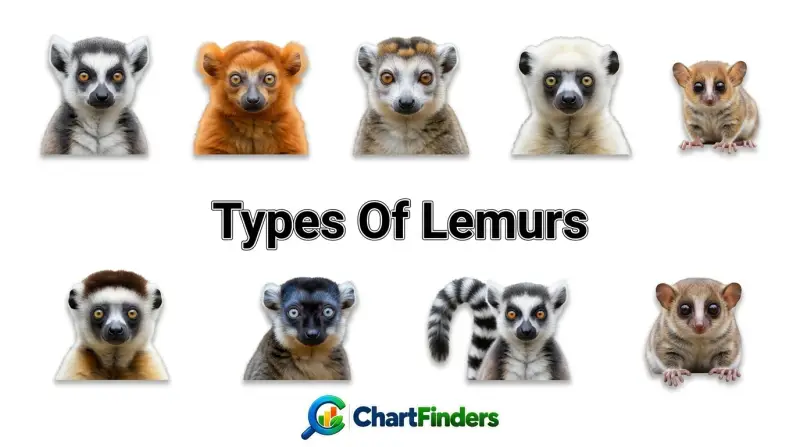
The island of Madagascar is a living laboratory of evolutionary biology, and at the center of its unique natural heritage are lemurs. Separated from the African mainland for tens of millions of years, Madagascar allowed these ancient primates to radiate into dozens of ecological niches typically filled by monkeys, apes, or squirrels elsewhere in the world. From nocturnal hunters creeping through dense rainforests to social, sun-worshipping troops traversing arid spiny deserts, understanding the diverse types of lemurs is essential for grasping global mammalian evolution.
However, this incredible diversity faces an unprecedented crisis. Habitat fragmentation, slash-and-burn agriculture (tavy), climate change, and bushmeat hunting have pushed these primates to the brink, making them some of the most threatened mammals on Earth. Conservation frameworks, such as those coordinated through the Lemur Conservation Network and international bodies, rely on precise taxonomic identification and ecological understanding to protect remaining populations. This comprehensive guide explores the taxonomy, physical adaptations, behavioral traits, conservation frameworks, and specific types of lemurs that inhabit Madagascar today.
Types Of Lemurs
- Endemic Isolation: All wild lemurs are native exclusively to Madagascar and nearby small islands, having evolved in total geographic isolation.
- Taxonomic Diversity: Science recognizes over 100 species and subspecies of lemurs, grouped into five major families spanning nocturnal, cathemeral, and diurnal habits.
- Extreme Size Variation: The spectrum ranges from the world’s smallest primate (Madame Berthe’s mouse lemur at ~30g) to large indris weighing up to 9 kilograms.
- Unique Primate Traits: Lemurs retain primitive primate features including a grooming claw, a dental comb formed by lower incisors and canines, and a moist rhinarium.
- Matriarchal Societies: In many lemur species—most notably ring-tailed lemurs—females hold dominant social status over males.
- Severe Conservation Crisis: Habitat destruction and hunting have made lemurs among the most endangered vertebrates on Earth, prompting extensive collaborative international conservation efforts.
To fully understand the diversity of lemurs, one must look beyond simple physical appearances and examine their taxonomic families, ecological niches, and evolutionary adaptations. The following sections break down the primary lineages of lemurs found across Madagascar’s varied habitats.
Taxonomic Classification and Major Families
Taxonomically, lemurs belong to the suborder Strepsirrhini, distinguishing them from the dry-nosed haplorhines (monkeys, apes, and tarsiers). Over the past few decades, genetic research has dramatically expanded the number of recognized species through the identification of cryptic species—animals that look identical or nearly identical physically but possess distinct genetic signatures.
Extant lemurs are divided into five primary families:
- Cheirogaleidae (Mouse, Dwarf, and Fork-marked Lemurs): Small, mostly nocturnal, solitary or pair-living, often capable of torpor or hibernation during dry seasons.
- Lemuridae (True Lemurs, Ring-tailed, Ruffed, Bamboo, and Gentle Lemurs): Medium-sized, highly social, primarily diurnal or cathemeral primates with complex social structures.
- Indriidae (Indri, Sifakas, and Woolly Lemurs): Large-to-medium-sized arboreal leapers possessing specialized vertical clinging and leaping anatomy.
- Daubentoniidae (Aye-Aye): A monotypic family featuring a highly specialized solitary nocturnal forager with rodent-like incisors and an elongated, skeletal middle finger.
- Lepilemuridae (Sportive Lemurs): Medium-sized nocturnal folivores that rely heavily on cecotrophy (re-ingesting digested food) to process high-fiber leaf diets.
| Family Name | Representative Species | Activity Pattern | Dietary Specialization | Average Weight Range |
|---|---|---|---|---|
| Cheirogaleidae | Gray Mouse Lemur, Greater Dwarf Lemur | Nocturnal | Omnivore (fruit, gum, insects, nectar) | 30g – 500g |
| Lemuridae | Ring-tailed Lemur, Red-bellied Lemur, Bamboo Lemur | Diurnal / Cathemeral | Frugivore / Folivore / Specialized graminivore | 1.5kg – 4.5kg |
| Indriidae | Indri, Verreaux’s Sifaka, Milne-Edwards’s Sifaka | Diurnal | Folivore / Frugivore (leaves, seeds, flowers) | 1.0kg – 9.0kg |
| Daubentoniidae | Aye-Aye | Nocturnal | Insectivore / Frugivore (grubs, nuts, fungi) | 2.0kg – 3.0kg |
| Lepilemuridae | Milne-Edwards’s Sportive Lemur | Nocturnal | Folivore (leaf specialist) | 0.7kg – 1.0kg |
The table above illustrates the broad biological divergence within the lemur radiation. While monkeys and apes often occupy overlapping niches across the tropics, lemurs have specialized drastically by body size, time of activity, and specific dietary adaptations to survive Madagascar’s seasonal extremes.
The Diurnal and Social Lemurs (Family Lemuridae)
The family Lemuridae contains the species most frequently recognized by the public, largely due to their diurnal habits and complex social structures. These animals live in cohesive groups ranging from tight family units to large multi-male, multi-female troops.
Ring-Tailed Lemur (Lemur catta)
Easily identified by its iconic black-and-white ringed tail and striking amber eyes, the ring-tailed lemur is perhaps the most famous ambassador of Madagascar’s wildlife. Spending a significant portion of its time onट्टी the ground compared to other lemurs, it inhabits the dry southern gallery forests and scrublands. Ring-tailed lemurs live in matrilineal troops averaging 13 to 15 individuals. Females rule the social hierarchy, maintaining priority access to food and resting sites. During breeding season, males engage in unique “stent scent wars,” lubricating their wrist spurs with pungent secretions from chest and genital glands to wave at competing rivals.
Ruffed Lemurs (Genus Varecia)
Comprising two primary species—the black-and-white ruffed lemur (Varecia variegata) and the red ruffed lemur (Varecia rubra)—these are the largest members of the Lemuridae family. Inhabiting the dense eastern rainforests, ruffed lemurs are heavily dependent on large, unfragmented canopies for fruit. Unlike most other primates, ruffed lemurs build complex nests in tree hollows for their altricial (helpless and un-furred at birth) offspring, parking multiple infants in a nursery nest while foraging.
Bamboo Lemurs (Genus Hapalemur and Prolemur)
Bamboo lemurs are evolutionary marvels capable of consuming bamboo species containing lethal doses of cyanide that would kill other mammals. The greater bamboo lemur (Prolemur simus), for instance, feeds heavily on hard bamboo pith, breaking through tough outer culms with specialized, robust dental architecture designed to detoxify and process heavy cyanide concentrations daily.
The Vertical Clingers and Leapers (Family Indriidae)
Indriids are specialized arboreal acrobats. Their anatomical design features elongated hind limbs and shortened arms, compelling them to move vertically through the forest by launching themselves powerfully from one tree trunk to another in an upright posture.
The Indri (Indri indri)
As the largest living lemur, the indri can weigh up to 9 kilograms. Found exclusively in the misty rainforests of eastern Madagascar, the indri is famous for lacking a long tail and for its haunting, whale-like vocalizations that echo across the canopy for kilometers to demarcate territory boundaries. Indris live in lifelong monogamous pairs, defying typical primate mating systems, and give birth to a single infant every two to three years.
Sifakas (Genus Propithecus)
Sifakas are arguably the most graceful leapers in the animal kingdom. When descending to the ground—an occasional necessity in open forest patches—they perform a comical, lateral bipedal dance, leaping sideways off their hind feet with arms raised overhead. Species such as Verreaux’s sifaka (Propithecus verreauxi) inhabit the arid spiny thickets of the south, where they cope with extreme drought by feeding on dry leaves, bark, and succulent plants.
The Nocturnal Specialists
Over half of all lemur species are nocturnal, hiding away in dense foliage or tree cavities during daylight hours. This nocturnal radiation allowed early lemurs to exploit feeding niches free from competition with diurnal predators.
Mouse Lemurs (Genus Microcebus)
Tiny, large-eyed, and remarkably agile, mouse lemurs are the smallest primates on earth. Madame Berthe’s mouse lemur weighs barely 30 grams. Despite their miniature size, mouse lemurs have complex social networks and utilize torpor—a state of lowered body temperature and metabolic rate—to survive cold or dry periods when food resources plummet.
The Aye-Aye (Daubentonia madagascariensis)
The aye-aye is undoubtedly one of the most eccentric creatures in the animal kingdom. Possessing continuously growing rodent-like incisors, large bat-like ears, and a specialized skeletal middle finger with a ball-and-socket joint, it fills the ecological niche of a woodpecker. The aye-aye taps on tree bark, listens for hollow chambers where wood-boring beetle larvae are tunneling, chews through the wood, and extracts the grubs with its elongated finger.
Geographic Distribution and Ecological Niches
Madagascar is divided into distinct climatic zones, and the distribution of lemurs mirrors this ecological patchwork. The eastern coast receives high levels of precipitation, supporting lush tropical rainforests where diverse communities of folivorous and frugivorous lemurs—such as indris, woolly lemurs, and ruffed lemurs—thrive.
Conversely, the western and southern regions experience extended, severe dry seasons. Here, the forests transition into deciduous dry forests and bizarre spiny deserts dominated by octopus trees (Alluaudia) and baobabs. Lemurs in these arid zones, including mouse lemurs, sportive lemurs, and sifakas, have evolved specialized physiological adaptations—such as fat storage in tails or seasonal torpor—to endure months without reliable fresh water or abundant fruit.
Comparative Analysis: Lemurs vs. Monkeys and Apes
To fully appreciate what makes lemurs unique, it is helpful to contrast them directly with higher primates (anthropoids, including monkeys and apes) which they superficially resemble in size and movement.
| Feature | Lemurs (Strepsirrhini) | Monkeys & Apes (Haplorhini) |
|---|---|---|
| Nose Structure | Moist, naked rhinarium (dog-like wet nose); enhanced olfactory reliance. | Dry, hairy nose bound to upper lip; reliance primarily on vision. |
| Dental Anatomy | Specialized lower incisors and canines form a protruding “toothcomb.” | No toothcomb; lower incisors and canines are independently vertical. |
| Grooming Adaptations | Specialized grooming claw on the second digit of each hind foot. | Lack a dedicated grooming claw; nails are standard across digits. |
| Social Dominance | Matriarchal dominance is common across many species (e.g., Lemuridae). | Male dominance is predominant in most monkey and ape societies. |
| Geographic Range | Strictly endemic to Madagascar and surrounding tiny offshore islands. | Widespread across tropical and subtropical regions of the Americas, Africa, and Asia. |
Conservation Status and Threats
The conservation outlook for lemurs is perilous. According to assessments by the International Union for Conservation of Nature (IUCN) Species Survival Commission, a vast majority of lemur species are classified as Endangered or Critically Endangered, making them among the most threatened mammal groups globally.
| Primary Threat | Driver | Impact on Lemur Populations |
|---|---|---|
| Habitat Loss | Slash-and-burn agriculture (tavy), illegal logging, charcoal production | Fragmentation of contiguous forests, isolating breeding populations and reducing carrying capacity. |
| Bushmeat Hunting | Poverty, lack of enforcement, commercial bushmeat trade | Direct removal of individuals, heavily impacting large-bodied species like indris and sifakas. |
| Live Pet Trade | Local capture for tourism or domestic pets | Removal from wild breeding pools; captured animals rarely survive due to specialized dietary needs. |
| Climate Change | Unpredictable rainfall patterns, prolonged droughts | Disruption of flowering and fruiting cycles, stressing food supplies in fragile western and southern ecosystems. |
Grassroots conservation organizations, international research institutions, and community-managed protected areas are working tirelessly to reverse these trends. Networks such as the Lemur Conservation Network unify dozens of conservation groups to elevate awareness, fund local employment, and support sustainable ecotourism. Additionally, mindful consumer choices—such as supporting certified sustainable agriculture (like Bird Friendly coffee) and avoiding products sourced from deforested habitats—play an indirect yet in safeguarding Madagascar’s remaining wilderness.
Frequently Asked Questions
Are all lemurs native to Madagascar?
Yes. Every single wild lemur species is endemic to Madagascar and a few surrounding minor islands like Nosy Be and Île Sainte-Marie. They do not naturally occur anywhere else on the planet.
How do lemurs differ from monkeys?
Lemurs are strepsirrhine primates, an older evolutionary lineage than higher monkeys and apes (haplorhines). Distinct physical differences include a moist, dog-like nose (rhinarium), a specialized dental comb used for grooming and feeding, and a grooming claw on the second digit of each hind foot.
Why are so many lemurs endangered?
The primary drivers of extinction risk are massive habitat destruction through slash-and-burn agriculture (tavy) and logging, combined with historical and ongoing bushmeat hunting. Climate change-induced droughts in southern Madagascar further exacerbate stress on vulnerable populations.
What is the largest living lemur?
The indri (Indri indri) is the largest living lemur, reaching weights of up to 9 kilograms (20 pounds) and standing nearly a meter tall. (Historically, extinct giant lemurs like Archaeoindris weighed over 160 kilograms, comparable to a female gorilla).
Can lemurs be kept as pets?
No. Keeping lemurs as pets is illegal under Malagasy and international law (CITES Appendix I). , lemurs have complex social, dietary, and environmental requirements that cannot be met in a domestic household setting, and removing them from the wild severely damages endangered breeding pools.
Conclusion
The sheer diversity of lemurs represents one of evolution’s most remarkable chapters. From the tiny nocturnal mouse lemurs scurrying through thorny brush to the resonant calls of the majestic indri echoing across misty eastern canopies, these primates embody the irreplaceable natural heritage of Madagascar. Ensuring their survival requires unwavering international cooperation, rigorous field research, and active support for local conservation initiatives. Protecting lemurs not only saves iconic species from extinction, but also preserves the structural integrity of Madagascar’s delicate and interconnected tropical ecosystems.