
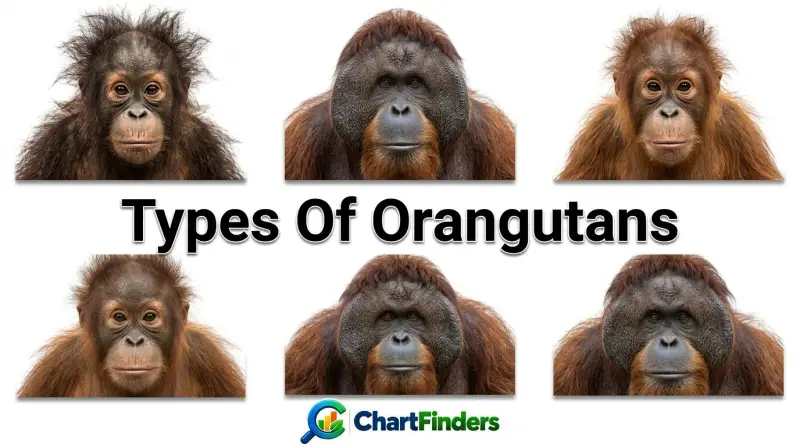
The family of great apes includes some of humanity’s closest living relatives, and among them, the genus Pongo represents the only strictly arboreal (tree-dwelling) great ape. For decades, biologists categorized these russet-haired forest dwellers into a single species or, at most, two distinct subspecies. However, advances in genetic sequencing, behavioral ecology, and cranial morphometrics have revolutionized our taxonomic understanding. Today, recognizing three distinct species is vital not only for academic accuracy but also for shaping targeted conservation initiatives, captive breeding protocols, and anti-poaching enforcement across Indonesia and Malaysia.
Understanding the different types of orangutans requires examining more than just superficial physical traits. Each species has evolved in isolation across varying ecological landscapes, resulting in unique adaptations in social structure, tool use, dietary specialization, and vocalization. , the discovery of the Tapanuli orangutan as recently as 2017 underscores how much remains to be learned about these critically endangered primates and highlights the fragility of remaining rainforest ecosystems. This comprehensive guide explores the taxonomy, physical characteristics, behavioral differences, conservation statuses, and ecological roles of the three recognized types of orangutans.
Types Of Orangutans: Taxonomy, Characteristics, And Conservation
- Three Recognized Species: Science officially recognizes the Bornean, Sumatran, and Tapanuli orangutans as distinct species within the genus Pongo.
- Island Speciation: Geological and climatic changes over millennia separated ancestral populations onto the islands of Borneo and Sumatra, driving divergent evolution.
- The Tapanuli Discovery: Described in 2017, the Tapanuli orangutan of South Sumatra (Batang Toru) is the rarest great ape species on Earth, numbering fewer than 800 individuals.
- Critical Extinction Risk: All three species face severe threats, with Sumatran and Tapanuli populations classified as Critically Endangered by the IUCN.
- Behavioral Divergence: While Sumatran orangutans exhibit frequent tool use and higher sociability, Bornean populations spend more time traveling on the forest floor and face distinct ecological pressures.
- Conservation Priority: Protecting remaining primary rainforests, preventing palm oil encroachment, and connecting fragmented habitats are essential for preventing the extinction of any single orangutan lineage.
To fully grasp the diversity within the genus Pongo, researchers evaluate a combination of genetic markers, morphological traits, geographical barriers, and behavioral ecology. The term “orangutan” originates from the Malay and Indonesian words orang (person) and hutan (forest), translating literally to “person of the forest.” Across all three types, these intelligent primates share high cognitive capacities, incredibly slow life histories (females give birth only once every six to eight years), and deep dependency on rich tropical rainforest canopies.
| Species Name | Scientific Name | Geographic Range | Estimated Population | IUCN Status | Key Identifying Feature |
|---|---|---|---|---|---|
| Bornean Orangutan | Pongo pygmaeus | Borneo (Indonesian Kalimantan and Malaysian states of Sabah and Sarawak) | ~55,000 – 100,000 | Critically Endangered | Darker, mahogany-brown coat; broader face and larger cheek flanges in dominant males. |
| Sumatran Orangutan | Pongo abelii | Northern Sumatra (primarily Aceh and North Sumatra provinces) | ~13,400 – 14,500 | Critically Endangered | Lighter, reddish-gold coat; longer facial hair/beard; more arboreal lifestyle. |
| Tapanuli Orangutan | Pongo tapanuliensis | Batang Toru ecosystems, North Sumatra | < 800 | Critically Endangered | Frizzy hair, distinct skull shape, longer and higher-pitched male long calls. |
The table above outlines the core taxonomic divisions. Analyzing these parameters reveals how geographic isolation shapes physical and behavioral diversity. Below, we examine each species in meticulous detail, addressing their unique evolutionary histories, physiological traits, and ecological environments.
1. Bornean Orangutan (Pongo pygmaeus)
The Bornean orangutan is the most numerous of the three species, yet its populations have experienced precipitous declines over the last century. Inhabiting the vast island of Borneo—which is divided among Indonesia, Malaysia, and the tiny nation of Brunei—these apes display considerable phenotypic variation across their range, leading scientists to previously divide them into three subspecies: P. p. pygmaeus (northwest), P. p. morio (east and southeast), and P. p. wurmbii (central and southwest).
Morphology and Physical Traits
Bornean orangutans generally possess a robust, stocky build compared to their Sumatran cousins. Their pelage (hair) is typically darker, tending toward a rich mahogany, chestnut, or dark brown shade. Mature adult males develop exceptionally wide cheek flanges (fatty pads on the sides of the face) and throat sacs used for resonating booming “long calls” across the forest canopy. They also tend to have larger, more pronounced beard-like hair patterns, though hair length is generally shorter than that of Sumatran individuals.
Behavior and Ecology
Because Borneo’s dipterocarp forests experience irregular, mast-fruiting events where hundreds of tree species fruit simultaneously followed by long periods of food scarcity, Bornean orangutans have evolved distinct survival strategies. They are more terrestrial than Sumatran orangutans, occasionally descending to the forest floor to travel or feed on fallen fruits and termites. This terrestrial behavior is partly an adaptation to lower predator pressure on Borneo (historically lacking the Sumatran tiger, though clouded leopards and reticulated pythons are present) and partly a strategy to conserve energy during times of extreme food scarcity.
2. Sumatran Orangutan (Pongo abelii)
Restricted entirely to the northern tip of the Indonesian island of Sumatra—with the vast majority residing in the Leuser Ecosystem—the Sumatran orangutan is rarer, more slender, and ecologically distinct from the Bornean species.
Morphology and Physical Traits
Sumatran orangutans are noticeably more gracile and lighter in body weight. Their coats feature a distinctly brighter, reddish-gold or orange hue with significantly longer, silkier hair. Adult males still develop cheek flanges, but these pads are generally covered in fine, downy white hair and appear flatter and angled more forward compared to the broader, swept-back flanges of Bornean males. Their faces are longer and more oval-shaped.
Behavior and Ecology
Sumatran orangutans spend almost their entire lives in the upper forest canopy. This extreme arboreality is an evolutionary response to the presence of apex predators on Sumatra, particularly the Sumatran tiger (Panthera tigris sumatrae). Descending to the ground is extremely rare and dangerous for Sumatran individuals.
Socially, Sumatran orangutans are more gregarious than their Bornean counterparts. Because Sumatra’s fruit supply is more reliable and continuous due to volcanic soils and stable precipitation patterns, Sumatran orangutans experience fewer energetic bottlenecks. Consequently, they gather in larger social groups, share feeding trees peacefully, and exhibit sophisticated cultural traditions, including extensive tool use. Sumatran individuals frequently manufacture and utilize stick tools to extract seeds from hard-shelled fruits and poke into tree cavities for honey and insects.
3. Tapanuli Orangutan (Pongo tapanuliensis)
Formally described as a distinct species in late 2017 after multidisciplinary genomic, morphological, and behavioral analyses, the Tapanuli orangutan (Pongo tapanuliensis) represents a monumental milestone in modern mammalogy. Confined to the Batang Toru forest ecosystems in South Tapanuli, North Sumatra, this population was isolated from other orangutans following ancient geological shifts and climatic events.
Distinct Genetic and Physical Characteristics
Genomic sequencing revealed that the Tapanuli orangutan split from the Sumatran orangutan more than 3 million years ago, making its lineage older than the split between humans and chimpanzees. Morphologically, Tapanuli orangutans share traits with both northern Sumatran and Bornean populations. They have cinnamon-colored, frizzier hair, a slender body frame similar to Sumatran apes, but skull and jaw structures that are markedly different and more robust, reflecting an adaptation to tough, fallback vegetation.
Vocalizations and Behavior
One of the most remarkable discoveries regarding Pongo tapanuliensis involves the male long call. The long call of a Tapanuli male features a distinctive high-pitched frequency and rapid series of pulses that differentiates it immediately from the resonant roars of Bornean males and the lower-pitched calls of northern Sumatran males. Ecologically, they depend heavily on montane forest habitats up to 1,500 meters above sea level, feeding on specialized plant species including lianas, soft fruits, and even pine cones.
Comparative Analysis: Key Differences Across Orangutan Species
To understand how these three species diverged, researchers examine their physiological adaptations, social structures, and responses to environmental pressures. While all orangutans share an overarching tree-dwelling lifestyle and high intelligence, their specific traits reflect millions of years of geographic isolation and evolutionary tailoring.
| Comparative Trait | Bornean Orangutan | Sumatran Orangutan | Tapanuli Orangutan |
|---|---|---|---|
| Coat Color & Texture | Dark mahogany to brown; coarse hair. | Bright reddish-gold; long and silky. | Cinnamon-colored; distinctly frizzy/kinky. |
| Male Cheek Flanges | Wide, prominent, swept-back, hairless pads. | Narrower, flatter, covered in fine white hair. | Resembling Sumatran males, prominent moustache/beard. |
| Terrestrial Activity | Moderate (regularly descends to ground). | Extremely rare (avoids ground predators). | Intermediate/Arboreal-focused, montane specialist. |
| Social Tolerance | Solitary to semi-solitary; lower food consistency. | More gregarious; frequently forms temporary feeding aggregations. | Semi-solitary, living in high-density forest patches. |
| Tool Use Frequency | Observed in some wild populations, but less prevalent. | Extensively documented; complex stick and leaf tools. | Observed using tools for extractive foraging. |
| Divergence Time | Split from ancestral stock ~400,000 years ago. | Split from ancestral stock ~1 million years ago. | Diverged from Sumatran lineage ~3.4 million years ago. |
As illustrated in the comparison table, evolutionary pressures on different islands produced divergent physical and behavioral traits. For instance, the presence of ground predators on Sumatra strictly curtailed ground travel, whereas Borneo’s predator-poor environment allowed orangutans to exploit terrestrial food sources during lean fruiting seasons.
The Ecological Role of Orangutans: Gardeners of the Forest
All types of orangutans play a critical, irreplaceable role in maintaining the health and biodiversity of Southeast Asian tropical rainforests. Often referred to as “gardeners of the forest,” orangutans are premier seed dispersers.
Seed Dispersal Mechanisms
Orangutans consume hundreds of species of fruits, ranging from figs and durians to wild rambutans and mangosteens. Because they ingest whole fruits containing large seeds that many smaller animals cannot swallow or digest, orangutans transport these seeds over considerable distances across their home ranges.
- Endozoochory: Seeds that pass through the digestive tract unharmed are deposited away from the parent tree via feces, fertilized and ready to germinate.
- Synzoochory: Large-seeded fruits are often stripped of pulp and dropped directly beneath canopy gaps, giving sprouting seedlings access to vital sunlight.
Without orangutans, the regeneration cycle of primary dipterocarp and swamp forests collapses, altering forest composition and reducing overall carbon storage capacity. Their presence is a direct bio-indicator of a healthy, functioning ecosystem.
Threats Facing All Types of Orangutans
Despite their ecological importance, all three species of orangutans share a devastating trajectory toward extinction driven primarily by anthropogenic (human-caused) pressures. Understanding these threats is critical for evaluating conservation strategies.
1. Deforestation and Habitat Fragmentation
The single greatest threat to orangutans is the rapid destruction of tropical rainforests. Industrial-scale conversion of land for monoculture plantations—most notably palm oil (Elaeis guineensis) and pulpwood—has decimated millions of hectares of prime orangutan habitat. Logging roads built for timber extraction open previously inaccessible primary forests to poachers, miners, and further agricultural encroachment.
2. The Palm Oil Crisis
Palm oil is found in approximately half of all packaged supermarket items, ranging from cosmetics and processed foods to biofuels. The booming global demand for cheap vegetable oil has incentivized widespread slash-and-burn clearing in Indonesia and Malaysia. These uncontrolled fires frequently burn out of control, destroying ancient peat-swamp forests, releasing massive amounts of carbon dioxide into the atmosphere, and trapping or killing slow-moving orangutans.
3. Illegal Wildlife Trade and Poaching
Although legally protected under national and international laws (CITES Appendix I), orangutans face severe pressure from the illegal pet trade. Adult females are frequently shot and killed for their infants, which are sold into captivity. Infant orangutans require years of maternal care to survive; thus, capturing one usually results in the death of the mother and psychological trauma for the young ape.
Additionally, in certain remote agricultural regions, orangutans are hunted for bushmeat or killed as agricultural pests when they enter oil palm plantations to feed on young shoots and fruits.
Conservation Strategies and Management Frameworks
Saving the remaining types of orangutans requires a approach combining field protection, habitat restoration, captive breeding, ecotourism, and international policy reform.
Protected Areas and National Parks
Establishing and rigorously patrolling national parks is the of orangutan conservation. Key sanctuaries include:
- Tanjung Puting National Park (Borneo, Indonesia): Famous for its peat swamp forests and pioneering rehabilitation work by Dr. Birutė Galdikas.
- Gunung Leuser National Park (Sumatra, Indonesia): A UNESCO World Heritage site representing the heartland of Sumatran orangutan conservation.
- Batang Toru Ecosystem (Sumatra, Indonesia): The sole global habitat of the Tapanuli orangutan, currently threatened by proposed hydroelectric dam developments and mining concessions.
Wildlife Rehabilitation Centers
Organizations such as the Orangutan Land Trust, the Borneo Orangutan Survival (BOS) Foundation, and the Sumatran Orangutan Conservation Programme (SOCP) operate rescue centers. These facilities intake displaced, injured, or illegally held orphan orangutans, provide veterinary care, and run rigorous forest school programs to teach juveniles the essential survival skills—such as nest building, foraging, and predator avoidance—required for eventual release back into protected wild reserves.
Sustainable Certification and Policy
Initiatives like the Roundtable on Sustainable Palm Oil (RSPO) attempt to enforce zero-deforestation policies within the agricultural sector. However, consumer awareness, corporate supply-chain transparency, and strict governmental enforcement of environmental laws remain critical for holding destructive industries accountable.
Frequently Asked Questions About Types Of Orangutans
How many species of orangutans exist today?
Science recognizes three distinct species: the Bornean orangutan (Pongo pygmaeus), the Sumatran orangutan (Pongo abelii), and the Tapanuli orangutan (Pongo tapanuliensis). Each species occupies separate island ranges in Southeast Asia and displays unique genetic, morphological, and behavioral traits.
What is the rarest type of orangutan?
The Tapanuli orangutan (Pongo tapanuliensis) is the rarest great ape species in the world. Discovered and described as a distinct species in 2017, its total population is estimated to be fewer than 800 individuals confined to the Batang Toru forest in North Sumatra.
Can Bornean and Sumatran orangutans interbreed?
While they are genetically similar enough to produce viable offspring in captivity, they represent distinct evolutionary lineages that separated hundreds of thousands of years ago. In the wild, their geographic separation (living on different islands) prevents natural hybridization. Conservation breeding programs strictly avoid hybridizing different species to preserve pure genetic lines.
Why do Sumatran orangutans use tools more frequently than Bornean orangutans?
Sumatran orangutans face more reliable and consistent fruit availability, allowing them to live in closer social groups where social learning and cultural transmission flourish. This social stability enables younger generations to observe, master, and pass down complex extractive tool-use techniques, such as using sticks to harvest seeds from hard-shelled fruits and extracting insects.
Are all orangutans endangered?
Yes. All three recognized species of orangutans are classified by the International Union for Conservation of Nature (IUCN) as Critically Endangered. Their populations continue to decline due to widespread deforestation, illegal palm oil expansion, poaching, and the illegal pet trade.
Conclusion
The diversity within the genus Pongo—encompassing the robust Bornean orangutan, the agile and social Sumatran orangutan, and the newly discovered, highly vulnerable Tapanuli orangutan—highlights the rich evolutionary of Southeast Asia’s rainforests. These intelligent arboreal apes are not merely charismatic symbols of wilderness; they are keystone species whose survival dictates the health of tropical ecosystems that sequester carbon and regulate regional climates.
Protecting the remaining types of orangutans requires urgent, coordinated global action. By supporting sustainable agriculture, enforcing strict anti-poaching and anti-trafficking laws, defending protected primary rainforest habitats like the Leuser and Batang Toru ecosystems, and funding grassroots rehabilitation efforts, the international community can ensure that these magnificent “persons of the forest” endure for generations to come.