
Dietary fiber often flies under the radar when people discuss macronutrients and micronutrients, yet it remains one of the most powerful dietary components for long-term health. Found exclusively in plant foods, fiber escapes enzymatic digestion in the human small intestine, passing largely intact into the colon where it performs critical metabolic and mechanical duties. Despite its profound impact on metabolic health, cardiovascular function, and gastrointestinal motility, most adults fall significantly short of daily intake targets. Understanding where fiber lives, how different types behave in the body, and how to track daily consumption using a structured dietary reference can transform nutritional habits.
Navigating the sheer volume of nutritional data available can be overwhelming, especially when sorting through varying measurements, serving sizes, and processing levels. This guide explores the mechanics of dietary fiber, breaks down the categories of high-fiber foods, provides a detailed master data reference, and offers actionable strategies for integrating fiber safely and effectively into daily life.
Explore our detailed breakdown on Seafood Cholesterol Chart: Complete Reference Chart.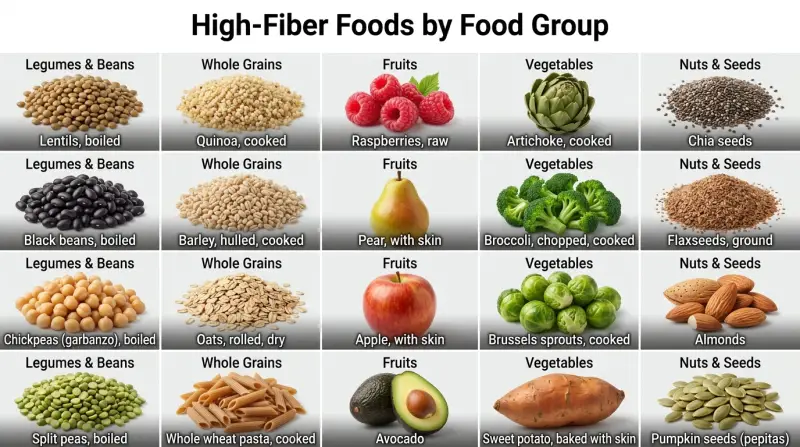
High Fiber Food Chart: Comprehensive Nutritional Reference
- Fiber is exclusively found in plant-based foods, including whole grains, legumes, fruits, vegetables, nuts, and seeds.
- The recommended daily intake ranges from 25 to 35 grams for healthy adults, though individual needs vary based on age, sex, and total energy intake.
- Dietary fiber is split into two primary functional categories: soluble (which dissolves in water to form a gel) and insoluble (which adds bulk and speeds transit time).
- Gradual increases in fiber intake, paired with adequate fluid consumption, prevent common gastrointestinal side effects such as cramping and bloating.
- Processing can drastically alter fiber content; whole, intact plant foods consistently retain more fiber than refined or heavily juiced equivalents.
- Regular tracking via a structured food chart helps bridge the gap between typical consumption and clinical recommendations.
To effectively manage daily intake, a structured reference tool is essential. The following high fiber food chart outlines the approximate dietary fiber content across major plant-based food groups per standard serving size. These values represent natural, whole, or minimally processed versions of each item.
| Food Category | Food Item | Standard Serving Size | Approximate Fiber Content (Grams) |
|---|---|---|---|
| Legumes & Beans | Lentils, boiled | 1 cup | 15.5 g |
| Legumes & Beans | Black beans, boiled | 1 cup | 15.0 g |
| Legumes & Beans | Chickpeas (garbanzo), boiled | 1 cup | 12.5 g |
| Legumes & Beans | Split peas, boiled | 1 cup | 16.3 g |
| Whole Grains | Quinoa, cooked | 1 cup | 5.2 g |
| Whole Grains | Barley, hulled, cooked | 1 cup | 6.0 g |
| Whole Grains | Oats, rolled, dry | 1 cup (cooked) | 4.0 g |
| Whole Grains | Whole wheat pasta, cooked | 1 cup | 6.3 g |
| Fruits | Raspberries, raw | 1 cup | 8.0 g |
| Fruits | Pear, with skin | 1 medium (approx. 178g) | 5.5 g |
| Fruits | Apple, with skin | 1 medium (approx. 182g) | 4.4 g |
| Fruits | Avocado | 1 medium (approx. 200g) | 10.0 g |
| Vegetables | Artichoke, cooked | 1 medium | 6.9 g |
| Vegetables | Broccoli, chopped, cooked | 1 cup | 5.1 g |
| Vegetables | Brussels sprouts, cooked | 1 cup | 4.1 g |
| Vegetables | Sweet potato, baked with skin | 1 medium (approx. 114g) | 3.8 g |
| Nuts & Seeds | Chia seeds | 1 ounce (28g) | 9.8 g |
| Nuts & Seeds | Flaxseeds, ground | 2 tablespoons | 3.8 g |
| Nuts & Seeds | Almonds | 1 ounce (28g) | 3.5 g |
| Nuts & Seeds | Pumpkin seeds (pepitas) | 1 ounce (28g) | 5.2 g |
When reviewing the data above, observe how structural differences dictate fiber density. Concentrated seeds, dense legumes, and skin-on whole fruits consistently outpace refined alternatives. Utilizing this breakdown allows for precise meal planning and ensures that daily dietary goals are met without relying on synthetic supplementation.
Understanding Dietary Fiber: Soluble vs. Insoluble
Dietary fiber is not a monolithic substance; it encompasses a diverse group of plant carbohydrates that resist human digestive enzymes. Nutrition science divides fiber into two main classifications based on water solubility, each serving distinct physiological roles:
- Soluble Fiber: This type dissolves in water to form a viscous, gel-like substance in the gastrointestinal tract. It slows digestion, which helps stabilize blood glucose spikes after eating and binds to cholesterol molecules to assist in their excretion. Rich sources include oats, chia seeds, beans, lentils, Brussels sprouts, and certain fruits like apples and oranges.
- Insoluble Fiber: This type does not dissolve in water; instead, it passes through the digestive tract largely intact. Insoluble fiber adds bulk to stool and accelerates the transit of food through the intestines, preventing constipation and supporting overall bowel regularity. Rich sources include whole wheat flour, wheat bran, nuts, seeds, and the skins of vegetables and fruits.
Most whole plant foods contain a combination of both soluble and insoluble fibers, which is why consuming a diverse array of plants is superior to isolating single fibers in supplements.
Health Benefits of Meeting Daily Fiber Targets
Consuming 25 to 35 grams of fiber daily triggers numerous protective physiological mechanisms throughout the body. Far beyond preventing occasional digestive sluggishness, adequate fiber intake influences metabolic, cardiovascular, and immunological health.
Metabolic Regulation and Blood Sugar Control
Soluble viscous fibers slow down the rate at which the stomach empties and delay the absorption of glucose in the small intestine. This blunts postprandial glycemic responses, preventing the sharp insulin spikes associated with refined carbohydrate consumption. Over time, consistent high-fiber intake improves insulin sensitivity, reducing the risk of type 2 diabetes.
Cardiovascular Protection
Fiber actively supports heart health through multiple pathways. In the gut, soluble fiber binds to bile acids—which are made from cholesterol—and facilitates their removal through excretion. To replace these lost bile acids, the liver draws cholesterol from the bloodstream, naturally lowering circulating LDL (low-density lipoprotein) cholesterol levels.
Microbiome Nourishment and Gut Integrity
The human colon is home to trillions of microorganisms that rely on fermentable dietary fibers as their primary fuel source. When beneficial bacteria ferment these fibers, they produce short-chain fatty acids (SCFAs) such as acetate, propionate, and butyrate. Butyrate serves as the primary energy source for the cells lining the colon, reinforcing the intestinal barrier, reducing systemic inflammation, and supporting immune regulation.
Category Breakdown of High-Fiber Foods
To build a balanced plate, examining individual food categories helps reveal where the highest concentrations of fiber reside and how to incorporate them into routine meals.
Legumes, Beans, and Lentils
Legumes are the undisputed heavyweights of the fiber world. A single cooked cup of lentils or black beans delivers roughly half of an adult’s entire daily recommended fiber requirement. Beyond fiber, they provide a dense matrix of plant protein, complex carbohydrates, iron, folate, and potassium. Incorporating lentils into soups, tossing chickpeas into salads, or mashing black beans into patties offers an efficient way to elevate daily fiber totals.
Whole Grains
Whole grains retain all three original parts of the grain kernel: the bran, germ, and endosperm. Refining strips away the nutrient- and fiber-dense bran and germ, leaving only the starchy endosperm. Swapping refined white bread, white rice, and conventional pasta for whole oats, hulled barley, quinoa, bulgur, and 100% whole-wheat products drastically increases daily fiber intake while delivering essential B vitamins and minerals.
Fruits
Fruits offer a sweet, hydrating vehicle for fiber, provided they are consumed in whole, intact forms rather than juiced. Juicing strips away nearly all insoluble fiber, leaving concentrated liquid fructose that can spike blood sugar rapidly. Berries lead the fruit category, with raspberries and blackberries offering over 7 grams of fiber per cup due to their countless edible seeds. Pears, apples, and avocados—which is botanically a single-seeded berry—also rank exceptionally high, especially when consumed with their skins intact.
Vegetables
Non-starchy and starchy vegetables form the backbone of a high-fiber dietary pattern. Cruciferous vegetables like broccoli, Brussels sprouts, and cauliflower, along with root vegetables like sweet potatoes and carrots, contribute substantial fiber. Artichokes stand out as a stellar vegetable source, offering nearly 7 grams of fiber in a single medium-sized cooked head.
Nuts and Seeds
Though dense in calories and healthy fats, nuts and seeds pack an extraordinary amount of fiber into compact serving sizes. Chia seeds and flaxseeds are particularly potent; just two tablespoons of chia seeds provide nearly 10 grams of fiber. Sprinkling seeds over yogurt, oatmeal, or salads provides an effortless daily fiber boost.
Comparison of Daily Fiber Sources
| Food Category | Average Fiber Density per Serving | Key Advantage | Primary Functional Fiber Type |
|---|---|---|---|
| Legumes & Beans | Very High (12–16g / cup) | Exceptional protein and mineral synergy | Mix of soluble and insoluble |
| Whole Grains | Moderate to High (4–7g / cup) | Readily integrated into daily meals | Predominantly insoluble (bran) |
| Fruits | Moderate (3–8g / serving) | High hydration and antioxidant content | Soluble (pectin) and insoluble |
| Vegetables | Moderate (3–7g / serving) | Low calorie density, high volume | Insoluble (cellulose) and fermentable |
| Nuts & Seeds | High per ounce (3–10g / oz) | Compact size, healthy fats | Insoluble seed coats and mucilage |
Practical Strategies for Increasing Fiber Safely
Transitioning from a typical Western diet—which often averages around 10 to 15 grams of fiber daily—to a target of 30 grams requires a strategic, gradual approach. Rushing this process can lead to abdominal discomfort, cramping, gas, and bloating.
- Go Slow and Steady: Increase your daily fiber intake by roughly 5 grams every week to allow your gastrointestinal microbiome time to adapt.
- Hydrate Diligently: Fiber absorbs water as it travels through the digestive tract. Without adequate fluid intake, high-fiber diets can paradoxically cause constipation or impaction. Pair every increase in fiber with an increase in water consumption.
- Prioritize Food Over Supplements: While fiber supplements can fill occasional gaps, whole foods provide a synergistic matrix of vitamins, minerals, antioxidants, and phytochemicals that isolated powders cannot replicate.
- Read Nutrition Labels Carefully: Look for products where whole grains are listed as the primary ingredient and check the grams of dietary fiber per serving. Aim for bread and cereal options that provide at least 3 to 5 grams of fiber per serving.
Common Pitfalls to Avoid
Even with the best intentions, individuals adopting a high-fiber lifestyle frequently encounter avoidable hurdles:
- Relying on Fiber-Fortified Processed Foods: Many commercial snack bars, cereals, and white breads add isolated synthetic fibers like inulin or polydextrose to boost label claims. These processed additives do not confer the same metabolic benefits as intact whole-food fibers and can trigger severe gas and digestive distress in sensitive individuals.
- Peeling Fruits and Vegetables: Much of a fruit or vegetable’s insoluble fiber resides in its skin. Peeling apples, cucumbers, pears, and potatoes significantly reduces their overall fiber density. Thoroughly washing produce allows you to consume the nutrient-dense skins safely.
- Sudden Dietary Overhauls: Jumping from 15 grams of fiber to 35 grams overnight overwhelms the digestive tract. Incremental adjustment is the single most important factor for long-term adherence.
Frequently Asked Questions
Health authorities generally recommend that adult women consume 25 grams of fiber daily, while adult men should aim for 31 to 38 grams daily, scaling down slightly for adults over age 50 as total energy requirements decrease. Meeting or slightly exceeding these ranges supports optimal metabolic and digestive health.
Yes. Consuming excessive amounts of fiber—typically above 50 to 60 grams per day—can cause severe abdominal cramping, bloating, gas, and intestinal blockage if fluid intake is insufficient. Excess fiber can also bind to certain essential minerals like iron, zinc, and calcium, temporarily impairing their absorption in the digestive tract.
The total fiber content in a vegetable remains largely identical whether it is cooked or raw. Cooking softens the plant cell walls and reduces water volume, meaning you can often fit a larger physical volume of cooked vegetables onto a plate, effectively increasing your per-serving intake.
Fiber supplements can help bridge nutritional gaps and support specific health goals, but they lack the complex matrix of antioxidants, vitamins, minerals, and diverse fiber types found in whole plant foods. Whole foods should always form the foundation of a high-fiber diet.
Gas is a normal byproduct of bacterial fermentation in the colon. When you suddenly introduce more fiber to your gut, your microbiome ferments the new substrates rapidly, producing excess gas. As your gut microbiome adapts and diversifies over a few weeks, gas production typically normalizes.
Conclusion
Mastering a high-fiber lifestyle is one of the most impactful, evidence-based steps you can take to safeguard your long-term health. By replacing refined, processed foods with nutrient-dense legumes, whole grains, fruits, vegetables, nuts, and seeds, you nourish your microbiome, stabilize your metabolism, and protect your cardiovascular system. Use the high fiber food chart as a practical reference for daily meal planning, increase your intake gradually while prioritizing hydration, and enjoy the profound foundational benefits of a plant-rich diet.