
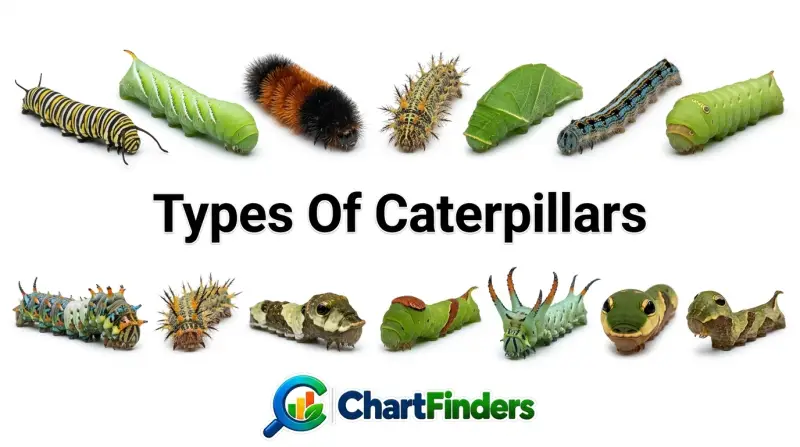
Quick Answer: Caterpillars are the larval stage of butterflies and moths (Order Lepidoptera). They vary immensely in appearance, spanning from smooth, camouflaged green loopers to brightly colored, venomous, or stinging species like the saddleback caterpillar, and destructive agricultural pests like the eastern tent caterpillar, fall webworm, and oak leaftier. They act primarily as consuming engines, transforming completely during the pupal stage into winged adults.
The garden floor, forest canopy, and ornamental shrubbery conceal one of nature’s most dynamic transformations. While people often view these crawling creatures with simple curiosity or garden-variety frustration, they represent a vital link in terrestrial ecosystems. From the monarch caterpillar feeding exclusively on milkweed to defoliating forest dwellers like the forest tent moth and oak leaftier, the sheer diversity of larval forms is staggering. Understanding these organisms requires looking beyond a generic label to examine their unique adaptations, defense mechanisms, feeding habits, and eventual emergence into adult butterflies and moths.
This comprehensive guide explores the taxonomy, identification, and ecology of various caterpillar groups. You will learn how to distinguish between beneficial pollinators in training, aggressive defoliators, and hazardous species equipped with stinging spines, giving you the practical knowledge needed to navigate encounters in nature and around the home.
Types Of Caterpillars
- Caterpillars are exclusively the larval stage of insects belonging to the order Lepidoptera (butterflies and moths).
- Defensive strategies vary widely, ranging from cryptic coloration and mimicry to toxic hairs and venomous stinging spines (urticating hairs).
- Timing matters significantly for identification; species like the oak leaftier hatch as early as mid-spring, while others emerge later in summer.
- Agricultural and forestry pests—such as eastern tent caterpillars, fall webworms, and oak leaftiers—can cause extensive defoliation if left unchecked.
- Positive ecological roles include serving as primary protein sources for nesting birds and acting as specialized herbivores that shape plant communities.
Taxonomic Foundations: Butterflies vs. Moths
Every caterpillar belongs to the insect order Lepidoptera, which is divided roughly into butterflies (Rhopalocera) and moths (Heterocera). While layman terms often lump them together, their larval stages exhibit distinct physiological and behavioral differences. Butterfly caterpillars typically form a bare chrysalis attached to a surface by a silk pad, whereas moth caterpillars frequently spin a protective silken cocoon or burrow underground to pupate.
Morphologically, caterpillars possess a chitinous head capsule with powerful mandibles for chewing plant tissue, three pairs of true thoracic legs, and up to five pairs of fleshy abdominal prolegs equipped with tiny hooks called crochets. These crochets allow them to grip vertical stems and leaf surfaces securely. Counting these prolegs and observing their movement patterns—such as the looping motion of inchworms—remains a of taxonomic identification.
Common Garden and Forest Caterpillar Groups
The sheer number of species makes classification challenging, but field naturalists and entomologists generally group caterpillars by their life history, host plant preferences, and ecological impact. Below is a detailed breakdown of major caterpillar categories encountered in North American landscapes.
| Caterpillar Group | Primary Host Plants | Distinctive Features | Ecological or Pest Status |
|---|---|---|---|
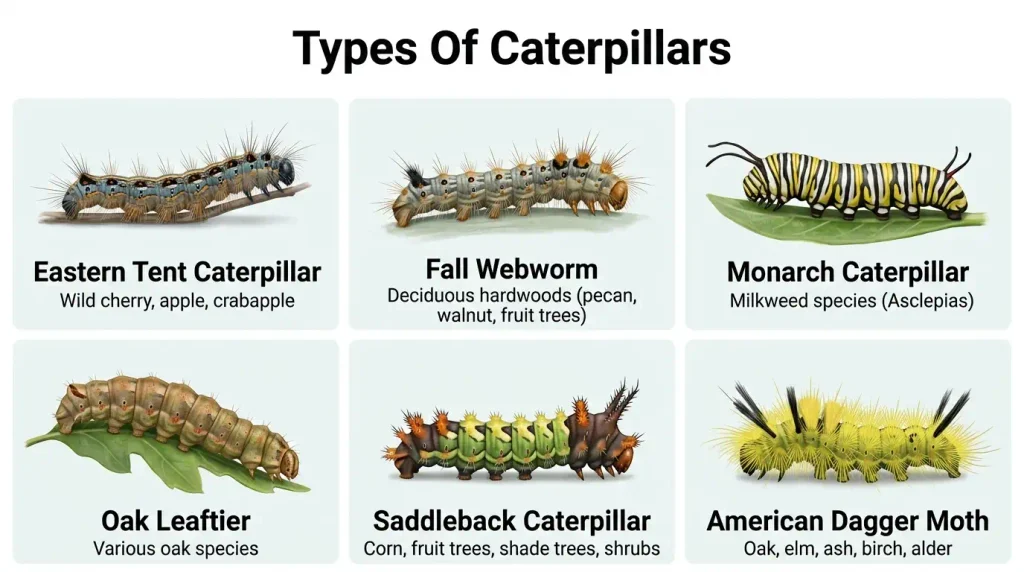
| Eastern Tent Caterpillar | Wild cherry, apple, crabapple | Hairy bodies with a white dorsal stripe; builds dense silk tents in tree crotches. | Spring defoliator; aesthetic and structural stress to ornamental fruit trees. |
| Fall Webworm | Deciduous hardwoods (pecan, walnut, fruit trees) | Pale yellow-green bodies with long hairs; encloses entire branch tips in webs. | Late-season defoliator; webs appear in late summer and autumn. |
| Monarch Caterpillar | Milkweed species (Asclepias) | Striking yellow, black, and white transverse bands with two pairs of black filaments. | Beneficial specialist; sequesters cardiac glycosides for protection. |
| Oak Leaftier | Various oak species | Tiny, active larvae hatching in mid-spring; ties leaves together with silk. | Early-season defoliator; chews holes in expanding buds and leaves. |
| Saddleback Caterpillar | Corn, fruit trees, shade trees, shrubs | Green slug-like body with a brown “saddle” marking and venomous horned tubercles. | Hazardous; defensive stinging spines cause intense skin irritation. |
| American Dagger Moth | Oak, elm, ash, birch, alder | Covered in dense yellow or white tufts of hair with distinct black pencils. | Caution required; hairs can break off and cause contact dermatitis. |
How to read this table: This reference matrix contrasts the biological traits and structural impacts of six widely recognized caterpillar categories. Use the host plant preferences and distinctive physical markers to narrow down field sightings.
Defoliators and Web-Builders: Spring and Summer Pests
Many inquiries regarding types of caterpillars stem from sudden outbreaks on trees and shrubs. Recognizing the difference between web-building species is essential for proper management.
Eastern Tent Caterpillars (Malacosoma americanum)
Emerging in early spring just as host buds begin to swell, eastern tent caterpillars construct prominent, silky webs in the forks of deciduous trees, particularly wild cherry and apple. They leave these tents during warm daylight hours to feed on foliage, returning at night or during inclement weather. Their hairy, dark bodies marked with a crisp white stripe along the back make them easy to identify.
Fall Webworms (Hyphantria cunea)
Often confused with eastern tent caterpillars, fall webworms appear later in the season—typically mid-summer through autumn. Unlike tent caterpillars, which build compact webs in branch crotches, fall webworms enclose the outer ends of branches in expansive, wispy silk tents. They feed safely inside these enclosures, gradually enlarging the web as they consume more foliage.
Oak Leaftiers (Croesia albicomana)
Operating earlier in the calendar, oak leaftier caterpillars hatch from overwintering eggs between mid-April and early May. These diminutive larvae target newly forming buds, often burrowing inside before the leaves even have a chance to fully expand. Surviving leaves frequently emerge with symmetrical holes or distorted, tied-together shapes where the larva bound them with silk threads.
Specialized Feeders and Pollinator Precursors
Not all caterpillars are viewed as agricultural nuisances; many are celebrated for their specialized ecological relationships and eventual transformation into iconic butterflies and moths.
Monarch Butterflies (Danaus plexippus)
The monarch caterpillar is arguably the most famous specialist feeder in North America. Relying entirely on milkweed plants, these larvae ingest toxic cardenolides (cardiac glycosides), rendering them unpalatable to vertebrate predators. Their bold yellow, black, and white stripes serve as warning coloration (aposematism) signaling their toxicity.
Swallowtails (Papilionidae)
Characterized by their plump profiles and clever defense mechanisms, swallowtail caterpillars—such as the Eastern Tiger Swallowtail—feed on a variety of trees and herbaceous plants. When threatened, they evert a foul-smelling, Y-shaped fleshy organ called an osmeterium from behind their head, releasing a pungent chemical deterrent to ward off parasitic wasps and ants.
Primrose Moths (Schinia florida)
Delightful nocturnal visitors in regional ecosystems, primrose moths begin as specialized caterpillars that feed almost exclusively on the reproductive structures and foliage of evening primrose plants. Their coloration often matches the pink and yellow hues of the host plant’s flowers, providing exceptional camouflage.
Venomous and Stinging Caterpillars
While the vast majority of caterpillars are completely harmless to touch, a specialized subset possesses hollow, venom-injecting spines or urticating hairs. Contact with these structures can trigger severe physiological reactions in humans.
The saddleback caterpillar (Acharia stimulea) features bright green and brown markings resembling a tiny saddle, coupled with prominent fleshy horns covered in stinging bristles. Brushing against these bristles causes immediate burning, swelling, and localized pain that can persist for hours. Similarly, the puss caterpillar (Megaloperce opercularis), often called the asp, is covered in thick, toxic fur hiding venomous spines beneath.
Even furry caterpillars without true venom, such as the American dagger moth caterpillar (Abronietta americana), feature barbed hairs that easily detach and lodge in human skin, causing contact dermatitis, itching, and rashes. Gardeners should exercise caution, employing gloves or tools when relocating unfamiliar, heavily-tufted larvae.
Field Identification Framework
When encountering an unfamiliar caterpillar in the wild or garden, a systematic approach helps determine its identity and potential risk level:
- Examine the Hair and Spine Coverage: Are they smooth, lightly bristled, or covered in dense, fuzzy tufts or sharp, venomous horns? Treat heavily spined or brightly tufted species with caution.
- Check the Host Plant: Note the specific tree, shrub, or weed the caterpillar is feeding on. Many species are monophagous (eating only one plant family) or oligophagous (restricted to a few related plants).
- Observe Locomotion and Prolegs: Does it crawl normally, or does it loop its body like an inchworm (Geometridae family)? Count the prolegs on the abdomen if possible.
- Look for Defensive Behaviors: Does it drop to the ground when disturbed, curl into a tight circle, inflate its thorax, or evert a foul-smelling osmeterium?
Common Mistakes in Caterpillar Management
Misidentifying caterpillar species often leads to ineffective control methods or unnecessary pesticide applications. Avoiding these frequent errors ensures better ecosystem health and yard management:
- Treating Web-Builders at the Wrong Time: Spraying insecticides on mature fall webworm webs in late summer is often ineffective because the dense silk protects the larvae inside. Physical removal of the branch tip or pruning out early tents is far more effective.
- Confusing Beneficial Pollinators with Pests: Eradicating monarch caterpillars or swallowtail larvae because they cause minor leaf nibbling deprives the garden of critical pollinators. Balance pest control with tolerance for native wildlife.
- Handling Unknown Hairy Caterpillars Barehanded: Assuming all fuzzy caterpillars are soft and friendly leads to painful stings and allergic rashes. Always use sticks or gloves to relocate unknown specimens.
- Ignoring Parasitoid Wasps: Finding white silken cocoons or tiny white cylinders on the back of a tomato hornworm or tent caterpillar does not mean the plant is dying; it means beneficial braconid wasps are naturally controlling the population. Leaving these caterpillars in place allows beneficial insects to hatch and multiply.
Frequently Asked Questions
Are all fuzzy caterpillars poisonous?
No. While species like the puss caterpillar and saddleback possess venomous spines, many hairy caterpillars—such as woolly bears (the larvae of the Isabella tiger moth)—are entirely harmless. However, tiny barbed hairs on certain species can still cause mechanical irritation or allergic contact dermatitis in sensitive individuals.
How do I get rid of tent caterpillars without harming beneficial insects?
The safest and most effective method for managing eastern tent caterpillars is physically removing the nests by hand early in the morning or late in the evening when the larvae are gathered inside. For larger outbreaks, applying biological controls like Bacillus thuringiensis (Bt) targets chewing caterpillars specifically without harming adult pollinators, birds, or beneficial predators.
What is the difference between an inchworm and a regular caterpillar?
Inchworms belong to the family Geometridae and lack middle abdominal prolegs. Because they only possess prolegs at the very front and rear ends of their bodies, they must pull their hind end up to meet their front feet, creating a distinctive looping motion that resembles measuring the earth.
Do caterpillars bite humans?
Caterpillars do not bite humans in a predatory sense. Their mandibles are adapted strictly for chewing plant material. However, some large species may give a defensive pinch with their mouthparts if handled roughly, though stinging via venomous spines or hairs is a far more common defense mechanism.
How long does the caterpillar stage last?
The duration of the larval stage varies significantly depending on the species, temperature, and food availability. For most common butterflies and moths, the caterpillar stage lasts anywhere from several weeks to a couple of months, during which time the insect undergoes multiple molts (instars) to accommodate its rapid growth.
Conclusion
The world of caterpillars is vastly diverse, encompassing everything from specialized native pollinators to voracious forest defoliators and venomous garden dwellers. By understanding their distinct taxonomic traits, identifying their preferred host plants, and recognizing their unique defense mechanisms, you can better manage your landscape while appreciating the ecological roles these remarkable organisms play. Whether you choose to protect milkweed for monarchs or prune out early web-builders, a knowledgeable eye transforms garden challenges into opportunities for ecological stewardship.