
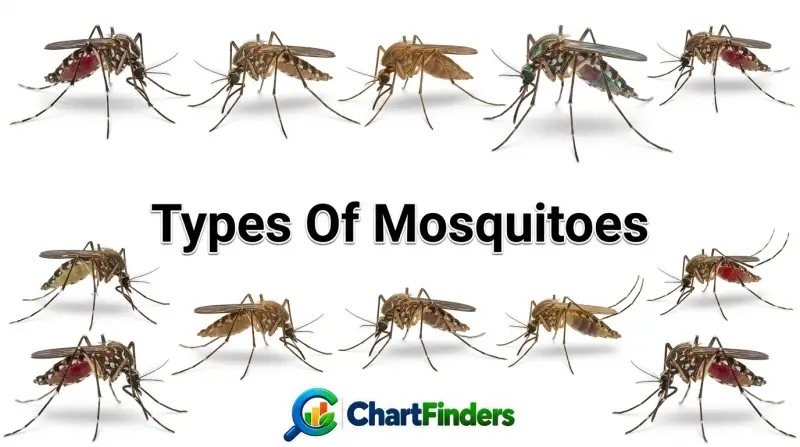
Mosquitoes are among the most consequential organisms on the planet, shaping human history, public health infrastructure, and ecological dynamics across every continent except Antarctica. While the casual observer views them simply as an irritating backyard nuisance, entomologists and public health specialists categorize them into thousands of distinct species characterized by specialized biology, distinct environmental adaptations, and highly specific disease-vector capabilities. Understanding the types of mosquitoes requires moving past generalized pest control approaches and looking closely at how variations in habitat preference, biting habits, and life cycles dictate both disease transmission risks and targeted control methodologies.
Public health surveillance relies heavily on accurately identifying vector species. A shift in climate patterns, landscape modifications, human mobility, and vector adaptation continually alter geographic distributions, as seen with invasive Aedes species establishing populations across new regions. This comprehensive guide breaks down the major genera, key invasive species, habitat preferences, vector relationships, and practical management considerations required to understand the complex world of mosquitoes.
Types Of Mosquitoes
- The mosquito family (Culicidae) contains over 3,500 species globally, but three primary genera—Aedes, Anopheles, and Culex—account for the vast majority of human disease transmission.
- Aedes mosquitoes are aggressive daytime biters that readily breed in small, artificial water-holding containers around human dwellings.
- Anopheles mosquitoes are nocturnal and crepuscular biters uniquely adapted to transmitting malaria parasites, identifiable by their distinct angled resting posture.
- Culex mosquitoes thrive in stagnant, organic-rich water sources and serve as the primary bridge vectors for West Nile virus and various forms of encephalitis.
- Invasive species tracking, such as monitoring Aedes aegypti and Aedes albopictus, is critical because rising global temperatures and international trade continually expand their geographic range.
- Effective mosquito management demands species-specific interventions; treating a storm drain for Culex larvae requires entirely different methods than eliminating container-breeding Aedes eggs.
To properly study or manage mosquitoes, one must understand their overarching taxonomy. Mosquitoes belong to the order Diptera (true flies) and the family Culicidae. This family is divided into two subfamilies: Anophelinae and Culicinae. Within these subfamilies lie dozens of genera, but the public health impact is overwhelmingly concentrated within Aedes, Anopheles, and Culex. Below is a detailed breakdown comparing the core characteristics of these primary mosquito groups.
| Genus | Primary Biting Time | Resting Posture | Preferred Larval Habitat | Key Pathogens Transmitted |
|---|---|---|---|---|
| Aedes | Daytime (early morning and late afternoon) | Parallel to the surface | Artificial containers, tires, flowerpots, small puddles | Dengue, Zika, Chikungunya, Yellow Fever |
| Anopheles | Nighttime / Crepuscular (dusk to dawn) | Angled / Head tilted upward | Clean, unpolluted natural water bodies, marshes, rice paddies | Malaria (Plasmodium parasites) |
| Culex | Dusk, dawn, and nighttime | Parallel to the surface | Stagnant water, storm drains, polluted ditches, retention ponds | West Nile Virus, St. Louis Encephalitis, Japanese Encephalitis |
The comparative table above highlights how differences in behavior and biology separate these groups. Understanding these distinctions allows vector control technicians and researchers to deploy targeted surveillance traps, apply appropriate larvicides, and advise communities on personalized protection measures timed precisely to when specific vectors are actively seeking blood meals.
The Genus Aedes: Invasive Container-Breeders
The genus Aedes represents one of the most medically significant and adaptable groups of mosquitoes. Often recognized by striking black-and-white banding on their legs and bodies, these mosquitoes are aggressive daytime biters. Unlike many other mosquitoes that prefer shaded, rural wetlands, Aedes species thrive in close proximity to human habitation, utilizing micro-habitats created by human activity.
Female Aedes mosquitoes do not lay their eggs in large rafts on open water surfaces. Instead, they deposit individual eggs just above the waterline on the damp interior walls of artificial containers—such as discarded tires, buckets, birdbaths, clogged gutters, and saucers beneath potted plants. These eggs possess remarkable desiccation resistance; they can survive in a dry state for months. When rain eventually fills the container and submerges the eggs, embryonic development triggers, and larvae hatch rapidly.
Key Aedes Species of Concern
- Aedes aegypti (Yellow Fever Mosquito): Highly anthropophilic (human-preferring), this species lives in close association with human dwellings, frequently resting indoors in closets, under furniture, or in dark corners. It is the primary vector for dengue virus, Zika virus, yellow fever, and chikungunya.
- Aedes albopictus (Asian Tiger Mosquito): Easily identified by a distinct white stripe running down the center of its head and thorax, Ae. albopictus is exceptionally aggressive. It has expanded its global range dramatically through the international trade of used tires and lucky bamboo plants. It feeds readily on both humans and animals, acting as a secondary vector for many of the same arboviruses as Ae. aegypti.
- Other Invasive Lineages: Surveillance programs across Europe and North America closely monitor emerging invasive populations of Aedes atropalpus, Aedes japonicus, and Aedes koreicus, which demonstrate cold-hardiness and continue to colonize temperate zones previously considered inhospitable.
The Genus Anopheles: The Malaria Vectors
The genus Anopheles occupies a unique and historically formidable space in medical entomology. Comprising over 400 species globally—with several dozen capable of transmitting human malaria—Anopheles mosquitoes have shaped human migration, settlement patterns, and immunological evolution for millennia.
Morphologically, adult Anopheles mosquitoes can be distinguished from other genera by their resting posture. When landing on a surface, an Anopheles mosquito elevates its abdomen at a distinct angle, pointing its proboscis, head, and body in a nearly straight line upward from the resting surface. Their wings often feature distinct dark spots or pale scaling patterns.
Female Anopheles deposit their eggs singly directly onto the surface of clean, unpolluted water bodies. These eggs feature unique lateral float structures that keep them buoyant on the water’s surface. Preferred larval habitats include freshwater marshes, mangrove swamps, rice fields, grassy edges of slow-moving streams, and temporary rain pools exposed to sunlight.
From an operational standpoint, adult Anopheles are strictly nocturnal or crepuscular feeders. Peak biting activity generally occurs from late evening through the pre-dawn hours. Because of this behavior, vector control strategies targeting adult Anopheles—such as indoor residual spraying (IRS) and long-lasting insecticide-treated nets (LLINs)—focus heavily on protecting sleeping humans during peak host-seeking windows.
The Genus Culex: Urban and Rural Arbovirus Vectors
The genus Culex is ubiquitous across urban, suburban, and rural landscapes worldwide. Unlike Aedes, which favor clean, small containers, or Anopheles, which prefer vegetated natural pools, many Culex species thrive in stagnant, organic-rich waters containing high levels of nitrogen and organic pollution.
Female Culex mosquitoes lay their eggs in distinctive vertical clusters known as “egg rafts.” A single raft may contain between 100 and 300 cigar-shaped eggs glued together, floating upright on the water’s surface like a tiny raft. Common larval habitats include storm drains, catch basins, roadside ditches, septic tanks, neglected swimming pools, and agricultural runoff ponds.
Public Health Significance of Culex
Culex mosquitoes are the primary enzootic and bridge vectors for several vital arboviruses, most notably West Nile virus (WNV). The life cycle of West Nile virus involves an amplification cycle primarily between wild birds and ornithophilic (bird-feeding) Culex species (such as Culex pipiens and Culex tarsalis). When these infected mosquitoes later feed on mammals, including humans and horses, they act as bridge vectors, transmitting the pathogen out of the avian reservoir.
In addition to West Nile virus, various Culex species transmit St. Louis encephalitis, Western equine encephalitis, and Japanese encephalitis (JEV). Because many Culex species readily feed after dark and readily enter residential structures, personal protection involving window screens and nighttime repellents remains essential.
Other Notable Mosquito Genera
While Aedes, Anopheles, and Culex command the vast majority of public health attention, the family Culicidae includes several other genera that contribute to local ecosystems and human interactions:
- Psorophora: Known commonly as “gallinippers,” these large mosquitoes develop rapidly in temporary floodwater habitats. Females are aggressive biters that attack fiercely during daylight hours, particularly following heavy rainfall or irrigation events.
- Mansonia: These mosquitoes possess specialized larval and pupal siphons that do not break the water surface for air. Instead, larvae insert their modified siphons directly into the vascular root systems of aquatic plants (such as cattails and water lettuce) to breathe oxygen. This adaptation makes standard surface larvicides largely ineffective against them.
- Toxorhynchites: Often referred to as “elephant mosquitoes” or “mosquito eaters,” these large, non-biting insects are beneficial predators. Adult females feed exclusively on floral nectar and plant sap. However, their predatory larvae inhabit tree holes and containers, actively hunting and consuming the wigglers of pest mosquito species.
The Mosquito Life Cycle: From Egg to Adult
No matter the genus, every mosquito undergoes complete metamorphosis consisting of four distinct life stages: egg, larva, pupa, and adult. Understanding this developmental cycle is essential for designing effective vector management programs. The entire process can take anywhere from 4 days to several weeks, depending heavily on ambient temperature, water quality, and nutritional availability.
- The Egg Stage: Eggs are deposited either singly on water surfaces (Anopheles), singly on damp substrate above the water line (Aedes), or in cemented rafts floating on water (Culex).
- The Larval Stage (“Wigglers”): Upon hatching, aquatic larvae feed voraciously on microscopic algae, bacteria, and organic particulates suspended in the water. They breathe air through a siphon tube at the tail end (except Anopheles, which lie flat against the surface to breathe through spiracles). Larvae molt four times, growing progressively larger through four distinct instars.
- The Pupal Stage (“Tumblers”): The non-feeding pupal stage serves as a transitional phase where the organism reorganizes its tissues into the adult form. Though they do not feed, pupae are highly mobile, tumbling downward when disturbed. They breathe air through a pair of thoracic respiratory trumpets.
- The Adult Stage (“Imago”): Once transformation is complete, the adult mosquito splits the pupal skin, emerges onto the water surface, rests briefly to dry its wings, and takes flight. Male mosquitoes emerge first, feeding exclusively on plant nectar and floral juices. Female mosquitoes require a blood meal to provide the protein and lipid resources necessary for egg maturation.
Vector-Borne Disease Dynamics and Global Distribution
The interaction between mosquitoes, pathogens, and vertebrate hosts is governed by a complex matrix of ecological, climatic, and sociological factors. Mosquito-borne viruses (arboviruses) and parasitic infections are not randomly distributed; their emergence and geographic persistence depend on vector competence, vector abundance, human mobility, and landscape modification.
Vector competence refers to the intrinsic physiological ability of a specific mosquito species to acquire, maintain, and successfully transmit a pathogen. For instance, while Aedes aegypti is an exceptionally competent vector for dengue and Zika viruses, many temperate Culex species lack the physiological compatibility required to sustain tropical arboviruses, focusing instead on enzootic pathogens like West Nile virus.
Environmental variables significantly alter these dynamics:
- Temperature: Elevated temperatures accelerate the metabolic and developmental rates of mosquito larvae, shorten the extrinsic incubation period of pathogens within the mosquito, and increase biting frequency.
- Rainfall and Humidity: Precipitation creates temporary larval habitats and increases relative humidity, which extends adult mosquito lifespan and enhances host-seeking endurance. Conversely, extreme drought can concentrate populations in remaining water sources, occasionally intensifying localized transmission risks.
- Urbanization: Urban heat islands, poorly managed stormwater infrastructure, and dense human populations provide abundant container habitats and reliable blood meal sources, favoring anthropophilic species like Aedes aegypti.
Practical Surveillance and Integrated Pest Management (IPM)
Managing mosquito populations effectively requires moving away from reliance on broad-spectrum adulticide fogging and embracing Integrated Pest Management (IPM). IPM frameworks emphasize sustainable, multi-tiered approaches that target immature stages before they emerge as biting adults.
| IPM Strategy | Primary Target | Operational Description | Key Advantages |
|---|---|---|---|
| Source Reduction | Eggs and Larvae | Eliminating, draining, or modifying standing water containers and breeding sites. | Permanent elimination of breeding habitat; highly cost-effective. |
| Biological Control | Larvae | Introducing natural predators like fish (Gambusia affinis) or larvicidal bacteria (Bti). | Eco-friendly; targets specific larvae without harming non-target wildlife. |
| Chemical Larviciding | Larvae / Pupae | Applying insect growth regulators (IGRs) or surface oils to stagnant water bodies. | Stops development before biting adults emerge; safe in managed water systems. |
| Adult Vector Control | Adults | Targeted ultra-low volume (ULV) spraying or barrier treatments during peak activity. | Rapid short-term knockdown during active disease outbreaks. |
Homeowners and property managers play a in source reduction through routine property maintenance. Emptying saucers, cleaning clogged roof gutters, sealing rain barrels with fine mesh screens, and turning over unused wheelbarrows or children’s toys disrupt the Aedes breeding cycle directly at the source.
Common Misconceptions About Mosquitoes
Misunderstandings regarding mosquito biology often lead to ineffective control efforts or misplaced safety concerns. Clarifying these points helps ensure resources are spent efficiently:
- Myth: All mosquitoes bite humans.
Fact: Only female mosquitoes bite, as they require blood proteins for egg development. Male mosquitoes feed entirely on nectar and plant sugars. , many mosquito species specialize in feeding on amphibians, reptiles, or birds rather than humans. - Myth: Citronella candles and bug zappers solve mosquito problems.
Fact: While burning citronella oil provides minor, localized masking of human carbon dioxide signatures, it offers minimal systemic control. Bug zappers kill vast numbers of beneficial, non-biting nocturnal insects (like moths and midges) while destroying very few female blood-seeking mosquitoes. - Myth: Mosquitoes only breed in large swamps and marshes.
Fact: While swamp-dwelling Anopheles and floodwater Psorophora breed in natural wetlands, many of the most dangerous urban disease vectors (such as Aedes aegypti) complete their entire life cycle in a bottlecap, discarded soda can, or plant pot saucer.
Frequently Asked Questions
How can I tell the difference between Aedes and Culex mosquitoes?
Visually, Aedes mosquitoes typically exhibit distinct black-and-white banding patterns on their legs and bodies and are active during daylight hours. Culex mosquitoes are generally brownish-gray without stark contrasting leg bands, and they are primarily active from dusk through the night. Additionally, when resting on vertical surfaces, Aedes and Culex hold their bodies parallel to the surface, whereas Anopheles tilt their abdomens upward at an angle.
Do male mosquitoes bite?
No. Male mosquitoes possess mouthparts that lack the piercing-sucking stylets required to puncture human skin. Their anatomy is adapted exclusively for feeding on floral nectar, plant juices, and honeydew to obtain carbohydrate energy for flight.
How long do adult mosquitoes live?
Adult mosquito lifespan varies significantly by species, sex, and environmental conditions. Male mosquitoes generally live for only 1 to 2 weeks after emerging. Female mosquitoes during warm summer months typically live for 2 to 3 weeks, though certain species that undergo diapause (hibernation) during cold winter months can survive for several months in sheltered micro-habitats.
What is the most dangerous mosquito species in the world?
Globally, mosquitoes of the genus Anopheles—specifically vector species like Anopheles gambiae in sub-Saharan Africa—are considered the most dangerous due to their efficiency in transmitting human malaria. However, in terms of rapid urban disease transmission across the Americas and Asia, Aedes aegypti poses a massive public health challenge as the primary vector for dengue, Zika, and chikungunya viruses.
Why do some people get bitten more often than others?
Host preference is driven by a combination of chemical and physiological cues. Mosquitoes locate hosts by sensing carbon dioxide emissions in exhaled breath, body heat, optical contrast, and specific chemical compounds present in human sweat—such as lactic acid, uric acid, and ammonia. Variations in skin microbiome composition heavily influence the specific blend of volatile organic compounds an individual emits, making certain people naturally more attractive to mosquitoes than others.
Conclusion
Effectively navigating the challenges posed by mosquitoes requires moving beyond treating them as a monolithic pest. Recognizing the distinct behavioral, physiological, and ecological traits of Aedes, Anopheles, Culex, and other genera allows public health professionals and property owners to implement precise, targeted interventions. From eliminating urban container habitats to protect against daytime-biting Aedes, to deploying bed nets against nocturnal Anopheles, species-specific knowledge remains the of effective vector control and disease prevention.