
Discovering unwanted microbial growth in a home or commercial building immediately triggers concern. Whether it appears as a powdery green film behind bathroom drywall, a dark velvety patch under a kitchen sink, or a speckled white crust on a basement joist, identifying the exact nature of the growth is the first step toward effective remediation. However, distinguishing between harmless surface discoloration and aggressive, toxic allergenic species is rarely straightforward without a structured framework.
(Reference: Mold in the home: Identifying and treating the issue to prevent health problems – Harvard Health)Because fungal ecology is complex and hundreds of species can thrive indoors under the right temperature and moisture conditions, property owners need reliable classification tools. A comprehensive mold identification chart organizes these organisms by observable characteristics, helping field inspectors and facility managers assess the severity of an infestation. This guide explores the most prevalent household molds, breaks down their visual profiles, analyzes advanced detection trends, and provides actionable steps for safe identification and professional remediation.
Explore our detailed breakdown on Quokka Lifespan Chart.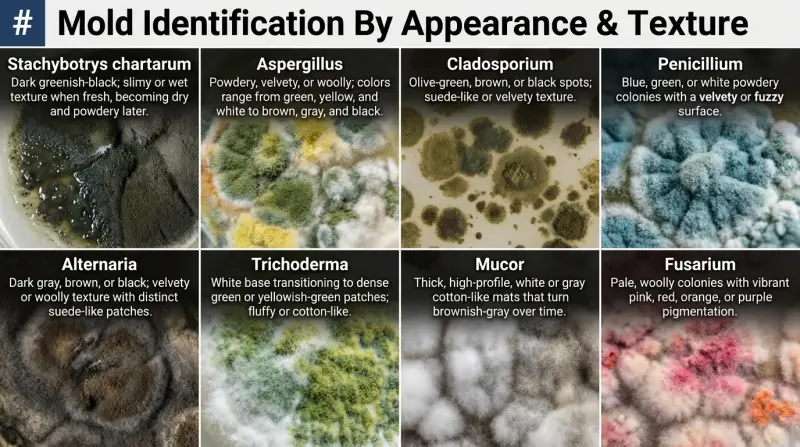
Mold Identification Chart
- Visual Classifications: Molds are commonly identified by color (black, green, white, gray, yellow, pink), texture (powdery, velvety, slimy, fuzzy), and substrate preference (wood, drywall, cellulose, insulation).
- Toxicity Misconceptions: While infamous species like Stachybotrys chartarum (“black mold”) attract significant attention, many other molds (such as Aspergillus and Penicillium) pose equally severe health risks to sensitive individuals.
- Moisture Dependency: Mold cannot colonize without water. Identifying the underlying moisture source is always more critical than simply wiping away surface spores.
- Advanced Detection: Modern remediation and inspection increasingly utilize thermal imaging cameras, moisture meters, and volatile organic compound (VOC) testing alongside traditional visual charts.
- Laboratory Verification: Visual identification charts are screening tools, not diagnostic certainties. Definitive species confirmation requires microscopic analysis by an accredited microbiology laboratory.
When conducting an initial assessment of indoor fungal growth, inspectors rely on standardized parameters to categorize what they see. The following master mold identification chart outlines the most common types of indoor molds, detailing their distinct visual appearance, where they typically thrive, how they spread, and their primary health implications.
| Mold Name | Visual Appearance & Texture | Primary Locations | Spread Mechanism | Health Concerns |
|---|---|---|---|---|
| Stachybotrys chartarum | Dark greenish-black; slimy or wet texture when fresh, becoming dry and powdery later. | Chronically damp, cellulose-rich materials (drywall, paper, cardboard, wood). | Heavy spores spread primarily through water-splash and physical disturbance; less airborne than dry molds. | Severe respiratory issues, chronic sinus infections, fatigue, immune suppression, neurological symptoms. |
| Aspergillus | Powdery, velvety, or woolly; colors range from green, yellow, and white to brown, gray, and black. | HVAC systems, dust, powdery food items, damp drywall, insulation. | Airborne spores easily inhaled throughout the indoor environment. | Allergic bronchopulmonary aspergillosis, asthma attacks, severe infections in immunocompromised individuals. |
| Cladosporium | Olive-green, brown, or black spots; suede-like or velvety texture. | Window sills, door frames, cooling coils, damp fabrics, wood surfaces. | Air currents; thrives in both cool and warm indoor/outdoor climates. | Hay fever symptoms, asthma flare-ups, skin and mucosal membrane irritations. |
| Penicillium | Blue, green, or white powdery colonies with a velvety or fuzzy surface. | Water-damaged wallpaper, insulation, decaying fabrics, mattresses, carpet backing. | Airborne spores; rapid germination on damp organic matter. | Allergic reactions, chronic rhinitis, hypersensitivity pneumonitis in sensitive populations. |
| Alternaria | Dark gray, brown, or black; velvety or woolly texture with distinct suede-like patches. | Showers, bathtubs, window frames, damp walls, under leaky sinks. | Airborne spores; very common outdoor mold that migrates inside. | Aggressive trigger for asthma symptoms, chronic allergic rhinitis, skin sensitivity. |
| Trichoderma | White base transitioning to dense green or yellowish-green patches; fluffy or cotton-like. | Damp wood, soil, decaying vegetation, wet paper products. | Airborne spores and direct physical contact; wood-decaying fungus. | Opportunistic infections in compromised hosts, pulmonary infections, allergic sensitivities. |
| Mucor | Thick, high-profile, white or gray cotton-like mats that turn brownish-gray over time. | HVAC ducts, old HVAC filters, condensation zones, wet insulation, organic dust. | Airborne sporangiospores; extremely fast-growing under high humidity. | Mucormycosis (rare, aggressive infection in severely immunocompromised patients), allergic reactions. |
| Fusarium | Pale, woolly colonies with vibrant pink, red, orange, or purple pigmentation. | Potted plants, damp carpeting, humidifiers, water-damaged drywall and insulation. | Airborne spores and water transport. | Eye and skin infections, allergic reactions, mycotoxicosis in vulnerable hosts. |
Reading this table effectively requires understanding that mold coloration can shift depending on its age, food source, and environmental humidity. For instance, an Aspergillus colony might start as a crisp white powder before developing characteristic yellow or green centers as it matures.
Categorizing Molds by Color, Texture, and Habitat
Property owners frequently search for molds based on how they look to the naked eye. While color alone is never enough for scientific identification, it serves as a practical triage method in the field:
- Black Molds: Often associated with extreme toxicity due to media coverage of Stachybotrys chartarum. However, many common non-toxic molds (such as certain strains of Cladosporium and Alternaria) also appear black. Only microscopic examination confirms species.
- Green Molds: The most common indoor color category, encompassing Aspergillus, Penicillium, and Cladosporium. These frequently inhabit food, wallpaper, and damp drywall.
- White Molds: Often mistaken for efflorescence (mineral salt deposits on masonry) or dry rot. White molds include early-stage Aspergillus and various basidiomycetes. They can be difficult to spot on light-colored walls until they mature.
- Pink and Red Molds: While technically often bacteria (such as Serratia marcescens) rather than true mold, pink slimy growths in showers and around plumbing fixtures are frequently managed and remediated similarly to fungal colonies. True fungal representatives include Fusarium.
Understanding Mold Biology and Environmental Triggers
Fungi are eukaryotic organisms that play an essential ecological role in decomposing organic material. Indoors, however, they represent a structural and biological hazard. Understanding how molds function helps explain why certain areas of a building become chronic problem zones.
Mold reproduces by releasing millions of microscopic spores into the air. These spores are omnipresent in both indoor and outdoor environments; they drift on air currents, hitchhike on clothing, and enter buildings through open windows and ventilation systems. When a spore lands on a surface that provides moisture, oxygen, and an organic nutrient source (such as cellulose, wood, or protein), it germinates, extends root-like structures called hyphae, and forms a feeding network known as a mycelium.
The Four Core Growth Requirements
To proliferate indoors, mold requires four simultaneous conditions:
- Moisture: The single most critical variable. Without liquid water, high relative humidity (typically above 60–70%), or persistent condensation, mold cannot grow.
- Nutrients: Organic substrates containing carbon. Common indoor building materials rich in cellulose include drywall paper, plywood, ceiling tiles, carpet fibers, and wallpaper paste.
- Temperature: Most indoor molds thrive in moderate temperatures between 60°F and 80°F (15°C to 27°C), though some psychrotolerant species grow slowly in refrigerated environments.
- Oxygen: As aerobic organisms, indoor molds require oxygen to fuel their metabolic processes, making completely airtight, oxygen-starved environments hostile to colonization.
Advanced Detection Trends in Modern Mold Inspection
Traditional mold inspection relied exclusively on visual searches and basic spore-trap air sampling. However, state-of-the-art building science has introduced advanced detection technologies that locate hidden moisture and microbial activity before colonies breach surface materials.
Early mold detection prevents minor leaks from escalating into structural catastrophes. Modern inspection protocols integrate several sophisticated tools:
- Thermal Imaging Cameras (Infrared Thermography): Infrared cameras detect surface temperature differentials caused by hidden moisture behind walls, under subfloors, or above ceilings. Because wet materials have different thermal properties than dry materials, hidden plumbing leaks and condensation pathways become immediately visible during an inspection.
- Pin and Pinless Moisture Meters: Digital meters quantify the moisture content of porous and semi-porous building materials. Industry standards dictate that wood or drywall exceeding specific moisture thresholds (typically 15% to 20% depending on the material) creates an immediate risk for fungal germination.
- Electronic Noses (e-Noses) and VOC Analyzers: Active microbial growth releases Microbial Volatile Organic Compounds (mVOCs), which produce a distinct musty or earthy odor. Advanced sensor arrays and photoionization detectors (PIDs) can identify anomalous mVOC concentrations in indoor air, flagging hidden mold colonies inside HVAC ducts or wall cavities.
- Particle Counters: Laser-based optical particle counters measure total airborne particulate loads across various micron sizes, helping inspectors determine whether an indoor space has elevated aerosolized debris compared to outdoor baseline levels.
Step-by-Step Mold Identification and Assessment Framework
When an occupant suspects mold contamination, a methodical evaluation ensures safety and accuracy. Rushing into remediation without proper assessment can spread millions of spores throughout clean areas of the home.
Step 1: Visual and Olfactory Inspection
Begin by scanning high-risk areas: bathrooms, kitchens, basements, attics, laundry rooms, and around HVAC registers. Look for discoloration, peeling paint, warped drywall, or water stains. Trust your nose—a persistent musty smell almost always indicates hidden microbial activity, even if no visual growth is immediately apparent.
Step 2: Assess the Extent of Contamination
Determine the surface area affected. According to industry guidelines from organizations like the U.S. Environmental Protection Agency (EPA) and the Institute of Inspection Cleaning and Restoration Certification (IICRC):
- Small Scale (Under 10 square feet): Typically manageable by a homeowner using proper personal protective equipment (PPE) and cleaning protocols.
- Medium Scale (10 to 100 square feet): Requires professional containment, HEPA filtration, and specialized remediation procedures.
- Large Scale (Exceeding 100 square feet or HVAC system involvement): Demands professional remediation specialists certified in mold abatement to prevent cross-contamination.
Step 3: Identify and Stop the Moisture Source
Never attempt remediation without resolving the underlying moisture issue. Inspect for roof leaks, plumbing failures, broken gutter downspouts, groundwater seepage, or improper bathroom ventilation. If the water source remains active, mold will regenerate within 24 to 48 hours regardless of chemical treatments applied.
Step 4: Sampling and Laboratory Testing (Optional / Recommended)
If occupants experience unexplained health symptoms or real estate transactions require verification, hire an independent, certified industrial hygienist (CIH) to perform air sampling, surface tape lifts, or bulk material testing. Laboratories analyze these samples under microscopy to identify specific genera and quantify spore concentrations.
Common Mistakes and Misconceptions in Mold Management
Property owners frequently make critical errors when dealing with indoor mold. Recognizing these pitfalls saves time, money, and health complications.
- Relying Solely on Bleach: Household chlorine bleach is effective on non-porous surfaces like glass or tile, but it fails on porous materials like drywall and wood. Because bleach is primarily water-based, the water soaks into the porous substrate while leaving the root structures (mycelium) alive beneath the surface, leading to rapid regrowth.
- Ignoring Hidden Cavities: Treating surface mold on the outside of a wall while ignoring a slow pipe leak inside the wall cavity guarantees ongoing contamination.
- Skipping Containment: Scrubbing dry, powdery mold without setting up negative air pressure and plastic containment barriers launches billions of spores into the HVAC system, contaminating previously clean rooms.
- Assuming All Black Mold is Toxic: While Stachybotrys chartarum produces potent mycotoxins under specific conditions, many other molds are dark-colored. Conversely, non-black molds like Aspergillus can produce severe health reactions. Toxicity depends on individual sensitivity, exposure duration, and species, not just color.
Frequently Asked Questions
Online charts provide a useful preliminary screening tool to understand common visual profiles, but they cannot provide definitive identification. Many different mold species share identical colors and textures. Accurate identification requires microscopic analysis or genetic sequencing by a certified microbiology laboratory.
The term “black mold” typically refers to Stachybotrys chartarum, a greenish-black fungus that thrives on high-cellulose, water-damaged materials. While it can produce trichothecene mycotoxins under specific conditions, all molds—regardless of color—can trigger allergic reactions, asthma attacks, and respiratory distress in sensitive individuals.
Under optimal temperature and moisture conditions, mold spores can germinate and begin colonizing indoor building materials within 24 to 48 hours of a water intrusion event. This underscores the critical importance of rapid structural drying following floods or plumbing leaks.
You should hire a professional if the contaminated area exceeds 10 square feet, if mold is discovered inside an HVAC system or ductwork, if the growth resulted from sewage or contaminated floodwater, or if building occupants suffer from chronic unexplained health issues or compromised immune systems.
No. Even after mold is dead (treated with a fungicide or biocide), the remaining spores, cellular fragments, and mycotoxins can still trigger allergic reactions and respiratory irritation. Proper remediation requires physically removing the mold colonies, HEPA vacuuming surfaces, and thoroughly cleaning the affected area.
Conclusion
Navigating indoor mold contamination requires a balance of visual observation, moisture control, and scientific accuracy. While a mold identification chart is an invaluable asset for recognizing early warning signs like discoloration and textural shifts, it remains only the first line of defense in property management. By understanding mold biology, leveraging modern detection tools like thermal cameras and moisture meters, and addressing underlying water intrusion promptly, property owners can maintain safe, healthy indoor environments. When facing extensive infestations or uncertain health risks, always consult certified professionals to ensure thorough, safe remediation.