
The cephalopod world operates on an accelerated biological clock that stands in stark contrast to the long lifespans of many other marine animals of comparable intelligence. When researchers, aquarists, and marine enthusiasts examine the parameters of cephalopod longevity, they encounter a fascinating evolutionary trajectory defined by rapid growth, intense cognitive complexity, and a dramatic, genetically programmed demise. Understanding these timelines requires looking past simple numbers to examine how temperature, reproductive biology, and metabolism dictate every phase of an octopus’s existence.
(Reference: Giant Pacific octopus | Monterey Bay Aquarium)This comprehensive guide explores the structural realities of cephalopod longevity, analyzing species-specific timelines, physiological drivers, environmental modifiers, and the terminal biological mechanisms that govern their final days. Whether you are managing a marine facility, studying marine biology, or seeking precise ecological data, this resource provides an authoritative breakdown of how long these remarkable creatures survive, complete with detailed comparative tables and analytical metrics.
Explore our detailed breakdown on Rabbit Breed Identification Chart [Full Reference Chart].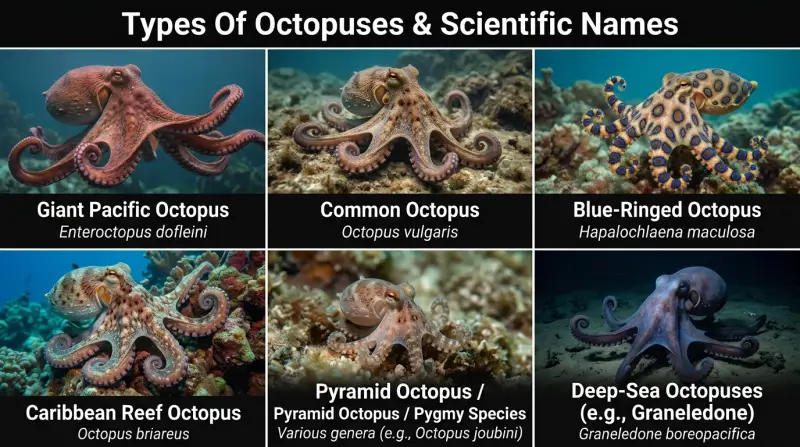
The Octopus Lifespan Chart: Species Longevity Breakdown
- Most octopus species live between 6 months and 3 years, with extreme variations ranging from under 6 months to 5 years.
- The Giant Pacific Octopus (GPO) holds the verified record for longevity, living up to 5 years in optimal cold-water conditions.
- Temperature acts as a primary metabolic regulator; colder water slows metabolic rates, directly extending lifespan.
- Senescence is the universal terminal phase, characterized by rapid cellular breakdown, cessation of feeding, and ultimate mortality following reproduction.
- Both males and females experience programmed death post-mating, though females expend significantly more energy brooding and guarding egg clutches.
To understand the scope of cephalopod longevity, it is essential to review verified data across various genera. The following reference chart details the typical lifespan, average adult size, and primary habitat temperature for the most thoroughly documented octopus species.
| Common Species Name | Scientific Name | Typical Lifespan | Average Adult Size | Habitat / Temperature Range | Reproductive Strategy |
|---|---|---|---|---|---|
| Giant Pacific Octopus | Enteroctopus dofleini | 3 – 5 years | 33–110+ lbs (15–50+ kg) | Cold temperate Pacific; 40°F – 55°F (4°C – 13°C) | Semelparous (Single reproductive event) |
| Common Octopus | Octopus vulgaris | 1 – 2 years | 6–20 lbs (3–9 kg) | Subtropical and temperate seas; 60°F – 75°F (15°C – 24°C) | Semelparous (Single reproductive event) |
| Blue-Ringed Octopus | Hapalochlaena maculosa | 6 months – 1 year | Under 2 oz (approx. 20g) | Tropical and subtropical shallow reefs; 70°F – 82°F (21°C – 28°C) | Semelparous (Single reproductive event) |
| Caribbean Reef Octopus | Octopus briareus | 1 – 1.5 years | 1–3 lbs (0.5–1.5 kg) | Tropical coral reefs and seagrass beds; 75°F – 82°F (24°C – 28°C) | Semelparous (Single reproductive event) |
| Pyramid Octopus / Pygmy Species | Various genera (e.g., Octopus joubini) | 6 months – 1 year | 1–4 oz (30–110g) | Warm shallow waters; 72°F – 80°F (22°C – 27°C) | Semelparous (Single reproductive event) |
| Deep-Sea Octopuses (e.g., Graneledone) | Graneledone boreopacifica | Up to 4.5+ years (Extremely slow metabolism) | 2–10 lbs (1–4.5 kg) | Abyssal plain / deep ocean; 35°F – 38°F (1.5°C – 3.3°C) | Semelparous (Extended brooding phase) |
This comparative overview highlights how environmental temperature and physical scale dictate longevity. Species residing in frigid polar or deep-sea environments exhibit drastically slower metabolic turnover, translating to extended survival windows, whereas tropical species compress their life cycles into mere months.
Comparative Longevity Ranks Across Major Species Groups
To further visualize the distribution of lifespan durations across different ecological niches, the following data contrasts maximum recorded survival limits among broad cephalopod categories.
| Ecological Category | Representative Species | Average Lifespan Span | Primary Longevity Driver | Metabolic Rate Indicator |
|---|---|---|---|---|
| Cold-Water Giants | Enteroctopus dofleini | 36 – 60 months | Low metabolic rate, massive body mass, high dissolved oxygen efficiency. | Low |
| Temperate Solitary Dwellers | Octopus vulgaris | 12 – 24 months | Moderate temperatures, seasonal breeding pressures. | Moderate |
| Tropical Reef Inhabitants | Octopus briareus, Hapalochlaena | 6 – 12 months | High metabolic rates driven by warm ambient water temperatures. | High |
| Abyssal / Deep-Sea Octopuses | Graneledone boreopacifica | 36 – 54+ months | Near-freezing temperatures, extremely low basal metabolic activity. | Extremely Low |
The Biological Blueprint: Why Do Octopuses Have Short Lives?
The abbreviated lifespan of the octopus is a direct evolutionary trade-off. Unlike vertebrates, which invest energy into continuous growth and multiple reproductive cycles over decades (iteroparity), most octopuses are semelparous—they reproduce once in their lifetime and die shortly thereafter. This strategy relies on producing massive numbers of offspring to ensure survival against overwhelming predation in the larval and juvenile stages.
Semelparity in cephalopods is heavily mediated by the optic gland, an endocrine organ functionally analogous to the vertebrate pituitary gland. The optic gland secretes hormones that promote sexual maturation while simultaneously shutting down digestive processes and triggering systemic somatic decline. This biological design ensures that adult octopuses do not compete with their own offspring for dwindling food resources within the same niche.
The Role of Metabolism and Temperature
Temperature acts as the master dial for cephalopod longevity. Because octopuses are ectothermic (cold-blooded), their internal body temperature mirrors their surrounding marine environment. As water temperature rises:
- Metabolic Rate Accelerates: Cellular oxygen consumption increases, heart rates quicken, and food conversion speeds up.
- Growth Paces Quicken: Juveniles reach sexual maturity much faster in warm tropical waters than their cold-water counterparts.
- Lifespan Compresses: The accelerated metabolic treadmill causes cellular damage and wear to accumulate at an unsustainable rate, shortening overall survival windows.
Conversely, species living in deep-sea trenches or sub-polar latitudes experience perpetual near-freezing temperatures. A notable example is the deep-sea brooding octopus (Graneledone boreopacifica), observed brooding a single egg clutch for an astonishing 4.5 years—the longest known brooding period of any animal on Earth—made possible by an exceptionally depressed metabolic rate.
Life Stages of an Octopus
Tracing an octopus from zygote to senescence reveals a tightly compressed developmental timeline. Every stage transitions rapidly into the next, governed by hormonal milestones.
1. Embryonic and Paralarval Stage
Life begins as a fertilized egg, painstakingly cared for by the female who cleans, aerates, and guards the clutch until hatching. Upon hatching, most species emerge as tiny paralarvae. These free-swimming creatures drift as part of the zooplankton, facing immense predation pressure. Only a microscopic fraction of these hatchlings survive the paralarval phase to settle onto the substrate.
2. Juvenile Growth Phase
Once settled on the seafloor, the juvenile enters an explosive growth phase. During this period, an octopus can consume up to its own body weight in food every few days. Energy is directed almost entirely into muscular and neural development rather than fat storage. They build complex dens, hone hunting strategies using acute tactile and visual senses, and achieve adult proportions within months.
3. Sexual Maturity and Adulthood
Adulthood is brief. Males develop a specialized hectocotylus arm used to transfer spermatophores into the female’s mantle cavity. Females develop thousands of oocytes. Once mating occurs, the physiological decline begins immediately, marking the transition into the terminal life stage.
4. Senescence: The Terminal Phase
Senescence in octopuses is not merely old age; it is a rapid, active breakdown of bodily systems without cellular repair or replacement. During senescence:
- Animals completely stop feeding, even when prey is placed directly in front of them.
- Vision and motor coordination deteriorate, leading to erratic swimming or uncoordinated movements.
- Skin loses its structural integrity, often showing lesions, discoloration, and sloughing.
- For females, brooding behavior takes precedence over all self-preservation instincts; they constantly clean and aerate the eggs until they starve or succumb to environmental stressors.
- Males wander aimlessly, displaying erratic behavior until dying of exhaustion or predation weeks after mating.
Environmental and Species Variations in Captivity vs. Wild
Maintaining cephalopods in public aquariums or research facilities provides unique insights into how environment influences longevity. While wild octopuses face constant threats from predators, parasites, and variable food availability, captive specimens enjoy protected environments with abundant, high-quality nutrition.
However, captivity introduces its own stressors. Inappropriate water parameters, lighting imbalances, and a lack of cognitive enrichment can induce stress-related behaviors, leading to premature senescence. Conversely, when strict temperature controls, pristine water quality, and complex puzzle-based enrichment are provided, species like the Giant Pacific Octopus often reach the maximum end of their natural lifespan spectrum (approaching or slightly exceeding 5 years).
Common Misconceptions About Octopus Longevity
Misinformation regarding cephalopod lifespans is widespread in popular media and aquarium lore. Clarifying these points prevents unrealistic expectations among hobbyists and ensures accurate scientific understanding:
- Myth: All octopuses live for several years. Reality: The vast majority of species found in tropical and warm temperate waters live for less than one year. Only cold-water giants approach multi-year spans.
- Myth: An octopus can recover after reproducing if fed well. Reality: Senescence is hormonally hardwired. Even with unlimited food and perfect water quality, the active degeneration of organs post-reproduction cannot be reversed.
- Myth: Octopuses die of starvation during brooding. Reality: While they do starve, it is because their digestive glands shut down via hormonal signals from the optic gland, not simply because they are too busy guarding eggs to hunt.
Frequently Asked Questions
The Giant Pacific Octopus (Enteroctopus dofleini) is the longest-living verified species, with a maximum documented lifespan of 3 to 5 years in cold northern waters. Deep-sea species such as Graneledone boreopacifica also exhibit exceptionally long brooding timelines and slow metabolic rates, though complete total lifespans in the abyss are still actively studied by marine biologists.
Preventing reproduction can delay the onset of senescence in some specimens, but it does not grant indefinite life. The endocrine triggers tied to sexual maturity and aging are genetically programmed. Once an octopus reaches a certain physiological maturity, hormonal shifts initiate somatic decline regardless of whether successful mating has occurred.
Females invest their remaining energy entirely into brooding. Their optic glands secrete self-destruct hormones that halt feeding and drive relentless egg care. The female stays with the clutch for months, cleaning and aerating the eggs without eating, until she dies of starvation and systemic organ failure just as the eggs hatch.
Temperature directly dictates metabolic speed. Warmer waters accelerate metabolism, causing the octopus to grow rapidly, mature quickly, and die within 6 to 12 months. Colder waters slow metabolic processes down, extending development and stretching the total lifespan toward several years.
Yes. Following successful transfer of spermatophores to a female, males enter a senescence phase similar to females. They stop eating, display erratic and disoriented swimming behavior, and typically die within a few weeks due to exhaustion, cellular degradation, and increased vulnerability to predators.
Conclusion
The lifespan of an octopus is a masterclass in evolutionary specialization. Bound by a short, intense biological timeline, these creatures achieve remarkable neural complexity, advanced tool use, and sophisticated problem-solving skills in a fraction of the time required by vertebrate counterparts. From the deep-sea brooding vagaries of abyssal species to the rapid, high-metabolism cycles of tropical reef dwellers, the octopus lifespan chart reflects an balance between environmental temperature, metabolic rate, and a programmed reproductive finale that defines one of the ocean’s most captivating lineages.