
The family Orchidaceae is one of the largest and most diverse groups of flowering plants on Earth, encompassing over 28,000 accepted species distributed across hundreds of genera, alongside more than 150,000 registered artificial and natural hybrids. Because of this staggering morphological diversity, identifying an unknown orchid can quickly become overwhelming for both novice hobbyists and experienced growers. Many enthusiasts make the critical mistake of attempting identification based exclusively on floral color or petal patterns—traits that are notoriously variable within the same species and ephemeral in nature. True, reliable taxonomic identification requires a methodical, structural approach grounded in botanical science.
(Reference: BiblioVault – Books about Orchids)This master guide provides a comprehensive framework for systematic orchid identification. By breaking down plants into their permanent vegetative and enduring floral architectures, you will learn to navigate complex identification keys with confidence. Whether you are evaluating an unlabelled accession in your greenhouse, cataloging wild species, or studying specialized phylogenetic relationships, the principles and reference tools detailed below will anchor your diagnostic process.
Explore our detailed breakdown on Squash Identification Chart (Complete Data Matrix).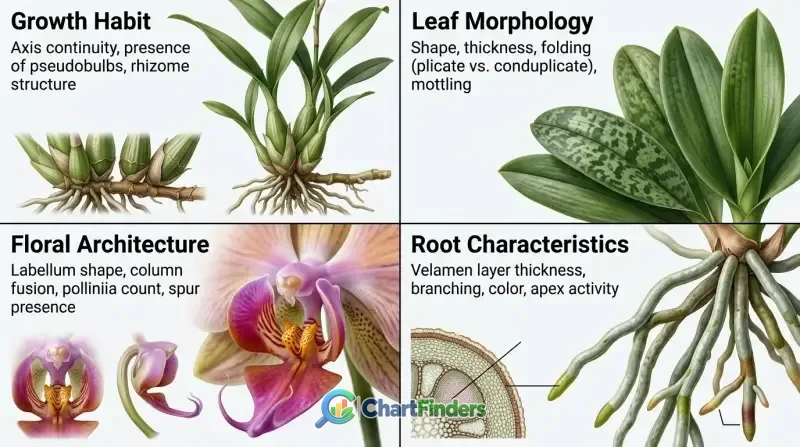
Understanding the Orchid Identification Chart
- Structure Over Color: Floral coloration is highly plastic; permanent vegetative features (leaves, pseudobulbs, roots) and core floral architecture (labellum, column) dictate true classification.
- Growth Habit Division: Orchids are fundamentally divided into monopodial (single vertical axis, no pseudobulbs) and sympodial (horizontal rhizomes with seasonal pseudobulb growth) categories.
- Leaf Morphology Clues: Leaf texture, arrangement, and shape reveal environmental adaptations and help narrow genera quickly (e.g., mottled leaves in certain Phalaenopsis vs. thick succulent leaves).
- Floral Architecture Mechanics: The specialized column, modified third petal (labellum/lip), and pollinia apparatus serve as the ultimate diagnostic checkpoints for species verification.
- Root and Velamen Analysis: Root thickness, color, and velamen composition offer critical clues regarding native habitat (epiphytic, lithophytic, or terrestrial).
- Systematic Process: Following a step-by-step elimination chart prevents misidentifications caused by natural color morphs and hybrid variations.
An orchid identification chart is not merely a picture book of flowers; it is a structured matrix of botanical traits designed to narrow down an unknown specimen through logical elimination. To use such a chart effectively, you must learn to read the plant’s architecture systematically. Botanists and specialized task forces—such as the American Orchid Society’s Species Identification Task Force (SITF)—rely heavily on standardized anatomical markers when evaluating awarded or newly discovered specimens. Below, we examine the primary diagnostic categories that form the backbone of any reliable identification chart.
| Diagnostic Category | Key Structural Features | Monopodial Example | Sympodial Example | Diagnostic Significance |
|---|---|---|---|---|
| Growth Habit | Axis continuity, presence of pseudobulbs, rhizome structure | Phalaenopsis, Vanda | Cattleya, Dendrobium, Oncidium | Instantly divides the family into two major architectural strategies. |
| Leaf Morphology | Shape, thickness, folding (plicate vs. conduplicate), mottling | Broad, flat, dark-green (P. amabilis) or mottled (P. schilleriana) | Rigid, thick, leathery, or thin and pleated (plicate) | Reflects light adaptation, moisture storage, and immediate genus-level traits. |
| Floral Architecture | Labellum shape, column fusion, pollinia count, spur presence | Trilobed lip, short column | Complex fringed or hinged lip, distinct column feet | Serves as the definitive mechanism for species-level verification. |
| Root Characteristics | Velamen layer thickness, branching, color, apex activity | Thick, silvery-grey velamen with green growth tips | Fine to moderately thick roots emerging from pseudobulb bases | Indicates moisture-retention needs and epiphytic vs. terrestrial lifestyle. |
The table above outlines the foundational parameters used in professional identification charts. When confronted with an unknown plant, you should never jump straight to the flower. Instead, evaluate the vegetative baseline first.
Growth Habit: Monopodial vs. Sympodial Architecture
The single most important division in orchid taxonomy is the growth habit. Understanding how an orchid grows dictates its cultural requirements, propagation methods, and placement on any identification chart.
Monopodial Growth
Monopodial orchids grow from a single, continuous vertical axis. They do not produce pseudobulbs or horizontal rhizomes. Leaves are produced alternately along the stem, with new growth emerging from the apex (stem tip) year after year. Roots emerge from the stem nodes, often interspersed between leaf joints. Classic monopodial genera include Phalaenopsis, Vanda, Angraecum, and Rhynchostylis. Because they lack water-storing pseudobulbs, monopodial orchids generally require consistent moisture throughout the year, though adaptations like thick velamen help them survive brief dry spells.
Sympodial Growth
Sympodial orchids grow horizontally rather than vertically. They produce a series of connected vegetative shoots along a creeping stem known as a rhizome. Each season, a new growth shoot emerges from the base of the previous pseudobulb, eventually maturing and frequently swelling into a water-storing pseudobulb before flowering. Once that shoot blooms, its vertical growth ceases, and the plant continues via lateral “eyes” or buds along the rhizome. Sympodial genera represent the vast majority of cultivated orchids, including Cattleya, Dendrobium, Oncidium, Cymbidium, and Bulbophyllum.
Leaf Morphology and Cellular Clues
Leaf structure provides immediate clues about an orchid’s native habitat and evolutionary pressures. Identification charts categorize leaves based on three primary structural axes: texture, venation, and coloration patterns.
- Conduplicate Leaves: Folded lengthwise along the midrib when young, these leaves are typically thick, leathery, or succulent. They are standard in high-light, high-evaporation epiphytes like many Cattleya and Phalaenopsis species.
- Plicate Leaves: Featuring multiple prominent parallel ribs or folds (resembling a folded fan), plicate leaves are characteristic of many sympodial terrestrial and semi-terrestrial orchids, such as Lycaste, Calanthe, and many catasetines. These leaves are typically thinner and deciduous in seasonal climates.
- Terete Leaves: Cylindrical, pencil-like, or flesh-thickened leaves designed to minimize surface area and reduce water loss. Found in certain species exposed to intense solar radiation, such as Vanda teres.
- Mottled Foliage: Distinct silver-grey or white variegation overlaid on green backgrounds (such as the marbled patterns seen in Phalaenopsis schilleriana compared to the solid, broad dark-green leaves of Phalaenopsis amabilis) serves as a direct visual marker for specific species complexes.
Floral Architecture and Reproductive Anatomy
While vegetative traits narrow down the genus, floral architecture provides the definitive signature for species identification. Orchid flowers exhibit extreme evolutionary specialization tailored to specific pollinators.
The Labellum (Lip)
The third petal of the orchid flower is modified into a specialized landing platform known as the labellum or lip. Unlike the upper two lateral petals and three sepals, the labellum is frequently ornamented with calli, crests, hairs, contrasting colors, or nectar guides. Its shape—whether entire, trilobed, saccate (pouch-like as in Paphiopedilum), or deeply fringed—is a primary diagnostic character in any floral key.
The Column (Gynostemium)
Orchids fuse their male and female reproductive organs into a single central structure called the column. The characteristics of the column—its length, angle, presence of wings, and the structure of agent mechanisms housing the pollinia (waxy masses of pollen)—are consulted by taxonomists using microscopic keys.
Spurs and Nectaries
Many orchids possess a tubular nectary extension at the base of the labellum or sepals, known as a spur. The length, curvature, and orientation of the spur are diagnostic for species within genera like Angraecum and Habenaria.
Root Characteristics and Velamen Analysis
Root morphology is frequently overlooked by hobbyists but plays a critical role in professional identification. Most tropical orchids are epiphytic, anchoring themselves to tree bark using specialized roots covered in a spongy, multi-layered epidermis called velamen.
When dry, velamen appears silvery-white or grey, acting as an insulating layer against heat and reflecting solar radiation. When hydrated, the velamen becomes translucent, revealing the green chlorophyll-bearing cortex beneath while rapidly absorbing atmospheric moisture and ambient nutrients. Identification charts note root diameter, branching angles, color of the root tips (growing apices), and whether roots are flattened (as in some vandaceous species) or cord-like and wiry.
Comparative Diagnostic Matrix of Major Orchid Genera
To assist in practical identification, the following matrix contrasts key diagnostic parameters across five major orchid genera representing both monopodial and sympodial lineages.
| Genus | Growth Habit | Pseudobulb Status | Leaf Type | Primary Diagnostic Floral/Root Feature |
|---|---|---|---|---|
| Phalaenopsis | Monopodial | Absent | Conduplicate, flat, broad (or mottled) | Short column; flat or slightly concave labellum with lateral lobes; thick silvery velamen roots. |
| Cattleya | Sympodial | Present (clavate or cylindrical) | Conduplicate, thick, leathery (1-2 per bulb) | Fringed or heavily colored trilobed labellum wrapping around a robust column; 4 to 8 pollinia. |
| Dendrobium | Sympodial | Present (elongated cane-like pseudobulbs) | Conduplicate or deciduous, arranged along canes | Mentum (chin-like extension formed by lateral sepals fused to the column foot); varied inflorescence positions. |
| Oncidium | Sympodial | Present (flattened, clustered) | Conduplicate, thin to rigid, often keeled | Extremely broadened, ruffled labellum (resembling a lady’s gown/dancing doll); distinct calli at lip base. |
| Paphiopedilum | Sympodial (Acaulescent) | Absent | Conduplicate, often checkered/mottled, leathery | Pouch-like labellum (slippers); shield-like staminode; absence of pollinia (fertile anthers produce powdery pollen). |
Step-by-Step Orchid Identification Workflow
When faced with an unidentified orchid, following a structured workflow prevents wasted time and eliminates false assumptions. Execute the following steps sequentially:
- Evaluate the Growth Axis: Examine the base of the plant. Is there a continuous vertical stem without pseudobulbs (Monopodial), or is there a creeping horizontal rhizome with distinct pseudobulbs or cane growths (Sympodial)?
- Inspect Leaf Texture and Shape: Feel the leaves. Are they thick and leathery, thin and pleated (plicate), needle-like (terete), or flat and broad? Note any mottling, spotting, or variegation.
- Examine Root Systems: Check the root thickness and the color of active growing tips. Note whether roots emerge solely from stem nodes or from the base of pseudobulbs.
- Analyze Floral Structures (If in Bloom): Look closely at the labellum. Is it a pouch, a flat landing pad, or a complex fringed structure? Check for the presence of a floral spur and observe the fusion of the column.
- Cross-Reference with Taxonomic Keys: Match your observations against a verified dichotomous identification chart or botanical database, filtering first by growth habit, then by vegetative morphology, and finally by floral characteristics.
Common Identification Mistakes and Pitfalls
Even experienced growers occasionally misidentify orchids due to common diagnostic traps. Being aware of these pitfalls ensures greater accuracy.
Over-Reliance on Flower Color
Color is the most unstable diagnostic feature in the Orchidaceae family. Natural color forms (such as alba variants lacking anthocyanin pigments, or coerulea blue-tinted variants) occur frequently within the same species. A red form of a normally pink species will share identical vegetative structure and floral architecture; relying on color alone leads to erroneous conclusions.
Confusing Pseudobulb Swellings with Monopodial Stems
Some beginners mistake the tightly compressed stem segments or swollen stem bases of certain sympodial orchids (such as some Epidendrum species) for true monopodial stems. Always trace the rhizome connection to confirm whether new shoots arise laterally or from the apex.
Ignoring Environmental Plasticity
Leaf thickness and color intensity change dramatically based on light levels. An orchid grown in high light may develop rigid, yellowish-green leaves with anthocyanin-blushed margins, whereas the same species grown in deep shade will produce thin, elongated, dark-green leaves. Always evaluate structural venation and growth habit rather than temporary environmental modifications.
Frequently Asked Questions
Yes, for many genera. While definitive species-level identification often requires floral architecture, genus-level identification and even identification of distinct species (such as mottled-leaf Phalaenopsis or distinctive bulbous sympodials like Cattleya and Bulbophyllum) are entirely possible using vegetative traits, growth habits, leaf morphology, and root structures.
Epiphytic orchids grow upon other plants (typically trees) with roots exposed to the air, requiring a thick velamen layer to absorb moisture quickly. Lithophytic orchids grow directly on bare rock faces, often developing tougher, more flattened root systems that wedge tightly into rock crevices to withstand extreme drainage and wind.
General plant identification apps rely heavily on superficial floral color and petal outline algorithms. Because orchids exhibit immense intraspecific hybrid variation and share highly conserved floral symmetries across different genera, AI-driven photo apps frequently mistake hybrid cultivars for wild species or confuse look-alike genera.
Look for pseudobulbs and rhizomes. If the plant grows upward from a single unbranching stem without water-storing pseudobulbs at the base, it is monopodial. If the plant produces horizontal creeping stems (rhizomes) that give rise to distinct seasonal cane or bulb growths, it is sympodial.
The labellum (lip) is the most evolutionarily diverse organ in the orchid flower. Its specialized shape, coloration guides, calli, hinges, and nectar structures are custom-adapted to specific insect or bird pollinators, making it the single most reliable floral feature for separating closely related species.
Conclusion
Orchid identification is a rewarding discipline that bridges botany, ecology, and horticulture. By shifting your diagnostic focus away from ephemeral floral colors and toward permanent structural traits—growth habit, leaf morphology, floral architecture, and root characteristics—you transform guesswork into a scientific process. Utilizing a systematic identification chart ensures that whether your specimen is in full bloom or resting in vegetative dormancy, you possess the anatomical tools necessary to uncover its true botanical identity.