
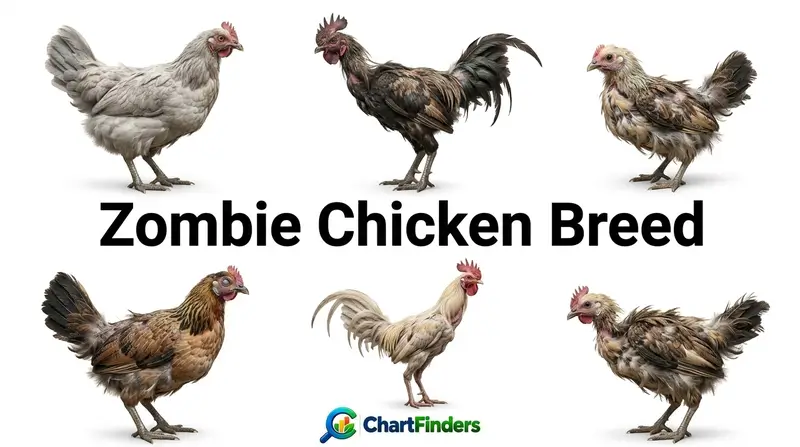
Poultry keeping is a rewarding agricultural and homesteading endeavor, but it occasionally introduces mysterious and alarming health crises. Among the most unsettling phenomena reported by backyard flock owners is the sudden appearance of birds displaying zombie-like symptoms. From erratic, uncoordinated movements and blank, glazed stares to miraculous revivals after appearing completely lifeless, these cases generate intense curiosity, fear, and scientific inquiry. While pop culture loves the idea of a literal undead poultry apocalypse, experienced poultry pathologists and veterinarians know that every “zombie chicken” has a very real, biological explanation grounded in avian medicine, neurology, or toxicology.
Understanding what causes a chicken to act or appear like a zombie requires looking past the sensationalism and examining the physiological mechanics of avian brains, nervous systems, and immune responses. This master guide explores the medical, environmental, and behavioral realities behind the zombie chicken phenomenon. We will dissect the root causes of neurological decline, examine look-alike syndromes, debunk common myths, and provide actionable biosecurity and veterinary frameworks to manage, treat, or prevent these distressing flock conditions.
Understanding the Zombie Chicken Breed Phenomenon
- “Zombie Chicken Breed” is a purely colloquial term; no such genetic poultry breed exists in standard registries like the American Poultry Association or the Entente Européenne.
- Symptoms commonly labeled as “zombie behavior” usually stem from neurological disorders, vitamin deficiencies (such as Vitamin E/Thiamine), or viral pathogens (such as Marek’s Disease).
- Some apparent “zombies” are actually birds experiencing extreme shock, catatonia, or recovery phases from severe trauma or predator attacks.
- Differential diagnosis requires careful separation of infectious neuropathogens from nutritional imbalances and toxicological exposures.
- Proper flock management, biosecurity, and supportive care protocols can frequently rehabilitate birds showing severe neurological distress.
The term “zombie chicken breed” frequently trends across social media platforms, homesteading forums, and novelty blogs. Novice keepers often worry they have accidentally purchased a diseased or cursed genetic line when their flock members begin exhibiting abnormal postures, walking backward, or staring blankly into walls. However, genetics play a role only in the sense that certain breeds possess higher genetic susceptibility to specific congenital or immune-mediated disorders—such as Silkies or Polish chickens, whose cranial vault mutations can occasionally predispose them to neurological vulnerabilities if injured.
To evaluate these situations objectively, we must deconstruct the biological realities that mimic zombification in gallinaceous birds. Avian neurology is delicate. Because birds rely heavily on rapid visual processing, balance, and complex reflex arcs to survive as prey species, any disruption to their central nervous system (CNS) results in profound behavioral anomalies that look utterly alien to human observers.
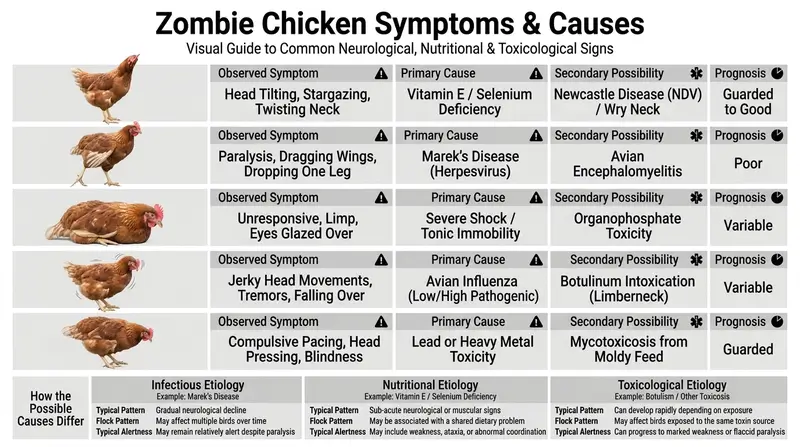
| Observed “Zombie” Symptom | Primary Biological Cause | Secondary Possibility | Prognosis |
|---|---|---|---|
| Head tilting, stargazing, twisting neck | Vitamin E / Selenium Deficiency | Newmarket Disease (NDV) / Wry Neck | Guarded to Good (with prompt supplementation) |
| Paralysis, dragging wings, dropping one leg | Marek’s Disease (Herpesvirus) | Avian Encephalomyelitis | Poor (Typically progressive and fatal) |
| Unresponsive, limp, eyes glazed over | Severe Shock / Tonic Immobility | Organophosphate Toxicity | Good (if protected and warmed) |
| Jerky head movements, tremors, falling over | Avian Influenza (Low/High Pathogenic) | Botulinum Intoxication (“Limberneck”) | Variable (Often highly lethal/regulated) |
| Compulsive pacing, head pressing, blindness | Lead or Heavy Metal Toxicity | Mycotoxicosis from moldy feed | Guarded (Requires chelation/purge) |
As outlined in the comparison table above, what appears to be a supernatural or genetic “zombie breed” trait is consistently tied to specific pathologies. Interpreting these signs accurately allows flock managers to intervene effectively rather than panicking or prematurely culling healthy stock.
Neurological Pathologies Mimicking Zombification
The central nervous system of a chicken governs everything from coordinated locomotion to autonomic breathing functions. When pathogens, toxins, or nutritional deficits attack the brainstem, cerebellum, or peripheral nerves, the visible manifestation often mirrors popular culture depictions of the undead.
Marek’s Disease: The Classic Paralytic Syndrome
Marek’s disease is an oncogenic alphaherpesvirus that infiltrates lymphoid tissue and infiltrates peripheral nerves. Birds suffering from the neural form of Marek’s disease often exhibit asymmetric paralysis of the legs and wings, causing them to assume awkward, sprawled postures. A classic sign is one leg stretched forward and the other backward. Because the bird remains conscious while losing motor control, its inability to stand combined with its wild, staring expression frequently leads owners to misidentify it as a zombie.
New Castle Disease and Avian Encephalomyelitis
Paramyxoviruses like Newcastle disease attack both the respiratory and nervous systems. Infected chickens twist their necks in unnatural angles (torticollis), walk in circles, or exhibit tremors. Avian encephalomyelitis (the “epidemic tremor”) specifically targets young chicks, causing rapid muscle tremors, ataxia, and eventual prostration.
Nutritional Deficiencies and Metabolic Disruptions
Not all zombie-like behaviors originate from transmissible pathogens. Nutritional imbalances are among the most common culprits behind sudden neurological failure in backyard flocks.
- Vitamin E and Selenium Deficiency: Often called “crazy chick disease” (nutritional encephalomalacia), a lack of Vitamin E causes softening of the brain tissue. Affected chickens lose their balance, flip onto their backs, bicycle their legs in the air, or twist their necks violently.
- Thiamine (Vitamin B1) Deficiency: Essential for carbohydrate metabolism in nerve cells. A deficiency leads to “stargazing,” where the bird throws its head straight back toward the sky, completely unresponsive to external stimuli.
- Botulism (“Limberneck”): Ingesting toxins produced by Clostridium botulinum bacteria paralyzes the bird’s muscles, starting in the legs and moving up the neck. The neck becomes completely limp, resting flat on the ground—giving the bird an uncanny, lifeless appearance while it remains conscious.
Trauma, Shock, and Tonic Immobility
Sometimes, a “zombie chicken” is simply a survivor of a brutal predator attack or extreme environmental stress. Chickens possess an innate defensive mechanism known as Tonic Immobility (often called “playing possum” or fear paralysis). When cornered by a hawk, dog, or raccoon, a chicken may enter a trance-like catatonic state where heart rate drops, respiration slows, and the body becomes completely rigid or limp. Novice keepers often discover these birds in the coop, assume they are dead or infected with a horrifying zombie plague, and are shocked when the bird suddenly snaps out of it hours later.
Diagnostic Identification: Distinguishing Fact from Fiction
When evaluating a bird displaying erratic or unsettling behavior, a systematic diagnostic approach is essential. Mistaking a treatable nutritional deficiency for a terminal viral outbreak leads to unnecessary culling, while failing to isolate a contagious pathogen endangers the entire flock.
| Diagnostic Indicator | Infectious Etiology (e.g., Marek’s) | Nutritional Etiology (e.g., Vitamin E) | Toxicological Etiology (e.g., Botulism) |
|---|---|---|---|
| Onset Speed | Gradual (weeks to months) | Sub-acute to Rapid (days) | Very Rapid (hours) |
| Flock Spread | Affects multiple birds over time | Affects birds on the same feed batch | Affects all birds eating the same toxin source |
| Alertness | Bright and alert despite paralysis | Confused, disoriented, or seizing | Comatose, limp, completely unresponsive |
| Response to Therapy | None (Supportive care only) | Rapid improvement with supplementation | Recovery with antitoxin/flushing |
This differential matrix highlights why observation window and symptom progression matter. An infectious disease like Marek’s typically creeps into a flock slowly, targeting specific age groups (usually between 12 and 24 weeks). Conversely, a botulism outbreak strikes an entire group of foragers within hours of consuming stagnant water or decaying organic matter.
Step-by-Step Flock Assessment Protocol
- Quarantine Immediately: Remove the affected bird from the main flock to a secure, warm, and dark hospital crate. This prevents cannibalism from flockmates and stops potential pathogen spread.
- Conduct a Visual and Palpatory Exam: Check the crop for blockages or sourness. Feel the breastbone to assess body condition score. Examine the legs and wings for asymmetric paralysis or heat inflammation.
- Evaluate Neurological Reflexes: Test tracking by moving a hand near the eyes. Check toe-pinch reflexes and righting reflexes (gently placing the bird on its back to see how fast it corrects itself).
- Review Management History: Analyze recent feed changes, water source cleanliness, vitamin supplementation schedules, and biosecurity breaches (wild bird access, new bird introductions).
Management, Rehabilitation, and Prevention Strategies
Once the underlying cause of zombie-like symptoms has been identified, targeted intervention can salvage the bird or protect the remaining flock. Because “zombie chickens” are almost always suffering from distinct medical issues rather than a supernatural curse, standard veterinary husbandry practices apply.
Nutritional Rehabilitation Protocols
If neurological testing points toward a vitamin deficit, immediate high-dose supplementation is required. For suspected Vitamin E and Selenium deficiencies, administering a human-grade liquid Vitamin E capsule (poked open and squirted directly into the beak) combined with a quarter-tablet of Selenium (or access to selenium-rich foods) often yields dramatic reversals within 24 to 48 hours.
Electrolytes and B-complex vitamins dissolved in water support cellular recovery and stimulate appetite in birds recovering from shock or toxicosis. For suspected botulism, flushing the system with molasses water or activated charcoal slurry can help bind and expel remaining toxins.
Biosecurity and Genetic Selection
Preventing neurological crises in poultry requires stringent management practices:
- Vaccination: Vaccinate day-old chicks against Marek’s Disease if the virus is known to be present in your region or if maintaining susceptible heritage breeds.
- Feed Quality Control: Store feed in cool, dry, airtight containers to prevent mold growth and mycotoxin production. Supplement commercial rations with fresh greens and seeds to ensure balanced micronutrient intake.
- Vector Control: Minimize standing water and decaying organic matter to prevent botulism outbreaks. Control rodent and wild bird populations that vector diseases like Avian Encephalomyelitis.
- Breeding Choices: If managing a closed breeding flock, select against birds that show congenital nervous system weaknesses, chronic wry neck, or extreme flightiness.
Frequently Asked Questions
Is there a real chicken breed called a zombie chicken?
No. “Zombie chicken” is an informal internet slang term. There is no recognized breed by this name in standard poultry associations. Birds exhibiting zombie-like traits are suffering from medical, neurological, or nutritional conditions.
Can a chicken recover after showing “zombie” neck-twisting symptoms?
Yes, absolutely. If the torticollis (wry neck) is caused by a Vitamin E deficiency, head trauma, or an ear infection, prompt administration of vitamins, anti-inflammatories, and supportive nursing care frequently leads to a full recovery.
Are zombie-like poultry diseases contagious to humans?
Most neurological conditions in chickens—such as Marek’s disease, nutritional encephalomalacia, and botulism—are not zoonotic and do not pose a direct threat to human health. However, certain strains of Avian Influenza or Newcastle Disease can cause mild conjunctivitis or flu-like symptoms in humans, so standard hygiene (gloves, hand washing) should always be practiced.
Why do some chickens suddenly drop dead and look like they came back to life?
This is usually due to “tonic immobility” (fear paralysis) or severe shock following a predator encounter. The bird’s autonomic nervous system shuts down motor functions defensively, making it appear lifeless until the perceived threat passes.
How can I protect my flock from neurological viruses?
The single most effective defense against viral neuropathogens like Marek’s Disease is vaccination administered immediately upon hatching. Strict closed-flock biosecurity, quarantine of new arrivals, and rigorous sanitation further reduce infection risks.
Conclusion
The concept of the “Zombie Chicken Breed” makes for fascinating folklore and viral internet content, but the reality is rooted firmly in avian veterinary science. Whether dealing with a vitamin deficiency, a viral challenge like Marek’s disease, or the aftermath of acute shock, recognizing the true biological drivers behind erratic poultry behavior empowers keepers to act decisively. By prioritizing rigorous biosecurity, balanced nutrition, and compassionate nursing care, homesteaders can effectively treat, manage, and prevent these alarming neurological episodes, ensuring a healthy and thriving flock.