
Quick Answer: Porcupines typically live up to 12 to 18 years in the wild, depending on the species, regional environmental pressures, and predation risks. In captivity, where threats from predators, vehicular collisions, and harsh winters are eliminated, porcupines can frequently live up to 20 years. Their longevity is supported by a slow reproductive rate, specialized herbivorous diet, and formidable defensive quills.
Understanding the lifespan of porcupines requires a close look at the intersection of wild ecology, biological defenses, and environmental pressures. As large, slow-moving rodents equipped with thousands of specialized quills, porcupines occupy a unique ecological niche across North America, South America, Africa, and parts of Asia and Europe. While their spiny armor offers exceptional protection against many natural predators, these creatures face a variety of human-induced and natural mortality factors that dictate how long they survive in their natural habitats. From the critical early months of nursing and learning arboreal foraging behaviors to the physiological decline of older adults, every stage of a porcupine’s life is shaped by ecological trade-offs. This master guide explores the biological realities of porcupine longevity, contrasting wild survival rates with captive maximums, breaking down the primary causes of mortality, and detailing the reproductive and developmental milestones that define these remarkable rodents.
Porcupine Lifespan
- Wild vs. Captive Longevity: Wild porcupines generally have a life expectancy of 10 to 18 years, whereas protected captive individuals can reach up to 20 years of age.
- Reproductive Rate: Porcupines breed only once a year, typically producing a single precocial offspring after a gestation period of roughly 205 to 217 days.
- Primary Mortality Factors: In the wild, mortality is heavily driven by human encounters (vehicular collisions), specialized predators like fishers, and internal or external parasites.
- Developmental Milestones: Young porcupines are born weighing about 454 grams (1 pound) with open eyes and soft quills that harden rapidly within the first hour of life.
- Ecological Strategy: Their long lifespan is balanced by a low reproductive output, meaning populations rely heavily on adult survival rather than high birth rates to maintain stability.
Comparing Wild and Captive Longevity
The disparity between wild and captive lifespans is a standard metric in mammalian biology, but the gap for porcupines is influenced heavily by specific environmental hazards. In the wild, North American porcupines (Erethizon dorsatum) face a continuous gauntlet of predators, vehicular traffic, seasonal starvation, and disease. While individuals can theoretically reach 18 years in ideal wild settings, the average wild lifespan is often closer to 10 to 12 years due to cumulative environmental attrition.
In contrast, captive environments—such as accredited zoos and wildlife sanctuaries—remove the primary drivers of unnatural mortality. Protected from automobiles, targeted mammalian predators like fishers, and severe winter starvation events, captive porcupines regularly attain their maximum biological potential, living up to 20 years or occasionally slightly longer. Veterinary care, consistent nutritional availability, and safe shelter insulate them from the acute stressors that shorten wild lives.
| Environment | Typical Lifespan | Maximum Recorded Lifespan | Primary Mortality Risks |
|---|---|---|---|
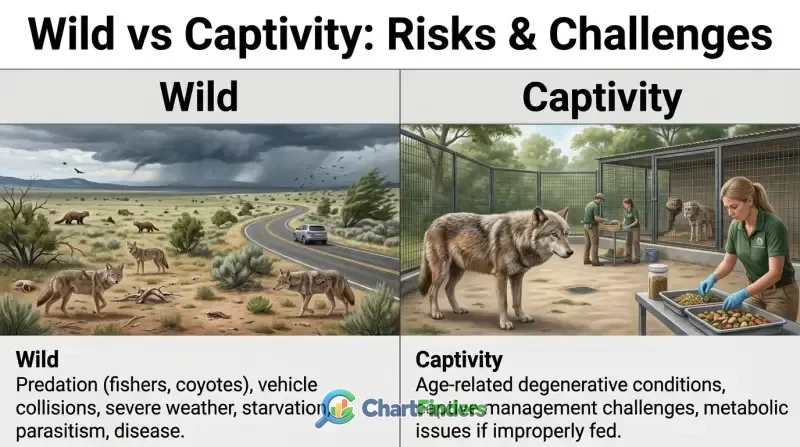
| Wild | 10 – 12 years (Average) Up to 18 years (Maximum) | ~18 years | Predation (fishers, coyotes), vehicle collisions, severe weather, starvation, parasitism, disease. |
| Captivity | 15 – 18 years (Average) | 20+ years | Age-related degenerative conditions, captive management challenges, metabolic issues if improperly fed. |
Note: The table above outlines the clear boundaries between wild survival expectancy and captive longevity. While wild specimens encounter life-shortening hazards daily, captive animals benefit from optimized management that allows them to reach the absolute upper limits of their genetic lifespan.
Biological and Ecological Factors Influencing Lifespan
Porcupines belong to the order Rodentia, but unlike fast-reproducing rodents such as mice or voles—which prioritize high reproductive turnover and short lifespans—porcupines follow a slow life-history strategy. This strategy is characterized by late sexual maturity, a single annual litter consisting almost exclusively of one offspring, and a prolonged investment in parental care.
Because populations produce very few young each year, individual survival is for species continuity. If prime breeding adults were continually lost to premature mortality, populations would plummet. Consequently, porcupines have evolved a robust physiological and behavioral toolkit to maximize individual longevity:
- Quill Defense Mechanism: Equipped with up to 30,000 specialized, barbed quills, porcupines deter the vast majority of mammalian predators upon first encounter.
- Arboreal Habits: Spending significant portions of their lives high in forest canopies reduces direct contact with ground-dwelling predators.
- Specialized Herbivory: Their ability to shift diets seasonally—consuming green herbaceous vegetation in spring and summer, and switching to inner tree bark (phloem and cambium) in winter—ensures year-round caloric intake without the need for active hunting.
Life Stages and Developmental Milestones
A porcupine’s journey from birth to old age is marked by distinct physiological phases that dictate its vulnerability and role in the forest ecosystem.
Gestation and Birth
Breeding typically occurs in late autumn (November and December). Following courtship rituals that involve vocalizations and scent-marking, the female undergoes an extended gestation period lasting between 205 and 217 days—exceptionally long for a rodent. This extended gestation ensures that the single young is born during late spring or early summer when environmental conditions are optimal and plant food is abundant.
Neonatal Development
At birth, the porcupette is remarkably precocious. Weighing roughly 454 grams (1 pound)—an enormous investment for the mother—the newborn enters the world with its eyes fully open, its incisors and some molars erupted, and soft, pliable quills. These quills dry and harden within an hour of exposure to air, providing immediate defensive capabilities.
Juvenile Independence
Although young porcupines begin sampling green vegetation within days of birth, they continue nursing for approximately three months. During this extended weaning period, they learn crucial survival skills from the mother, including how to navigate canopy branches, identify preferred tree species for bark stripping, and perfect defensive postures. By late summer or autumn, the juvenile disperses to establish its own home range.
Adult Maturity and Senescence
Porcupines reach sexual maturity between their first and second years. Prime adult years span from age 3 to age 10, during which they actively participate in regional breeding pools. As they enter their second decade, signs of senescence appear: dental wear from chewing tough bark and wood fibers, arthritis from arboreal climbing and falls, and diminished immune function that leaves them more susceptible to severe parasite loads.
Natural Mortality Factors in the Wild
While quills make porcupines formidable opponents, they are not entirely immune to predation and environmental attrition. Understanding what shortens a wild porcupine’s life requires examining the specific threats they encounter across their range.
Predation and Specialized Hunters
Most generalist predators quickly learn to avoid porcupines after a painful encounter with quills. However, certain specialized predators have evolved behavioral adaptations to overcome this defense. The fisher (Pekania pennanti) is the most notable natural predator of the North American porcupine. Fishers hunt by repeatedly attacking the porcupine’s unprotected face until the prey is exhausted or flipped onto its back, exposing the vulnerable belly. Other predators, such as cougars, coyotes, great horned owls, and bobcats, occasionally take porcupines, usually targeting inexperienced juveniles or scavenging weakened adults.
Parasitism and Disease
Wild porcupines serve as hosts for a variety of parasites and pathogens. External parasites such as ticks, mites, and lice are common. , porcupines frequently suffer from internal parasites, including tapeworms and nematodes. In dense populations or during periods of environmental stress, outbreaks of mange or bacterial infections can significantly compromise an individual’s health, accelerating mortality.
Vehicular Collisions and Human Conflict
As human development encroaches on forested habitats, artificial hazards become leading causes of premature death for adult porcupines. Porcupines are notoriously attracted to road salt; they frequently ingest salt-impregnated soil or lick road surfaces during winter and spring. This attraction draws them onto highways and secondary roads, resulting in high rates of vehicular mortality. Additionally, because porcupines girdle trees and chew on wooden cabins, tool handles, and plywood (motivated by a craving for mineral salts and structural salt residues), they are sometimes eradicated as nuisance animals by landowners.
Frequently Asked Questions
How long do porcupines live in the wild?
In natural habitats, North American porcupines typically have an average life expectancy of 10 to 12 years, though exceptionally resilient individuals can live up to 18 years if they successfully avoid major predators, vehicular hazards, and severe disease.
Why do captive porcupines live longer than wild ones?
Captive porcupines frequently reach up to 20 years of age because zoos and wildlife sanctuaries eliminate major environmental stressors. Captive animals receive consistent, balanced nutrition, protection from specialized predators like fishers, shelter from harsh winter weather, and immediate veterinary medical care when injured or ill.
How many babies do porcupines have, and how does this affect their lifespan strategy?
Female porcupines give birth to only a single offspring (rarely twins) once per year after a gestation period of 205 to 217 days. Because their reproductive rate is extremely slow for a rodent, individual adults must live long lives and successfully rear multiple generations to maintain stable population numbers.
What is the primary natural predator that shortens a porcupine’s life?
The fisher is the primary specialized mammalian predator of the North American porcupine. Fishers use targeted behavioral tactics to flip porcupines onto their backs, bypassing their dense quill armor to attack the vulnerable underbelly.
At what age are young porcupines fully independent?
Young porcupines (porcupettes) are born at a relatively advanced stage of development with open eyes and hardening quills. They nurse for about three months before being fully weaned, after which they separate from their mother by late summer or autumn to establish independent home ranges.
Conclusion
The lifespan of a porcupine is a to the balance between specialized evolutionary defenses and persistent environmental challenges. Achieving up to 18 years in the wild and up to 20 years in captivity, these deliberate, slow-breeding herbivores rely on their formidable quill coats, arboreal adaptability, and behavioral caution to survive. While natural predators like fishers, alongside anthropogenic threats such as vehicular collisions and habitat fragmentation, curtail the lives of many individuals, the species’ longevity strategy ensures that adults have adequate time to sustain stable populations across diverse forest ecosystems.