
A Low GI (Glycemic Index) Foods Chart is a comprehensive reference guide used to classify carbohydrate-containing foods based on how slowly or quickly they cause blood glucose levels to rise. Foods are ranked on a scale from 0 to 100 compared to pure glucose (which has a GI of 100). Low GI foods score 55 or less and include legumes, most whole fruits, vegetables like broccoli and carrots, and whole grains such as pearled barley and brown rice, helping maintain steady metabolic energy and glycemic control.
(Reference: Low GI Diet Shopper's Guide 2011: The authoritative source of Glycemic Index values for more than 1000 foods by Jennie Brand-Miller, Kaye Foster-Powell – Books – Hachette Australia)Managing metabolic health, sustaining stable daily energy, and supporting long-term wellness depend heavily on understanding how the human body processes dietary carbohydrates. When you consume starchy, sugary, or fibrous foods, your digestive system breaks them down into simple sugars—primarily glucose—which then enters the bloodstream. However, not all carbohydrates behave identically inside the metabolic machinery of the body. Some trigger rapid, sharp spikes in blood sugar followed by reactive crashes, while others release energy in a sustained, gradual trickle.
Explore our detailed breakdown on Wasp Identification Chart [Master Comparison Chart].This dynamic forms the core foundation of the Glycemic Index (GI). Navigating the sheer volume of nutritional data available can be overwhelming, especially when conflicting guidelines obscure how different preparation methods, fiber contents, and processing techniques alter a food’s physiological impact. This master guide explores the science of glycemic indexing, breaks down detailed classification categories, analyzes real-world food profiles, and provides practical frameworks for integrating low-glycemic principles into daily nutrition without falling for common marketing traps or dietary misconceptions.
Understanding the Low GI Foods Chart
- The Glycemic Index (GI) measures the relative ability of carbohydrate-containing foods to raise blood glucose levels compared to pure glucose.
- Low GI foods score 55 or lower, medium GI foods score 56–69, and high GI foods score 70 or higher.
- Fiber, protein, fat, and acid content all slow down gastric emptying and carbohydrate absorption, lowering a food’s overall GI score.
- Cooking methods and food processing significantly alter GI; overcooking pasta or pureeing vegetables instantly shifts them into higher glycemic categories.
- Non-starchy vegetables like broccoli and spinach have a GI close to zero because they contain negligible digestible carbohydrates.
- Legumes, whole kernel grains, and intact fruits represent the gold standard of sustainable, low-glycemic carbohydrate sources.
At its core, a Low GI Foods Chart serves as an operational roadmap for selecting carbohydrates that support metabolic equilibrium. Developed in the early 1980s by Dr. David Jenkins and his colleagues at the University of Toronto—initially to optimize dietary management for individuals with diabetes—the index provides a numerical ranking that measures postprandial (post-meal) blood glucose responses.
It is crucial to understand that the Glycemic Index measures quality, not quantity. It tells you how rapidly a specific food turns into glucose, but it does not account for the total amount of carbohydrates in a standard serving. This distinction gave rise to the Glycemic Load (GL), which multiplies a food’s GI by the amount of carbohydrates in a typical portion, dividing the result by 100. Together, GI and GL provide a complete picture of dietary impact.
The classification spectrum is universally divided into three distinct tiers:
- Low GI (0 to 55): Slow digestion and absorption; produces gradual, minor fluctuations in blood glucose and insulin levels.
- Medium GI (56 to 69): Moderate digestion speed; causes moderate glycemic responses.
- High GI (70 to 100): Rapid digestion and absorption; triggers sharp, pronounced spikes in blood glucose and insulin.
Comprehensive Low GI Foods Reference Table
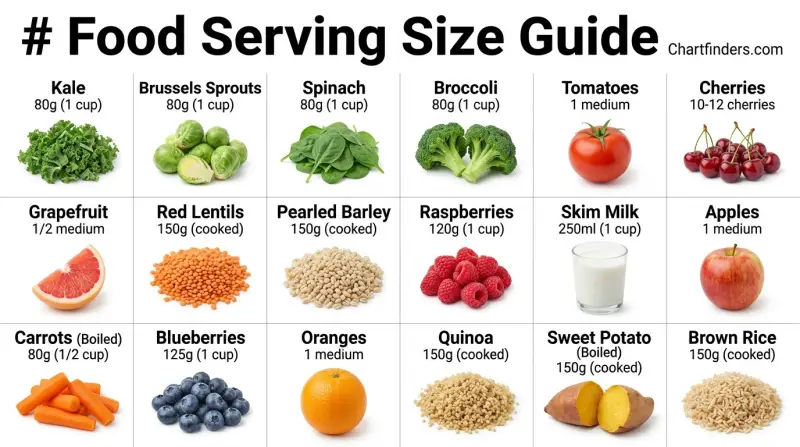
The following reference table outlines common foods across various categories, providing their established Glycemic Index values and typical portion sizes. Use this breakdown to compare how different whole foods, grains, and produce items rank on the glycemic spectrum.
| Food Item | Glycemic Index (GI) | Typical Portion | Category |
|---|---|---|---|
| Kale | 5 | 80g (1 cup) | Very Low |
| Brussels Sprouts | 6 | 80g (1 cup) | Very Low |
| Spinach | 6 | 80g (1 cup) | Very Low |
| Broccoli | 15 | 80g (1 cup) | Very Low |
| Tomatoes | 15 | 1 medium | Very Low |
| Cherries | 22 | 10-12 cherries | Low |
| Grapefruit | 25 | 1/2 medium | Low |
| Red Lentils | 26 | 150g (cooked) | Low |
| Pearled Barley | 28 | 150g (cooked) | Low |
| Raspberries | 30 | 120g (1 cup) | Low |
| Skim Milk | 32 | 250ml (1 cup) | Low |
| Apples | 39 | 1 medium | Low |
| Carrots (Boiled) | 39 | 80g (1/2 cup) | Low |
| Blueberries | 40 | 125g (1 cup) | Low |
| Oranges | 45 | 1 medium | Low |
| Quinoa | 53 | 150g (cooked) | Low |
| Sweet Potato (Boiled) | 54 | 150g (cooked) | Low |
| Brown Rice | 50 | 150g (cooked) | Low |
When analyzing this data, notice how non-starchy green vegetables occupy the absolute lowest tier. Because their carbohydrate load is extremely low and packed with insoluble cellular walls, they require significant digestive effort and yield minimal free glucose. Conversely, starchy roots and refined grains sit higher on the spectrum.
The Physiological Mechanisms: Why Low GI Matters
To fully grasp why low GI foods are essential for metabolic optimization, one must look at what happens inside the human body after ingestion. When you eat a high-GI food—such as instant mashed potatoes or white bread—enzymes in your digestive tract rapidly break the starch molecules down into glucose. This glucose floods the small intestinal lining, crossing swiftly into the portal vein and causing an abrupt spike in blood sugar.
In response to this sudden surge, the pancreas works overtime, releasing a large bolus of insulin. Insulin acts as a molecular storage key, forcing circulating glucose out of the bloodstream and into muscle, liver, and fat cells. Because the initial insulin surge is often oversized relative to the incoming glucose, it frequently overcorrects, driving blood sugar levels below baseline. This reactive hypoglycemia triggers feelings of fatigue, irritability, brain fog, and intense cravings for more quick-energy carbohydrates—initiating a vicious metabolic cycle.
In contrast, low GI foods alter this sequence fundamentally:
- Slow Gastric Emptying: High amounts of viscous, soluble fiber form a gel-like matrix in the stomach, slowing down the rate at which food empties into the small intestine.
- Extended Enzymatic Breakdown: Digestive enzymes take significantly longer to penetrate intact cell walls and complex molecular structures (such as the amylose and amylopectin matrix found in legumes and whole grains).
- Attenuated Insulin Secretion: Because glucose enters the bloodstream as a slow, steady stream rather than a tidal wave, the pancreas secretes modest, sustained levels of insulin, avoiding sharp blood sugar crashes.
Key Biochemical Drivers of Low GI Status
Several distinct factors dictate whether a food earns a low GI rating:
- Fiber Matrix: Soluble fibers (found in oats, beans, and psyllium) and insoluble fibers (found in whole grains and vegetable skins) physically impede digestive enzymes.
- Starch Structure: Starch is composed of two molecules: amylose and amylopectin. Foods high in amylose (like lentils and certain rices) digest much slower than foods high in amylopectin (like white potatoes and sticky rice) because amylose has a tightly packed, crystalline structure that resists enzymatic cleavage.
- Protein and Fat Content: Both macronutrients slow gastric emptying. A meal containing healthy fats and lean proteins alongside carbohydrates will always result in a lower glycemic response than the carbohydrate consumed in isolation.
- Acidity: Foods with high acid content—such as vinegar, lemon juice, or sourdough fermentation lactic acid—slow gastric emptying, delaying carbohydrate absorption in the small intestine.
Deep Dive into Low GI Food Categories
A successful low-glycemic dietary pattern is not about restriction; it is about substitution and intelligent selection. Understanding the nuances across different food groups allows for immense culinary variety without compromising metabolic health.
Legumes, Pulses, and Beans: The Undisputed Champions
Legumes—including lentils, chickpeas, black beans, kidney beans, and dried peas—consistently rank among the lowest GI foods on the planet, with scores typically falling between 20 and 40. This remarkable performance stems from a unique combination of structural traits:
- High concentrations of slow-digesting resistant starch.
- Abundant soluble fiber content.
- Significant amounts of plant-based protein.
- Presence of enzyme inhibitors that temporarily slow down carbohydrate breakdown in the gut.
Incorporating lentils or chickpeas into soups, salads, and grain bowls provides sustained satiety and prevents the afternoon energy slumps commonly caused by refined grain lunches.
Whole Grains vs. Refined Grains
The degree of grain processing is the single greatest determinant of its glycemic impact. When a grain is milled into fine white flour, the fiber-rich bran and nutrient-dense germ are stripped away, leaving only the starchy endosperm. This exposes the starch directly to digestive enzymes, transforming a slow-burning whole grain into a fast-acting glucose source.
Compare this to intact whole grains:
- Pearled Barley (GI ~28): Retains its dense, chewy endosperm structure and beta-glucan soluble fiber, making it one of the best grain choices for blood sugar management.
- Quinoa (GI ~53): A pseudo-cereal that contains a complete amino acid profile along with a protective outer seed coat that delays digestion.
- Brown Rice (GI ~50): Retains the fibrous bran layer, slowing sugar absorption compared to white jasmine or instant rice (which often exceeds GI 70).
Fruits: Navigating Fructose and Fiber
A common misconception is that sweet-tasting fruits should be avoided on a low GI diet due to their sugar content. In reality, the vast majority of fresh fruits fall into the low GI category (scores under 55).
This is because the natural sugar in whole fruit is bound within cellular structures surrounded by dietary fiber, water, and bioactive micronutrients. For example, apples score 39, pears score 38, and cherries score 22. The notable exceptions are tropical fruits like watermelon, pineapple, and overripe bananas, which feature more accessible starches and free sugars that elevate their GI.
Crucially, how fruit is consumed matters immensely. Blending whole fruit into a high-speed smoothie ruptures those cellular walls mechanically, pre-digesting the food and resulting in a significantly faster glycemic spike than eating the whole fruit raw.
Vegetables: Starchy vs. Non-Starchy Realities
Non-starchy vegetables—such as leafy greens (spinach, kale), cruciferous vegetables (broccoli, cauliflower, Brussels sprouts), and vine crops (tomatoes, cucumbers, zucchini)—have negligible impact on blood sugar. Their GI is so low that testing them accurately is nearly unnecessary; a plate of steamed broccoli or spinach requires minimal insulin to process.
Starchy vegetables require more careful navigation:
- Boiled Sweet Potatoes (GI ~54): Contain higher amounts of moisture and beneficial fiber when boiled compared to baking.
- Baked Russet Potatoes (GI 111): Exceptionally high glycemic impact due to the gelatinization of amylopectin starches during high-heat dry baking.
- Carrots: While raw carrots have a low GI (~35), boiled carrots sit around 39. However, their overall glycemic load remains very low because a standard serving contains very few total carbohydrates.
Practical Application: How to Lower the GI of Everyday Meals
You do not need to overhaul your entire pantry or abandon your favorite meals to benefit from low-glycemic eating. Simple culinary techniques and food pairing strategies can alter the glycemic profile of everyday dishes.
The Retrogradation Phenomenon (Resistant Starch)
One of the most fascinating discoveries in nutritional science is that cooking and subsequently cooling starchy foods transforms their molecular structure. When foods like potatoes, rice, pasta, or oats are cooked and then placed in a refrigerator for 12 to 24 hours, a process called retrogradation occurs.
During cooling, the digestible starches reorganize into resistant starch—a type of carbohydrate that resists enzymatic digestion in the small intestine, passing instead to the large intestine where it acts as a prebiotic fiber. Even if you reheat the food afterward, a significant portion of this resistant starch remains intact, permanently lowering the meal’s overall glycemic index and reducing its postprandial glucose spike.
Strategic Food Pairing
Rarely do we eat a single macronutrient in isolation. By intentionally combining carbohydrate foods with healthy fats, lean proteins, and organic acids, you blunt the glycemic response:
- Add Healthy Fats: Drizzling extra virgin olive oil over whole-grain pasta or adding avocado to toast slows gastric emptying.
- Incorporate Protein: Pairing a piece of fruit with a handful of raw nuts or a scoop of Greek yogurt moderates the absorption of fructose.
- Use Acidic Condiments: Dressing a carbohydrate-heavy meal with apple cider vinegar, lemon juice, or balsamic vinaigrette reduces the rate of stomach emptying, lowering the meal’s overall glycemic impact.
Common Mistakes and Pitfalls in Low GI Dieting
Even with the best intentions, individuals adopting a low-glycemic approach often fall into predictable traps. Recognizing these pitfalls ensures better long-term results.
- Confusing Low GI with Low Calorie: A food can have a low glycemic index while still being exceptionally high in calories and fat (for example, peanuts or chocolate). Low GI does not automatically mean weight-loss friendly if caloric surplus is maintained.
- Ignoring Portion Sizes and Glycemic Load: Eating massive quantities of a low-gi food (such as consuming bowls of pasta or excessive servings of brown rice) will still introduce a heavy total load of glucose into the bloodstream. Total carbohydrate amount always matters.
- Overprocessing and Cooking: Boiling pasta until it is mushy (overcooked) breaks down its starch matrix, raising its GI significantly compared to cooking it al dente. Similarly, juicing vegetables strips away the fiber, destroying the protective mechanism that keeps the GI low.
- Falling for Marketing Hype: Many commercial food products advertise themselves as “low glycemic” or “diabetic-friendly” while packing refined wheat, artificial sweeteners, and fractionated oils. Always inspect the ingredient list rather than relying solely on front-of-pack health claims.
Frequently Asked Questions
Yes. Cooking methods that involve high heat, moisture, and prolonged duration—such as boiling, baking, or mashing—gelatinize starches, making them easier for digestive enzymes to break down. For instance, instant mashed potatoes have a much higher GI than whole boiled potatoes. Conversely, cooling cooked starches creates resistant starch, which lowers the GI.
Not necessarily. Different sugars have vastly different glycemic indexes. Pure glucose has a GI of 100, table sugar (sucrose) sits around 65, and pure fructose has a remarkably low GI of approximately 19 because it must be processed by the liver before entering the bloodstream as glucose. However, high-fructose corn syrup and excessive concentrated sugars still place heavy burdens on metabolic health and liver function, so whole-food sources remain preferable.
Glycemic Load (GL) is calculated by multiplying the food’s Glycemic Index by the grams of available carbohydrate in a standard serving, then dividing that product by 100. A GL of 10 or less is considered low, 11 to 19 is medium, and 20 or higher is high. This metric is often more practical for daily meal planning than GI alone.
Yes. By preventing the sharp blood sugar spikes and reactive crashes associated with high-GI foods, a low-glycemic diet helps stabilize hunger hormones, reduces impulsive sugar cravings, and promotes prolonged satiety. This makes it significantly easier to maintain a natural caloric deficit without feeling deprived.
Absolute elimination is rarely necessary unless prescribed for specific medical conditions. A balanced, sustainable lifestyle allows for flexibility. When consuming a higher-GI food (such as a baked potato or white rice), you can mitigate its glycemic impact simply by pairing it with ample fiber, healthy fats, and protein, or by cooling and reheating it to form resistant starch.
Conclusion
Mastering a Low GI Foods Chart provides a powerful, scientifically validated framework for taking control of your metabolic health, energy levels, and long-term wellness. By shifting your focus from rigid dietary restrictions to structural food quality—prioritizing legumes, intact whole grains, non-starchy vegetables, and whole fruits—you can enjoy satisfying meals while keeping blood glucose steady.
Remember that the Glycemic Index is a tool for guidance, not an absolute rulebook. Factors like cooking time, food pairing, and portion size all play crucial roles in how your body responds to what you eat. By applying these principles thoughtfully and avoiding common processing pitfalls, you can build a sustainable, energizing nutritional pattern that supports your body for life.