
Few feline breeds command the immediate awe and fascination inspired by the Maine Coon. Known affectionately as “gentle giants,” these magnificent cats combine rugged, weather-resistant coats with formidable skeletal structures that set them apart from standard domestic cats. However, because they grow at such an exceptionally slow rate, owners frequently find themselves questioning whether their kitten is growing normally, underweight, or simply experiencing one of the breed’s distinct developmental lulls.
(Reference: Maine Coon Size: Weight Charts, Height, and Growth Timeline)Understanding the trajectory of a Maine Coon’s physical development requires looking far beyond standard feline growth charts. Unlike regular house cats that reach their adult size and weight within their first year, Maine Coons undergo a prolonged multi-year maturation process. This extensive timeline impacts everything from nutritional requirements and environmental space planning—such as litter box sizing and vertical territory design—to long-term veterinary health monitoring. This comprehensive resource explores the physical milestones, growth rates, measurement metrics, and environmental accommodations necessary for managing a giant-breed cat.
Explore our detailed breakdown on Vintage Lamp Identification Chart [Full Reference Chart].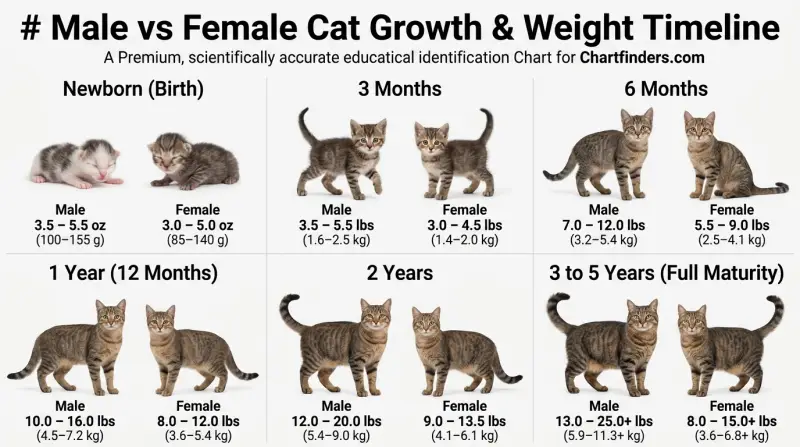
Maine Coon Cat Size Chart
- Extended Growth Window: Maine Coons do not reach their full physical size and weight until they are 3 to 5 years old.
- Sexual Dimorphism: Adult males typically weigh 13–25 lbs, whereas adult females generally range between 8–15 lbs, with notable exceptions in hyper-large lines.
- Substantial Length: Total length from nose to tail tip ranges from 18 to 40 inches, requiring specialized extra-long housing and feeding accessories.
- Height Proportions: Adult shoulder height spans 10 to 16 inches, giving them a commanding, dog-like stature.
- Bone Structure Over Fat: Healthy weight gain in Maine Coons should reflect heavy bone density, muscular build, and a broad chest rather than adipose fat tissue.
- Specialized Environment: Standard pet products (such as 18-inch litter boxes or lightweight scratching posts) are inadequate for full-grown Maine Coons and often lead to behavioral or joint issues.
To accurately evaluate a Maine Coon’s development, owners must reference growth benchmarks tailored specifically to the breed’s slow-maturing genetics. The following comprehensive size chart outlines the expected weight, length, and height ranges across different life stages for both males and females.
| Life Stage / Age | Male Weight Range | Female Weight Range | Approximate Length | Shoulder Height |
|---|---|---|---|---|
| Newborn (Birth) | 3.5 – 5.5 oz (100–155 g) | 3.0 – 5.0 oz (85–140 g) | 4 – 6 inches | 3 – 4 inches |
| 3 Months | 3.5 – 5.5 lbs (1.6–2.5 kg) | 3.0 – 4.5 lbs (1.4–2.0 kg) | 10 – 14 inches | 6 – 8 inches |
| 6 Months | 7.0 – 12.0 lbs (3.2–5.4 kg) | 5.5 – 9.0 lbs (2.5–4.1 kg) | 15 – 22 inches | 8 – 11 inches |
| 1 Year (12 Months) | 10.0 – 16.0 lbs (4.5–7.2 kg) | 8.0 – 12.0 lbs (3.6–5.4 kg) | 20 – 28 inches | 10 – 13 inches |
| 2 Years | 12.0 – 20.0 lbs (5.4–9.0 kg) | 9.0 – 13.5 lbs (4.1–6.1 kg) | 24 – 34 inches | 11 – 15 inches |
| 3 to 5 Years (Full Maturity) | 13.0 – 25.0+ lbs (5.9–11.3+ kg) | 8.0 – 15.0+ lbs (3.6–6.8+ kg) | 18 – 40 inches | 10 – 16 inches |
When analyzing this data, keep in mind that individual growth trajectories are heavily influenced by genetic background, lineage, nutrition, and overall health status. Outliers—particularly males from European lines selected for extreme size—frequently exceed the upper limits of these standard ranges.
Understanding the Maine Coon Growth Timeline
The defining characteristic of Maine Coon development is its pacing. While a standard domestic shorthair kitten reaches roughly 80% of its adult size by six months of age, a Maine Coon is essentially a perpetual adolescent for its first few years of life.
During the first year, growth is remarkably rapid. Kittens experience explosive bone elongation and weight gain, often looking disproportionate—such as having oversized paws, elongated ears, or gangly limbs (“losing their kitten looks”). Between years two and three, the skeletal frame begins to fill out, and muscle mass accumulates, particularly across the broad chest and shoulders. From years three to five, the cat undergoes its final broadening phase, developing the heavy coat ruff, dense undercoat, and blocky head structure characteristic of mature adults.
Sexual Dimorphism in Maine Coon Sizes
Sexual dimorphism is exceptionally pronounced in the Maine Coon breed. While kittens of both sexes are relatively indistinguishable at birth and during the first few months, a divergence becomes clear around six months of age.
Adult males consistently outpace females in every physical dimension. A mature male typically features a broader skull, heavier jaw structure, and a thicker, more muscular torso. Conversely, females—while still vastly larger than average domestic cats—tend to possess a slightly more refined, athletic build. It is not uncommon for a fully mature, high-line male to weigh nearly double the weight of a standard female from a different bloodline.
Key Physical Dimensions Explained
Evaluating a Maine Coon’s size involves more than stepping on a bathroom scale. True breed conformation requires assessing linear measurements that dictate how these cats interact with their environment.
Length: From Nose Tip to Tail
The extraordinary length of a Maine Coon is one of its most striking attributes. Ranging from 18 to 40 inches, this measurement incorporates a long, plumed tail that can easily span 12 to 16 inches on its own. Their elongated spine allows for a fluid, powerful stride and grants them an impressive reach when stretching or climbing.
Height and Stature
Standing 10 to 16 inches tall at the shoulder, Maine Coons approach the height of small-to-medium dog breeds. Their height is supported by heavy, dense bone structures and large, tufted paws equipped with extra width to distribute their body weight evenly—an evolutionary adaptation designed for walking across deep winter snow.
Weight Composition: Muscle vs. Fat
A common pitfall among novice owners is striving for maximum weight without considering body composition. A healthy Maine Coon should feel solid, muscular, and substantial when lifted. Ribs should be palpable beneath a light layer of fat, and the waistline should remain discernible from above. Overfeeding to achieve an inflated weight figure places undue stress on their developing joints and predisposes them to feline hypertrophic cardiomyopathy (HCM) and joint deterioration.
Environmental and Product Adaptations for Large Cats
Because Maine Coons dwarf standard domestic cats, standard pet supplies are frequently unusable or hazardous. Accommodating their massive frame requires purpose-built equipment.
| Product Category | Standard Cat Specification | Maine Coon Requirement | Operational Reason |
|---|---|---|---|
| Litter Box | ~18″ L x 14″ W | 22″+ L x 18″+ W, high sides (12″+) | Prevents elimination misses; provides adequate clearance for 40-inch turning radius. |
| Cat Tree / Condos | 24″ – 36″ tall, light fiberboard base | 48″+ tall, heavy solid wood base, wide footprint | Prevents tipping during high-impact leaps; allows full-body vertical stretching. |
| Food & Water Bowls | Small, shallow plastic or ceramic dishes | Wide, heavy ceramic or stainless steel (or elevated bowls) | Prevents whisker fatigue; prevents tipping; reduces strain on cervical spine and neck. |
| Carriers | Standard plastic airline kennel (Small/Medium) | Large-breed dog crate or specialized XXL soft/hard carrier | Ensures the cat can stand, turn around, and lie down comfortably during transit. |
Investing in heavy-duty supplies prevents premature wear and tear on household goods and ensures the physical comfort of the cat. A litter box that is too small, for example, frequently results in inappropriate elimination simply because the cat cannot comfortably position its body inside the basin.
Nutritional Requirements During Growth Phases
Fueling a giant-breed cat through a five-year growth cycle requires precise nutritional management. During kittenhood and early adolescence (months 1 through 24), Maine Coons require high-calorie, protein-dense diets formulated for growth. High-quality animal protein supports rapid skeletal and muscular development.
However, once the rapid growth phase slows down around year two, owners must monitor caloric intake closely to prevent excessive weight gain. Because Maine Coons are prone to hereditary hip dysplasia and spinal issues, maintaining an optimal lean body condition is vital for long-term musculoskeletal health. Incorporating wet food alongside high-protein kibble helps maintain proper hydration and urinary tract health, while joint supplements containing glucosamine and chondroitin can support cartilage integrity as the cat matures.
Genetic Lines: European vs. American Maine Coons
When analyzing a Maine Coon size chart, it is essential to distinguish between the two primary breeding directions within the fancy: American lines and European lines.
American Maine Coon Type
American lines tend to focus on traditional, classic type standards. While still remarkably large, American-bred Maine Coons generally possess a slightly more moderate bone structure, longer snouts, and overall dimensions that sit comfortably within the standard historical averages for the breed.
European Maine Coon Type
European lines have been selectively bred for a more dramatic, “wild” appearance. These cats feature extremely heavy, blocky bone structures, high-set ears with pronounced lynx tips, squared muzzles, and significantly larger overall mass. It is very common for European-line male Maine Coons to push past the 20 to 25-pound mark, with exceptional specimens weighing even more.
Common Mistakes in Evaluating Maine Coon Growth
Owners frequently misinterpret their cat’s developmental milestones due to several widespread misconceptions:
- Expecting Adult Size at One Year: Assuming a cat has finished growing at 12 months often leads to premature dietary restriction or unnecessary panic when the cat appears lanky or unproportioned.
- Confusing Fluff with Mass: Maine Coons possess a thick, double-layered, water-repellent coat that can easily create the illusion of a much larger or heavier cat. Always feel for the underlying muscle and bone structure rather than judging by visual silhouette.
- Using Human or Inaccurate Scales: Relying on inconsistent scales can mask subtle weight fluctuations. Regular tracking using a digital pet scale is recommended during the growth years.
- Overlooking Joint Stress: Allowing a growing kitten to become overweight in an effort to produce a “massive” cat places destructive loads on developing growth plates.
Frequently Asked Questions
Maine Coons continue physical development for a remarkably long time, typically reaching their full adult size, weight, and coat density between 3 and 5 years of age. While the most rapid skeletal growth occurs in the first year, skeletal broadening and muscle filling continue well into early adulthood.
Compare your kitten’s weight against established breed-specific growth charts rather than standard domestic cat guidelines. A healthy Maine Coon kitten should display steady, consistent weight gains week over week. If you notice sudden weight loss, lethargy, or halted growth during the first two years, consult a veterinarian familiar with giant cat breeds.
A 12-pound adult male is on the smaller side for the breed but can still fall within a normal, healthy range, particularly if he comes from American working lines, is of mixed heritage, or has a naturally slender, athletic build. Genetics play the primary role in determining ultimate size.
During their prolonged growth phase (up to age 3+), they benefit from high-protein, energy-dense kitten or all-life-stages food. Once fully mature, transition them to a high-quality adult maintenance formula designed for large breeds, keeping a close eye on portion control to prevent obesity.
Yes. Sexual dimorphism is a hallmark of the breed. Adult females typically weigh between 8 and 15 pounds, while adult males range from 13 to 25 pounds or more. Females also tend to have a slightly more refined facial structure and a less massive chest girth than their male counterparts.
Conclusion
The Maine Coon cat is an architectural marvel of the feline world, combining a slow, deliberate developmental timeline with impressive physical proportions. Mastering the nuances of a Maine Coon size chart allows owners to provide appropriate nutrition, invest in correctly scaled environmental accessories, and monitor long-term health with confidence. By respecting their multi-year growth window and prioritizing structural soundness over superficial weight, you ensure your gentle giant leads a long, healthy, and comfortable life.