
Few domestic animal commitments rival the multi-decade responsibility of welcoming a macaw into your home. Renowned for their brilliant plumage, high intelligence, and formidable vocalizations, these magnificent Neotropical parrots are companion animals that can span multiple generations of human life. However, understanding how long these birds live goes far beyond a single numerical average. Macaw longevity is governed by a complex intersection of species-specific genetics, captive environmental factors, dietary precision, psychological stimulation, and advanced avian veterinary care.
(Reference: Types of Macaw Parrots: A Comprehensive Guide – Windy City Parrot)This master guide provides a comprehensive framework for understanding macaw longevity, examining how different species compare across a structured lifespan chart, analyzing the primary physiological and environmental determinants of aging, and highlighting the critical care protocols required to maximize a companion macaw’s quality and length of life. Whether you are evaluating a lifelong pet adoption or managing the specialized geriatric care of an aging senior bird, mastering these insights is essential for responsible stewardship.
Explore our detailed breakdown on Walrus Lifespan.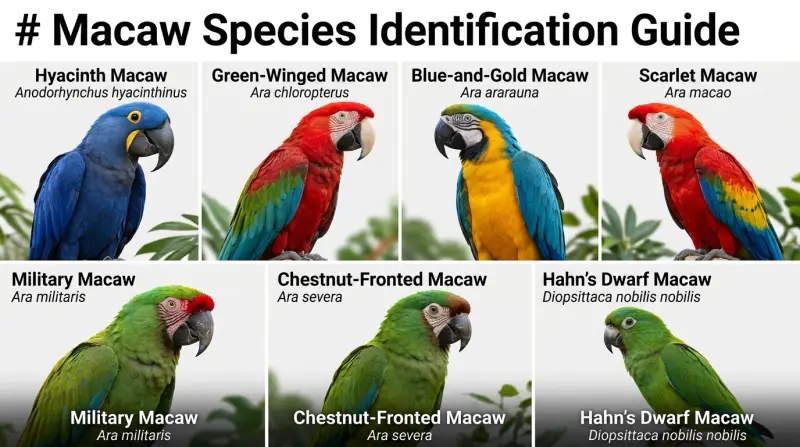
Macaw Lifespan Chart and Species Longevity Profiles
- Large macaw species (genus Ara) consistently average 50 to 60+ years in captivity, with documented exceptional cases reaching 80 years or more.
- Miniature macaws (genus Diopsittaca and Orthopsittaca) have shorter natural baselines, typically living 20 to 30 years.
- Nutritional deficiencies—particularly chronic seed-based diets leading to hypovitaminosis A and atherosclerosis—represent the leading preventable threat to captive macaw longevity.
- Environmental enrichment and psychological stability directly impact physiological health by mitigating stress-induced immunosuppression and self-mutilation behaviors.
- Senior macaws (aged 35+) require targeted veterinary diagnostics, including routine blood chemistry panels, organ function checks, and joint-supportive habitat modifications.
To understand macaw longevity accurately, one must first recognize that “macaw” is a broad umbrella term encompassing multiple genera and varying physical scales. A dwarf Hahn’s macaw shares taxonomic family traits with a massive Hyacinth macaw, yet their physiological baselines, metabolic rates, and expected lifespans differ substantially.
The following data outlines the expected lifespan ranges across the most common macaw species encountered in aviculture and conservation settings.
| Common Name | Scientific Name | Average Adult Size | Wild Lifespan | Captive Lifespan (Optimal Care) |
|---|---|---|---|---|
| Hyacinth Macaw | Anodorhynchus hyacinthinus | 40 inches (100 cm) / 1200g–1700g | 30–50 years | 50–70+ years (Up to 80+ documented) |
| Green-Winged Macaw | Ara chloropterus | 35–38 inches (90–95 cm) / 1050g–1700g | 35–50 years | 50–70+ years |
| Blue-and-Gold Macaw | Ara ararauna | 30–34 inches (76–86 cm) / 900g–1300g | 30–35 years | 50–60+ years |
| Scarlet Macaw | Ara macao | 32–35 inches (81–90 cm) / 900g–1000g | 30–40 years | 40–50+ years (Occasionally 75+) |
| Military Macaw | Ara militaris | 27–28 inches (70–7 kW) / 900g–1100g | 30–50 years | 50–60 years |
| Chestnut-Fronted Macaw | Ara severa | 18–20 inches (45–50 cm) / 300g–400g | 25–30 years | 30–50 years |
| Hahn’s Dwarf Macaw | Diopsittaca nobilis nobilis | 12 inches (30 cm) / 130g–170g | 20–25 years | 25–30+ years (Up to 40 recorded) |
When analyzing this data, owners and researchers note a recurring pattern: under pristine captive conditions with minimized predation, optimized veterinary oversight, and balanced nutrition, large macaws frequently equal or exceed their maximum wild lifespans. Conversely, wild macaws face relentless environmental pressures, including avian predators, habitat fragmentation, foraging stress, and infectious pathogens that truncate their natural life expectancy.
Comparative Longevity Trends Across Macaw Genera
Visualizing the longevity data across different weight classes and species helps illustrate the biological correlation between body mass, metabolic demand, and expected lifespan in psittacines.
Generally, larger body size in macaws correlates with higher maximum lifespans, though physiological resilience and dietary specialization play equally vital roles. The Hyacinth macaw, for instance, possesses a specialized diet consisting heavily of high-lipid palm nuts in the wild, which requires careful caloric and fat management in a captive setting to prevent hepatic lipidosis while supporting its robust frame.
Core Biological and Environmental Determinants of Macaw Lifespan
A macaw’s potential to reach the upper limits of its lifespan chart depends heavily on a combination of internal physiology and external management. Understanding these factors allows avian caretakers to proactively eliminate life-shortening hazards.
Nutritional Optimization vs. Dietary Deficiency
Historically, pet macaws were fed simple, high-fat seed mixes composed primarily of sunflower seeds and peanuts. Modern avian medicine has unmasked this practice as a primary driver of premature mortality. Seeds lack essential amino acids, calcium, vitamin A, and trace minerals.
- Vitamin A Deficiencies: Compromises the epithelial integrity of the respiratory, gastrointestinal, and reproductive tracts, leading to chronic infections.
- Atherosclerosis: High-fat diets cause lipid plaque buildup within arterial walls, predisposing birds to sudden stroke, heart failure, and aneurysms.
- Balanced Formulation: A long-lived captive macaw requires a diet anchored by scientifically formulated pelleted rations, supplemented daily with fresh dark leafy greens, orange-fleshed vegetables, controlled amounts of sprouted seeds, and safe nuts.
Preventive Avian Veterinary Care
Macaws are master prey animals that instinctively mask symptoms of illness until disease processes are dangerously advanced. Routine wellness examinations form the bedrock of long-term survival.
- Annual Diagnostics: Comprehensive blood panels (complete blood count and serum chemistry) establish baseline organ function for liver and kidneys.
- Infectious Disease Screening: Regular testing for Psittacine Beak and Feather Disease (PBFD), Psittacosis (Chlamydia psittaci), and Polyomavirus prevents catastrophic outbreaks.
- Proactive Husbandry: Regular beak trims (when malocclusion exists), nail maintenance, and feather assessments ensure physical comfort and mobility.
Psychological Well-Being and Stress Mitigation
Macaws possess cognitive capacities comparable to those of primates, alongside intense social requirements. Chronic psychological stress triggers elevated circulating glucocorticoids (stress hormones), which systematically suppress immune function and spark stereotypic behaviors.
- Environmental Enrichment: Foraging toys, destructible wood blocks, puzzle feeders, and out-of-cage flight time prevent stereotypic feather-destructive behaviors (FDB) and self-mutilation.
- Social Bonding: Isolation or sudden changes in primary caregivers can induce profound grief and depression, occasionally manifesting in self-starvation or profound lethargy.
Life Stages of a Macaw and Age-Related Care Protocols
Just like humans, macaws transition through distinct life stages, each demanding customized environmental adjustments to preserve health and maximize longevity.
1. Juveniles and Fledglings (Ages 0 to 3 Years)
This formative window establishes metabolic health, skeletal growth, and behavioral foundations. Nutritional weaning mistakes during this phase can permanently stunt bone density or cause chronic organ strain. Socialization during the juvenile period prevents lifelong fear-based aggression.
2. Prime Adults (Ages 4 to 35 Years)
Representing the vast majority of a macaw’s life, this stage is characterized by high physical energy, hormonal fluctuations during sexual maturity (typically manifesting between ages 5 to 10), and established domestic routines. Consistent mental stimulation, flight conditioning, and preventive veterinary checks sustain vitality through these decades.
3. Senior and Geriatric Macaws (Ages 35+ Years)
As macaws enter their senior years, subtle physiological declines begin to accumulate. Specialized geriatric husbandry becomes essential to maintain quality of life:
- Arthritis and Joint Support: Older large macaws frequently develop degenerative joint disease in their hocks and toes. Habitat modifications—such as lowering perches, replacing rigid hardwood perches with wide, padded platforms, and ensuring easy ramp access to food stations—prevent painful falls.
- Organ Senescence: Renal and hepatic filtration efficiency decreases with age. Diets may require protein and phosphorus adjustments under veterinary guidance to manage early-stage renal insufficiency.
- Ophthalmic and Auditory Changes: Cataracts and diminished visual acuity are common in geriatric birds. Keeping cage layouts entirely consistent prevents disorientation and panic injuries.
Common Mistakes That Shorten Macaw Lifespan
Even well-intentioned owners frequently commit husbandry errors that inadvertently diminish a macaw’s expected lifespan. Identifying and correcting these pitfalls is vital.
- Inhalant Toxins: Avian respiratory systems are exceptionally efficient, utilizing a continuous air-sac network. Non-stick cookware coatings (PTFE/Teflon), aerosol air fresheners, scented candles, tobacco smoke, and self-cleaning oven fumes release microscopic toxins that cause rapid, fatal pulmonary hemorrhaging.
- Unsafe Enclosures and Zinc/Lead Toxicity: Galvanized wire cages, cheap imported hardware, or painted toys can expose curious, heavy-chewing macaws to heavy metal poisoning. Chronic ingestion of zinc or lead leads to profound neurological deficits, seizures, and organ failure.
- Inadequate Sleep Schedules: In the wild, macaws experience roughly 10 to 12 hours of uninterrupted darkness aligned with natural photoperiods. Captive birds kept in active living rooms with artificial light and household noise until late at night suffer chronic sleep deprivation, leading to weakened immune responses and severe behavioral instability.
- Incomplete Wing and Dietary Clipping: Total flight restriction leads to muscular atrophy of the pectoral girdle, obesity, and secondary cardiovascular strain. Whenever possible, safe flight environments or supervised training support optimal cardiovascular health.
Frequently Asked Questions
Yes. Because large macaws like the Green-Winged, Blue-and-Gold, and Hyacinth routinely live for 60 to 80 years in captivity, it is statistically common for these birds to outlive their primary human caretakers. Responsible macaw ownership mandates establishing a formal legal estate plan or avian trust specifying lifelong guardianship provisions.
While unverified anecdotal claims often suggest macaws reaching 100 years old, the oldest documented and verified captive macaws generally peak between 75 and 85 years of age. A famous Blue-and-Gold macaw named Charlie, reportedly owned by Winston Churchill, lived well past 100 in unverified accounts, though documented scientific records confirm maximum verified captive lifespans hovering around 80 to 85 years.
No. While captive macaws are vulnerable to poor husbandry, wild macaws face severe environmental mortality pressures including apex avian and mammalian predators, severe weather events, disease outbreaks, human poaching, and occasional starvation. Protected captive environments with optimal veterinary care consistently yield higher average lifespans.
Sexual maturity varies by species and size. Miniature macaws (such as Hahn’s) typically mature around 2 to 3 years of age. Larger species (such as Scarlet and Hyacinth macaws) reach sexual maturity much later, usually between 5 and 10 years of age, often accompanied by significant behavioral shifts and increased territoriality.
Signs of avian arthritis include reluctance to climb cage bars, perching on flat surfaces rather than round perches, shifting weight frequently from foot to foot, drooping wings, reduced grip strength, and generalized lethargy. A veterinarian can confirm joint degeneration via physical examination and diagnostic radiography.
Conclusion
A macaw lifespan chart is much more than a set of abstract statistical projections; it represents a multi-decade journey of shared companionship, complex psychological bonding, and rigorous stewardship. Understanding that species like the Green-Winged and Hyacinth macaw can thrive for upwards of six to eight decades underscores the profound dedication required to meet their biological needs. By prioritizing scientifically formulated nutrition, pristine environmental safety, proactive veterinary medicine, and rich psychological engagement, avian caretakers can ensure their majestic companions live out their long lives in vibrant health and comfort.