
Quick Answer: Maine Coons are intelligent, affectionate, and loyal giants known for their dog-like personalities and striking tufted coats. Their primary pros include exceptional family compatibility, robust social behavior, and stunning aesthetics. However, their cons include significant grooming requirements, high-end nutritional costs, large living space needs, and genetic predispositions to health issues such as hypertrophic cardiomyopathy (HCM) and hip dysplasia.
(Reference: Pros and Cons of a Maine Coon Cat | The Cat Butler)Choosing to bring a feline companion into your home is a major decision, but choosing a Maine Coon elevates that commitment to an entirely different scale. Often dubbed the “gentle giants” of the cat fancy, these magnificent creatures capture attention with their impressive stature, luxuriant ruffs, and lynx-tipped ears. Yet beneath that majestic exterior lies a complex blend of traits that can either make them the ultimate household companion or an overwhelming responsibility depending on your lifestyle, living arrangements, and financial readiness.
Explore our detailed breakdown on Types Of Gazelle.Understanding the full spectrum of Maine Coon cat pros and cons requires looking past the viral videos of exceptionally large specimens and examining the day-to-day reality of living with an active, high-maintenance breed. From their unique vocalizations and social quirks to specialized veterinary care needs and dietary demands, this comprehensive guide breaks down everything you need to know before welcoming one of these gentle giants into your life.
Maine Coon Cat Pros And Cons: The Complete Master Guide
- Size and Presence: Maine Coons are among the largest domesticated cat breeds, often weighing up to 25 pounds, which requires spacious living arrangements and sturdy cat trees.
- Affectionate Temperament: They possess a famously dog-like, highly social personality, making them exceptionally well-suited for families with children and other pets.
- High Grooming Demands: Their dense, water-resistant double coats require regular, disciplined brushing to prevent severe matting, though they generally tolerate grooming well.
- Significant Financial Investment: Beyond higher adoption or breeder costs, their massive size translates directly into greater food consumption and higher veterinary bills.
- Genetic Health Risks: Prospective owners must verify that breeding lines are screened for common hereditary conditions such as hypertrophic cardiomyopathy (HCM), spinal muscular atrophy (SMA), and hip dysplasia.
- Slow Maturation: Maine Coons grow slowly, retaining kitten-like behaviors, high energy levels, and playfulness well into their third or fourth year of life.
Evaluating any cat breed involves balancing desirable behavioral and aesthetic traits against the practical, financial, and time-intensive obligations of daily care. To provide a clear overview, the following breakdown maps out the primary advantages and disadvantages of owning a Maine Coon.
| Category | Maine Coon Pros | Maine Coon Cons |
|---|---|---|
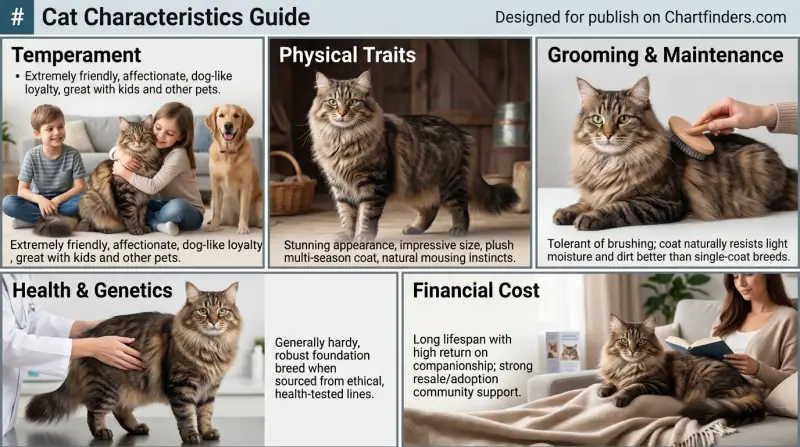
| Temperament | Extremely friendly, affectionate, dog-like loyalty, great with kids and other pets. | Can be overly demanding of attention; may experience separation anxiety if left alone for long periods. |
| Physical Traits | Stunning appearance, impressive size, plush multi-season coat, natural mousing instincts. | Massive size requires heavy-duty furniture, larger litter boxes, and extra living space. |
| Grooming & Maintenance | Tolerant of brushing; coat naturally resists light moisture and dirt better than single-coat breeds. | Heavy shedding, high risk of mats and tangles, frequent combing required, prone to hairballs. |
| Health & Genetics | Generally hardy, robust foundation breed when sourced from ethical, health-tested lines. | Prone to genetic conditions including HCM, hip dysplasia, polycystic kidney disease (PKD), and SMA. |
| Financial Cost | Long lifespan with high return on companionship; strong resale/adoption community support. | High initial purchase cost, massive food bills due to large body mass, elevated veterinary medication doses. |
Reading through this comparison table highlights a central theme: the very traits that make Maine Coons so beloved—their size, coat, and energy—are often the root cause of their primary maintenance challenges. Let us examine these factors in detail.
The Advantages of Owning a Maine Coon
There are solid, practical reasons why the Maine Coon consistently ranks among the top most popular cat breeds worldwide. Their unique blend of rugged working-cat ancestry and refined domestic sweetness creates a captivating companion.
Exceptional Temperament and Social Intelligence
Often referred to as the “dogs of the cat world,” Maine Coons are remarkably people-oriented. Unlike more aloof or independent breeds, they prefer to be where the action is. They will greet you at the door, supervise your cooking, follow you from room to room, and often participate in household activities.
Their high emotional and cognitive intelligence makes them easy to train. Many Maine Coons learn to play fetch, walk on a leash with a , and respond to basic verbal cues. This intelligence also means they require mental stimulation; bored Maine Coons can easily invent their own entertainment, which may not always align with your household rules.
Compatibility with Families, Children, and Other Pets
If you have a bustling household with children, dogs, or other cats, a Maine Coon is uniquely equipped to handle the chaos. Their patient, laid-back demeanor means they are less likely to startle or scratch when handled clumsily by young children compared to more sensitive breeds.
, their natural confidence allows them to integrate smoothly into homes with resident dogs. They rarely display fear or aggression, instead adopting a calm, commanding presence that wins over hesitant canine housemates.
Striking Appearance and Adaptable Coat
The visual appeal of the Maine Coon is undeniable. With their heavy bone structure, rectangular bodies, large expressive eyes, square muzzles, and signature tufted ears and paws, they look like miniature forest lynxes. Their multi-layered coat is engineered to withstand harsh New England winters, featuring a heavy, water-repellent guard hair over a soft, insulating undercoat. While this coat requires maintenance, it handles seasonal climate changes exceptionally well.
The Disadvantages and Challenges of Owning a Maine Coon
While the pros are compelling, prospective owners must be entirely honest about the substantial challenges that accompany this breed. Ignoring these factors can lead to behavioral issues, financial strain, and considerable stress for both owner and cat.
Demanding Grooming and Coat Maintenance
That legendary, plush coat does not maintain itself. While Maine Coons have less undercoat than Persian cats, their fur is still prone to tangling and matting, particularly in friction areas like the armpits, belly, and around the ruff.
Owners must commit to a routine of thorough combing at least two to three times a week—and daily during the spring and autumn shedding seasons. Failure to maintain this schedule results in painful pelting (severe matting down to the skin), which often requires professional shaving. Additionally, their long britches and tail can occasionally trap fecal matter, requiring occasional sanitary trims.
High Financial and Resource Investment
Everything about a Maine Coon is scaled up, including your budget. Consider the following resource requirements:
- Food Consumption: A healthy adult male Maine Coon can weigh between 18 and 25 pounds (and sometimes more). Their massive muscle mass requires high-protein, premium commercial or raw diets in quantities significantly larger than an average domestic cat.
- Environmental Modifications: Standard-sized cat trees, scratching posts, and litter boxes will not suffice. You must invest in heavy-duty, oversized cat furniture, extra-large litter boxes (often modified storage bins), and robust carriers.
- Veterinary Expenses: Veterinary medications, anesthesia, and treatments are frequently dosed by weight. Treating a 20-pound cat costs noticeably more than treating a standard 9-pound cat.
Genetic Health Concerns
While natural selection forged a generally hardy, robust breed, selective breeding over generations has concentrated certain genetic disorders. Responsible ownership demands vigilance regarding the following conditions:
- Hypertrophic Cardiomyopathy (HCM): A hereditary heart disease causing thickening of the left ventricular wall, which can lead to heart failure or arterial thromboembolism. DNA screening and regular echocardiograms are essential.
- Hip Dysplasia: More commonly associated with large dogs, hip dysplasia also affects large cats like Maine Coons, causing joint laxity, pain, and eventual arthritis.
- Spinal Muscular Atrophy (SMA): A genetic motor neuron disease that causes progressive muscle weakness and atrophy in hind limbs. A reliable genetic test is available.
- Polycystic Kidney Disease (PKD): A hereditary condition causing fluid-filled cysts in the kidneys, leading to eventual renal failure.
High Energy and Slow Maturation
Many first-time cat owners expect kittens to calm down around one year of age. Maine Coons, however, are notoriously slow to mature. They remain in their “kitten phase”—characterized by high energy, clumsy acrobatics, intense curiosity, and a love for play—until they are three to five years old. Living with a 15-pound juvenile cat swinging from your curtains or racing across the countertops requires a great deal of patience and durable home decor.
Living Arrangements and Behavioral Nuances
Integrating a giant cat into your daily routine involves practical adjustments that extend beyond basic feeding and grooming. Their physical size and vocal tendencies create unique living dynamics.
Vocalization and Interaction Style
Do not expect your Maine Coon to meow like a typical domestic cat. Instead, they are famous for an array of unique vocalizations, including chirps, trills, and soft, melodic squeaks. They use these sounds to converse with their humans throughout the day. While generally calm and quiet during resting hours, they can become quite vocal and playful during active periods, a factor worth considering if you live in close quarters with noise-sensitive neighbors.
Space and Environmental Enrichment
Can a Maine Coon live in an apartment? Yes, provided their environment is adequately enriched. Because they are large, athletic cats, they need vertical space to explore. Tall, floor-to-ceiling scratching trees anchored securely to the wall are non-negotiable. Without proper vertical territory and interactive play sessions, a confined Maine Coon can become destructive, bored, or overweight due to lack of movement.
Practical Decision Framework: Are You Ready for a Maine Coon?
Before contacting a breeder or rescue organization, run through this practical decision framework to determine if your lifestyle aligns with the realities of Maine Coon ownership.
- Time Audit: Do you have 15 to 20 minutes several times a week dedicated strictly to coat combing and grooming?
- Financial Buffer: Can your monthly budget comfortably absorb premium high-protein food costs and higher veterinary service fees scaled for a large animal?
- Space Assessment: Does your home have room for oversized cat furniture, large litter enclosures, and space for a high-energy feline to roam without knocking over fragile items?
- Schedule Stability: Will this cat have company, or will they be left alone in an empty house for 10 to 12 hours every single day? (If the latter, consider a bonded pair or a more independent breed).
Common Mistakes to Avoid
First-time owners often fall into predictable traps when acquiring and caring for a Maine Coon. Avoiding these common mistakes will save you money, vet bills, and frustration.
- Buying Without Genetic Clearance: Never purchase a Maine Coon kitten from a seller who cannot provide documented proof of DNA and ultrasound screenings for HCM, SMA, and hip dysplasia from the parents. Saving money upfront on an unverified kitten often leads to heartbreaking veterinary bills later.
- Neglecting Early Grooming Desensitization: Waiting until your cat is a full-grown adult with matted fur to introduce a comb is a recipe for disaster. Start handling their paws, ears, and coat gently every day from the moment you bring them home as a kitten.
- Underestimating Litter Box Requirements: Buying standard pet store litter boxes leads to chronic house-soiling issues. Maine Coons need long, deep boxes—many owners successfully transition to heavy-duty industrial storage totes with low cutouts.
- Allowing Unmonitored Outdoor Access: Because of their friendly, trusting nature and high financial and emotional value, letting a Maine Coon roam freely outdoors exposes them to theft, vehicle strikes, infectious diseases, and parasite loads. Safe outdoor enclosures (catios) or leash training are much safer alternatives.
Frequently Asked Questions
Male Maine Coons typically weigh between 15 and 25 pounds and stand up to 16 inches tall, with lengths reaching over 40 inches from nose to tail tip. Females are noticeably smaller, generally weighing between 10 and 15 pounds. Fully mature sizes are not reached until the cat is approximately three to five years old.
No cat breed is truly hypoallergenic, and Maine Coons are no exception. Despite their long, heavy coats, they produce normal levels of the Fel d 1 protein found in cat saliva, skin oils, and dander that triggers human allergies. However, regular bathing and meticulous combing can help reduce the amount of loose dander floating in your home environment.
Unlike most domestic cat breeds that despise getting wet, many Maine Coons possess a fascination with water. This stems from their ancestral heritage on working farm ships in the North Atlantic, where their water-resistant coats protected them against damp conditions. Do not be surprised if your Maine Coon plays with running faucets, bats at water bowls, or occasionally joins you in the bathroom.
With proper nutrition, indoor living, and proactive veterinary care, a healthy Maine Coon typically lives between 12 and 15 years, with some individuals living well into their late teens. Investing in reputable lines with clean genetic health screenings greatly improves these longevity odds.
Ethical, registered breeders typically price Maine Coon kittens between $1,500 and $3,500+ depending on lineage, show potential, color, and geographic location. This price generally includes initial vaccinations, microchipping, spay/neuter procedures, and genetic health guarantees. Be highly skeptical of ultra-cheap kittens advertised online, as they frequently bypass vital health testing and veterinary care.
Conclusion
The Maine Coon cat is an extraordinary blend of rugged natural history and refined domestic charm. Their intelligence, stunning appearance, and dog-like devotion make them peerless companions for the right household. However, their massive size, high grooming requirements, genetic health considerations, and significant financial upkeep mean they are not suited for every owner. By carefully weighing these pros and cons against your lifestyle, budget, and commitment level, you can make an informed decision that ensures a wonderful, long-lasting bond with one of the cat fancy’s most treasured gentle giants.